


Gone West
-
Posts
4668 -
Joined
-
Last visited
-
Days Won
20
Everything posted by Gone West
-
Yes, it's not too difficult. We did the setting out and levels for our foundations. I used a lot of short lengths of reinforcing rod, a steel measure and the 3,4,5 triangle rule.
-
These were the type we were looking at, but I don't know the price. https://www.phifer.com/product/suntex-80-90/
-

Bank Holiday fun: the cherry on the cake!
Gone West replied to Dreadnaught's topic in General Self Build & DIY Discussion
I'm struggling to come up with anything at the moment, but I'll keep pondering. -
Humidity and MVHR
Gone West replied to lizzie's topic in Mechanical Ventilation with Heat Recovery (MVHR)
No, temperature the same. If only I had the time. -
We used Clearview Vista80X on the outside of our glazed gable and it has been effective at reducing solar gain. If it had been a rectangular window we would have considered external blinds. http://www.sun-x.co.uk/products/clearview-solar-film
-
Humidity and MVHR
Gone West replied to lizzie's topic in Mechanical Ventilation with Heat Recovery (MVHR)
On my system there are four fan settings and it is recommended to run it on setting two. Setting one is for when the building isn't occupied and turns everything else off leaving the fans running very slowly. It is possible to change the fan speed for each setting so I have reduced setting two to 30% which allowed me to change the ventilation rates to that for a PH. This has increased the humidity from 37% to 45%. -
We went for a solar heat gain reducing film because that particular window is large and only sees the sun in the late afternoon/evening for around four months of the year. It doesn't see the sun in the winter so there is no loss in solar gain in the winter. I like the Sageglass solution because it is neat and works automatically.
-
We have a portal timber I-beam framed house built using Steico I-beams. They came in much longer lengths IIRC 7m, 9m and 13m and were cut to minimise wastage.
-
Sounds excellent, wish we could have afforded it.
-
Another point to consider is with two side opening sashes in a tilt & turn do you want a flying mullion. If so is it possible with the frame material you like.
-
We are about to embark on a similar task with the demolition of our 1920s bungalow. All the timber frame walls and ceilings are lined with 8'x4' asbestos cement sheets which have been covered with plasterboard sometime in the past. Fortunately it is Chrysotile and not one of the more dangerous types, but it is an expensive exercise. Although ours is classed as Non-licenced work it's not a job I would want to do.
-
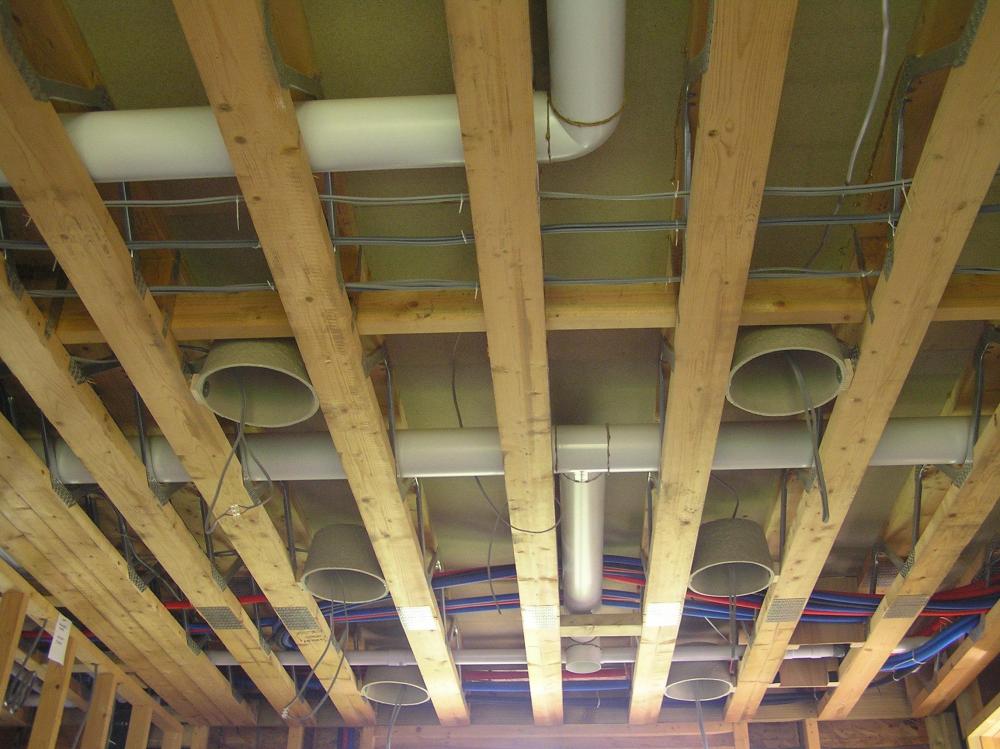
We fitted similar ones to these https://www.tlc-direct.co.uk/Products/LTFRD12WW.html They have interchangeable lenses and bezels so we could use them where ever we wanted downlighters. We also used plain downlight hoods also from TLC but they don't sell them any longer, only the intumescent type.
-
I seem to remember that there are large trees surrounding your proposed build so the roof will probably be shaded significantly. I'm not sure how much of an effect decrement delay will have. If decrement delay was a significant factor then I would be thinking along the lines of a combination of a concrete slab and a layer of aerogel.
- 10 replies
-
- 1
-

-
- roof lights
- roof
- (and 3 more)
-
Thanks Jeremy.
-
Towel rail design : or rather the opposite
Gone West replied to ToughButterCup's topic in General Self Build & DIY Discussion
Even the electric ones I bought had to have the element fitted because you can fit different element sizes. They just come with the inhibitor mix installed. I ones I bought were also thermostatic. http://www.geyser.co.uk/thermostatic-electric-towel-rails-c-56_78.html -
The VAT refund VAT431NB notes state they want the 'approved plans from your local authority'. Does this mean it has to be an A0 size drawing as submitted to the planners or can it be an A3 or A2.
-
The DHW tank is enamelled steel and the pipework is copper.
-
As @lizzie we had a Hozelock irrigation system with timer at our last house for the pots and hanging baskets and it saved us loads of time. Don't remember having any problems.
-
Back to Buildloan (groan)
Gone West commented on curlewhouse's blog entry in Sips and stones may break my bones...
Wendy had a similar problem with Vodafone. She closed her account, and had it confirmed verbally because they refused to put it in writing. Two years later her VISA credit provider was behaving strangely so she checked her credit record and found Vodafone was claiming unpaid bills. After a long drawn out farce with Vodafone she took it to the Ombudsman and won compensation against Vodafone and her credit rating has finally gone back to where it should be. Wendy complained to the Ombudsman that these companies can affect your credit rating without having to tell you. -
We had to supply a hard landscaping and planting plan as part of our planning application. When the weather has been pleasant and we've been fed up working indoors we've worked on the garden.
-
Our door openings were too tall so I just put noggins in at the height I wanted.
-
Re-satisfying an already satisfied planning condition.
Gone West replied to epsilonGreedy's topic in Planning Permission
I supplied samples of materials to the planners as per the conditions and when I asked a few months later if I could have the samples back I was told they only keep them for a short time and then dispose of them. So I don't know how they are going to check whether what I have used has been approved or not. -
Sorry I forgot to update this. The BCO accepted that the Genvex Combi was a self contained unit with built in safety controls and didn't require G3 certification.
-
Found a cheap structural warranty
Gone West replied to Adamantium's topic in New House & Structural Warranties
We finally received our Build Zone Warranty yesterday. We took out the warranty when we started the build eight years ago and paid £1299.25. The insurance premium part of the cost was £535.50 inc. tax and the remainder was site visits, paperwork etc. -
Sewage treatment plants
Gone West replied to Kerron Allen's topic in General Self Build & DIY Discussion
We have a WPL Diamond DMS2 which we chose because of the ease of installation. As @ProDave says all the air pump ones are much the same. I was also told to avoid a Biodisc like the plague.

