
Conor
-
Posts
4165 -
Joined
-
Last visited
-
Days Won
12
Everything posted by Conor
-
 Lindab. That's a lot of ducting and outlets, I'm hoping you've got two units for that or a big one with decent sized main ducts. You would definitely need to split that in to four manifolds, each fed by a 160mm duct back to the unit(s). You'll find that might also reduce your individual runs as you'll split the locations of the manifolds to be more central.
 -
Before you go down this route, check to see if this falls under permitted development rules and what building control regs and process will apply, and these will dictate you construction spec. Eg. Its to be used /can be used as a habitable space (you've mentioned bathroom etc, so almost certain BC will apply), then you'll need to meet certain building regs, e.g. insulation, prevention / spread of fire etc. Do this first before picking a construction method.
-
@China21 if you are within 1m of a boundary, the structure must be made out of largely non-combustable materials. Sounds like it's mostly wood, so you've another issue to address. Solution might just b moving the whole thing so you're >1m from the boundary, allowing you to have higher eaves height (depends on your LA) and not fall foul of the non-combustable material issue.
-
We've internorm 310s throughout the house and are very, very happy with them. We got 3 quotes, they came out in the middle. (£22k, 34k, and £40k). Definitely get quotes for your build as companies price in different ways, and some can't do certain dimensions or styles others can. E.g. internorm were the only ones that could do 2400mm tall patio doors and a 2200mm tilt and turn window.
- 65 replies
-
- 2
-

-

-
- comparison
- cost
- (and 1 more)
-
Best Place to Buy Plasterboards - Sound Proofing
Conor replied to Ambaz79's topic in Plastering & Rendering
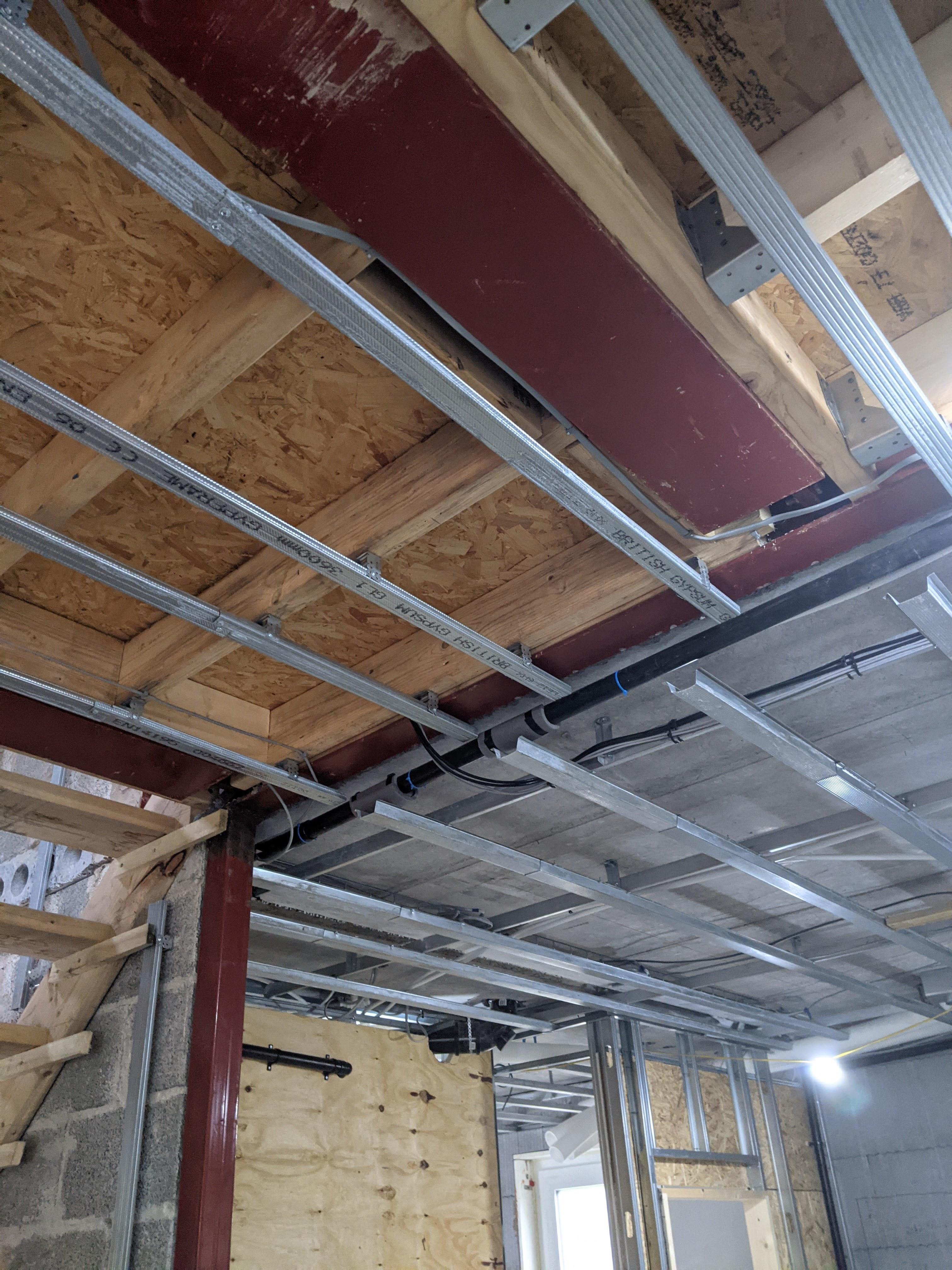
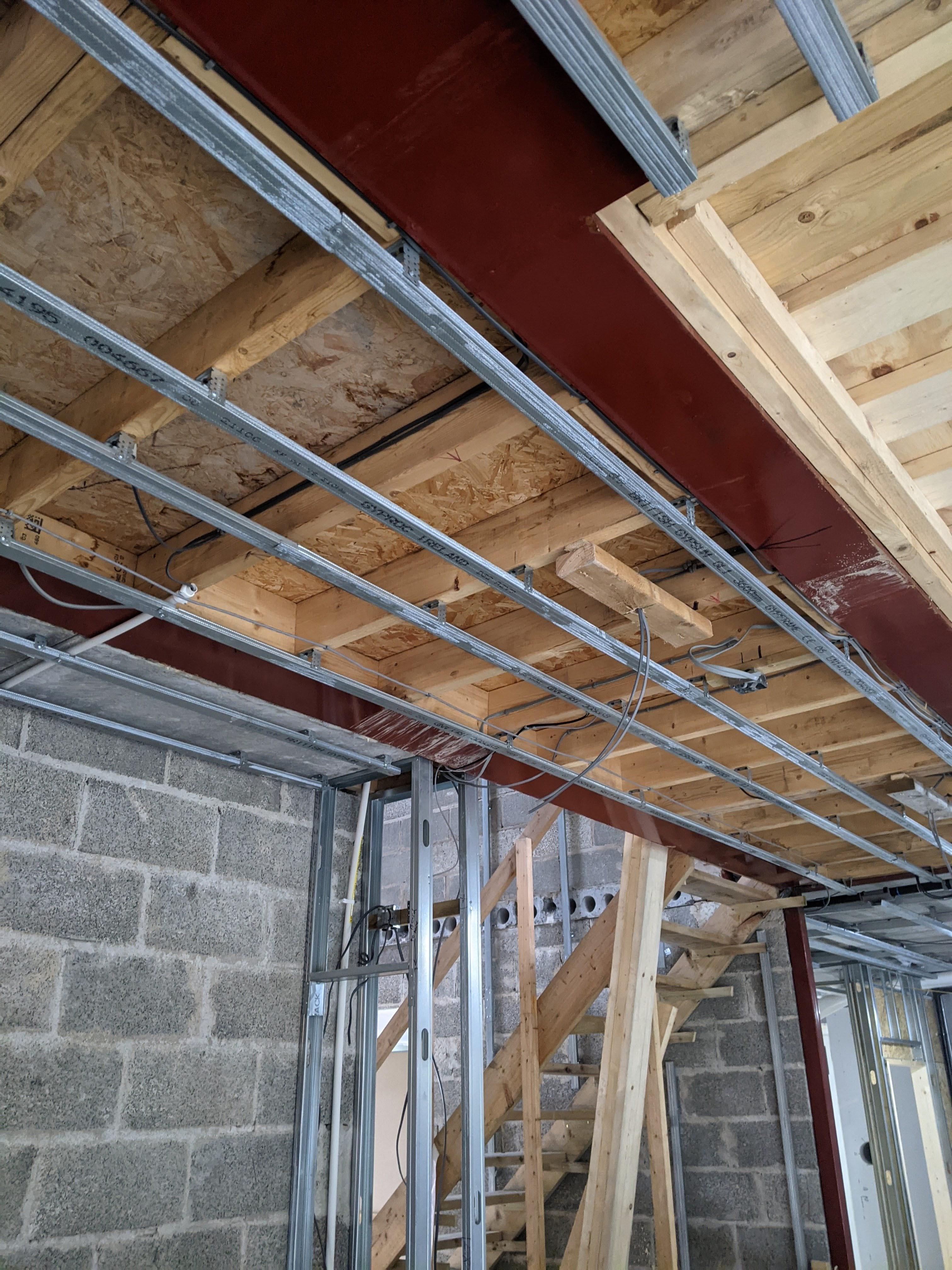
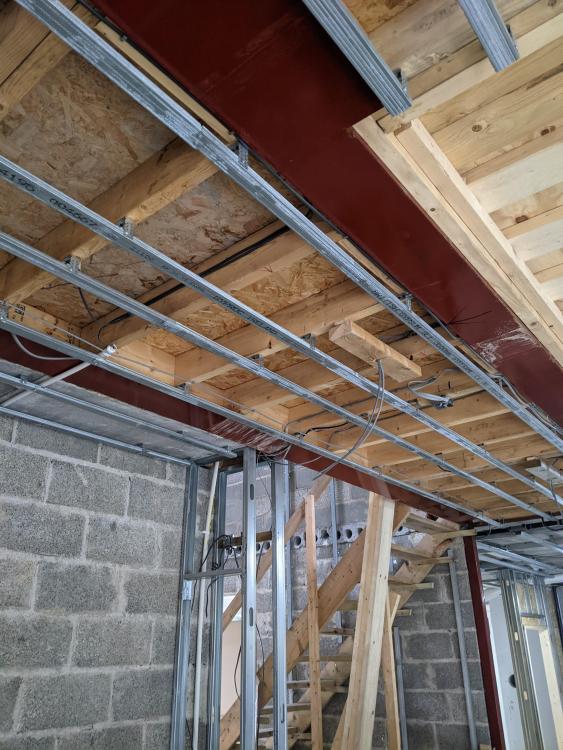
In the last pic there the drop is only 50mm, but could be less if needed. The bars will always perform better than boars directly on joists as you are dramatically reducing the solid transfer path for sound. Can't give you any figures to back that up tho. -
Best Place to Buy Plasterboards - Sound Proofing
Conor replied to Ambaz79's topic in Plastering & Rendering
Best sound proofing for ceilings is to hang a suspended metal ceiling frame and fill the void with 50mm accoustic insulation. Same for walls, metal studs with 50mm insulation. We did that throughout with standard palsterboard and there's virtually no sound transmission between rooms. You've probably no accounted for that in your design by the sounds of it, so next best thing is use gyprails or other resilient bars fixed to the underside of the floor joists. Like the below.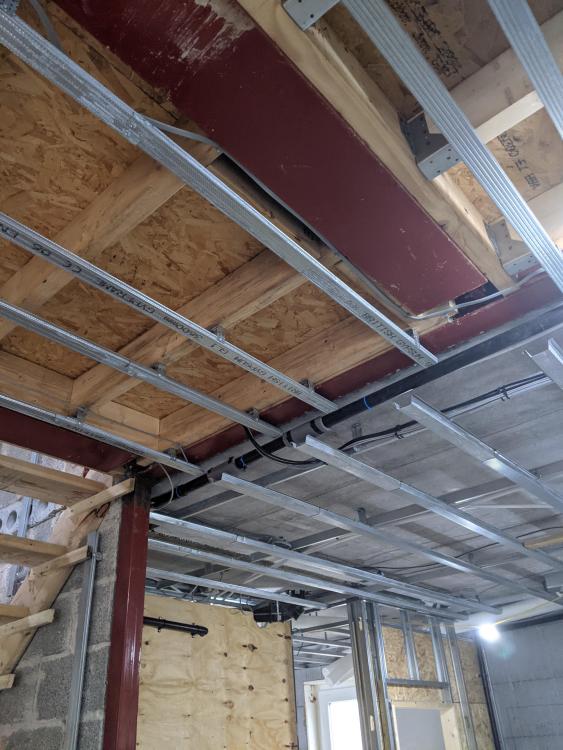
-
Connecting imperial mains pipe to metric copper pipe
Conor replied to Simon's topic in General Plumbing
It's on the list!!!! -
Connecting imperial mains pipe to metric copper pipe
Conor replied to Simon's topic in General Plumbing
Another vote for the plasson universal couplers. Used a 27-32mm one to connect our new MDPE supply pipe to the existing dented and scored 6lb lead pipe at the stopcock. Easy and solid. -
Better to price by day rate, it's about £200 a day here for most trades.
-
Be aware of you are employing any labour directly... They need to be properly insured and appropriately supervised if unskilled. You'll likely need to go through a company that has all these in place.
-
You save on the labour. Get quotes for supply and fit if it's a big enough job. If you're doing it DIY when there's no cost saving.
-
If contamination is suspected or confirmed, you need to put measures in place to mitigate against any risks to the building or its occupants. A radon barrier is standard. If there is contamination of the soil, all BC will need is to ensure you use membranes or barriers resistant to that contamination. A report will show you if there is any contamination that requires mitigation.
-
Land drain/French drain correct way to install?
Conor replied to ruggers's topic in Landscaping, Decking & Patios
I went with B for our basement perimeter drain. Reason being that it will prevent your clean gravel from clogging up. The gravel does the work 90% of the time anyway, with just heavy rain needing the pipe to kick in, unless you've a high water table. It's easy enough. Just make sure your membrane is wider than it needs to be. -
Food Waste Caddy built in to worktop - Smell?
Conor replied to puntloos's topic in Kitchen Units & Worktops
With the insinkerator, it has a rubber top where the plug goes that stops anything bigger than a pea going down unles you force it. The mechanism itself doesn't have teeth or blades, just a couple sliding notches that somehow do all the work. Anything hard tends to bounce up and down rather than get jammed in the baldes. I think the older ones were notoriously prone to blowing up from an errant teaspoon. -
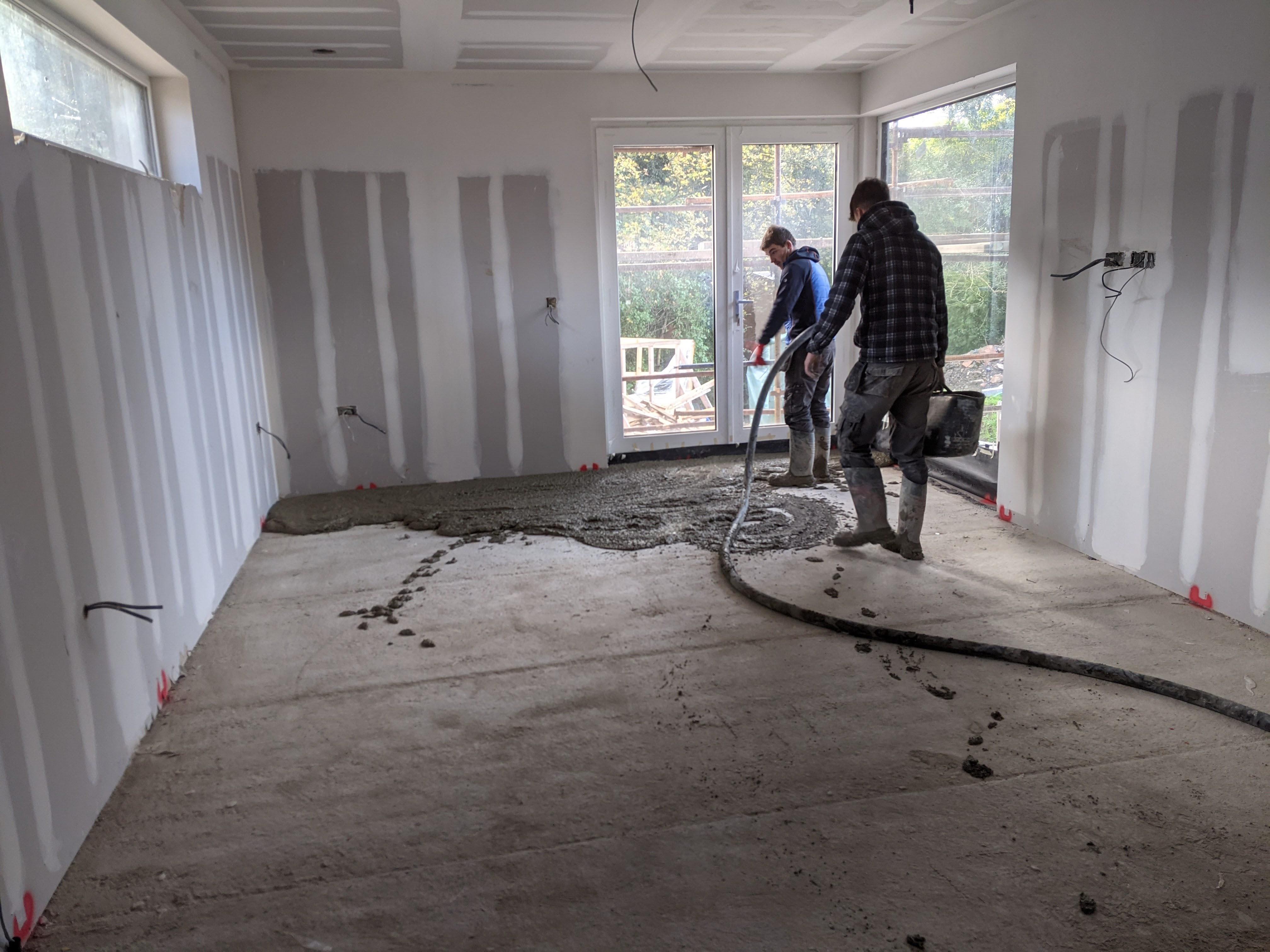
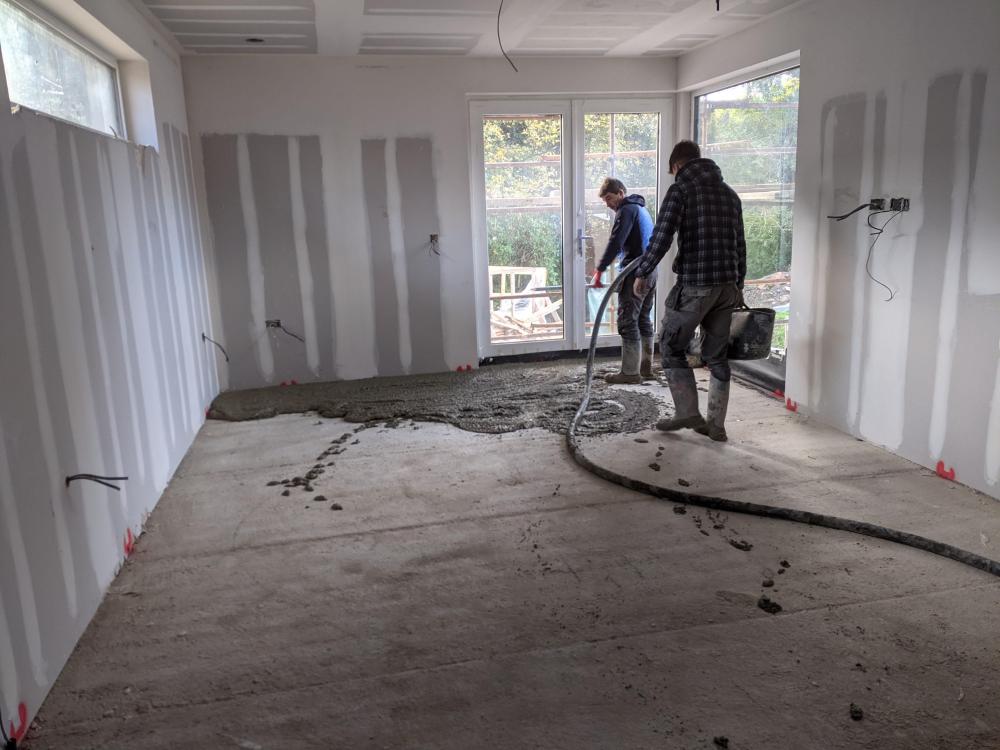
Put 50mm liquid screed down and do the job right. Ours heats up in an hour and house goes from 18c-20c in about 4hrs with a 34c flow temp.
-
For us, we had a few uneven slabs and quite a few steels protruding so laying sheets of PIR or EPS would have been a real pain. I factored in £800 of labour for two guys for two days levellimg and laying the boards. We were at a crunch time of the build with kitchen arrival immenent so dates were fixed and we didn't have the time outlrselves. PIR was also through the roof at the time and hard to get, so the TLA worked out same price, if not cheaper You can walk on it in a couple of days after. It's a bit soft but fine for foot traffic. You wouldn't let a team of guys work on it all day tho. Or set a ladder on it. Same as insulation sheets really You need to get your polythene sheet and UFH pipes down within 3-5 days as the TLA becomes too hard to drive staples in. And they done tstick as well compared to PIR. We used mostly self adhesive clip rails anyway. But you still need to staple and will need a decent stapler and good hard, double barbed staples. Don't get the cheap ones off Amazon like I did!
-
What stage did you find the hardest?
Conor replied to BadgerBadger's topic in General Self Build & DIY Discussion
The VAT reclaim. -
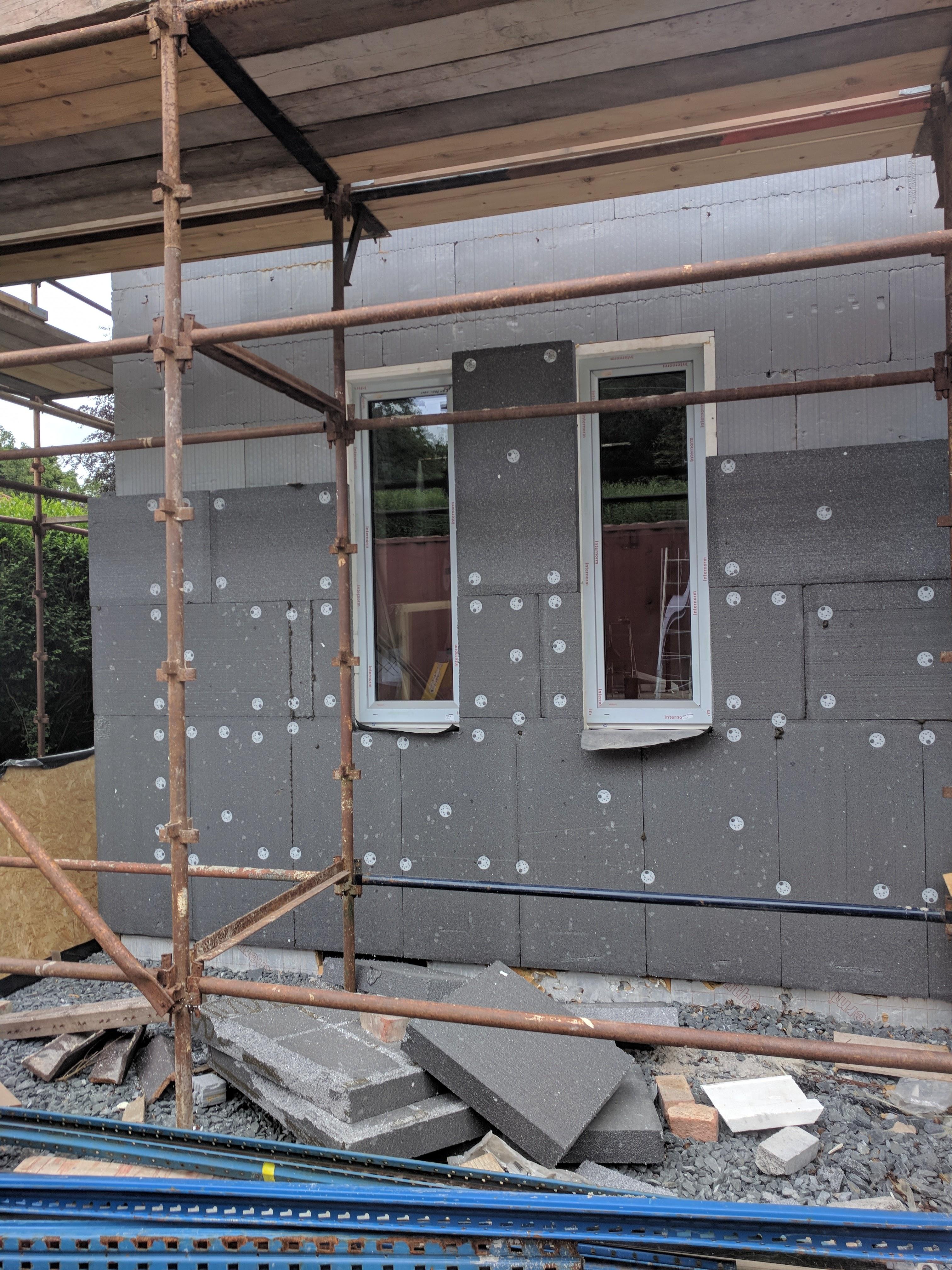
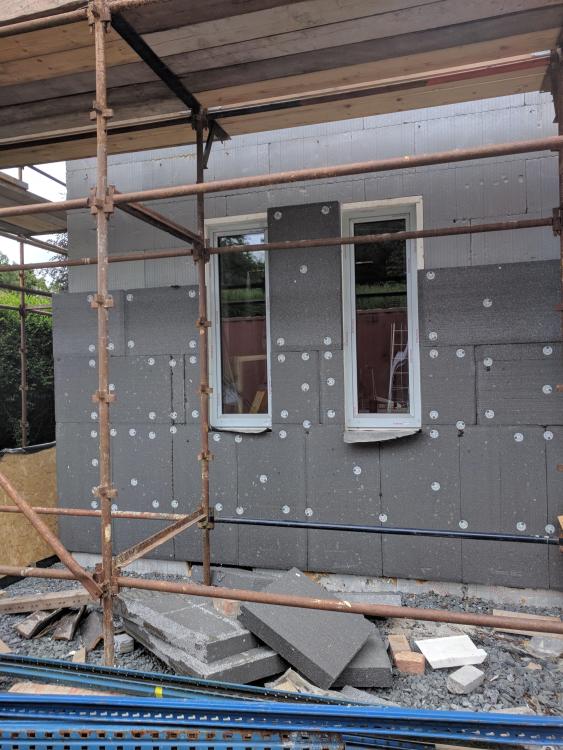
Amvic 300 blocks with an additional 100mm EPS on the outside. Was a lot of work but hopefully worth it! (The plastic washers were later rebated in and covered with 25mm thick insulation discs before rasping and rendering)
-
You put 50mm insulation on top of the deck, then UFH pipes, then 50mm liquid insulation. As the ICF core is behind a fair bit of insulation, it's not a true cold bridge. E.g. on ours we have 175mm insulation on the outside and 75mm On the inside. The deck you've shown above is a composite deck with structural screed. You wouldn't normally do that here (unless e.g. a garage) a standard prestressed 150mm plank system (typically 900mm wide and spans up to 5m) that fit tight together and only require a little grouting (you break the top of some of the hallow sections to bend in your wall bars). These leave a fush deck and no need for all the extra rebar and structural covering that detail shows. In the end, we used an insulated screed (TLA) over tha slabs rather than PIR boards as there was little cost difference and I didn't have the time to level everything out and lay 200m² of boards
-
The inverter kit instructions showed how to wire it all up as it came with optimisers for each panel so had wiring diagrams from the panel strings to the inverter. The spark advised me about the cable routes, conduit, warning labels, isolators etc. It's fairly simple really. First port of call would be the mounting kit to see how the panels are mounted. Then figure out how the cable runs will go. Most residential applications will be a single string, so you wire up the panels together in series, just onnect the MC4 connectors together, then you bring the + and - cables from either end back to the inverter and plug them in. AC side is wired directly to your consumer unit via the isolator and meter I've overly simplified it be that's most of it. Not exactly a dark art. I'm sure there are laid sof videos on YouTube.
-
Wedges and gripfill. Make sure it's well fixed on the adjoining walls and the roof above. We have one like that and it's solid.
-
VAT on professional services/surveys, finance fees, hire costs etc cannot be zero rated or reclaimed.
-
UFH zones - staggered timings or all at once?
Conor replied to climbinggeorge's topic in Underfloor Heating
No, you want the pump to heat the largest volume of water possible so it doesn't short cycle. And your solar panels won't be doing much at this time of year. My 4.5pkW array is struggling to hit 1kW. We will start running ours overnight on economy 7 very soon. Out background load is about 300W, so solar will cover that and any excess goes to the immersion. Other factor is a better COP during the day when the air is warmer, tho that advantage is diminishing day by day as the difference between night and day temps drops. And fyi, we've only had ours on 3 times this year, and weren't really needed, just trying it out really. -
Yes, you need a level threshold and ramp down tho the driveway/path. Its all clearly detailed out in the regs. We have a similar setup, at the reveals we just lapped a dpc down from the door frame down below the paved approach. You have that setup already so plough on. If you think driving rain is a possibility, you can put a slot drain at the threshold.
-
I got a complete kit from ITS and installed 90% of it myself. Spark commissioned and certified it. Key things are to ensure that there are DC warning stickers on the cables / conduit. isolation on both the AC and DC sides. The inverter instructions will give you all the string wiring requirements, I found that the most useful document. Between that and the mounting kit instructions, you should be most of the way there. But definitely try and find a spark to connect it to your consumer unit, test and certify.