
Conor
-
Posts
4165 -
Joined
-
Last visited
-
Days Won
12
Everything posted by Conor
-

VAT reclaim delays
Conor replied to Oldsteel's topic in Self Build VAT, Community Infrastructure Levy (CIL), S106 & Tax
We submitted in September as well, heard nothing, can't get through to phone line. I think we'll chance our arm with a second submission next year as we've significant landscaping and associated structures that are a strict part of our planning conditions. I.e. if we don't build a particular wall we are in breach of conditions etc. Argument is that we need the funds from first application to pay for these works. The balcony and retaining walls alone are £15k. -
Working correctly
Conor replied to Pocster's topic in Mechanical Ventilation with Heat Recovery (MVHR)
Oh yeah. Need you to give you a call about it. Can't get it to work. -
I've hired a 13t, 8t, 5t and 2.5/3t. For digging drainage trenches, duct runs, moving stuff around, and 3t is the best. The 5t was a bit big for digging down the side of the house, just was capable of some fairly heavy digging. The 8t was great and moving a 200t pile of clay. The 13t is only useful on a completel clear site for moving material about. On balance, the 5t is the one to get as you'll be able dig your founds, service trenches, and still be able to dig a 300mm wide hole close to the building. Re letting other people drive it... Do t go there unless they are fully insured and experienced! Your self build I sirance won't cover it
-
Hi, welcome to the forum. I doubt you could build a 4 bed house for £200k these days. Would have to be a compact developer style box. Remember stamp duty, bank fees, soliticitor, architect, utilities etc. It's at least 10-15% of your construction cost. Where will you live during the build? There's £30k gone before you start digging. If you could get a plot for £80k, avoid stamp duty, have utilities very close by, live on site in a caravan, and be happy with a 150m² box that you mostly build yourself, then it's possible. A wild shot is to take a punt on some agricultural land, and play long game at getting planning permission. Wish you all the best in your plot hunting.
-
Calculating ducting size
Conor replied to jayc89's topic in Mechanical Ventilation with Heat Recovery (MVHR)
I went by the pressure drop guide in the Lindab catalogue. They also gave figures for bends etc. Flow rate on boost setting and duct diameter determine hghest airflow velocity and therefore pressure loss. I was aiming for a pressure loss of about 100kpa across the system. The lindab 76mm ID single ducts will be OK for small rooms up to 7m away from the unit. I doubled up everything beyond about 8m or so. Also to larger bedrooms and the kitchen unit where you want a higher flow rate. I didn't even entertain the 63mm ID ducts as they'd all have to be doubled. Remember that the cross sectional area of a circle increases by a factor of 4 as diameter doubles. So a 100mm duct has 4x the "capacity" of a 50mm. -
Fyi land only mortgages tend to require a high LTV, typically 50% (that's all we could find). You'd only get a self build mortgage once you have FULL planning and detailed costings. Do you have the cash to pay for half of the plot price? Once you have a mortgage from the likes of ecology, you'll get most of this back as you'll have a more typical 80% LTV loan. Find a broker that specialises in these sorts of loans, normal residential ones typically don't.
-
Thermal bridge of vertical metalwork
Conor replied to MattMiller's topic in House Extensions & Conservatories
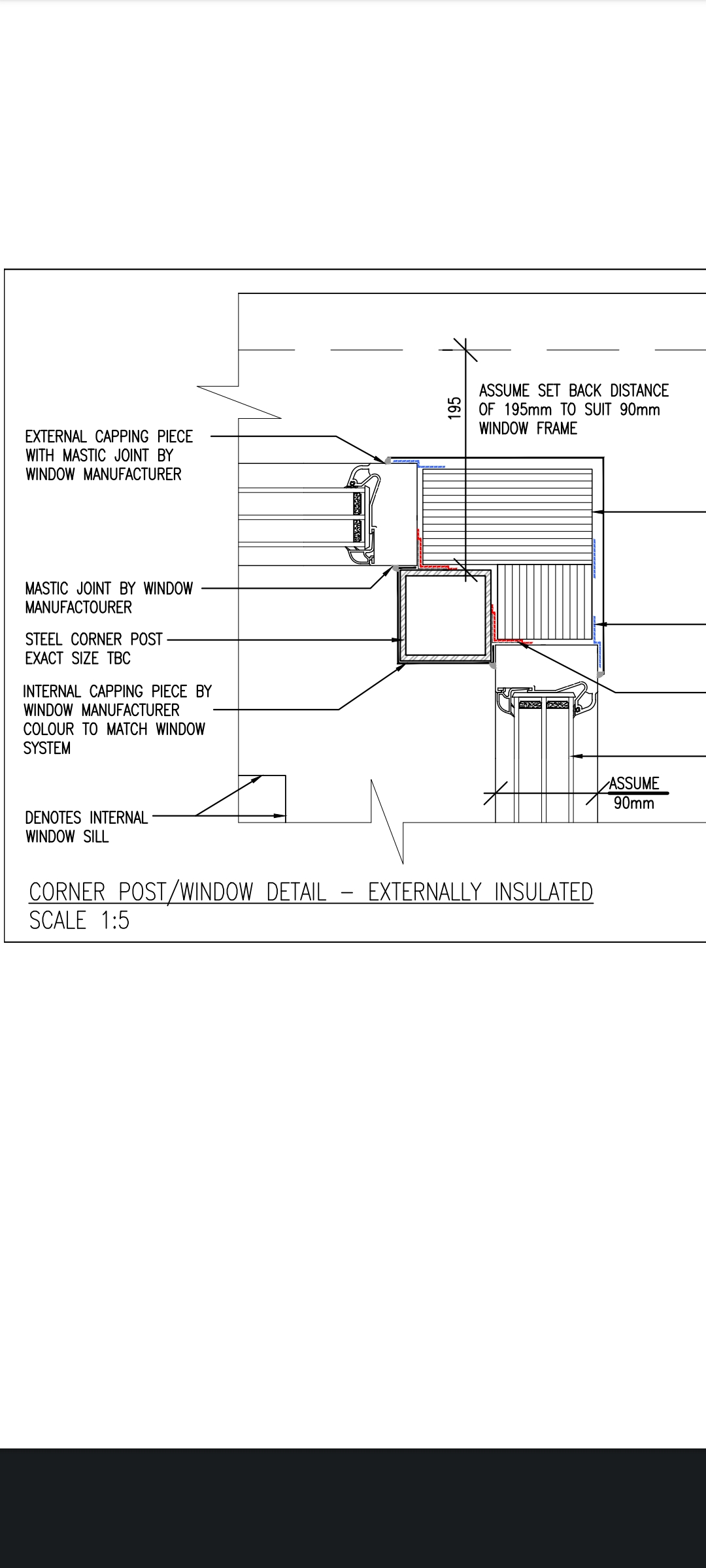
Any pics? Tbh, it sounds like you'd be best ripping the whole thing down and starting again. You'll get a good bit of cash for the lead roof at least. The roof sounds like a disaster and needs redoing. The heatloss by the steel posts is probably nothing compared to what you're losing through the old double glazing. Even if you replace with triple glazed units, this will still be significant. Consider a proper redesign the reduces the heatloss. Re the corner posts. The best way is to position these behind the galzing units. I.e. right inside and the frames of the units meet to the outside. So they are not forming and kind of bridge. See attached. This doesn't always work due to boring structural reasons. For us, we couldn't do this and the compromise was to set the post at the inner join of the two frames. So we had the depth of the frames (50mm) between the post and outside world. We put in 50mm PIR with foil tape, and the window company made an aluminium flashing that covers the whole lot. On the inside, I wrapped the post in aerogel before boarding.
-
Get your connections to water, sewer, electric done asap, makes life easier through the build, and more importantly when you get to the end you're not up shit creek when the utility company tells you it's a 6month wait. And when you look back on it, the £1509 or so for tempory connections, kiosks etc will look like money very well spent. You'll need potable water for your welfare facilities anyway. Portaloo and handgel aren't enough.
-
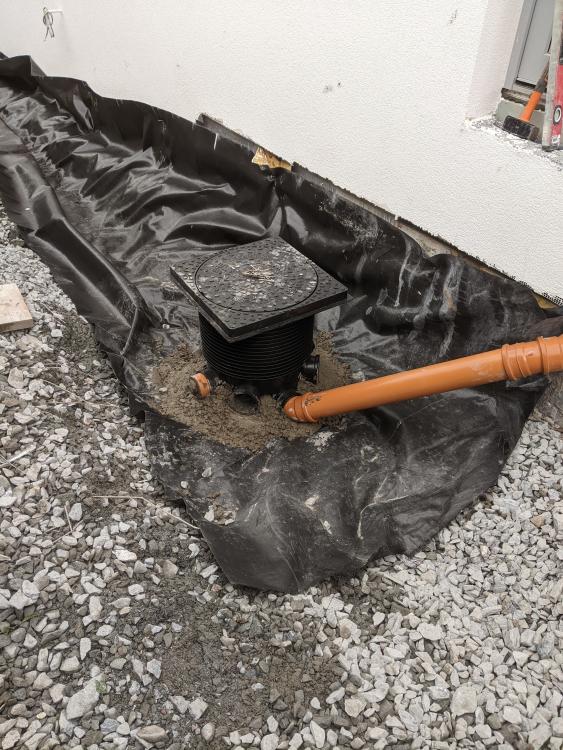
You can have whatever fall you want on a grey water run. I had similar, two 45s and a metre of pipe between them. Have the second bend within a metre of the chamber so you can deal with any issues of they arise. BC was happy with this run from kitchen / washing machine.
-
Nuaire too busy for self build.
Conor replied to CalvinHobbes's topic in Mechanical Ventilation with Heat Recovery (MVHR)
Have you tried BPC or Lindab? -
Practical experience of ceiling acoustic performance sought
Conor replied to dnb's topic in Plastering & Rendering
We used 5mm woodfibre underlay. Great stuff. Gives the floor a bit of "give" and it's certainly not noisy. Not so good at heat transmission tho if you're having UFH -
When we got our mortgage in August, neither Bank of Ireland or Virgin required anything other than building control certificate. Their rates were competitive so that's what we went with. Worth checking with your broker before you go down expensive certificate or insurance routes. Different ball game if wanting to sell in the first 2-5 years or so
-
90% of your tools will be battery powered. Only mains powered items I have are a 9" grinder, 6kg kango and table saw. Safety wise, if you have a prerly earthed and RCBDO supply, then Therese not much in it. Industry goes for 110v on assumption that you won't have these in place
-
You'd just need a streetscape type drawing and some photos and a brief design and access statement. By default, you can't have PV panels on the street side in a conservation area. You should preempt the visual impact by using an in-roof tray system and giving example photos. That's how we did it and it didn't even raise any questions.
-
Download and read the manual. You'll find that it will have a holiday or building protection mode that drops the fan rates right down for the specified period of time. Could be activated via a control panel or remote portal.
-
Wet UFH on ground floor suspended floor. Marriage with an extension
Conor replied to DCG's topic in Underfloor Heating
A drastic, but best performing option is to rip up all the existing floors, level the ground with some hardcore, sand binding, DPM, 300mm EPS, 100mm floated concrete floor with UFH. Marry that to the extension new floor; say 150mm PIR, 100mm screed, so you have consistent floor type, U values, heating loop lengths, levels etc. -
I'd sell the foam cans and go out for a nice meal instead.
-
Reccomend me a wireless thermostat control system
Conor replied to Conor's topic in Underfloor Heating
That is an option and I did consider this. However, the basement gets VERY warm, very quickly, and I'd have to reduce the flow rates way down. And the top floor is the opposite, it's all carpet, lots of glass plus a few roof lights, meaning heatloss is highest here and slowest to warm up. I think I need two zones as a min. So might keep the basement on the neo stat and have it wired, and get an alternative to the top floor. -
We have our system up and running, heatpump timed on certain times of the day, and the room stats call for heat when needed. Three zones, one pre floor, all wiring at the buffer in the plant room in the basement. Problem is, we have heatmiser NeoAir2s, which, are utterly terrible. The range is non existent, to the point where all three stats have to be in the basement in order to communicate with the hubs. Some zone also randomly switch on and off, even when the remote unit is not calling for heat. The the remote stats themselves, are a horror to use. I don't have the WiFi hub, but I'm not risking another £160 on this terrible system. Is there any chance I can get a system that has the range to get through two sets of precast concrete floors and at least one dense co cteete block wall? I'm thinking I'll need something to work through my mesh WiFi network? Google Nest? Do the stats connect to the wiring boxes directly or via WiFi?
-
Solis invertor with MET_Comm-FAIL and RS485 fail
Conor replied to jen and mark's topic in Photovoltaics (PV)
It means it's not hooked up to a network connection. E.g. a solis monitoring platform. Is it generating? -
Do you live by the sea? You might want to upgrade to a coastal rated one next 🤣
-
Beam and block external patio
Conor replied to DeanoFromTheDock's topic in Landscaping, Decking & Patios
Actually, the sloped screed with tanking on top then pavers on pedastals is the answer. Just need a route for the water to leave the deck. -
Beam and block external patio
Conor replied to DeanoFromTheDock's topic in Landscaping, Decking & Patios
We're doing exactly the same. Raised patio out the back of the house, with a storage area underneath. I'm looking at span tables now before sending sketches off to architect and SE. My thoughts are also firmly on waterproofing. First, flashing against the house, secondly, a cement based tanking slurry over the beam floor. Paving over. The bit I'm worried about is how to get rid of the water on top of the beam floor. Inevitable that water will soak through the pavers and screed, and then sit on the tanked surface. I'm worried it'll be perpetually wet and lead to a horrible slimy surface. Alternative is to screed with a fall, then tank. Still trying to figure it out. -
No, just make sure you have your planning sorted. Don't need BC until you sif your founds / drainaged
-
Expanding foam and airtight tape. We rendered with Sto and the beads were self adhesive and stuck to the outside of the frames. We had the glazing company fit the windows, wouldn't dream of doing it myself.