
Conor
-
Posts
4165 -
Joined
-
Last visited
-
Days Won
12
Everything posted by Conor
-

Tall ceilings = tall windows and doors?
Conor replied to Conor's topic in New House & Self Build Design
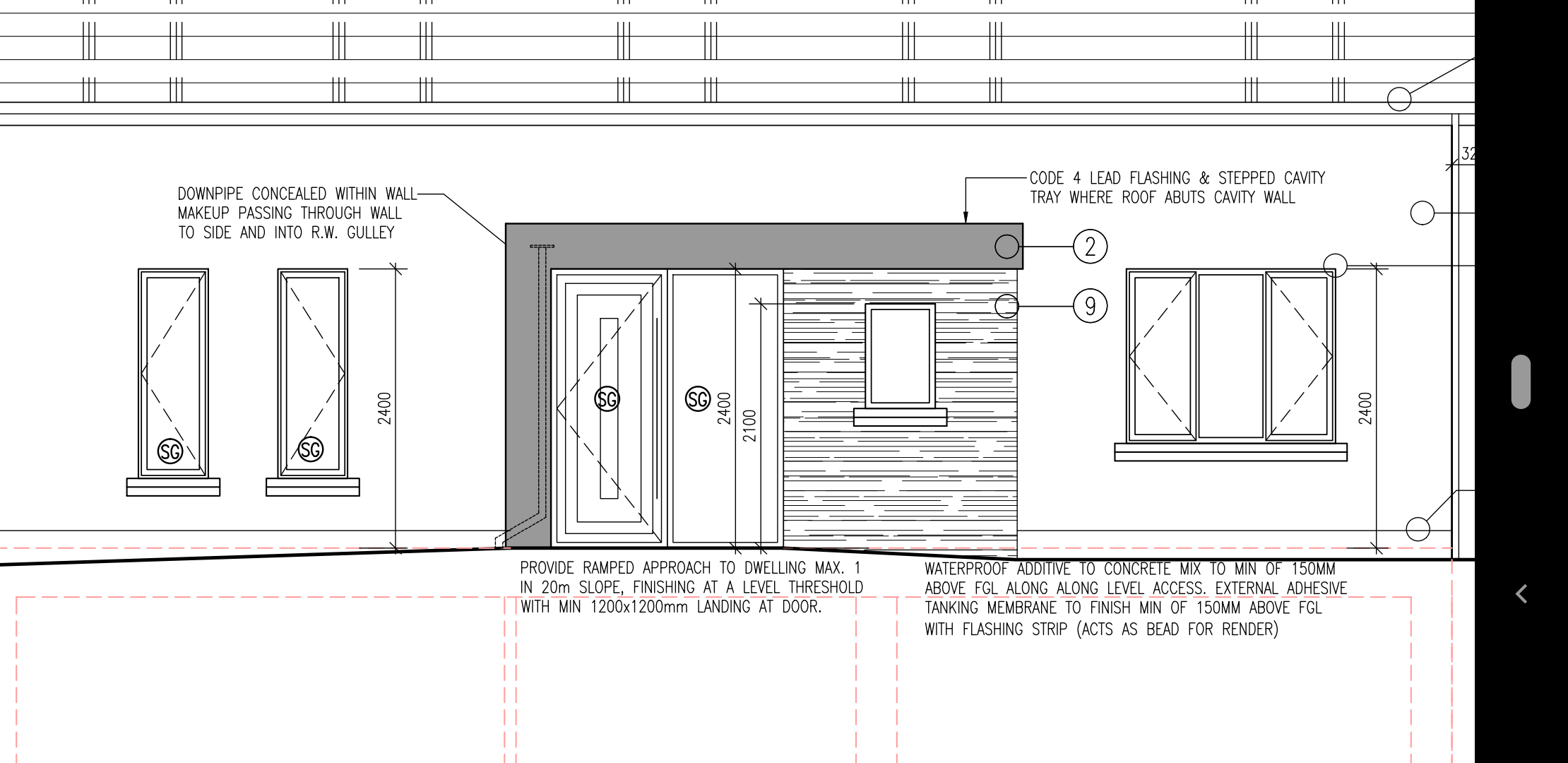
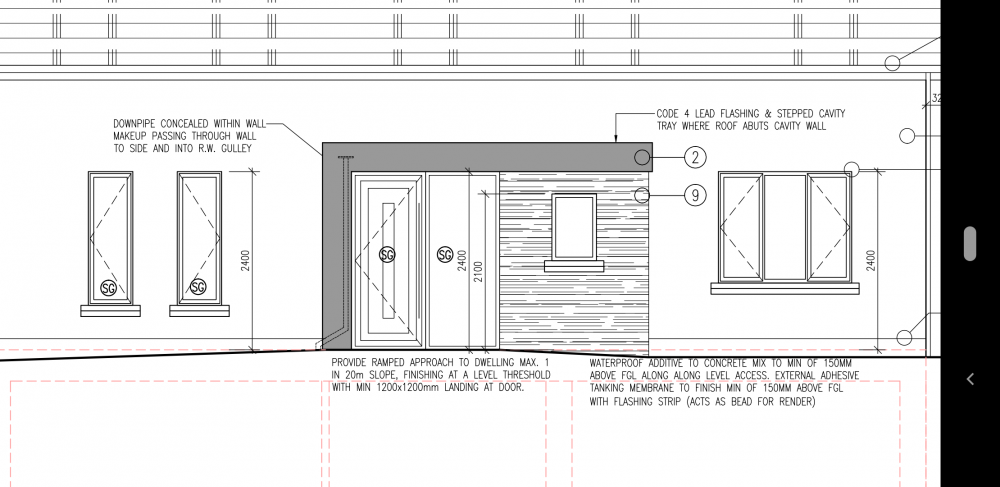
Thanks @Oz07. What about internal doors? Would we be wise to make these a little taller as well? I had a thought that raising windows and doors would negate some of the effect of higher ceilings? re top light... That's what the door guy suggested. But by the time you factor in frame 5hickness, you only end up with about 100mm of glass and a load of frame. Hoping to find a 2400mm high door. A pivot door will do that but they start at £5k.... -
We have 2650mm ceilings on our ground floor. We're shopping for external doors and have realised that the architect has door and window heads of 2400mm all around the house. This is making finding a front door a little more tricky as most standard doors are a max of 2100 or 2200mm. Is it normal to have higher head heights for higher ceilings? If we were to drop the front door HH to 2200, would we be best dropping the windows as well?
-
Yes. For all water companies that's why we call them "boundary boxes" Re the stockpock. It's mostly likely debris or build up of minerals. Operating it from fully open to fully closed several times while you have a tap open in the house will help clear it out.
-
The ratio entirely depends on how much you spend fitting out the house... You can spend £5k or £50k on a kitchen. Your estimate seems good tho £15k for demolition is a lot, unless it's a large, difficult building.
-
A developer wants to put a drain through our land...
Conor replied to Conor's topic in Party Wall & Property Legal Issues
@Declan52 that was my first thought.... I've a lot of clay to muck away, loads of stones to bring in and landscaping to do. they also have their own diggers, handlers and dumpers parked up over the weekends that would be very handy for me... -
@markc and @ZacP thats in Northern Ireland btw - you'll need to adjust for your areas.
-
A developer wants to put a drain through our land...
Conor replied to Conor's topic in Party Wall & Property Legal Issues
A building site for single dwelling here go from £250-£325k. Completed house worth around £600-£800k. For our potential site, would be on the low end of that range as it would be relatively small. Had a chat with the architect about this and said he's had cases where people have been able to build over drains/utilities with agreement with the owner. I'd be getting that in writing at the start that would allow me to build over the drain (within agreed limitation) without seeking approval from the owner. Meeting builder tomorrow and going to set out my situation and let them come back to me. -
Looking at about £145k for us to get watertight - inc ground works but excluding design, planning, BC fees etc. (£15k ground works, £75k walls/floors, £25k roof, £30k doors and windows.) That's about 60% of our budget. That's for a 300m2 ICF 1.5 story house with basement, built to passive standards.
-
A developer wants to put a drain through our land...
Conor replied to Conor's topic in Party Wall & Property Legal Issues
Very good question. I assume the developer would retain ownership. Another facet is that they need to sort this asap... As some of the houses are probably 2-3 months from completion. I know first hand that both a license to discharge application and any kind of private land agreement takes at least the same length of time... I can picture a route that would skirt our new house and not cause too much of a problem as we'd be keeping a good 4metre gap between us and the second house. An alternative would be for me to lay my own drain from the front of the property and allow them to connect to it for an modest annual fee ? -
A developer wants to put a drain through our land...
Conor replied to Conor's topic in Party Wall & Property Legal Issues
That's the issue... If we dont get PP for a second house, we'll be selling a 2-4m strip of land to our neighbours who want to build a garage and extension. Hmm -
Long story short. There's a development of five large (300m² ish) houses being built across the road from us. The builder popped on Friday and said they haven't sorted their drainage yet.... Firstly I'm amazed they got planning permission with out a drainage plan but that's beside the point. Anyway, we are between them and the nearest river and he doesn't think they'll be allowed to discharged to the combined sewer. So they want to lay a drain pipe though about 40m of our land to the river at our rear boundary. I've no objection on principle.... And we're basically a building site anyway so no disruption to us. What's the usual procedure? Is a wayleave normally used for this or is there another way? My only concern is we may want to build a second house on that part of the land in the future... Would this be a (legal) hindrance?
-
It's a pretty simple and quick job to divert a small diameter pipe. As in you can do all the works before anybody notices. 7am on a Saturday morning for a 30min shutoff would be perfect... What size is it? And no, there's no way your solicitor would have found that in a search.
-
Trade account with BPC
Conor replied to tanneja's topic in Mechanical Ventilation with Heat Recovery (MVHR)
I've been told that of you ask (non trade), a 30% discount is likely. A friend of a friend got their order zero vat rated and then a 20% discount without even asking... My quote with them is sitting at £7.5k so I will be asking!!! -
Tile Backer Board or Marine plywood?
Conor replied to Snowbeetle's topic in Bathrooms, Ensuites & Wetrooms
Hardi backer board. Pretty much standard way to tile on to wooden structures. I'm not sure of I'd have it as the only material on your stud walls.. you also have to bear in mind building regs re fire and sound. I'm sure somebody will come along and clarify.- 10 replies
-
- 1
-

-
- bathroom tiles
- bathroom board
- (and 2 more)
-
Good luck. We've been browsing kitchens, windows, doors etc . All seem to have 8 week + lead in times.
-
That's over £140 a metre. That's excessive. That's the kind of money you'd pay for a large diameter public sewer. I'd be looking for a new contractor. But devil is in the detail... Is there difficult or specialist reinstatement? What depth does the main and manhood need to be? Does this include connection charge to the public sewer? Is it pvc pipe or two wall polythene?
-
Go back to the assessor and see what happens when you upgrade insulation to about 0.15 and put in triple glazing. This is kinda what we should all be doing as a min starting point before thinking about heat sources and power generation.
-
Two-stroke leaf blowers must be one of the most anti-social contraptions ever devised. First thing I'll ban when I'm king of the world.
-
Doesn't really work like that - there's a very long thread with lots of formulae and arguments about this subject. The wall should be considered as a single thermal element, where the concrete is in the profile, doesn't really matter. It's an order of magnitude cheaper to put a 40mm sheet of PIR on the inside vs a 100mm sheet of EWI grade EPS on the outside.
-
We're just sticking on 40mm of PIR on the insides of the walls (then plasterboard screwed through to the webs) to get the standard Amvic blocks down to 0.15. considerably cheaper than a larger block.
-
What's the normal method of bring water, electric and tele in through a tanked basement wall? I was thinking of sticking in 3x 50mm conduits through the ICF at about 300mm apart and tanking around them. How would I then airtight/tank them after the cables and pipes go in? Expanding foam and tanking tape? Same approach I assume for the waste pipes? Stick in a section of 110mm PVC pipe at the appropriate depth? Thanks
-
I'm also doing a great job of getting in my builders way ?
-
@ZacP what's your procurement strategy? Are you going to buy the Icf and assemble yourself along with some assistance? Bear in mind structural warranty erc. That was my plan but in the end I went with a contractor to supply and fit... Came in at £51k, a fair bit more than my DIY estimate of £40k... But I'm saving £3k on not needing a warranty and it'll be done 10x faster lol. And contractor takes all the risk. I recommend you price up a contractor to supply and fit the ICF along with all structural elements.
-
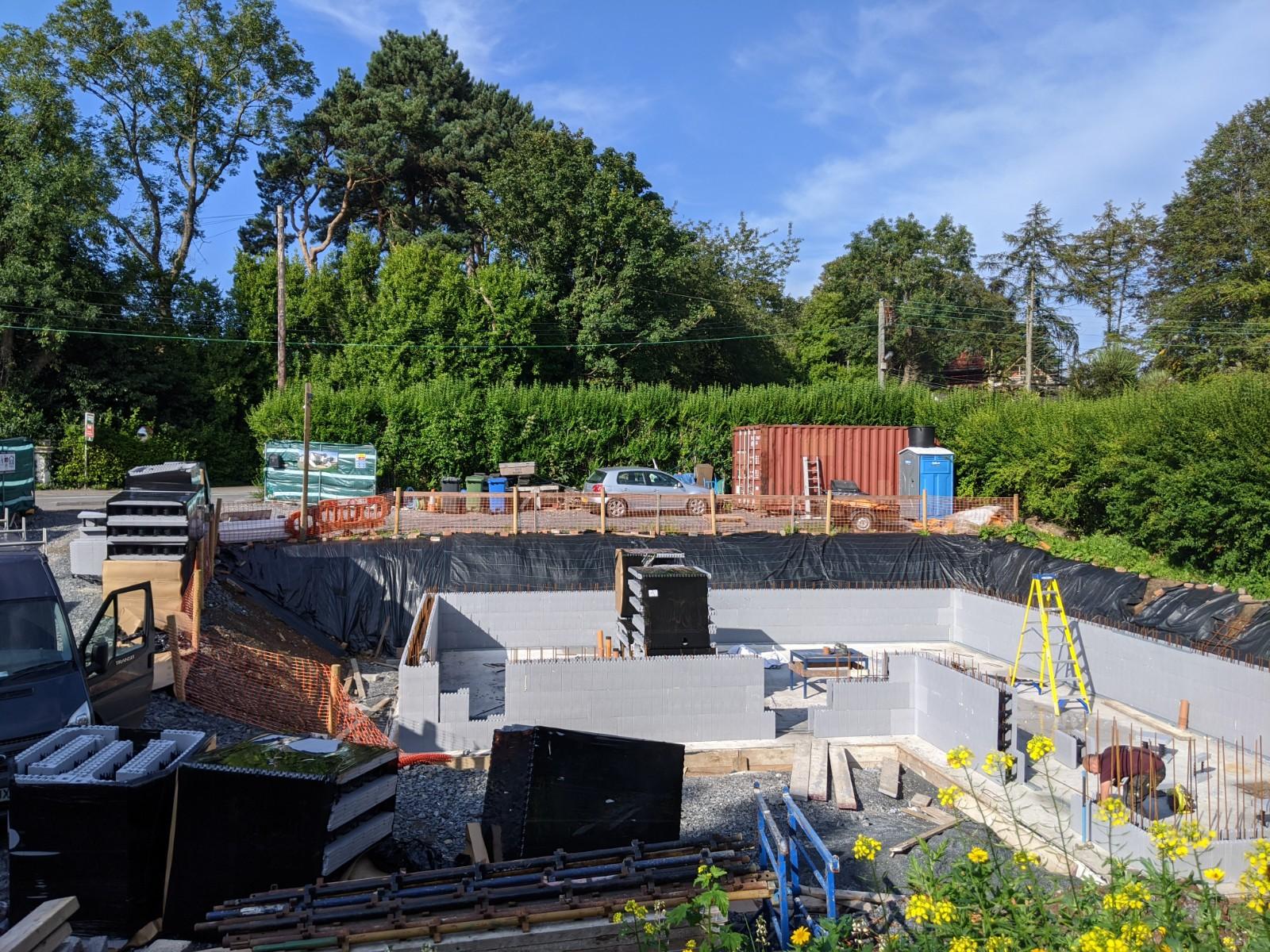
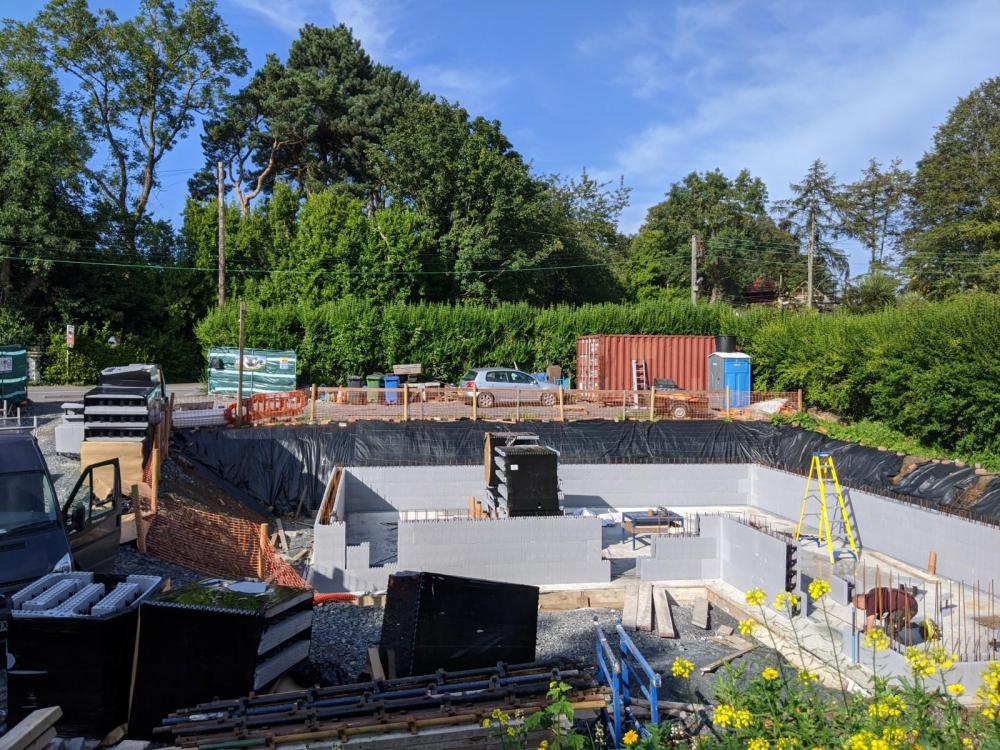
Have you priced AMVIC? They came out cheapest - about 50% cheaper than NUDURA for reference once you factored in all the "extras". FYI we're in th emiddle of our basement assembly: Looking like 2 weeks from delivery of forms to concrete pour. Once you factor in the setting out of tracks etc (1 day alone), a full week for assembling blocks and doing rebar, and other 2-3 days bracing and setting up props and checks before the pour. That assumes you've no complicated or large openings. Builder started forms on our simple 100m2 basement on Monday, will be finished tomorrow lunch time, bracing the four openings in the afternoon and into next week assuming props arrive on Monday, with pour hopefully on Wednesday. Extra insulation will go on with the tanking the week after.
-
I just got the main contractor to do in the end. Much simpler and cheaper as he provides the guarantee.