
Conor
-
Posts
4165 -
Joined
-
Last visited
-
Days Won
12
Everything posted by Conor
-
We had a double layer laminate - sparkly coloured layer with a hard, clear layer on top. Cost was about £500 for the whole kitchen vs £5k for quartz. It looked great. We're now in a rental with black quartz worktops.... I'm a bit put off them with the number of glasses and plates we've chipped or broken due to little knocks. Suppose that's the price you pay for hard wearing surfaces! Would actually consider laminate again of the quality and look we're what we're after.
-
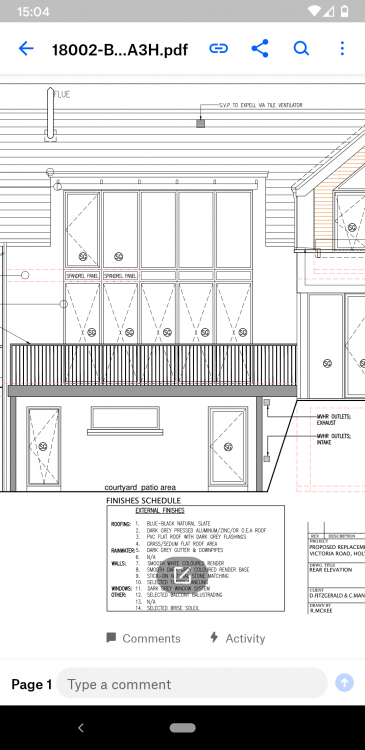
We have matching windows above - 5m span with 5 panels. If we went for sliders below, the lines would not match. We can't easily change the 5 panels above as there is a room partition where one of the frames are, as well as an escape window. And we had mock ups done of three, four and five panels. 5 looks best! And the frames aren't am issue as there isn't really a view to speak of... Just a garden and trees. We much prefer the effect of having a full 5m door opening.
-
We have almost the same openings. We're still going for bifolds as we can't live with the look of sliders. We're going with Lacuna - their u values and airtightness are right up at the top and they are routinely used in passive certified houses. Top hung system so no pressure to deform floor seals. Price is a bit more but nothing scary.
-

MVHR - New build with basement
Conor replied to mike77's topic in Mechanical Ventilation with Heat Recovery (MVHR)
@Thorfun we were in a similar position Partial basement, but the logical place for the ASHP and mvhr ducts we're on a side of the house that was underground. Architect strongly argued against going though the basement wall (and therefore tanking) as it opens up a whole raft of problems and complications. There was talk of a service void coming up behind a kitchen cabinet and out through at ground level. I think that's what you'd have to do, either that or locate your mvhr at ground level and have everything else in basement. We have ended up with plant "room" under the basement stairs and a 3m duct run to the south wall that isn't below ground. -
I used sweet home 3d... Basic but very useable.
-
We did it when the electric connection was being done. Engineer arrived on the same day and got the digger driver to dig a couple extra holes down to our foundation depth. She then just did a visual check and grab a handful of the soil.. was fairly obviously just standard red boulder clay and didn't warrant any further investigations. Think the whole exercise was a couple hundred quid. A lot depends on the local geology and history. If there is a reason to suspect something out of the ordinary, a detailed investigation may be needed.
-
MVHR Air - Ground Heat Exchanger?
Conor replied to Conor's topic in Mechanical Ventilation with Heat Recovery (MVHR)
That's a brilliant breakdown, thanks. Would be even lower return for us here, we're by the sea so temp range is lower than at aldergrove, which is inland and at altitude. temp only goes below zero a couple times a year, and air temp is never above low twenties. Our 5m wide bifolds will be our primary summer cooling device! Having an ASHP and PV panels... May as well use those for cooling if needed. -
MVHR Air - Ground Heat Exchanger?
Conor replied to Conor's topic in Mechanical Ventilation with Heat Recovery (MVHR)
That's not bad at all. -
MVHR Air - Ground Heat Exchanger?
Conor replied to Conor's topic in Mechanical Ventilation with Heat Recovery (MVHR)
Good find. 150mm twinwall pipe would be a better option as I'd only need two of them, rather than four 110mm PVC pipes. Not so sure about the slit... we're above the water table at the minute and the ground will be well drained and pipes will most likely go in gravel or sand. But I'd still be worried about ingress or standing water. Think I'd prefer to have Tees every couple of meters with down pipes to the drains below. -
MVHR Air - Ground Heat Exchanger?
Conor replied to Conor's topic in Mechanical Ventilation with Heat Recovery (MVHR)
Ahhh, good point. That would explain why the commercial kit pipes are so expensive... but good falls, drainage and anti-bacterial paint should solve that issue. Will search for previous topics. -
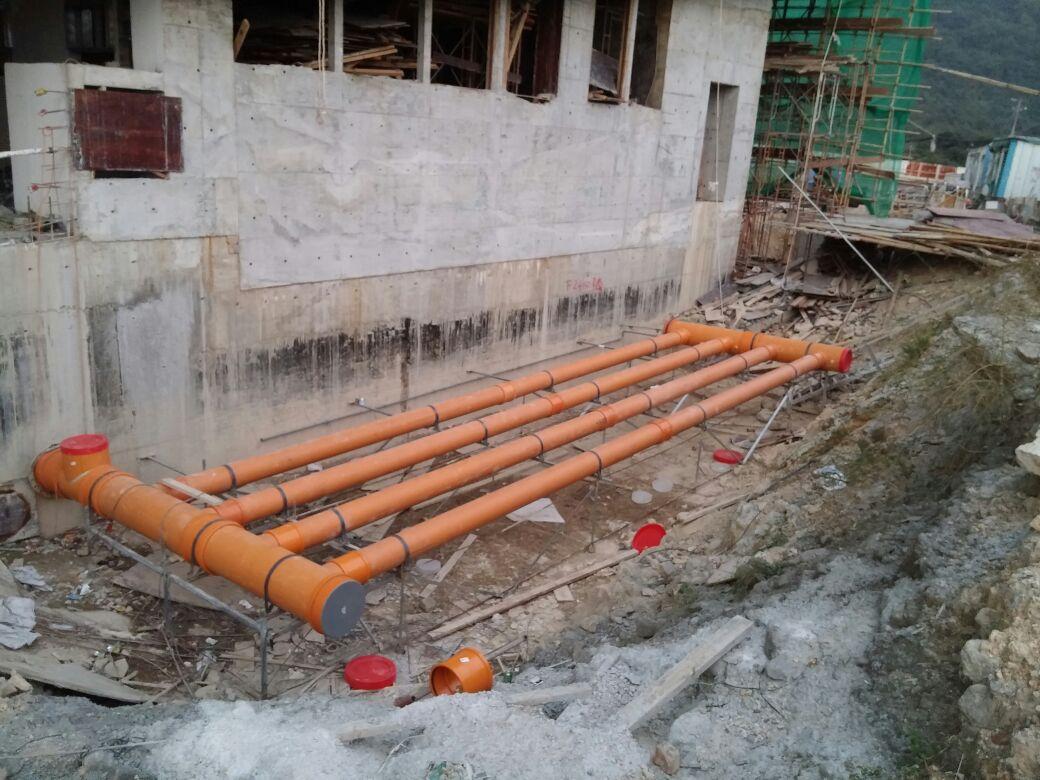
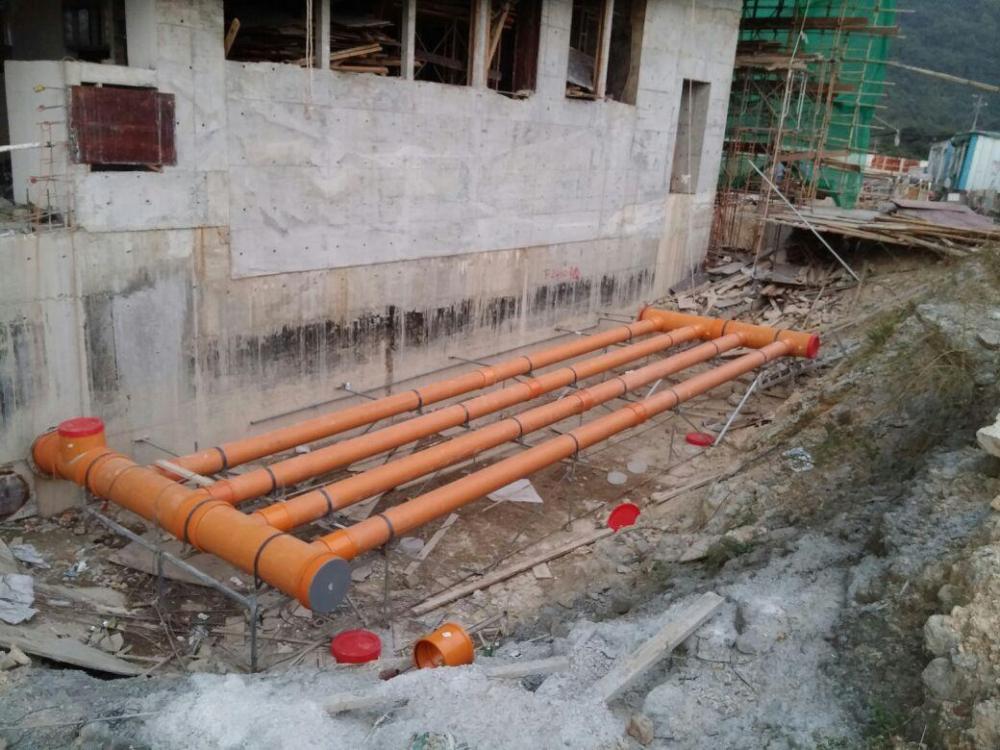
During one of my many lunchtime build project online research sessions (procrastination!) I stumbled across the concept of ground - air heat exchangers for ventilation. It seems simple, air passes through several meters of buried pipe prior to entering the ventilation unit. This ensures that the inlet air is always 6-12c all year round. I can see an advantage for summer cooling, along with reducing heat losses from the exchanger in winter nights as the incoming air will be warmed slightly. Would also mitigate any frost problems in the exchanger, no pre-heater required, so a cost saving there. Off-the shelf kits seem to be £3k upwards... and without doing any actual calculations, I'm assuming this is significantly more than any winter heating or summer cooling savings. With my experience in hydraulic engineering, I'm sure I could replicate a system for a few hundred pounds using 3x 110mm PVC drain pipes (would need to calculate losses of course), laid in parallel around the perimeter of the house. We are building a basement and have ~50m long, ~3m deep and ~1-2m wide excavation that will be back-filled with red clay and fine stone. So there would be no excavation cost if I were to do this. I'd just need to install the network of pipes, a condensation chamber (simple enough as land drain would be directly below and I'd have enough cover for a constant fall in the pipes), inlet stack (would be hidden and sheltered behind the side door porch return), and manifold (would either re-purpose a standard 200mm manifold or have something manufactured) connection to the 200mm inlet duct on the unit, and some sort of bypass for when air temp is preferable to soil temp (12-18c in spring and autumn). Am I missing anything? Am I mad??!!! Would look very similar to this, but my 110mm pipes would be stacked vertically from 3m-2m depth of cover.
-
I have a portaloo on hire as I'm using the site office for working from home at the minute. It's only £20 a week and serviced frequently. Not luxury but does the job and over 12months, cheaper then buying or renting a plumbed toilet unit.
-
Opinions on Dulux Diamond Matt and Johnstones Perfect Matt?
Conor replied to MJNewton's topic in Decorating
We used Dulux Once matt paint in our last house, complete disaster. marked really easily, literally wiped off the walls with a damp cloth. Scared me off matt paint for ever. -
As already said, you can do a fair bit of plumbing yourself with a bit of care and right materials and tools. Flexible plastic pipes and push fittings make most jobs easy. You'll still need a plumber for likes of boilers and cylinders. Of you go down the route of an MVHR (recommended) then again you do a lot of the installation yourself and save anywhere from £2-£4k. Painting is done job I wouldn't do and if you have the budget, get than done professionally along with second fit joinery. Those are the parts you'll see everyday!
-
In our case, any material changes would require a full new application.... All local authorities vary.
-
Love the stealth shed. Thinking I'll do something similar with the site shipping container after we're done. Envious of 8 months to get planning... We were 12months, and that was with a lot of shouting and pushing.
-
Yeah, there aren't many licenced landfills that take contaminated soil.... There are none in northern Ireland so it all has to be shipped over to Scotland. I was told £500 a tonne!
-
We had oil contamination at our site. Old tank was leaking for years. knew about it at the time so had mentally put aside £5k to deal with it. Initial survey said it wasn't too bad. No smell, no die back. We we started digging the founds for the basement, we hit a large area of heavily contaminated soil about 1.5m down. I could smell it from other end of site. Oil had sunk down over the years and saturated a layer of stony clay, about 4x5m and couple hundred mill thick. Had it tested and came back as hazardous with a 15% oil content... Theoretically flammable! Now have a nice pile of contaminated soil on polythene at the back of the site for disposal. The guy that tested it recommended leaving it exposed for as long as possible as enough VOC may evaporate for it to become contaminated, but non hazardous... Can then go straight to landfill. Oil is horrible, and I'd never, ever have it as a heating source.
-
Planning and Design Process - take your time!
Conor commented on Conor's blog entry in Holywood Passive ICF Build
Amvic. That's what the builder that we awarded the contract to uses. Rereading what I said above... I don't think I'll be doing quite as much as that lol. -
This should all be detailed in your architect's drawings, engineering drawings etc. U values would have been needed for your SAP report and building control would also have required this. What overall I values are you aimer for in the build? What's your targeted SAP rating?
-
Temporary Building Supply requirements?
Conor replied to Randomusername's topic in Electrics - Other
Our supplier specified a weatherproof kiosk to specific dimensions along with a easy sweep conduit up through the base for their cable. They also specify the supply must be fused and can only use 16a outlets. All DNOs have different requirements. If you don't meet their spec, they may not install your meter- as happened in our case as we had a standard 13a socket alongside the two 16a. As I was demolishing a brick house, this cost about £30 to build. Others here have got away with fitting a standard meter box to a boundary wall and even fence.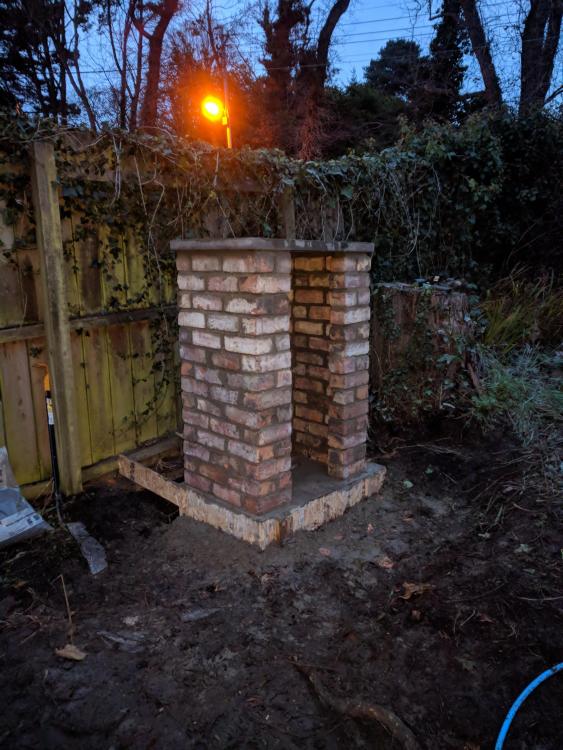
-
There was a post a couple days ago about this very topic, have a search and you should find it. Spoiler alert: 10mm is ok.
-
No idea - we've just specified a standard on the drawings but not a specific system. the main contractor is doing all that, will know more after our kick-off meeting on Wednesday.
-
That's exactly what we're doing. ICF walls, tanking membrane. 50mm EPS100, clean stone backfill.
-
My partner is from Parteen and we holiday in Kilkee a fair bit. We'll be rendering on to EPS.