
Conor
-
Posts
4165 -
Joined
-
Last visited
-
Days Won
12
Everything posted by Conor
-
@Olf @Levo I've just asked m friend that installs MVHR system on what he thinks - he often sources units like this from Denmark and Germany. Will report back. I'm keen as well as it's coming in a fair bit cheaper than the Zehnder equivalent I'm looking at.
-

WPD quote for electricity supply blowing our budget
Conor replied to Omnibuswoman's topic in Electrics - Other
Really goes to show it's worth doing your homework!!! -
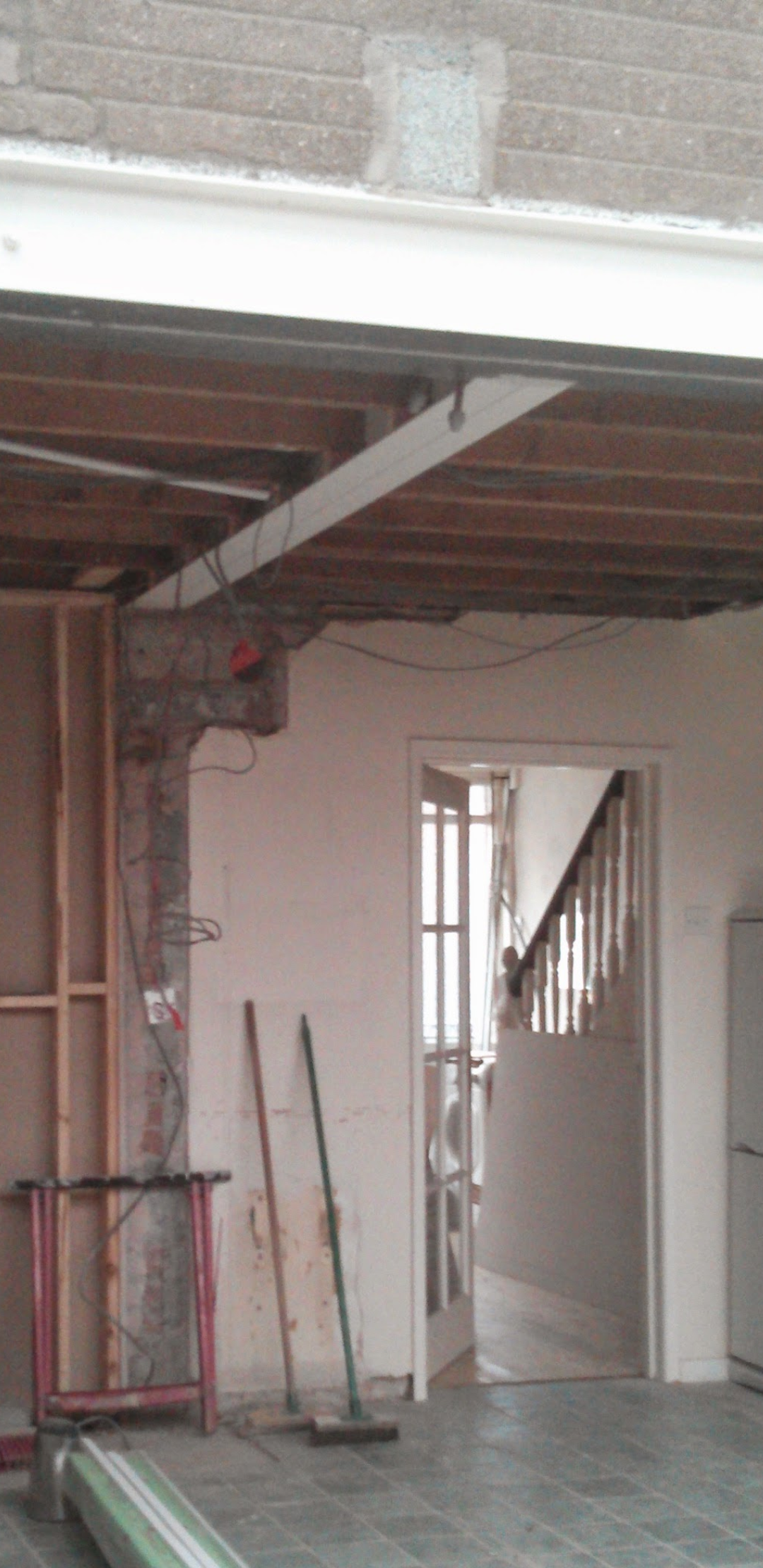
Wouldn't it be better to fit two "L" beams in through the joists? That's what we did at our last house. Then you can have a flush ceiling - worst case you have to baton our the plasterboard 50mm. Joists were cut, beams inserted and bolted, batons fitted to joists and ceiling fitted.
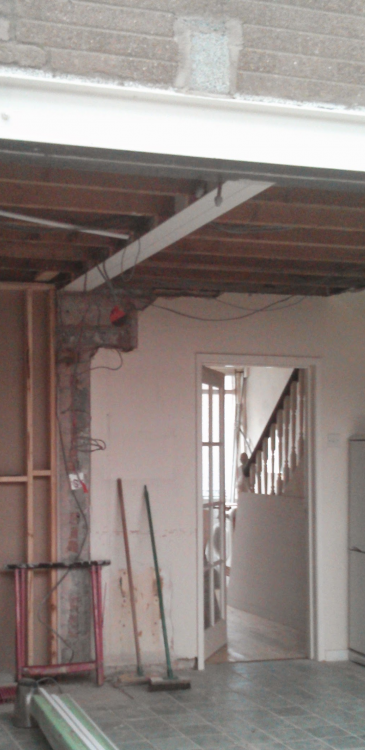
-
Personally, I'd track the cables in the wall in conduit and straight in to the ground.
-
What are you studs built up on? Concrete sub-floor? Mind sharing the details?
-
Another bump. We've now got the ground floor slabs in over the basement. I want to get cracking with a few pre-watertight jobs in the basement, like stud walls (treated timber) and first fix MVHR and plumbing. What's the detail for building up a stud wall from the subfloor? I have a load of lightweight blocks... Can I build up from a course of them? Or if I start the studs on the slab (presumably with DPC), would I need noggins at FFL for fitting skirting etc?
-
As above, all depends on your insulation and airtightness. If you have enough of both, the consensus is that UFH isn't needed on the upper floors. We're only putting ufh in the bathrooms. Also, individual room stats not really needed as house will be of uniform heat. We're having three stars (one for basement, ground floor and first floor).
-
6mm pea shingle for 110mm pipe bedding - WTF?
Conor replied to BotusBuild's topic in Waste & Sewerage
We used "0-32mm" stone... in reality it's dust. You can use sand as well. -
Friend has a Bosch and loves it. I'm going for two eye level ovens - a Bosch series 8 steam oven with heat probe, and a more basic second oven for grilling and those rare occasions two ovens are needed, e.g. Christmas.
-
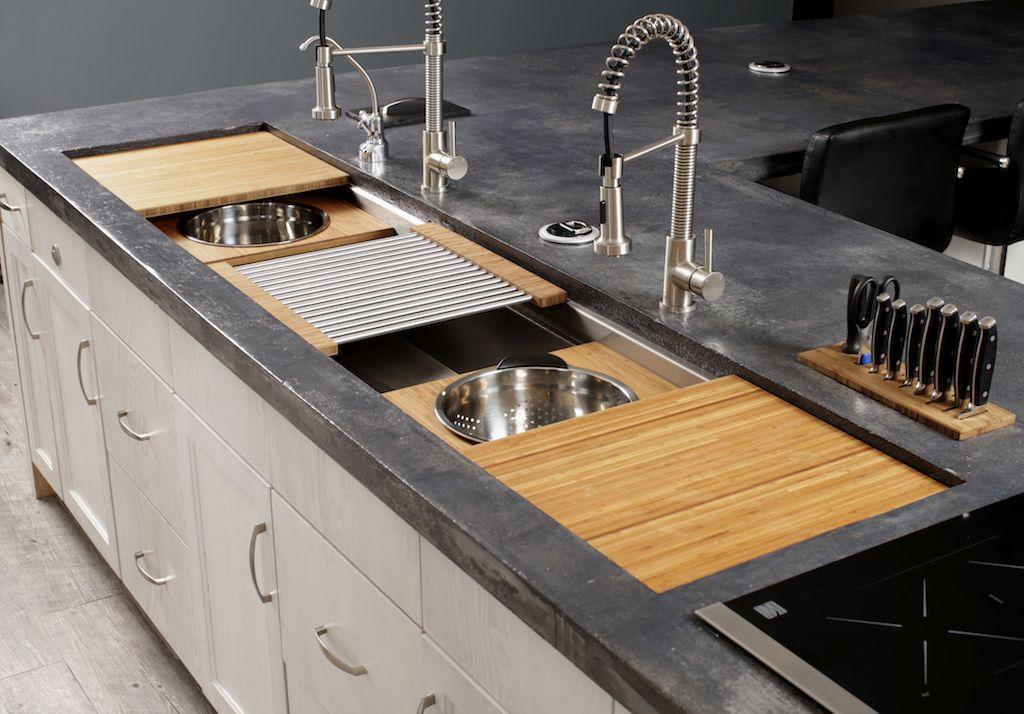
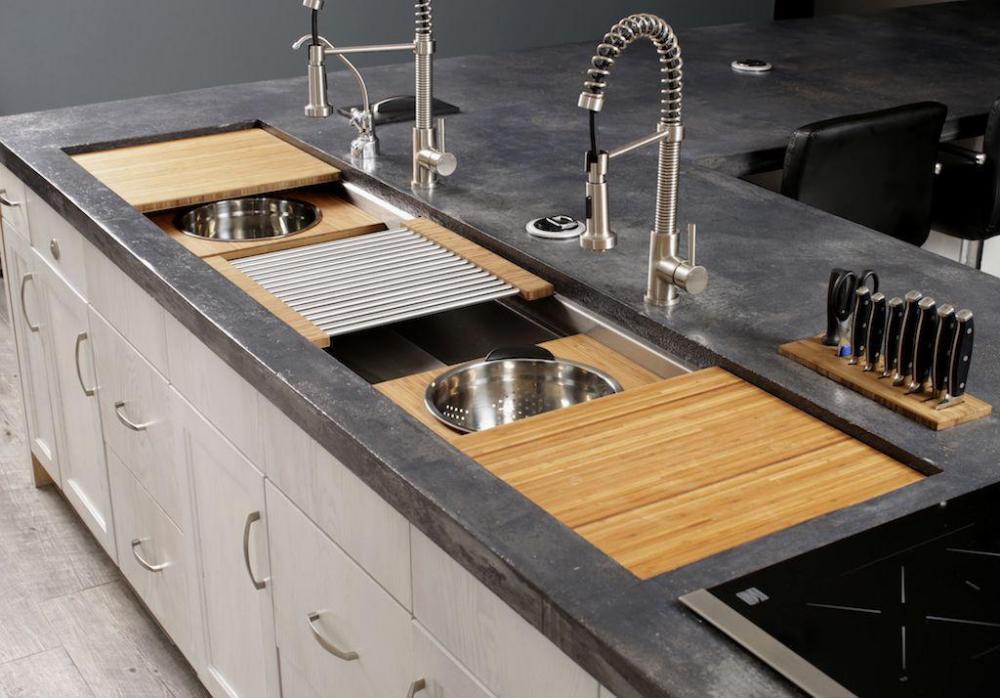
Kitchen guy is looking in to it. We're thinking a 800mm-1000mm long sink will be about £400-£500 I think the issue would be the sink needs a certain amount of structure to be bonded to. When getting your kitchen build, get it without feet and kickboards so it's 100mm or so lower than standard. One trough, with two ledges welded to the sides- one near the bottom for false bottom, and the upper one to take chopping boards, drainers etc. Material wise, we think it'll have to be made from heavy guage commercial kitchen grade stainless steel. I'll be speaking to a couple companies that make sinks and fryers and full commercial kitchens soon.
-
Has anyone used THERMOHOUSE roof system??
Conor replied to NickK's topic in Roofing, Tiling & Slating
Builder we went for not familiar with it and would rather do a cut roof. Roof span from ridge to plate is just over 4m so doable with 215x50 joists. -
Don't have a sink yet, but going to get a local company to make a smaller version of this:
-
Has anyone used THERMOHOUSE roof system??
Conor replied to NickK's topic in Roofing, Tiling & Slating
Unfortunately not! Contractor won't do it and we're getting a cut roof I stead. Actually makes things easier for the PV installation. -
We've a basement underneath. This is essentially and intermediate floor. Only purpose of insulation is to prevent heat from UFH sinking in to the slab. My original point is that as heating will be so rarely used, I can live with this effect.
-
Hi, We've just got our ground floor slabs in and have realised the FFL is going to be too high with the planned build up - 25mm PIR, UFH pipes, 75mm screed. (too high as in we're overlooking neighbours as it is) As its a passive house, heating wont be on very often and only have a small area heated, so not bothered about heat from UFH loops going in to the slabs. This would mean we could get away with about 40mm liquid screed, rather than the proposed 100mm build up. Would it be a complete pain nailing/screwing UFH clips to the precast slabs? Any other issues?
-
Induction downdraft hobs requirements (Bora etc)
Conor replied to SuperJohnG's topic in Kitchen & Household Appliances
To handle all the steam when pouring out hot water etc from washing up and opening the dishwasher. Plus we've a baby bottle steriliser that kicks out a lot of steam. And the sink is a fair distance away from the hob (I'll have prep sink on the island beside the hob). Kitchen is over 6m long so almost treating it as two rooms. -
Induction downdraft hobs requirements (Bora etc)
Conor replied to SuperJohnG's topic in Kitchen & Household Appliances
I'm hoping to use a recirculating Elica in my kitchen... I'm assuming that the MVHR extract in the kitchen will comply with the min BC regs of 13l/s. I'll be doubling up regardless - one above the island near the hob, and another above the sink, and a supply at the start of the kitchen area to have airflow from the living area to the kitchen to help keep smell contained. Others here have done that and it seems to work well. -
That doesn't sound right. You want the pipes tied to the top layer of mesh, so 30-40mm deep. At 150mm depth, the heat will never make it to the surface of the concrete. Make sure you have the fact that the slab will be a finished floor. I.e. you'll need the concrete specced so it doesn't crack with the heating cycles, and is leveled to the right tolerances and power floated. Btw, you'll find that once you cost up all these difficulties and extras, a finished and polished concrete floor slab is no cheaper, if not more expensive, than a tiled or wooden floored screed. Factor in a min of £40m² for a basic polished concrete floor, on top of your normal costs. And also weigh up other difficulties as the build goes on- how do you get electrics and water to your kitchen island? What happens to all the plaster and wet trade crap that falls on the floors? Others here have protected their slabs wil bots of carpet, plyboard etc. Not impossible, bit any savings may not be worth it or realised. But don't get me wrong, and insulated concrete raft is a great design.
-
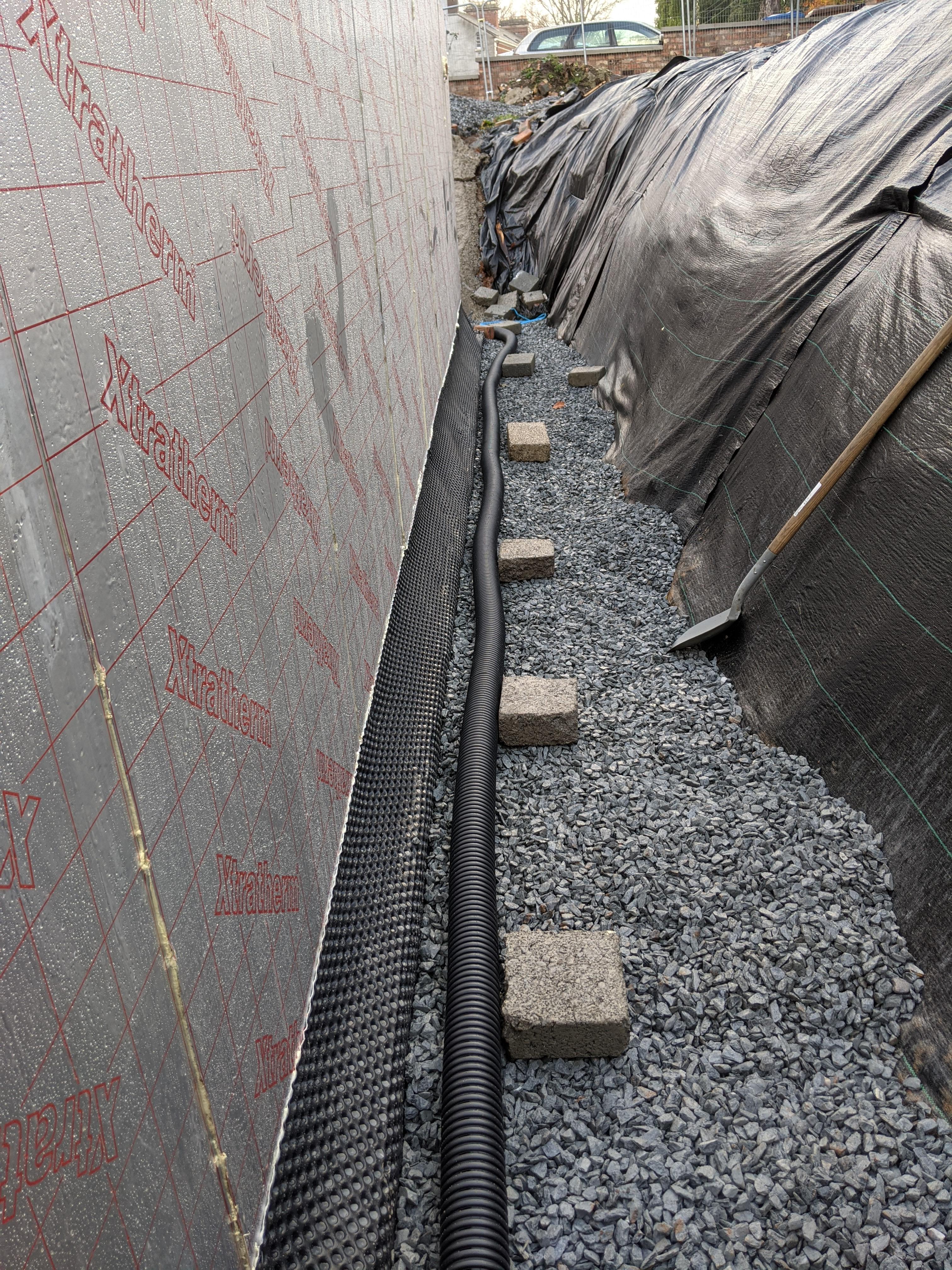
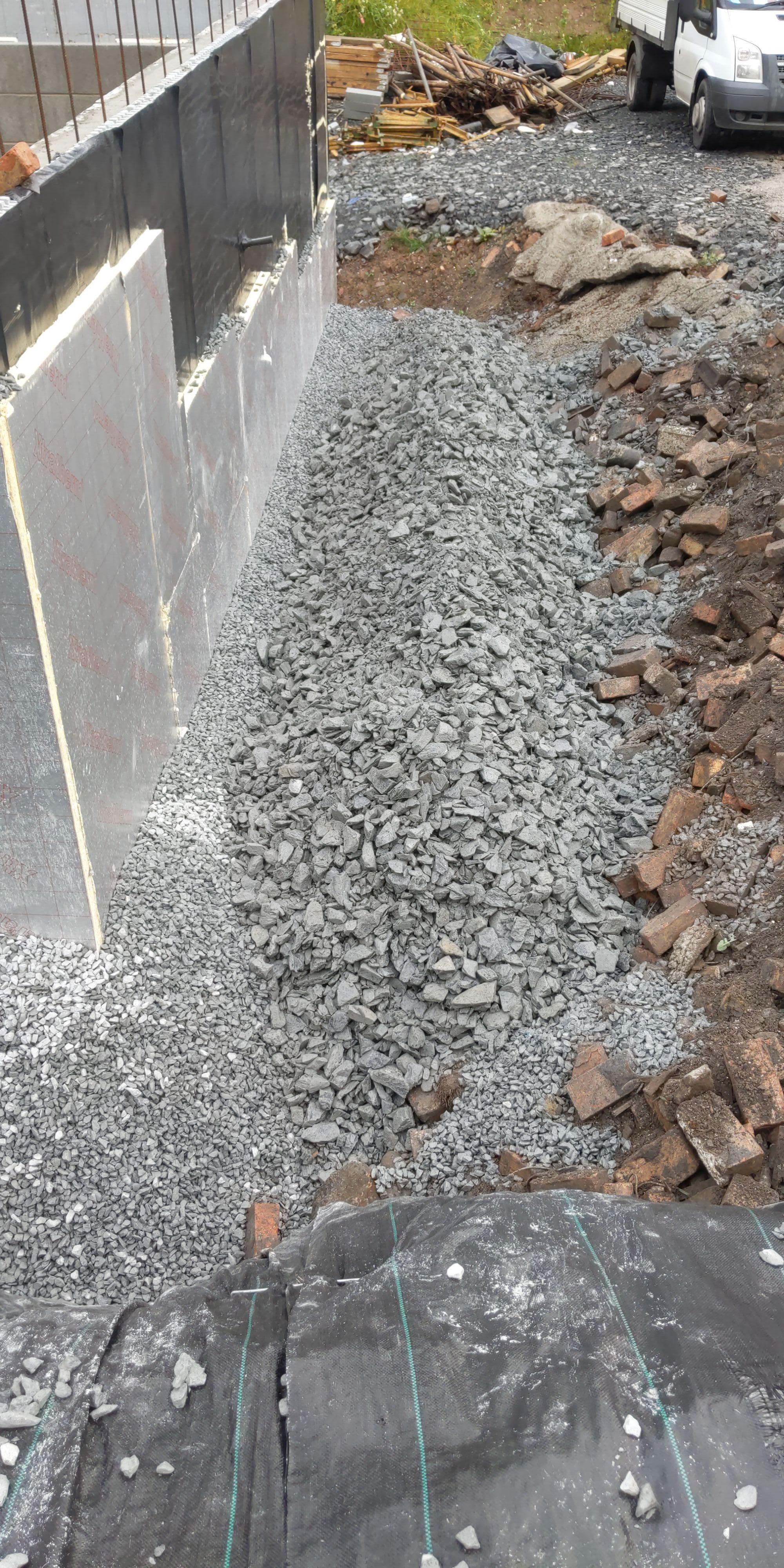
So we've come with 14mm chippings for the base and around the drain. Keeping at least 300mm of that against the face and we fill up. Ordered 100mm clean stone for the rest... Fat from clean but we're on a tight schedule and have to make do! Going to lap the geomembrane over the top of the clean stone to the face once we are about 300mm from FGL and compact come type 3 to make the surface.
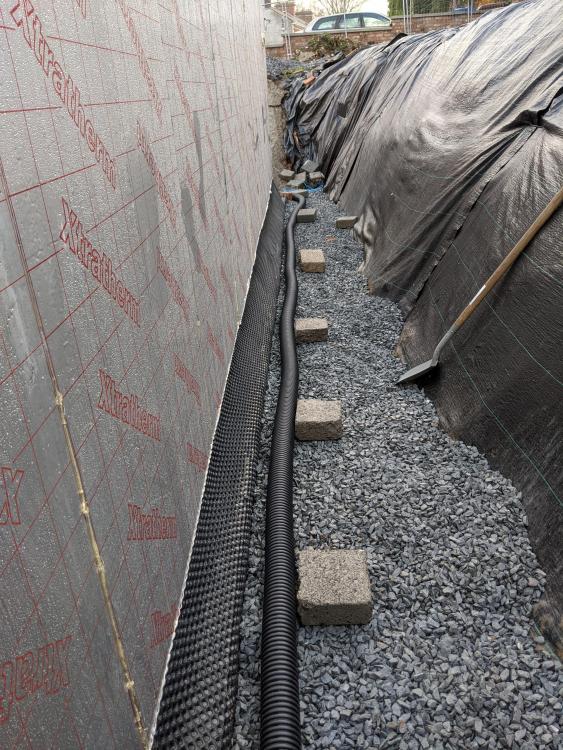
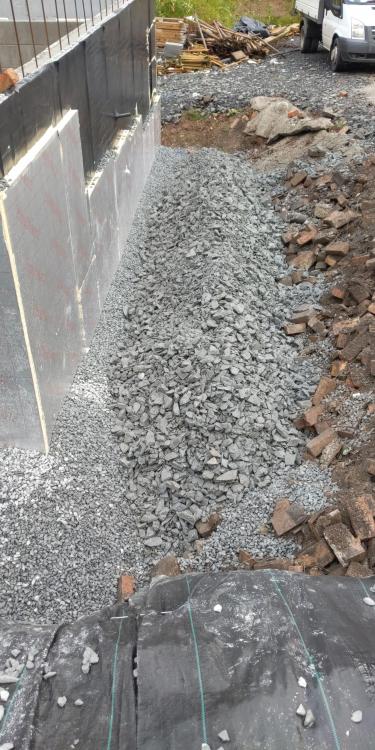
-
They brace from the outside. You'll need to have suitable ground for them to set the props in to.
-
Thanks @Bitpipe. How did you lay the geomembrane between the stone and spoil? I can see it being rally akward. This is what I'm thinking for the gable end as it'll one ever be garden and quite a wide excavation due to soft ground.
-
How have you all backfilled your basements? I'm seeing various methods - from the American style of a perimeter drain and the rest earth, to various European standards of stone combinations. I'm installing the 100mm French drain with clean stone along the slab esge. The architect has suggested filling the entire excavation with 20-40mm dia clean stone from the drain to ground level. Issue with this is it will cost several thousand pounds. An alternative I've seen is after the drain is installed, stone is placed in layers against the face to a thickness of about 300mm, the rest of the trench can then be local soil. Some details show that you need a geo membrane between the clean stone layer and the soil. Any suggestions? I'm keen to sue up some of the massive mounds of risings on site... https://www.sciencedirect.com/science/article/pii/S036013231930784X
-
We went to tender with our ICF project in March, builder appointed in July, started on site in August, currently have one floor of the shell completed. Looking like end of Jan for the shell and roof to be done and windows etc by March. So yeah, basically a year.
-
Nov 4th - It's not good being a woman at times
Conor commented on LSB's blog entry in Little Stud Barn
Sad to say this is too common. Myself and my partner have a joint email address (hername_myname@.com). She spent weeks emailing various suppliers looking for quotes and signed off the emails with her name... on more than one occasion the replies came back addressed to me... even though I hadn't been mentioned at any point and they inferred my existence from the format of the email address only. Needless to say, she had words with them -
We're between these two. Kastrup is coming in 10% cheaper, but the local supplier is basically a one man band and outsources the fitting... So leaning towards Internorm as coming from a reputable company. Spec wise, I don't think there is much difference. Kastrup is now owned by Internorm anyway. So kinda like VW vs Skoda or Seat.