


Mr Punter
-
Posts
8581 -
Joined
-
Last visited
-
Days Won
27
Everything posted by Mr Punter
-
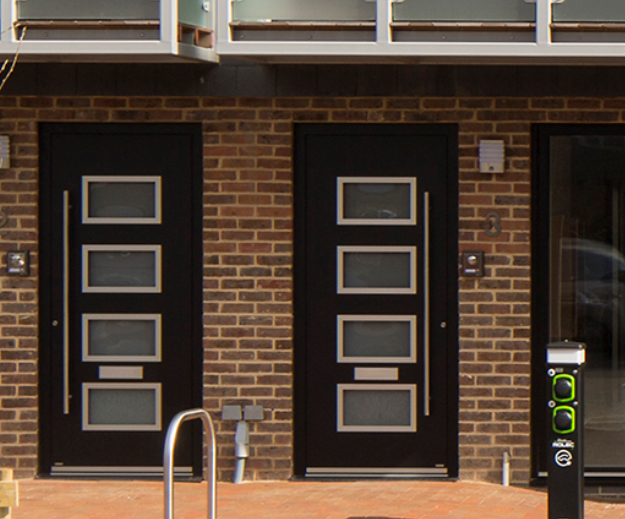
I had 8 RK Doors fitted in a development. £3,600 each including fitting. They had motorised locks and were a special design to match the planning drawings. Quite expensive but they seem decent quality. There is no snib, so if the door shuts behind you and you don't have a key, you are stuffed.
-
Certainly noticed with Velfac and IdealCombi but I think it could be generally, as the max sizes are at the limit of the system.
-
frameless glass balustrade for juliet balconies
Mr Punter replied to kaye's topic in Windows & Glazing
Have a look at https://www.balustradeglass.co.uk/product/glass-juliette-balcony/, decide what you need, then shop around for prices. Simplest is fixing to brickwork / blockwork but you can also fix to timber frame or even the door frame. -
I have found that windows / doors that are close to the max size limits do not always operate as well as those that are not.
-
If you download the Ideal Combi Architect catalogue you can look at the maximum dimensions for their entire range. https://idealcombi.dk/Flippingbook/uk_2017_Architect-catalogue_WEB/
-
Stroma EPC / FSAP software questions
Mr Punter replied to Ferdinand's topic in Energy Efficient & Sustainable Design Concepts
Ventilation has a big impact. 5m3 or lower is easily achieved. To get as poor as 15m3 you would need to forget to install the windows. It is easier to remediate a failed air test than a sound test. If there is any room for solar PV it would help lots? -
Try cutting in a few electrical sockets. I will be very interested to hear your take.
- 78 replies
-
- 1
-

-
- dry lining
- fermacell
- (and 1 more)
-
92.5 degree bend : the half? Really? Honestly?
Mr Punter replied to ToughButterCup's topic in Waste & Sewerage
Unless this a joke and I don't "get" it, 92.5 and 87.5 degree bends are the same - they are slightly less than a right angle. One measurement is the bend itself, the other is between the original direction and the new one. Just like a 45 degree is the same as a 135 degree. -
From unhappy experience I have consistently advised against using Fermacell and @Russdl's experience chimes with mine. Very clever marketing, I think.
- 78 replies
-
- 1
-
-
- dry lining
- fermacell
- (and 1 more)
-
You could try just painting the wall above with StormDry, which is supposed to last 25 years.
-
Well done on progress so far. It is certainly no fun doing this but I have seen a number of sites near me where the contractor has had to go back to remedy issues. The recent weather has brought lots of defects into focus. Once the soggy insulation is all stripped it should be easier to see what has gone wrong.
- 48 comments
-
- 1
-

-
- roof
- rooflights
- (and 2 more)
-
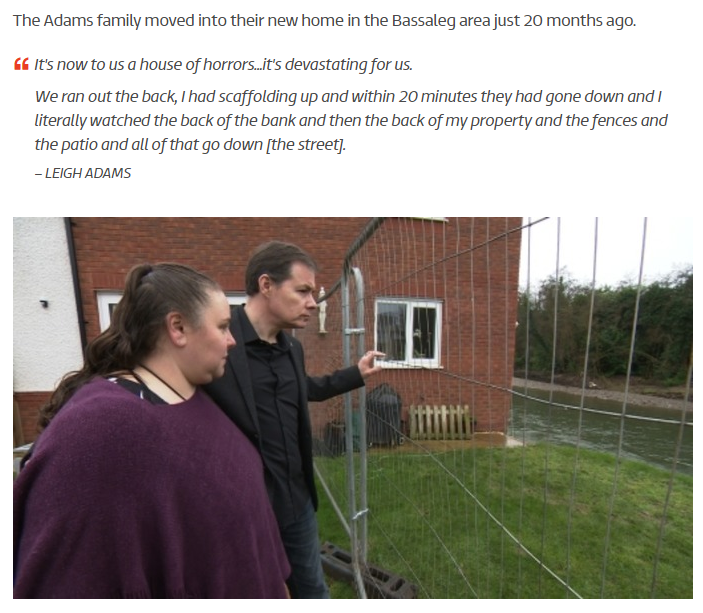
Dreadful for them but I did smile when I saw they were called the Adams family...
-
75mm would be better. 100mm preferred. 50mm only gives you 1:120. Make sure it is properly supported with a bracket every metre.
-
You need the roofer and the window people on site for an inspection when (if) the weather improves. Between them they should work out what has gone wrong and suggest a remedy. As others have said, junctions are the most likely area of failure, especially if they are not correctly designed and detailed.
-
VCL is polythene which vapour does not travel through. Plasterboard is vapour permeable. Odd that the studs either side of the original window opening do not go down to the sole plate and that there are two top plates. Did the design change after manufacture / design deadline?
-
Most expensive trade, you’ve had.
Mr Punter replied to Russell griffiths's topic in General Self Build & DIY Discussion
I scan read the first post and thought they had fitted windows throughout. My estimate was based on them fitting them all and I assumed they fitted about 55m2 of windows at about £60 per metre. Agreed that £2,500 for a door and a window is excessive. How much was that per m2? -
The self build VAT rules seem a fair bit stricter than those for developers.
-
No need to do decoration or tiling. You need to fit sink, baths and WCs to test traps, complete electrics. Get them over and if BC want more work done before final they will let you know.
-
Most expensive trade, you’ve had.
Mr Punter replied to Russell griffiths's topic in General Self Build & DIY Discussion
My guess £3,500 -
I have appealed a couple of bandings successfully some years ago. It was possible to have a dialogue with the assessor and they seemed fairly amenable if one was able to give evidence of similar houses in a lower band than they had proposed.
-
Piled Foundations without digging out ground
Mr Punter replied to Ivan_England's topic in Foundations
The plans that @Ivan_England posted show a full basement in the proposed new house. The footprint is close to both the neighbour and the donor house so the excavation will need support. This could be done with driven sheet piles, trench plates, secant piles, king piles etc but will be very difficult and expensive. While the basement retaining walls are built they will need a bit of working room around. I would not consider building a basement in that location. -
We have built near a river. The houses have brick and block ground floor, rigid insulation, electrics set above 1100 from ffl, suspended concrete ground floor, with flood proof airbricks and porcelain tile finish. Ground floor walls are rendered internally. Ground floor use non-habitable (store, gym, office etc. Bedrooms, kitchen etc. located on upper floors.) Skirtings and a few areas are sacrificial. We are also looking at adding some flood barriers for ground floor openings at a cost of about £2,200 per house.
-
Piled Foundations without digging out ground
Mr Punter replied to Ivan_England's topic in Foundations
I do not think that the garden wall is a structural retaining wall. It looks to be 100mm thick with 215mm piers. Your engineer will need to consider temporary as well as permanent support to the neighbouring structures. That basement will be a bit of a challenge! -
I concur that it does sound rather - um - unusual. I understand that @pocster once had a tenant who left items of a similar ilk.
-
If the issue is saturated brickwork, you could paint it with Storm Dry. I think this works OK where there is no cavity tray above conservatories and porches. Very long lasting apparently.
