

.jpg.c21f3ac78c9b7efd90cbdcb312744dc5.jpg)
jack
-
Posts
7460 -
Joined
-
Last visited
-
Days Won
41
Everything posted by jack
-
It's been a while, but I'm pretty sure mine was damp too.
-
Based on my experience during our build, I don't know any good trades except our electrician and (to a lesser extent) groundworkers. Actually, I've since become friendly with a really good plumber (not the one who did the build!) who's coming around soon to price up a list of stuff we want fixing and changing. This is on the list, for sure. We have an identical problem with the water softener.
-
Agreed. Our current arrangement is like this, and it makes a hell of a racket when the dishwasher drains.
-
There was a whole range of these details on their site a few years ago for different wall types, many including brick and/or block. I'm sure(?) it's been engineered properly, but it doesn't look/feel like very substantial support for two masonry walls.
-
Yes, I went for a 250L. No particular reason for the choice. We don't generally run out (I think we've done so twice in 18 months). We also have shower waste water heat recovery, which (given shower usage patterns) probably makes the 250L tank act more like a 300-350L tank.
-
.jpg.c21f3ac78c9b7efd90cbdcb312744dc5.thumb.jpg.7adcad4c0e384f5ecd7d56b0618df6e5.jpg)
Underlying boards showing through render - suggestions?
jack replied to Bitpipe's topic in Plastering & Rendering
Glad to hear they're taking responsibility. -
Have a look at this thread, and particularly @Bitpipe's stuff about waterproofing:
-
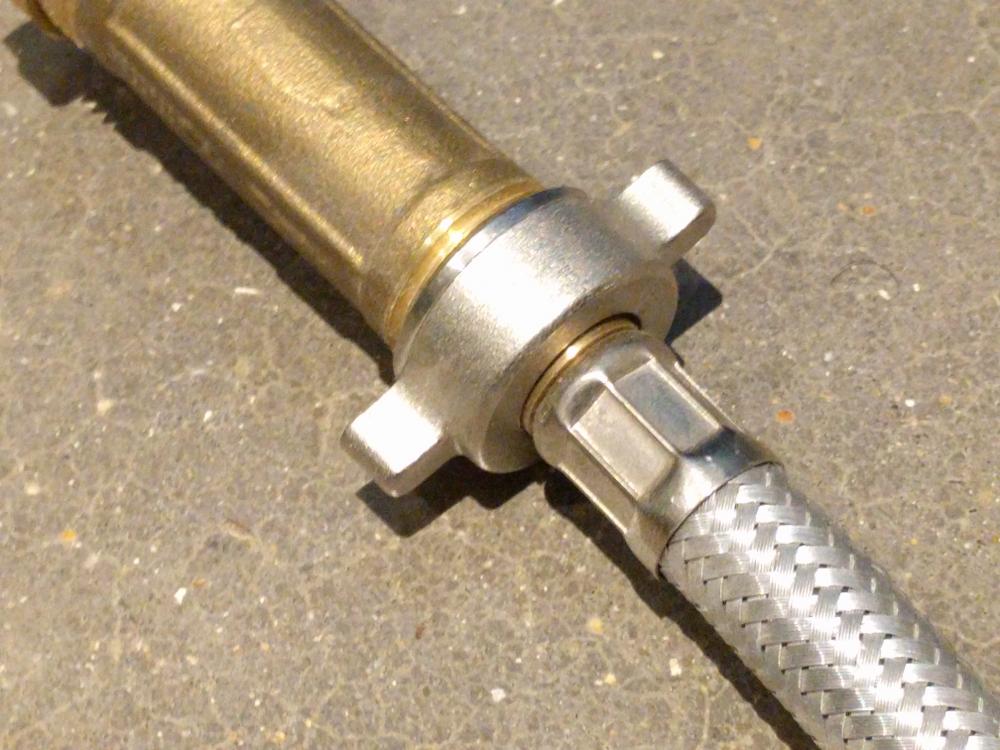
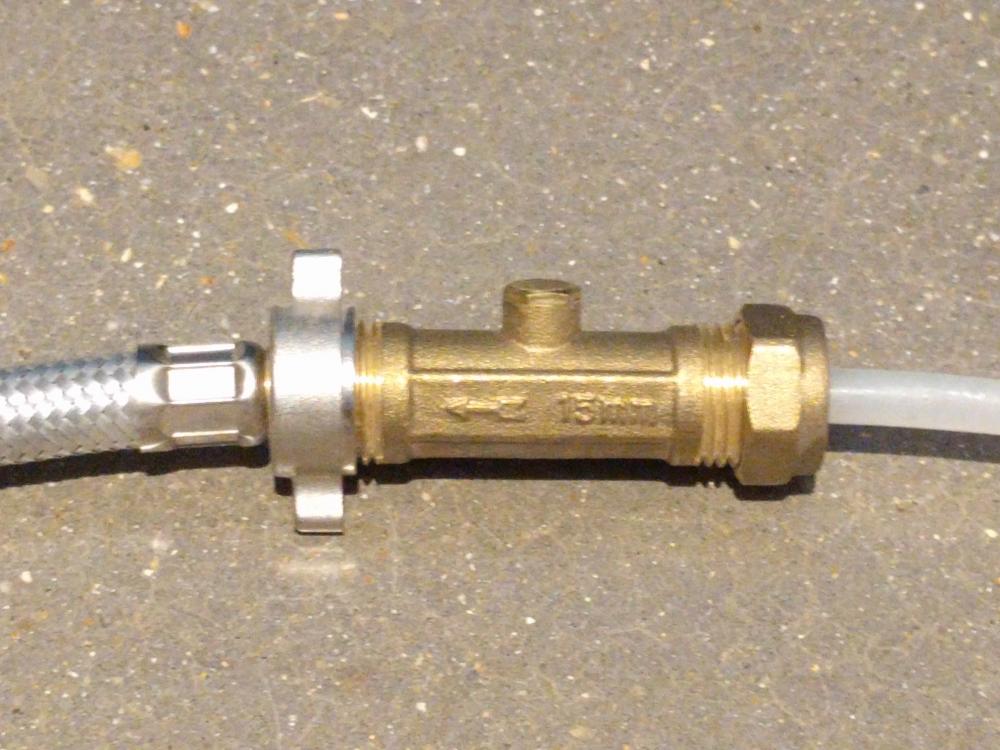
Here we go @Barney12 and @JSHarris:

-
Sometimes nightmares are real: the insurance story
jack replied to ToughButterCup's topic in Self Build Insurance
Insurers will always try to avoid paying. I have a written admission from our roofer that they caused the leaks in our house, but the insurer still insists that we have no evidence. That's fine, I'll be suing the roofer directly once the rectification work is complete. I'd have thought based on their website that Durisol should provide the blocks for free, and perhaps an additional contribution to labour to replace them. What else can you do but follow manufacturer's instructions? -
I was surprised at how few trades we had onsite who actually took builders' tea! Probably less than half - most seem to have moved on to tea with no sugar, and a few drank coffee.
-
Sorry, I was away over the weekend and forgot to reply to this when I got back. I'll take some photos tomorrow.
-
The stone arrives, as does a caravan!
jack commented on curlewhouse's blog entry in Sips and stones may break my bones...
I've heard it suggested that building a "skirt" out of, eg, plywood to reduce drafts under the caravan keeps things warmer in winter. -
We had battens pre-installed within the reveal, positioned so that they stopped the windows in the correct position relative to the insulation. I agree completely about flush windows. In fact, I'm sure that I read somewhere (maybe A Pattern Language?) that externally flush windows are a major factor in modern houses not looking quite "right".
-
The architect used the supplier's standard details, so neither of them was the problem. Indeed, we took the architect with us when we visited the factory (huzzah for ultra-cheap flights!) and the managing director went through all the details and suggested some useful tweaks, especially around thresholds. The installers were the sole source of the problem. It shouldn't have been like this though, because they were also the official sales rep for Ireland for the supplier (the supplier being a German company located in the Mosel valley - I'm sure you know the company, but I'd rather not identify them given that they weren't the source of the problems). The installers missed an important element in the sections, which involved all windows being packed up by 15mm to allow for the correct fall on the cills. This was drawn and annotated on the details that we supplied to them when they quoted. They also failed to check the installation details for the external blinds, and only discovered after all windows had been installed that the external battens in the reveal prevented attachment of the blind rails. Other than a slightly threatening series of text messages with one tradesman who we ended up having to kick off site, this was by far the most stressful part of the build for us.
-
Agreed. At one point we were considering using MGO boards for the internal lining of the house. I can't remember why we didn't - I think it was one of those many ideas that just never quite got important enough to make it into the final plans.
-
All of ours were installed from inside (including a 5.5m, 900+kg lift-and-slider - my wasn't that a stressful afternoon!) Surely it must be easier working off a level, stable, and higher surface?
-
I'm sure it often is. However, our architect provided a full window schedule, dimensions and installation sections for every window, and yet in the end the experienced, specialist installers ballsed things up in several ways.
-
One thing to consider: the architect that did our house used MGO-based SIPS on a project two or three before ours. He said that they'd had serious problems with the panels being curved. I can't say whether that was anything to do with the supplier, storage conditions, or the product more generally, but I know it caused huge issues during assembly.
-
I can see the advantages in your approach, but many of the issues complained about (e.g., late delivery, damage during transport, poor quality finish, wrong sizes, poor installation) could just as well have happened to you.
-
I'm far too soft for that.
-
I suspect it will work perfectly with the right tradespeople, but then, they'd probably do a good job on a fixed rate too!
-
In my admittedly limited experience, yes. The same guy did both fixed price and day rate work. I can't see that the quality of the work, or speed of the workers, changed between the two. When I queried quality on fixed price work, I was told he didn't have the margins on fixed price work to meet my "unrealistic" expectations of quality. When I queried quality on day rate stuff, I was told he didn't have the margins on day rate work to meet my "unrealistic" expectations of quality. Again, I told him I was expecting very high quality and was willing to pay a reasonable price for it, so this shouldn't have been news to him. I think (but don't know) that he grossly and accidentally under-priced the first job he did for us. He took the hit on that, although if he'd discussed it with us we'd have been happy to pay more to get the right job done. If I'm right about that, then it coloured every further interaction with him, including the one where he walked off while I was in mid-sentence, explaining that the piece of protective steel I'd found on the floor was supposed to be protecting a 240V eternal blind cable in the wall. One of his guys had just removed it and tossed it when it interfered with him fitting plasterboard quickly. I had to go and find him elsewhere on site a few mins later to sort things out, as there was no way he was coming to me. Ridiculous. In any event, things may get interesting when I have time to dig into the cracked tiles in the bathroom. His tiler fitted the boards and the tiles, and they're all falling apart. It's annoying, because I really like the tiler, but there's presently probably a grand's worth of damage that I don't think I should be paying to put right.
-
I hear you. I used to think it was because they were all in a hurry to get onto the next job, but I've since concluded that many simply aren't capable of high-quality work even if they're interested in delivering it. We had some poor work from one supplier, despite saying we wanted (and them agreeing to provide) a "perfect" finish. This was on a day rate, so there should have been no rush, but what was delivered still sucked.
-
New diesel and petrol vehicles to be banned from 2040
jack replied to Triassic's topic in Environmental Building Politics
The plan is to test drive the Leaf and the Zoe. We don't need load space, due to our other car being an estate. We just need something compact and decently priced (it'll be replacing a Nissan Micra that we inherited from my wife's grandmother a couple of years ago - now that I've had this, I'd never be without a compact, automatic car). Yes, been looking at this. There aren't that many around that don't have leased batteries. The (new) price difference between leasing and buying the battery outright is about £5k. I haven't gotten around to figuring out how that price difference ends up expressing itself on a car that's two or three years old. The plan is to try the Leaf and the Zoe. We had a Renault Clio hire car in Europe recently and frankly it was terrible to drive. Most of my complaints were about the engine and drivetrain though, so perhaps the Zoe won't be so bad. I'm personally hoping that the Leaf is that much better that 'er indoors will prefer it despite its looks. Basically, the smaller the better for what I want this car for, so that doesn't rule the e-Up! out. The main reason I'm not seriously considering one is that they do seem to be a lot more money for really no more function. Yes, seems like a properly good car (although not sure about the looks), but it's quite a bit more expensive than the Leaf. The cheapest I could see when I started looking at electric cars was around £16k - most are £20k+. -
New diesel and petrol vehicles to be banned from 2040
jack replied to Triassic's topic in Environmental Building Politics
It's certainly a lot more pleasant than my usual experience of getting into the car and finding the petrol light on, because my missus (who excels in so many other ways) seems incapable visiting a petrol station until the reserve shows zero miles. Of course, with an electric car, she'll probably not get around to plugging it in... I'm seriously looking at electric cars at the moment. The Nissan Leaf ticks all the boxes for us in terms of being a small, electric-only car that we can use for the 95% of our driving that's less than, say, 50 miles round trip (we have a second car - beat up Toyota estate - for longer drives). Thing is, it's just so damned ugly. I can live with that for all the other advantages, but my wife is really resistant. The new model for next year is better, but I don't want to buy a new car: https://electrek.co/2017/07/31/next-gen-nissan-leaf-design-revealed/ The VW e-up! is a much nicer looking car. Quite a bit more expensive, but the main problem is actually finding one for sale second hand. I'm assuming they've been nothing like as successful as the Leaf in terms of sales, because the other day I could only find three for sale second hand anywhere in the country! That leaves the Renault Zoe. Cheaper even than the Leaf, better(ish) looking, and with a decent range. However, I'm concerned about buying a French car. My first car was a Peugeot, and the horrific experience I had with that has put me right off French cars for good. Since then, I've always had Toyotas. Boring as hell, but my god they just go on for ever. Why did Nissan make the current Leaf so ugly?!
.jpg.c21f3ac78c9b7efd90cbdcb312744dc5.thumb.jpg.7adcad4c0e384f5ecd7d56b0618df6e5.jpg)



