
Nickfromwales
-
Posts
31390 -
Joined
-
Last visited
-
Days Won
346
Everything posted by Nickfromwales
-
Bored too....
-
Wise words. Different systems seal at different points etc. Funny thing water. Pisses out all over the place and ruins your day. What's your budget for flood damage? Deep down inside, you already know what the answer is
-
SolarWatt is where my money will be going. After the kids all FO that is......
-
Sorry @pocster, I did just piss myself laughing when I read the above. Sorry. Genuinely. ? I'm a bad person. ?
-
Dead man walking......
-
Only at 100W or so. Give the guy a break lol
-
There are now "silent" / super quiet models available too. Random example
-
All depends if you want a high-revving 2-stroke, or a smooth running 4-stroke.... Both will work, one will work full time, the other part time. Longevity has to come into the equation too so it's a little multi-faceted.
-
That’s fine. I’ve put plenty of 35L expansion vessels on walls. Or, wall mounted buffers are common to outsource anyway. Link or Link They may be asking for that for defrost, so there is a body of water the unit can draw back to itself to assist / accelerate or provide defrost function without using an inbuilt immersion. A buffer is the most economical way to defrost vs direct ( 3-6kW!!!! ASHP immersion ) so a wise choice. Do you know if the buffer operates in line with heating and DHW or just heating?
-
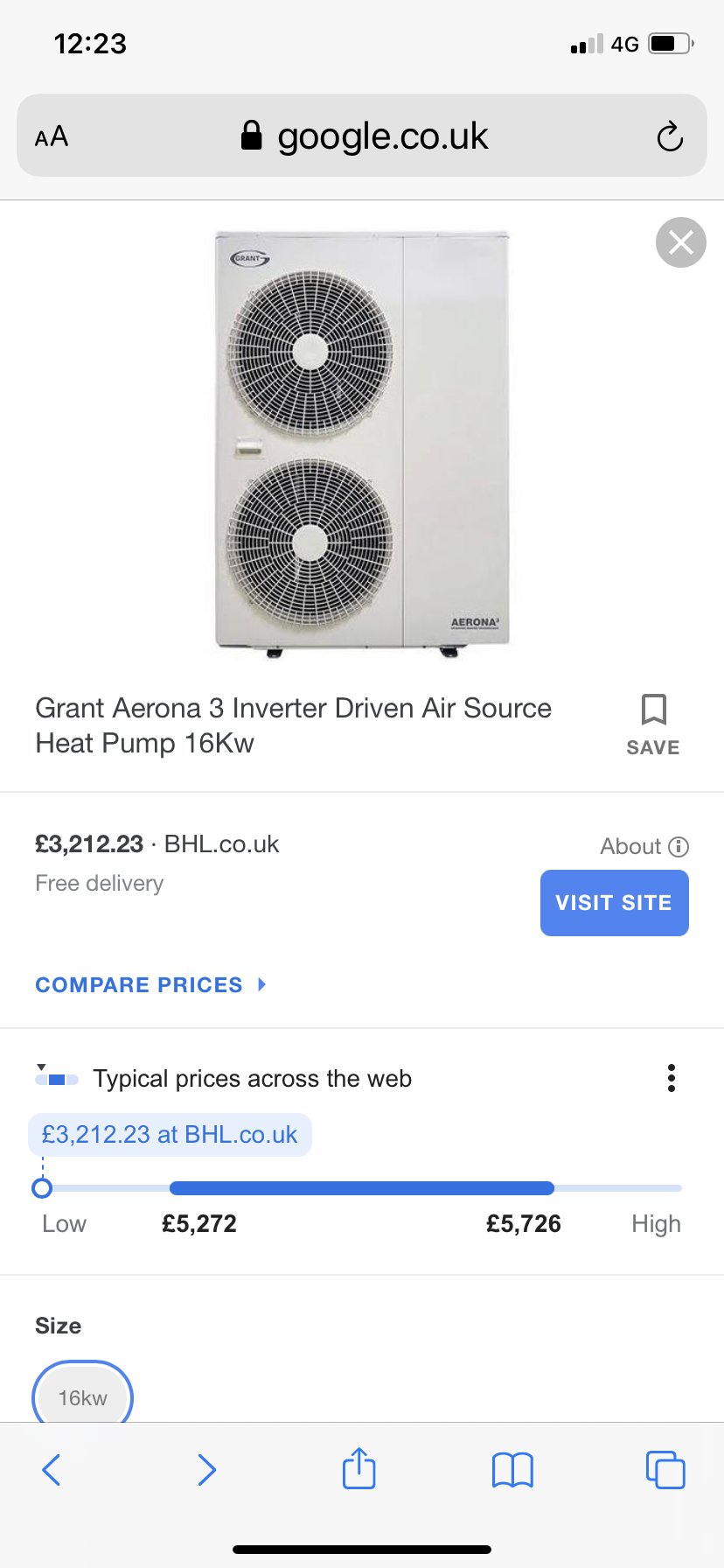
£3200 for a 16kw so twice the Uk average for a good quality gas combi. What price have you been given. ?
-

-
How much more is the 10kW one?
-
 Yes. You can’t have SELV ( safety extra low voltage ) or signal wires in the same back box as the 230v stuff ?
 -
Veissmann Vitodens 222-F advice please
Nickfromwales replied to Raks's topic in Boilers & Hot Water Tanks
Vaillant or Baxi for me. -
He meant to say CT1........ Plus 1 ! Tres Bien! Nice shower.
-
Check that you have someone that is willing to put their name, badge and insurance to a job they did not install. Not all sparks have the necessary certification to sign off works done by other. It is quite important to get that understood now, so that individual can come and observe all cable ways / fixing methods / containment / regs & legislations have been observed BEFORE you cover ANYTHING up I fit simple reactive switches on CAT6 cable for MVHR boost, but you need to know the MVHR unit supports an external signal prompt to boost rather than that having to be done manually at the ctrlr. Other cable types may also be required for different manufacturers / machines.
-
We just need to know if these dwellings ( assume house adjacent if garage is mentioned ) will be married, or separate titles and deeds at any point too. Far too little detail available atm...
-
Yes, just a cap-end. Back feed contamination can only happen if the pipe is made off to an openable fitting like a stopcock. If it cannot be opened, like a cap end cannot, and you have used a WRAS approved cap end, then there should be no issues.
-
? You're building this from scratch, or it's a garage conversion? What is it next to? An existing residential dwelling? Can you T off the gas supply if so, even if it's to a second meter? If you're building this from scratch then I'd get a good 200mm of PIR insulation over the slab, more if possible, and then get a super cheap ASHP and heat via UFH in the screed. A lot depends on how best to attack this, like how long you'll be living there, or if you intend to live there then let it out etc etc. If it's OK to fit bigger radiators into, then the ASHP could heat those instead ( cheap and quick ) and then you wouldn't need any screed over the insulation, or UFH pipes. Electric shower is a no-brainer, but what is happening for an independent electricity supply? You cannot max out a connection to the existing dwelling by making the "garage" all electric / instant water heating without doing the sums first. Gas supply? Electric supply? Water supply? Details please!!
-
Losing Pressure vaillant ecotec 624
Nickfromwales replied to Danmat2332's topic in Boilers & Hot Water Tanks
You have probably lost the pre-charge pressure in the heating expansion vessel. When running hot water there is minimal expansion, but when the heating is on for a duration it is problematic, plus you have a very small heating system so minimal adventitious expansion available there. The heating system needs to be drained to zero pressure, then ( a plumber ) will bring a pump ( like a bike tire pump which you stand on and pump ) which will have a long hose. The hose goes onto the Schroeder valve on the top of the expansion vessel and you pump it up to the manufacturers specification ( usually around 1 bar ). The boiler and heating warm up and the system water expands, then the PRV let’s tiny amounts of water escape ( disappears as steam due to the heat in the boiler ) and then the system cools down again. Upon cooling the contraction draws air IN through the air admittance valve of the boiler pump and bye bye to the pressure after prob one or two heating cycles. -
Economical way to combine soundproofing and UFH
Nickfromwales replied to Adsibob's topic in Underfloor Heating
Rigid insulation board ?. -
Stuck in the double tree Hilton at Swindon ATM and relegated to my room with the best of the shite they had to offer.... Out of Bombardier, so Bud it is.
-
It was Brokeback Mountain......just brought a tear to my eye when I realised why his back broke........
-
100% don't remove any tiles!! That is a journey you really do not want to start....
-
No more than the rest of us typing here at this time of night. Budweiser is my co-pilot.