


Temp
-
Posts
10690 -
Joined
-
Last visited
-
Days Won
43
Everything posted by Temp
-
This page on slurry bonding from the Paving Experts also worth a read.. https://www.pavingexpert.com/bond_bridge_01
-
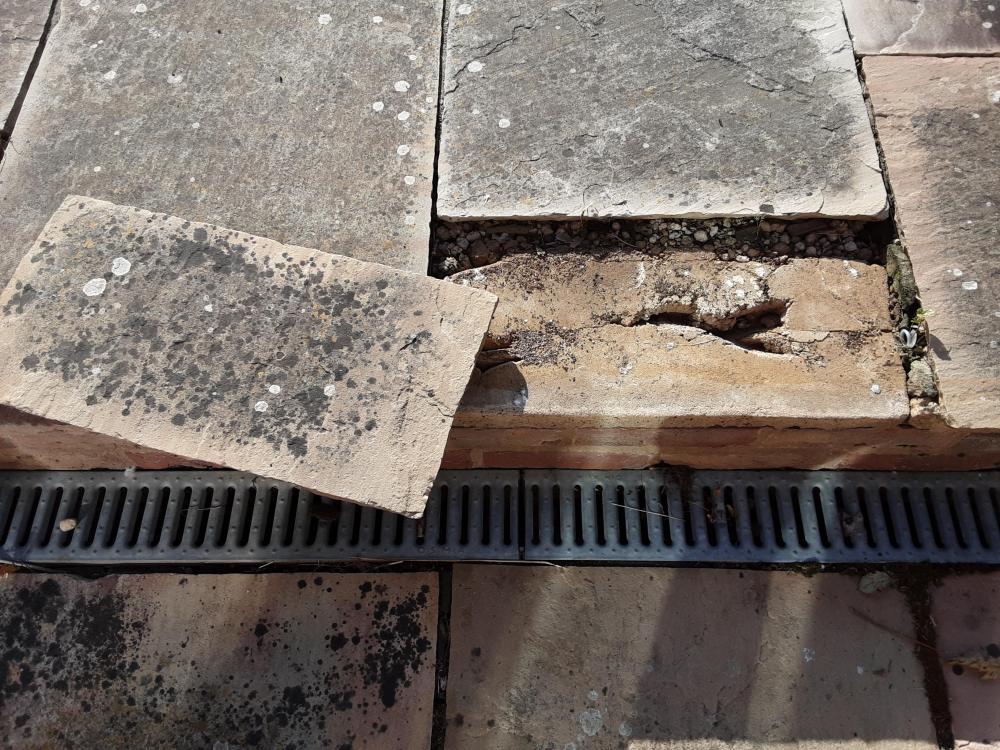
Mortar just doesn't seem to stick to some stone very well without it. Not a great example but..
-
Reclaimed Railway Sleepers
Temp replied to canalsiderenovation's topic in Landscaping, Decking & Patios
Plus one for the real thing but bear in mind they aren't suitable for sitting/playing on as they can leach tar and oil. -
I've started using Ultra Scape Pro Prime to repair loose india stone originally stuck with unknown slurry.
-
I suspect the professional companies that do insulation removal have figured out a way.
-
How does a house / row of houses get water from a main??
Temp replied to Apprentice's topic in General Plumbing
Not sure about Ireland but in England the water co own the bit from the main to your property boundary so they get to do the connection for you. -
@TonyT See the OP. This thread is about preserving PP from the "must start within 3 years" condition. The stuff you mention will be relevant once the OP starts building in several years time but now they need the BCO to confirm work has started for the Planners.
-
Do all windows have to be 1100mm from the floor to opening now?
Temp replied to Papillon's topic in Surveyors & Architects
It only applies to ground floor windows where there is a height difference of more than 600mm between inside and outside. See table 3.1. -
Do all windows have to be 1100mm from the floor to opening now?
Temp replied to Papillon's topic in Surveyors & Architects
From what I can see... ADK (Protection from Falling) - Min height of windows 800mm. ADB (Escape from Fire) - Max height 1.1m of escape windows. ADO (Overheating) - No max/min but to count towards your overheating mitigation strategy any window that opens more than 100mm must have guarding to 1.1m and meet other rules in para 3.9. So you can still have 800mm high openers if you fit 100mm restrictors. -
So was it empty for more than 10 years?
-
I might be wrong but I think you can only reclaim the vat on items you purchase yourself under the >10 year scheme.
-
The government have two different schemes to encourage empty houses to be refurbished. Depends how long they have been empty/unoccupied: https://www.no-use-empty.org.uk/advice-and-guidance/property-tax-and-vat/reduced-vat-schemes/ So if your place has been empty >2 years any trades you hire to do renovation work should only charge you 5% not 20%. Make this clear to them when they come to quote and get them to amend any quotes that say +20% vat. If they question it refer them to VAT 708. Make sure they are VAT registered. There are also reduced rate VAT for energy saving things. These apply even if its not been empty >2 years..
-
I can't quite work out which direction you want the new driveway to run but best try and keep it away from the corner as much as possible and "conventional" in orientation. Perhaps have it aligned with your front door? You will need to make a Dropped Kerb Application. This doesn't just get permission for a dropped kerb but also the permission needed to drive over the footpath.
-
Why is it non-dischargable?
-
Separation Distance Between Drainage Field And Buildings
Temp replied to EViS's topic in Building Regulations
I asked on Quora and someone replied that the 15m distance came from BS 6297 which I've not seen. Apparently its to do with the risk of a flooded drainage field getting into the building causing a health hazard. So on that basis I would suggest you don't need to consider overhanging parts of the building. The responder also reminded me that the Approved Documents aren't the law but represent one way of demonstrating compliance with the Building Regulations Act. So it's upto the BCO to determine if an alternative proposal also meets the Act. I would try explaining to the BCO that your drainage field will be 15m from any part of the building that could be affected by the drainage area flooding which you understand to be the intent of this part of Approved Document H and BS 6297. Ideally a drainage field would also be down slope from the building? -
Separation Distance Between Drainage Field And Buildings
Temp replied to EViS's topic in Building Regulations
I couldn't find a reason why it's 15m written down anywhere. -
If there is a planning condition requiring work to start within 3 years then apply to have that condition discharged. There is a small fee. First you will also need to meet any other conditions that say "Before work starts..." or similar. Typically this will be conditions requiring materials or drainage details to be approved. So go through all the planning conditions and see which you need to do before starting work. Some will only need to be done "Before occupation". Those can be done later. Send in any samples and drawings you need approval for. When they sound happy or if you don't get a reply send one letter/form requesting those conditions be discharged. The fee is per request not per condition so do as many as possible in one letter. My letter said something like: With reference to planning grant number xxxxx I write to request the following planning conditions be formally discharged: Condition 2: The landscape plan has been agreed with the landscape officer. Condition 4: Brick samples have been submitted to the conservation officer. Condition 7: A Drainage plan has been agreed. I enclose a cheque for the fee of £x. Yours etc In my case they wrote back to say conditions 2 and 7 were discharged but 4 was not discharged as they had lost the brick samples! I had to send more then sometime later make a new request to discharge and pay the fee again. I guess these days you have to pay the fee by BACS rather than cheque ? If really worried its possible to apply for a Certificate of lawfulness on the grounds work has started. I have seen that done for a wind farm. They built the site entrance then applied for a Certificate to extend their PP indefinitely. It was eventually built 4-5 years later. However the fee for a Certificate is similar to that for a planning application.
-
Yes 3m is OK..
-
They are from the tech guide here.. https://www.gov.uk/government/publications/permitted-development-rights-for-householders-technical-guidance If you see references to "Article 2(3) land" that means conservation areas, national parks and AONB .
-
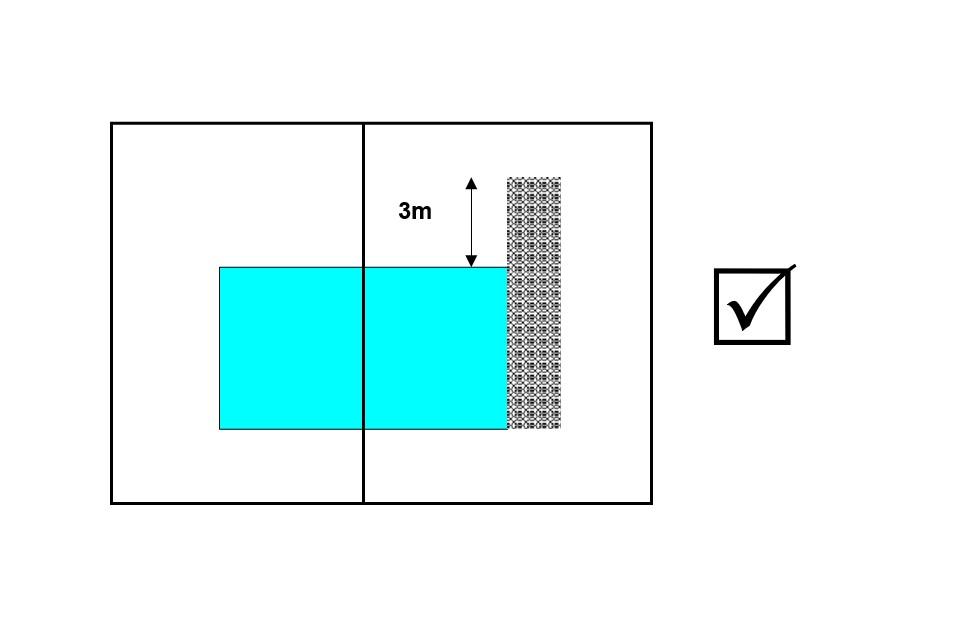
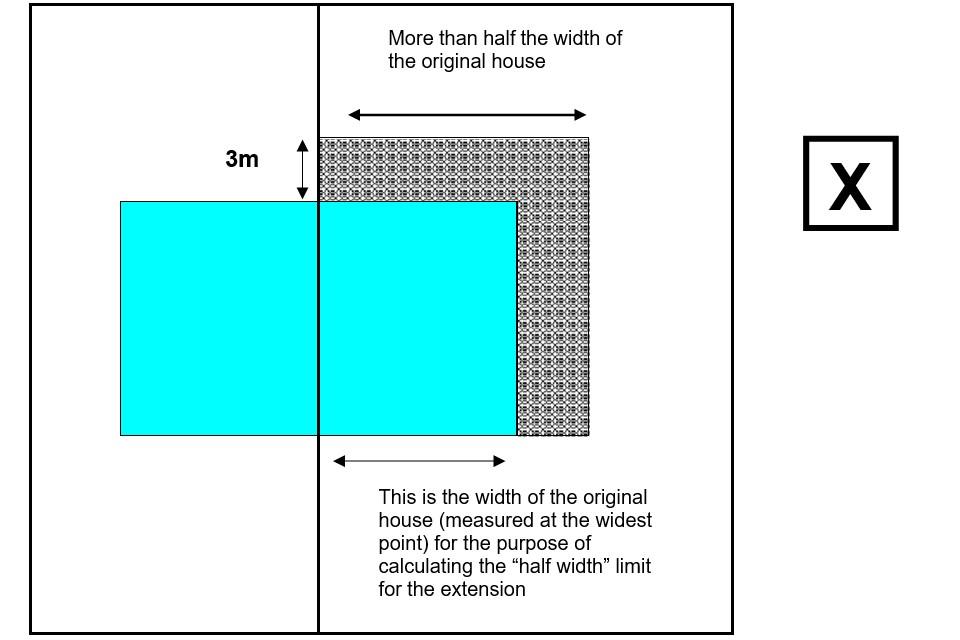
This is permitted development in a Conservation area. Provided it meets the height rules and is more than 7m from rear boundary. On a wrap around I think it's PD provided it's not more than half the width of the original house. So you can't wrap it all the way around like this. A partial wrap is possible I believe.
-
Bear in mind your gutters can't overhang the boundary so the wall will probably be set back a little from the boundary.. so you could probably put the fence back?
-
So how do you fix plasterboard to the underside of these for a normal ceiling?
-
If it was me one sneeze and the digger bucket would go right through the asbestos sheeting 😞
-
Welcome to the forum. Was he literally building it himself or using a builder? If a builder was doing the work try and obtain details of any contracts and payments already made. A Quantity Surveyor could calculate how much of the build has been completed, what that's worth and how much more is required. He could slso tell you if the amount paid to the builder was reasonable for the work done to date. Eg has he been over or under paid? However a QS would charge a significant fee. Depending on the financial situation it might or might not be worth continuing with the existing builder. A New builder might be prepared to quote to finish the project if plans exist. As @SteamyTea said best check out the legal and tax position. Would you even have the legal right to finish it or would you need permissions of some sort? Does the existing build match approved plans etc. What would be needed to transfer any rights to that permission. Some countries charge VAT on sale of houses. Not sure about France but would the sale to you be liable to VAT if not completed?
-
CIL question
Temp replied to Selfbuildsarah's topic in Self Build VAT, Community Infrastructure Levy (CIL), S106 & Tax
Yes not all Councils have introduced the CIL. Some still use S106 instead and some both.



