Temp
-
Posts
10641 -
Joined
-
Last visited
-
Days Won
43
Everything posted by Temp
-
Can you use two narrower beams side by side.. http://www.greenbuildingforum.co.uk/newforum/comments.php?DiscussionID=15148 Although read the thread as there are issues.
-
Customs controls aren't the only think likely to cause problems at Dover in January. What does Boris plan to do about... https://www.express.co.uk/news/politics/1347628/brexit-news-france-emmanuel-macron-latest-eu-uk-fishing-rights-vn "French fishermen threaten to blockade ports in Brexit row revolt 'this is the end of us!' "If we can't enter British waters, it's practically the end of our profession. "We might decide to flex some muscles. We got into trouble before for blocking the port of Calais, but it's something we will discuss"
-
Its not clear what happens next year in the event of no deal. We were going to have regulatory alignment and i dont think we have a choice but.. https://www.weightmans.com/insights/brexit/brexit-the-impact-on-the-construction-sector/
-
Did the price you were quoted include VAT and whose? Currently as long as they are from the EU you can reclaim foreign VAT. Next year the VAT rules change. My understanding is that should not be charged VAT by the seller but will have to pay VAT when they arrive in the UK port. It should still be possible to reclaim that VAT. Its not clear to me what you should pay if you order and pay in 2020 with delivery in 2021. There may also be some import duty to pay and a modest customs handling charge. Good luck trying to figure out how much duty is. There is a large government data base but the usual problem is working out which category it comes under. Are they building materials, timber products, insulation etc etc. Rates ive seen range from 0% to 40%.
-
No but it might work out cheaper as there would only be one lot of inspections instead of two. However you might consider more eyes are better.
-
Firestop! where does it go in a timber framed house?
Temp replied to Triassic's topic in Building Regulations
Google found this which might be useful.. http://www.structuraltimber.co.uk/assets/Links/STA_Cavity_Barriers_Technical_Document_FINAL.pdf And nhbc has some info on installation in S8.. http://nhbccampaigns.co.uk/landingpages/techzone/previous_versions/2008/Part6/section2/sitework.htm -
Firestop! where does it go in a timber framed house?
Temp replied to Triassic's topic in Building Regulations
Post Grenfell they are paying more attention to this sort of thing. Normally you send drawings to the BCO who checks them and may ask for more info. Eventually he will give you the ok to start. Typically the BCO will want to inspect the bottom of the foundation trenches before you fill them with concrete. When he visits use the opportunity to ask him at what stage he would like to be called back for the next inspection. Same/next day write to him to confirm what he said and list any defects he found and how he wanted them fixed. Repeat at each inspection. -
+1 12mm ply over existing 20mm floorboards would be ok if screwed down properly.
-
12mm directly on joists doesnt meet building regs let alone the stiffness needed to stop tiles cracking... https://ukbathroomguru.com/screwing-down-structural-plywood-to-joists/ https://www.diynot.com/diy/threads/minimum-thickness-of-ply-subfloor.511459/
-
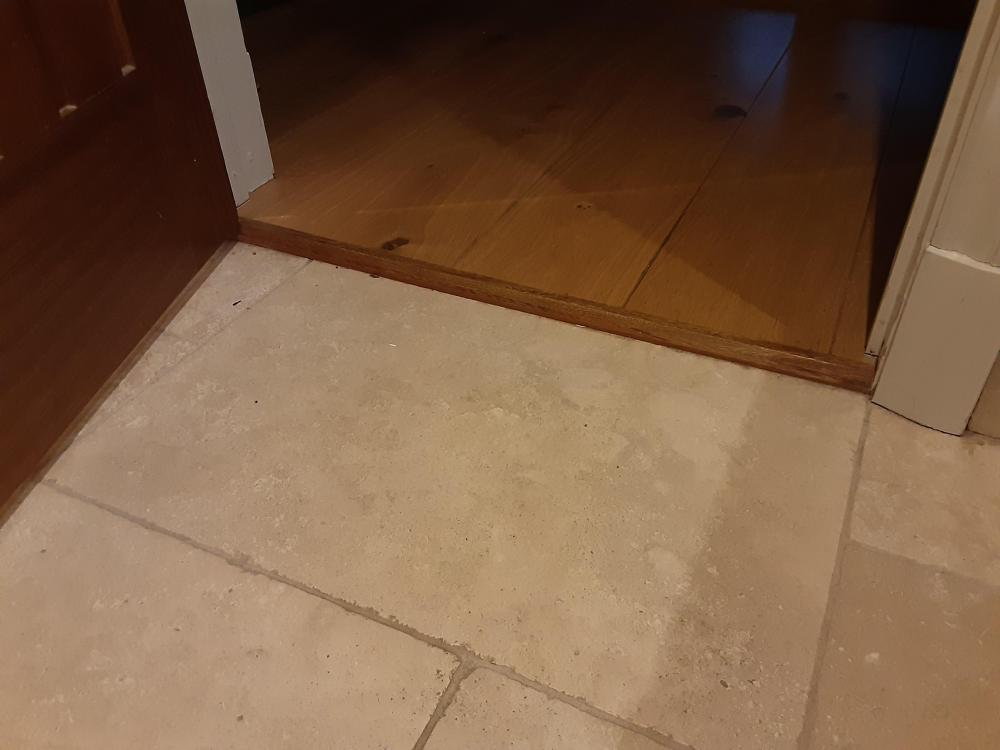
PS We have a small difference in levels at our bathroom door between a stone floor in the bathroom and wood floor outside. It's not been an issue although our step is going up as you leave rather than enter. The step is about 10mm high.
-
From what I've read you need more like 22mm plywood over joists before tiling. I think 18mm is the minimum for Building Regs. You may also need to beef up the floor joists and add noggins to reduce movement before screwing down plywood on 200mm centres. The ply must be sealed before tiling.
-
We have had Visonic wireless system for 13 years. Their Quad PIR sensors seem pretty reliable. Remember to turn off any LEDs in the PIR sensors and the batteries will last much lolonger - Well over a year. We use key fobs to arm and disarm from outside the house.
-
If I remember correctly this scale of excavating would be classed as an "Engineering Operation" not covered by Permitted Development meaning planning permission would be required. I might be wrong though. The normal recommendation is that any retaining wall over 1m high should be designed by a Structural Engineer. Unfortunately the Party Wall Act may also come into play if you are digging within 3m (and possibly 6m) of a neighbours house. Try and avoid this if possible as things can get expensive. Keep the neighbours happy.
-
Porch Building Regs/planning permission
Temp replied to Annahb's topic in House Extensions & Conservatories
Planning Permission.. I would suggest that if you add a porch and remove the door at the same time then its not permitted development. Permitted Development rights allow you to "add a porch to any external door". However removing the door later appears to be ok as far as I can see. Building Regulations.. There is a difference between "complying with the Building Regulations" and "The need to make a Building Control Application". In general everything should comply with the Building Regulations. Its not always necessary to notify Building Control or make a Buiding Control Application. In the case of a Porch... https://www.planningportal.co.uk/info/200130/common_projects/46/porches/2 -
Fire Angel good customer service
Temp replied to Ferdinand's topic in General Self Build & DIY Discussion
Perhaps check the circuit breakers. If they aren't getting mains the battery will run down fast. Eg if the property is ever empty dont turn off the elec because the batteries will go flat in weeks. -
Fire Angel good customer service
Temp replied to Ferdinand's topic in General Self Build & DIY Discussion
The manual for some models mentions a 10 year warranty but retailers only seem to offer 5 years. -
I'd ask the companies that do the polishing if they've seen problems. I'm sure its the sort of things they do for hotels and conference centres. Perhaps they recommend round holes rather than square ones (as per the Comet)? Beware at doorways. Our screed cracked where the screed in two rooms met at a doorway. We should have put in an expansion gap to form a straight "crack".
-
I might be wrong but I think the regulations changed some years ago so that a house only has one "principle elevation". That change benefited houses on corner plots that previously could have two "principle elevations" making side extensions easier. I don't think this helps you but might others.
-
?
-
Changing interpretation of material change of use
Temp replied to hardya's topic in Introduce Yourself
The normal reason they go off at night is because its the coldest time of day so the battery voltage is lowest. I would suspect a power issue because I had a similar problem.. One month after we moved in we were woken up by the alarms chirping about 4am. The indicator light on one alarm said the battery was low so I replaced it. Few nights later another went off. Then a month later the first one went off again. Our alarms use a 3 core and earth cable for Live, Neutral and Interlink (don't think earth is used). 3 core and Earth cable has cores in Brown, Black and Grey. Somehow our electrician had forgotten which colour was which and the alarms upstairs were wired differently to downstairs. Swapped the wires so upstairs matched downstairs and it all works perfectly. The incorrect wiring meant they were running on battery all the time. -
If your architect has a 3D model of your house and understands 3D printing it might not be too expensive. Otherwise someone has to create a printable CAD model. Thats not something most 3D printing services get involved with. Once you have that its probably not too expensive. If I was getting one done I'd want each floor and the roof printed separately so I can take it apart. One issue is with colour. Most 3D printing is in monochrome and that tends to make features less obvious. For example on a CAD model the window frames may stand out because they are a different colour to the brickwork. On a monochrome 3D print the frames may be far less obvious. I suppose you could easily paint it though.
-
I think that's going to be considered "non-standard construction" by the Mortgage industry. I would seek advice from a valuer/estate agents to see what impact it might have on the final value. Might be worth knocking it down and building a semi or even two detached houses. https://www.homeprotect.co.uk/non-standard-construction-insurance/buying-a-non-standard-home
-
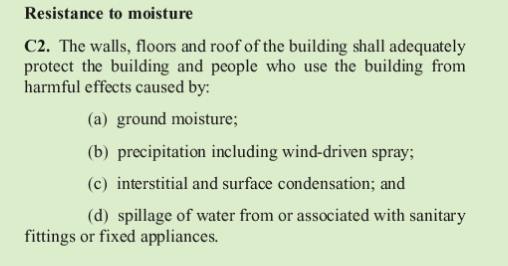
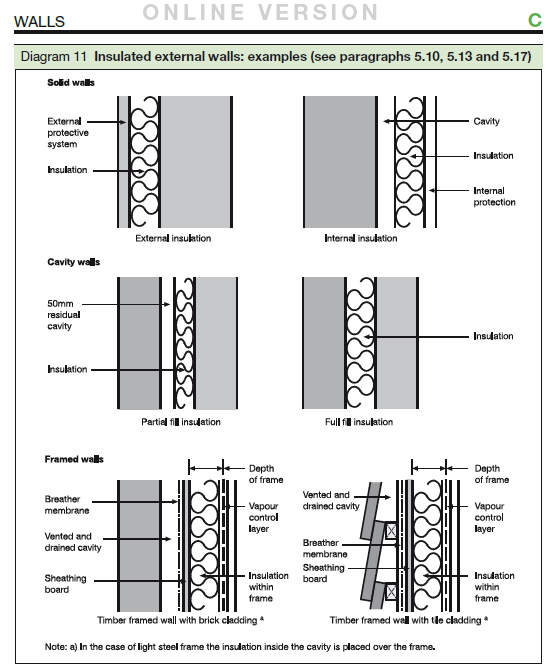
Regarding cavities... The Building Regulations are somewhat vague but they are the ONLY legal requirements. The so called "Approved Documents" is what most people work to.. https://www.gov.uk/government/collections/approved-documents These outline ways of meeting the Building Regulations. They are not legal requirements so you are free to adopt other ways of complying, however BCO sometimes treat them as if they are mandatory and the only way of complying. Approved Document C covers water ingress.. https://assets.publishing.service.gov.uk/government/uploads/system/uploads/attachment_data/file/431943/BR_PDF_AD_C_2013.pdf Each Approved Doc has a section in green near the beginning that references the relevant section of the Building Regulations (the law). In this case see page 5. Diagram 11 on page 33 covers external insulation. If the walls are concrete I would suggest the nearest option is top left (External Insulation of solid walls). Thats EWI with a cladding board and render or similar waterproof "protective system". However there is a section for "framed" external walls. This was probably intended to refer to timber framing but the BCO might interpret it to mean any type of framing (eg concrete posts and concrete panels). That option is EWI, Membrane, Cavity, Cladding. You will have to propose whatever external cladding solution you want and see what the BCO says. As for how thick the insulation deeds to be that's a whole different ball game and I'm out of date with the figures.
-
Some Building Control Officers will try and tell you a cavity is necessary but that's not in the Building Regs. Of more concern is what mortgage companies think. If they see it as a "non-traditional construction" then buyers will have a harder time getting a mortgage and valuations will be lower. What sort of foundations and floor has it got? Is it just a timber frame sat on a concrete slab like a shed or does it have proper trench foundations?
-
Upgrading Wirsbo Cosy stats to programmable stats
Temp replied to Brix's topic in Underfloor Heating
I've had a quick look at the wiring diagram for "a" Wirsbo Cosy 24V stat... https://www.uponor.co.uk/-/media/country-specific/uk/download-centre/support/manuals/legacy/cosywirsbo/cosy-wired-manual.pdf?la=en-gb&hash=B38C92FA92FB3D52591E387F7F3D06AC2A380540 and the Danfos TP5000M 24 Si. https://assets.danfoss.com/documents/DOC041186407154/DOC041186407154.pdf I think you would need a wire link in the TP5000Si but otherwise I reckon they could be used to replace the Wirsbo Cosy stats. I believe the existing stat has.. Terminal 2 → Phase 24V Terminal 3 → Switched phase Terminal 4 → Neutral 24V The TP5000M 24 Si has.. A → 0V B → 24V and relay contacts.. 1 → OFF 2 → Com 3 → ON So I think the wiring would be... Wire TP5000M 24 Si Contacts Phase 24V --------------------------- B and 2 (eg using wire link) Switched Phase ------------------- 3 Neutral 24V -------------------------- A I recommend taking a photo of the back of an existing stat before disconnecting any wires. Oh and turning off power to the whole system but that's obvious.