


Temp
-
Posts
10691 -
Joined
-
Last visited
-
Days Won
43
Everything posted by Temp
-
If this is a ground floor I would recommend a supporting wall mid span. If its a first floor then.. We have a 6m room and our SE recommended two steel beams to reduce the span of the concrete beams. It was only two because of the location of a window. One mid span would have been fine. Are you having UFH? If so I recommend at least 100mm or PIR and ideally more like 120mm under the screed. Normally 65mm sand cement screed is fine. Could go thinner and add more insulation if FFL is an issue. Could add fibres to reinforce. What I would recommend is expansion gaps (aka deliberate cracks) at door ways where the screed in two rooms meet. Think figure 8. Our screed shrank towards the centres of each room and a crack appeared at a doorway where there is a narrow strip of screed. Needless to say the crack isn't straight but curves into one room. This propagated through the stone floor tiles. Be careful of the laitance issue with Anhydrite liquid screeds if tiling.. https://www.bal-adhesives.com/tiling-onto-calcium-sulfate-anhydrite-screeds/
-
Looks ok to me. If you are using the Geberit frames they come with a 90 degree pipe that can be rotated down or sideways. You will need a 90 degree bend to go into what you have.
-
That works if you measure the length and width in blocks.
-
So it currently looks like you have high/max pump power levels, high pressure and not huge flow. Do you still have a lot of the rad lock valves closed?
-
0.6m^3/h appears to be about right for the Grundfos Alpha data i just looked at. Which model do you have and which mode is it in?
-
12l/min is only 0.2 kg.s-1 or have I misunderstood your calc?
-
Is that 0.6m^3/h a measured flow rate or from the data sheet? If its measured its about 10L/s so there is flow going around the rads. If most rads are shut off and the open ones are cold it must be going somewhere else... Is there a bypass that is stuck open?
-
Somewhere near where the FTTP comes into the building you will need a modem and power supply or can you run the fibre inside the building to somewhere else?
-
Welcome to the forum. Some ridge tiles interlock. I wonder if they cut one to length incorrectly loosing the seal?
-
Never heard of a "zero vat number". Offer him a certificate which is essentially a letter confirming that the work should be zero rated as it relates to the construction of a new dwelling at... and quoting your planning reference number, site address, your name and contact details. Attach copy of your planning grant. Your drive should definitly be zero rated. However its possible he may argue the neighbours driveway should be standard rated. If and only if he raises this issue point out that VAT Notice 708 has a section that covers "3.3.4 Work closely connected to the construction of the building" and argue that it comes under "(a) allows the construction of the building to take place,..". I would not mention it unless he does because its open to interpretation. The fact that it on your planning approval helps argue the point.
-
+1 What do the conditions say exactly? Normally all you need to do is start work before it expires. The catch is that the start must be legal so you must get any conditions that say "before work starts.." resolved and formally discharged. Assuming the conditions are OK then its a matter of doing something significant enough to count as having started work. For a new house that might be digging a foundation and getting it inspected by building control. I've seen a wind farm construct a site entrance and some meters of road then stop work. As its not clear what councils will accept you should probably get a letter from them afterwards confirming they believe you have started work. To be 100% sure get a Certificate of Lawful Development but there is a fee for that.
-
Changing use of dormer kitchen to a bedroom
Temp replied to Dedwards's topic in Building Regulations
Some sections of the Approved Docs say a kitchen isn't a habitable room (F) and others that it is (B & M). Most websites say it is. Personally I wouldn't bother with BCA unless you are doing structural work. -
I lived in Belgium for 10 years until 2007 and came across many EU companies that only delivered within the EU. They didn't have enough customers to warrant the hassle of delivering outside the EU. In some cases they had a deal with courier companies that gave them fixed rates for delivery anywhere in the EU. I also found many UK companies wouldn't export across the channel. Typically it was easier to get a company in Germany or Spain to deliver to Belgium than to get a UK company to export. In some cases I found UK companies only had distribution rights for the UK. Once or twice I failed to find a UK company and ended up opdering from a German company that was even happy to deliver COD to Belgium. It would be easy to underestimate the impact of misconceptions on trade. I met many that thought ordering from a UK company would mean they had to pay extra VAT because we weren't in the Euro!
-
Air Source Heat Pump (ASHP) planned - 8.5kW up to the job?
Temp replied to Spoogster's topic in Other Heating Systems
Why switch from mains gas to an ASHP? Running costs likely to be at least double at the moment.. https://nottenergy.com/resources/energy-cost-comparison/ Scroll down to the table and see "Pence per kWh (after boiler efficiency)" -
Structural Engineer Not Providing Connection Detail
Temp replied to SteveMack's topic in General Structural Issues
Think its missing a horizontal plate for the regular part of the connection? -
I would try pretending you live in germany and see if the prices change. If not then they include EU VAT and as over £135 you would most likely get to pay UK VAT as well on arrival.
-
Structural Engineer Not Providing Connection Detail
Temp replied to SteveMack's topic in General Structural Issues
This has a sketch of a moment connection but I guess dimensions are important.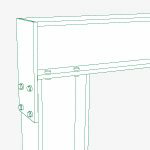
-
Structural Engineer Not Providing Connection Detail
Temp replied to SteveMack's topic in General Structural Issues
Think you will have to find another SE. Then I would suggest a letter to... https://en.m.wikipedia.org/wiki/Institution_of_Structural_Engineers -
They just don't want the hassle of supplying to the UK. Can't say I blame them.
-
Interesting comments thanks. So far the dimmable bulbs I've tried have quite a high minimum brightness and flicker when multiples are used in an array of downlighters. Pretty sure I started out with a Varilight dimmer but perhaps more experimenting is needed.
-
Structural engineer for Vaulted Ceiling
Temp replied to Laurence737's topic in Surveyors & Architects
How is the roof structure ventilated? Normal lofts have eaves vents so air goes in one side across the floor of the loft just above the insulation and out the other. If you change this so the insulation is between the rafters you will probably need to add vents at the ridge equivalent to a 5mm slot.. The insulation changes will need building control involvement.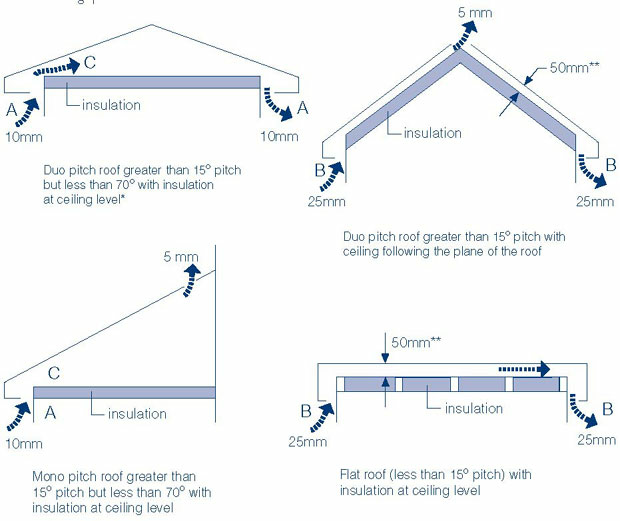
-
Structural Engineer Not Providing Connection Detail
Temp replied to SteveMack's topic in General Structural Issues
I agree its the SE job but this fabricator says they offer free advice on connections.. https://www.bandssteel.co.uk/steel-fabrication/connections/ -
Deleted. Doesnt work.
-
2-3 weeks might be short notice for some standard bricks. Suggest you check if not done already.
-
Got a room that has GU10 Halogen downright on a dimmer. Looking to replace the light fittings and dimmer with LEDs. I've left these as halogen because they aren't used a lot and when they are they need to be highly dimmable which halogen does really well. Elsewhere I've got trailing edge dimmers in several rooms. While they do work they still aren't great. So has anyone got a recommendation for a combination of LED Lights and a dimmer thats working well? I don't really care what standard the dimmer uses just after really good dimming, ideally down to a few percent without flicker. Is CCR the way to go?

