


Temp
-
Posts
10641 -
Joined
-
Last visited
-
Days Won
43
Everything posted by Temp
-
Structural engineer for Vaulted Ceiling
Temp replied to Laurence737's topic in Surveyors & Architects
How is the roof structure ventilated? Normal lofts have eaves vents so air goes in one side across the floor of the loft just above the insulation and out the other. If you change this so the insulation is between the rafters you will probably need to add vents at the ridge equivalent to a 5mm slot.. The insulation changes will need building control involvement.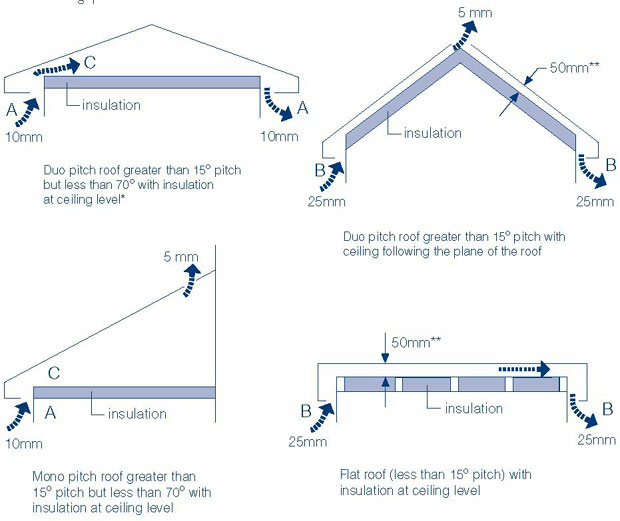
-
Structural Engineer Not Providing Connection Detail
Temp replied to SteveMack's topic in General Structural Issues
I agree its the SE job but this fabricator says they offer free advice on connections.. https://www.bandssteel.co.uk/steel-fabrication/connections/ -
Deleted. Doesnt work.
-
2-3 weeks might be short notice for some standard bricks. Suggest you check if not done already.
-
Got a room that has GU10 Halogen downright on a dimmer. Looking to replace the light fittings and dimmer with LEDs. I've left these as halogen because they aren't used a lot and when they are they need to be highly dimmable which halogen does really well. Elsewhere I've got trailing edge dimmers in several rooms. While they do work they still aren't great. So has anyone got a recommendation for a combination of LED Lights and a dimmer thats working well? I don't really care what standard the dimmer uses just after really good dimming, ideally down to a few percent without flicker. Is CCR the way to go?
-
Lambda value of 0.07 W/(m·K) compared to 0.02 for PIR? You would need three times the thickness to achieve same result.
-
Possibly but it needs to be breathable or it traps water.
-
https://turnbullmasonry.com/common-causes-spalling-bricks-fix-crumbling-masonry/
-
I very much doubt blown bead insulation could damage a block wall in the way described. Arent the beads already expanded before they are blown in? I guess it might be possible with foam that expands in place but I've never heard of that cracking blocks. I have had an issue with a stud wall and expanding foam blowing out plasterboard but that was my fault. I think the person you spoke to was confusing it with another issue.. Fully filled cavities can cause water to bridge the cavity causing damp inside. For that reason its not recommended in exposed lolocations. The problem is that bricks are porus. Would your location be considered exposed? Installers that fill cavities on old houses are meant to decline if they think this is a risk on houses they have been asked to quote on. I suspect many dont. My understanding is this is not an issue if your house is rendered. I have heard that the grey "platinium" coated bead system is also at less risk. Pick a good installer and perhaps check if the warranty covers this issue.
-
What are the houses like either side of the plot? A 5 min drive is a log way in architecture terms. Do you know if it will go to committee? If so make sure they get the photos of other houses. Not sure what happens at the moment with covid but in my day you were allowed to speak at the meeting.
-
There is a bunch of info in here but I suspect you are OK. https://www.gov.uk/government/publications/permitted-development-rights-for-householders-technical-guidance Search it for "loft" or "roof" as the relevant bits are spread out. Not quite sure why you have divided by 6? Can you post a sketch with dimensions? If the height is only 2.17m won't you will have a problem with headroom, especially after taking into account the depth of insulation needed.
-
In winter the solar won't be producing much on average and the immersion heater "COP" is 1. The COP of the ASHP might also be quite low ifvits been cold where you are. So overall I don't think its doing too bad.
-
Various companies make PIR/PUR foil covered sheet insulation - Celotex, Kingspan etc Its thermal properties are better than EPS.
-
Oh ok. So you can ignore my first paragaph ?
-
Don't get me wrong, I like UFH but I'd have to be desperate to install electric UFH. Id only use it to warm tiles in a bathroom rather than for heating.. All direct electric heating (UFH, Fan heaters, Radiant etc) is practically 100% efficient, which sounds good, but electricity is about the most expensive fuel per kWH you can buy. Three to four times the cost of mains gas. Three times current cost of oil etc. I would try really hard to extend your heating system. If the rooms are small and have office furniture etc the actual floor area available to dissipate heat into the room might be quite low. So if the rooms aren't well insulated it might not be possible to get enough power out of any form of UFH (bit like having too small a radiator). They say heat rises but that's convection. First the heat has to escape the heating element by conduction and it goes in all directions including downwards. So UFH needs at least 100mm of insulation below the floor. UFH also takes quite a long time to warm up the room. Fine if you are going to be in there most of the day but not so good if its just for short periods say first and last thing in the day. I can't really comment on makes of electric UFH we have UFH but its oil fired.
-
Disguise it with a whiff of new carpet? Perhaps try brushing in cement dust. Isn't that what they use for oil spills on racing circuits? Desk fan pointed at the patch might speed up evaporation.
-
My guess is firrings and fixing works out cheaper than tapered insulation or tapered i-joists or similar.
-
I'm a bit late to this thread but.. If one pump is managing to push 2 L/min through the UFH then Id probably leave it alone. If you had said the rads were getting hot but not the UFH then I would recommend a different approach. A manifold loop pump and mixer is the standard way of doing UFH but is there much point to a mixer if you don't need it to mix down the temperature? Some houses need higher UFH flow temperatures than others. 50kWH per day equates to 50/24 = 2.1kW average. Not sure what COP you get in the cold weather but if you managed a COP of 2 that would mean the heat loss is around 4.2kW. Less because some is used for DHW.
-
Spray foam has to be sprayed onto something. The exposed surface isn't flat. So it would be difficult to use on a warm roof. If you spray it on the underside of the top layer of OSB that OSB would need supporting. If you spray it on the top side of the lower OSB then the surface would be uneven and the top layer of OSB might not be supported evenly. I don't think Rockwool can be used for load bearing so again the top layer of OSB would need support that penetrates the insulation layer. The best solution I reckon is to: Install the joists. Put tapered firring strips on top to get the fall. OSB Vapour barrier PIR Insulation boards Squirty foam or tape any gaps in the PIR (shouldn't be any but if there are). OSB (Top and edges) EPDM
-
. Is there a pressure gauge near the boiler so you know its pressurised? There are many different types of store. Ours is vented so the boiler to thermal store side is filled by a cold supply to a ball valve in the header tank.
-
We have a Bosch thats pretty stable but still moves a bit on our tiled floor. I'd use something to stop it falling off. Rather than build a platform just under the machine might be better to make a false floor over that whole area?
-
https://nottenergy.com/resources/energy-cost-comparison/
-
Awhile back i found this doc that has a lot of pricing data in but its horrible to extract. Perhaps start around page 125 and see. https://www.ukpowernetworks.co.uk/internet/en/about-us/regulatory-information/documents/UKPN%20CCCMS%20-%20July%202018%20v1.0%20PXM%202018-06-27.pdf Looks like £2000 to £3400 for each new pole and length of cable between poles £1700 to go from pole to underground and first 10m of cable Trenching and cable. From £130/m in grass to £330/m in road
-
Oops yes. Sorry. Bit distracted. I have my son here trying to ask me questions on subjects I last studied 40 years ago.
-
+1 You will need Planning Permission but possibly not Building Control Approval.. Planning permission for outbuildings (inc garages).. https://www.planningportal.co.uk/info/200130/common_projects/43/outbuildings Building Regulations https://www.planningportal.co.uk/info/200130/common_projects/43/outbuildings/2 If you are putting in power or lighting that will need Building Control involvement but if you get an electrician to do it they should sort that for yo and notify Building Control. Offer to do the digging to reduce cost. Typically they would install a "Garage CU" with an RCD and 2 MCB plus an earth rod, sockets and lights.


