


Temp
-
Posts
10691 -
Joined
-
Last visited
-
Days Won
43
Everything posted by Temp
-
Wall hung WC frame within cupboard unit
Temp replied to Vijay's topic in Bathrooms, Ensuites & Wetrooms
I doubt most units would be strong enough on their own but if reinforced no problem. Under load the top tends to pull away from the wall and the bottom is pushed back towards the wall. I think we have 2*4 fixed to the brick wall and 10mm threaded rod from that to holes at the top of the frame. Nuts either side allowed it to be adjusted so its vertical. Timbers were added immediately left and right of the metal frame so Hardi backerboard could be screwed to form boxing. Later tiled before fitting the WC. Think the Geberit frames are 50cm wide so can be fitted in a 60cm wide base unit. Would have to be units without a setback toe board. -
Privacy Rights For Plot With Expired Planning Permission
Temp replied to Paralytic's topic in Planning Permission
Meanwhile write anyway. Mention your expired PP and that you intend to renew it. It's up to them how much consideration they give it if any. -
Actually it looks like I'm wrong. Leaving the country might not be enough.. 20+ years ago you could leave for a year or two. Then some chancellor made it 5 years. However it looks like for property they changed it in 2015 and again in 2019.. https://www.hillierhopkins.co.uk/here-for-you/internationally-mobile-individuals/everything-you-need-to-know-about-non-resident-capital-gains-tax-on-uk-properties
-
If you already have a property empire consider moving to a country like Belgium that doesn't have CGT. You have to be resident there for 5 years and its unwise to retain a home in the UK for the duration.
-
Who exactly is building the house? You or a company you own? If the CIL has been implemented in your area what have you done about that? My understanding is... If you are building it to live in yourself then you might avoid CGT because when you eventually sell it will be your Principle Private Residence. There might be CGT to pay on your current house but only on the gain since you move out (?) and there is scope to avoid that if sold within 2 (?) Years. If you are building it to sell and make a profit the you might be taxed as a developer and have to pay income tax on the profit. If you build and then hold it as an investment/holiday let/Air BnB you might avoid income tax on the sale profit but pay CGT when sold. If you build it and let it on a long lease you can avoid income tax but loose the ability to reclaim VAT or may have to repay any VAT claimed. HMRC sometimes look at your intentions at the outset so it might not be possible to change your mind later. What have you already told any lender you plan to do? See also.. https://www.thisismoney.co.uk/money/experts/article-3420863/We-thinking-building-house-garden-pay-CGT-sold-it.html
-
Except it isn't and never was a party wall. The wall is entirely on his land. Yet the neighbour appears to have put his roof joists on top of it,
-
And most people install a quad LNB so you want 4 cable runs. Typically 2 to each Freesat box. Thats because some channels are vertically polarised and others horizontally. Having 2 allows you to watch one and record another of different polarity.
-
Remembering that nothing must overhang including the eaves/gutters.
-
The problem is the executors are obliged to look after the interests of the beneficiaries. If the executors are family members they might co-operate with you and agree to share a Party Wall Surveyor. If the executors are a solicitor or some other professional they might feel the need to insist you pay for a second independent surveyor to represent the beneficiaries.
-
I put up both terrestrial TV aerial and Free Sat dish. Neither are particularly difficult. Sat dishes are possibly a bit harder to install because they need to be pointed a bit more accurately but you can do it with a cheap signal strength meter. The wind loading is higher with a dish so they need to be mounted a bit more securely. I guess the main advantage of a dish is they don't always need to be installed high up.
-
I can't comment on any particular product but the vast majority of devices on the market are total woo. Normally they make a lot of claims in terms that sound scientific but are just plain nonsense. Pretty much the only proven technology is salt based chemical water softening or similar. This is what wikipedia has to say about magnet based devices.. https://en.wikipedia.org/wiki/Magnetic_water_treatment#:~:text=Magnetic water treatment (also known,regarded as unproven and unscientific. This is what the Advertising Standards Authority has to say.. https://www.asa.org.uk/advice-online/water-treatment-devices.html
-
Will spin or try to spin faster on the higher voltage. Mostly will work fine but just take care when under high load as there is greater risk of burning out the motor.
-
Some decades ago my dad managed to solder some lead sheet himself but I remember it being a difficult job. At least I learnt new swear words.
-
Just to add to what I was saying about BCO having some discretion... ours allowed us to put our oil tank between a timber clad garage and the boundary fence. Both less than a foot away. Mostly because the neighbour had done the same on his side. Definitly not according to the regs as our boiler service engineer points out every other year.
-
The specification page is what they call "content free". No information on gain etc. Thats never a good sign. Amplifiers are also a poor alternateive to aving the correct aerial. Something like a small log periodic might be worth considering. Cheap from Toolstation or Screwfix. Some rate the Optima L 20 F Element for areas with good signal. Just bear in mind that some locations and transmitter combinations have specific issues that make correct aerial choice more important. Any trees in the way
-
Welcome to the forum. The example they use here is of a garage but same rules apply to your outbuilding.. https://www.planningportal.co.uk/info/200130/common_projects/43/outbuildings/2 So how big is yours? Cladding the side facing the boundary in fire retardant board might be acceptable to the BCO but you will need to discuss with him exactly what he requires. Try and keep on his good side because they have some discretion to bend the rules. Sadly he may or may not be willing to discuss it with you until you pay a fee.
-
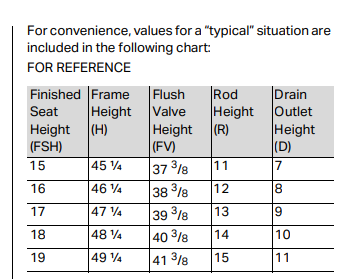
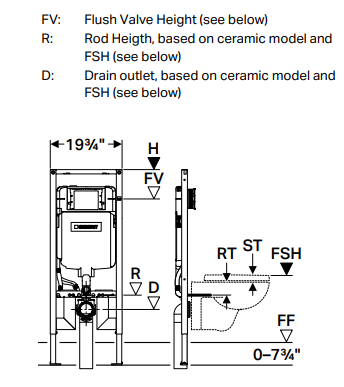
You could fit a geberit wall mounted WC/Frame and adjust the feet so its a bit on the high side. The outlet pipe from those has a 90 degree bend which can be turned "horizontally". There is a table of outlet height vs seat height in some of the installation manuals (this one from the USA).. https://www.geberitnorthamerica.com/local-media/instructions/968-075-00-0-sigma2x4-install.pdf
-
Could you replace the bend with solvent weld parts? eg just leaving one clip where it enters the unit? Edit: The rubber joints might be for noise reduction.
-
Many garages are single skin brick but they have piers every ?? meters. In the past curved or zigzag walls have been used to aid stability and these can create sheltered areas for exotic plants or humans...but obviously increase the number of bricks needed.
-
Old water pipe?
-
Indeed. What you can do and what you should probably do are different. I would at least lean on him a bit to try for a formal agreement so that it doesn't cause issues when you sell.
-
You can lobby the Planning Officer and members of the Planning Committee. You can also ask your MP to write to the chairman of the Planning Committee to support your proposed planning condition. However he may only agree to do so if you have support for that from neighbours - so perhaps send him a joint letter.
-
The relatively high cost of electricity vs gas (per kWH) means you need your ASHP to be running at close to maximum COP. This makes correct sizing of the ASHP important. Otherwise go for it. We have oil fired UFH and have it "on" 24/7, however we use set back on the thermostats to reduce temperatures at night.
-
540mm is about standard projection. Some companies make "short projection" wc but might be issues with the seat not staying up?
-
He is allowed to use the foundations of the wall if they extend over his side of the boundary. What he can't do is use your wall in any other way. Eg he can't rest the roof members on top of the wall or fix them to the side. If the wall is entirely on your property you could knock it down and replace with a chain link fence or bushes if you wanted.


