


Temp
-
Posts
10691 -
Joined
-
Last visited
-
Days Won
43
Everything posted by Temp
-
Is the wall entirely on your side of the boundary? If so then he is in the wrong and cannot simply turn it into a party wall just by building on it. The encroachment over the boundary amounts to trespass. See down this page.. https://www.duncanlewis.co.uk/Actions-in-trespass.html However taking court action is expensive and courts have been known to award trivial damages where they consider the infringement to be modest. The court might award you a few £hundred and allow the trespass to continue. Most solicitors will give you 30 min free to discuss a problem. I suggest asking one to recommend a course of action and estimate the cost involved. Sadly if you dont like those costs there is little you can do apart from trying a no win no fee outfit. You could start with a solicitors letter asserting your rights over the wall and pointing out that as it is entirely on your land it is not a party wall and that his work does not make it a party wall. You could consider allowing him to continue to use the wall provided he sign a formal agreement to facilitate any extension you wish to build on your side. Ask the solicitor to quote to draw up such an agreement that can be added to his deeds.
-
Just wait until the wind is blowing away from houses and get on with it. I have 60m of hedge and the annual cutting produce three bonfires worth. I cut it in January and leave it for a month or two for any greenery to dry out. Few pints of diesel get it going.
-
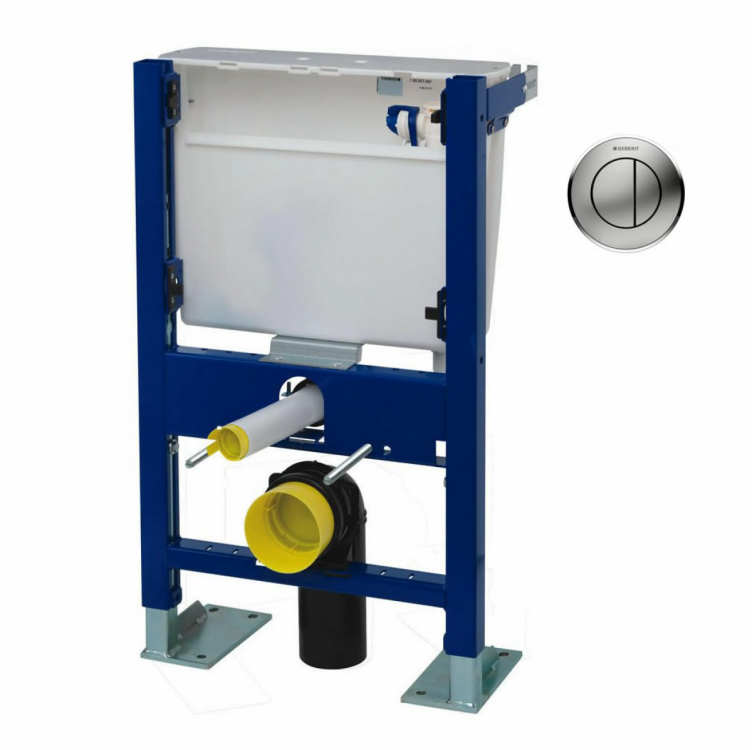
You can get frames where the flush goes on top of the boxing or is remote (eg operated by air pipes) so it can be off to one side. The different heights are to allow different height boxing (eg under windows). The WC pan height is the same. See this picture.. Note that some WC have non standard dimensions for the distances between bolts, flush pipe and waste pipe. Shop around as prices for frames vary. Pre Brexit there was someone on ebay selling them from Germany cheap but I don't know about now.

-
TP1 doesnt really help. It requires you to comply with the covenants in the title referred to in section 12:15:1. But you need to see all of that title to know if they are enforceable. If you dont have the rest of that doc you can normally download it from the (real) LR website for about £3.
-
There are some rules that covenants have to follow or they can't be enforced. Typically they have to benefit nearby land and that land has to be identifiable. https://www.duttongregory.co.uk/site/blog/personalnews/freehold-restrictive-covenants-part-one 1. The covenant must be for the benefit of the covenantee’s land 2. The covenant was intended to run with the land 3. The party seeking to enforce the covenant must own the benefiting land 4. The benefit of the covenant has passed to the person seeking to enforce it Continues...
-
Read the terms of the insurance very carefully because some have conditions that invalidate the policy if you contact the beneficiary in any way.
-
What came first? If they built the garage with a gap and then you or a previous owner of your house filled it in and laid the path above DPC then you could be liable for fixing the damp. If it was them that built the garage and they back filled above DPC then its entirely their problem to fix.
-
Whats the budget like? Could you afford copper guttering and some copper hoppers? Perhaps replace some down pipes with shorter ones into another horizontal gutter running below the window?
-
+1 I don't believe you need a party wall agreement either. The neighbours founds are very likely same depth as your own. So just dig a trial hole on your side. Might be worth thinking about what happens if the neighbour likes your extension and decides to do his own. Will there be a very narrow gap that collects debris? Could you join your roofs together to get around the problem? Will you be able to access your eaves for maintenance? Consider a pitched roof? .
-
Mineral wool rafter fill with habitable rooms - any experience?
Temp replied to Hilldes's topic in Roofing, Tiling & Slating
If you have fully filled rafters you need a vapour permeable membrane and there is no void under it that needs ventilating. If the tiles are very flat, solar PV or slates then i think they recommend the space above the membrane is ventilated. With irregular or hand made tiles there are enough gaps for ventilation. Both options are designed to allow water to run down to the gutter. They aim to prevent the insulation pressing the membrane against the underside of the tile battens. That can cause water to pool on the up hill side of the tile battens. Pollen and dust can also collect there making amud like mixture that stops water running down. Your BCO may have a preference for one or the other. -
Salus THB23030 Auto Balancing Actuator with Google Nest
Temp replied to tomcoleman's topic in Underfloor Heating
If I've understood correctly you have the actuators powered all the time? What happens if (after calibration) you turn the power to the actuators off then on again? The manual says it should flash the led for 2min then fully open the valve. -
Mineral wool rafter fill with habitable rooms - any experience?
Temp replied to Hilldes's topic in Roofing, Tiling & Slating
If the rafters are fully filled then above that you need either.. Membrain Counter battens Tile battens Tiles Or Counter battens Membrane with 25mm drape Tile battens Tiles The first option needs a membrane that the maker allows in contact with the insulation. Last I looked kingspan make one. I'd also put PIR and a vapour barrier under the rafters. -
Would a washing machine style trap and upstand meet the regs? Put the kitchen waste into it to keep it filled if there isn't enough/any overflow from the water softener?
-
We have MVHR and towels dry pretty quick with the towel rail off. I didn't bother turning it on this winter and nobody complained.
-
Cost of moving a neighbour's phone line
Temp replied to catrionag's topic in General Self Build & DIY Discussion
I think adding a new pole and changing the route to use it would be around £2,000. They normally want a £300 fee to do a survey and may not be very responsive until you pay for that, or even if you do pay! I've heard of figures between £1500 and £4,000 for similar work a few years back but the devil is in the detail If you dont mind.. It might me cheaper if you allow a pole in the bottom corner of your plot but don't offer that unless putting another one in the road is expensive or not possible for som reason. Beware the pole location messing with visibility splays if any are a condition of your PP. -
removing permitted development restrictions
Temp replied to Balou's topic in General Self Build & DIY Discussion
No not standard practice. Planning conditions must meet six tests or you can appeal them or apply to get them removed.. https://www.gov.uk/guidance/use-of-planning-conditions -
I quite enjoyed this... Nothing to do with the insulating properties of the towel then ?
-
+1 I don't think 110mm opposed connections (eg for the WC) are allowed at all. See notes on diagram 2. We find having two showers or baths on one narrow pipe causes more issues with siphoning. Eg one shower makes the other gurgle. If possible think about where you might add AAV later if you get an issue. For example on the left most shower waste, perhaps extend that pipe further to the left then up. Cap it off and add an AAV there if you get issues.
-
Our Clearview Solution 400 has one on the front. Just remember to close it when not in use.
-
We have 80mm downpipes going straight into 110mm drain socket via a rubber adaptor. We have huge leaf fall due to lot of broad leaf trees. This has blocked gutters but never blocked the drain. I think an open gulley might be more inclined to collect leaves and block.
-
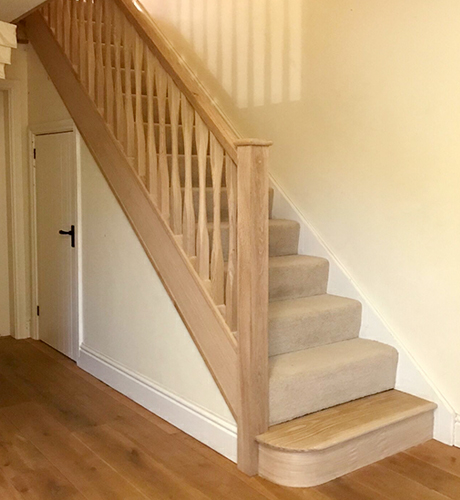
Just measured our stairs.. The width of our treads is 900mm between the stringers but overall the staircase is around 1m wide including the wall stringer one side and the newel posts on the other. If your WC wasn't under the stairs I would recommend 1m internal width. However that would make your stairs about 1.1m wide which is quite big, perhaps ok if you have space. I reckon 80cm internal width/90cm stairs is the smallest I would want to go for the WC. So I reckon a reasonable compromise would be 90mm internal width and roughly 1m wide stairs. Personally I think it looks better if the stringer stands outside the wall like this. Source of image: http://www.at-carpentry.co.uk/worcestershire-oak-staircase-renovation/
-
Which cheap tool has surprised you most (in a good way)
Temp replied to MortarThePoint's topic in Tools & Equipment
I got a cheap unbranded petrol chainsaw from amazon some years ago. Been fantastic for clearing up fallen tree branches. The supplied chain didn't last long but otherwise been great and starts easily if I remember the choke. I also have a Ryobi cordless drill from the days when they were blue. Think it was their first model with a lithium battery. Not used the hammer action much but did once use a 50mm diameter * 100mm long grindstone to open out holes in a brick wall to take wall lights - the bearings survived the large side loads ok. -
Its not quite clear to me what he has applied for. Can you post a link to the planning application? An application for a "change of use" isn't some kind of short cut. Its a necessary addition to some planning applications. For example you can use an agricultural field as a camp site for 28 days a year but any more than that and you need to apply for change of use as well as planning permission. In general land is considered to have a "use class". Changes within a use class are permitted development. Changes between different use classes may need an application for "change of use". That said the government have allowed some changes between different use classes to be permitted development but these require a "prior approval" process to be followed. An example is the class q conversion of a barn to a house. If he plans to knock down the workshop and replace it with flats across two sites then an application for change of use from industrial to residential together with demolition and building of flats is probably the correct and most onerous process. If he plans to convert the workshop using permitted development requiring prior approval that might be easier to obtain. However it doesnt sound like that's what he's doing?
-
It reminds me of something but I can't quite...




