ProDave
-
Posts
30861 -
Joined
-
Last visited
-
Days Won
427
Everything posted by ProDave
-
My windows (Rationel) were 50% deposit and remaining 50% BEFORE delivery, so that won't help you. I did have a rather unsually favourable deal with the builders of stage payments in arrears, so they had started work and bought materials before they even got their first payment from me. That was not from a timber frame company, but a local small firm of builders who built and erected the frame, as well as laying the foundations.
-
And my situation was even more unusual because I genuinely did not know how far I would get with the money I had. So right from the start it was agreed to have a regular review of where we were and there would come a point where I would have to say stop. That point turned out to be a complete structural frame with windows and doors, but no wall cladding, no insulation and no roof covering. That was where I took over on my own to eek out the budget. We parted on good enough terms that in the future they are happy to do more work for me as and when the budget allows. Oh and I will be doing some wiring for them in the new year.
-
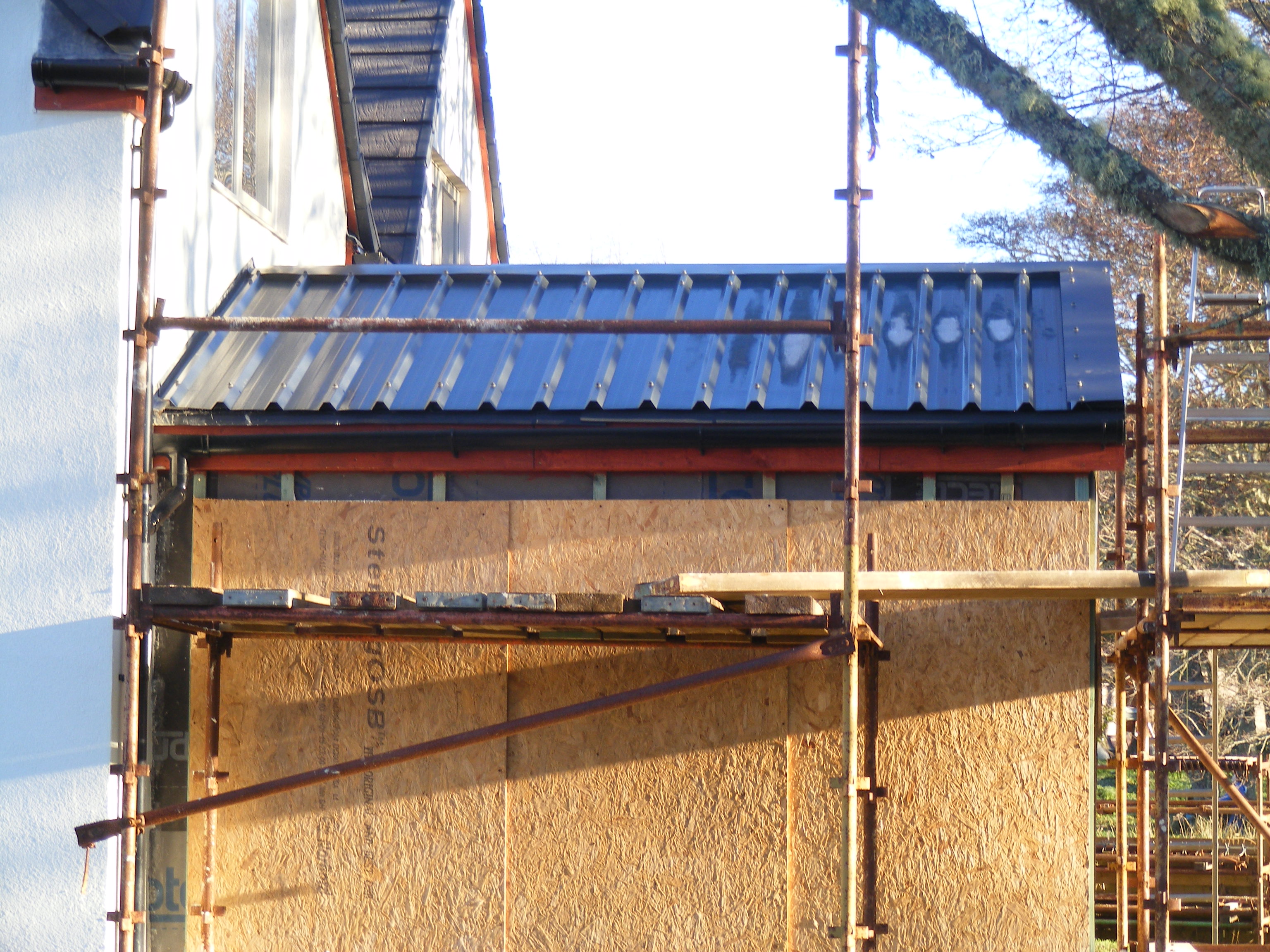
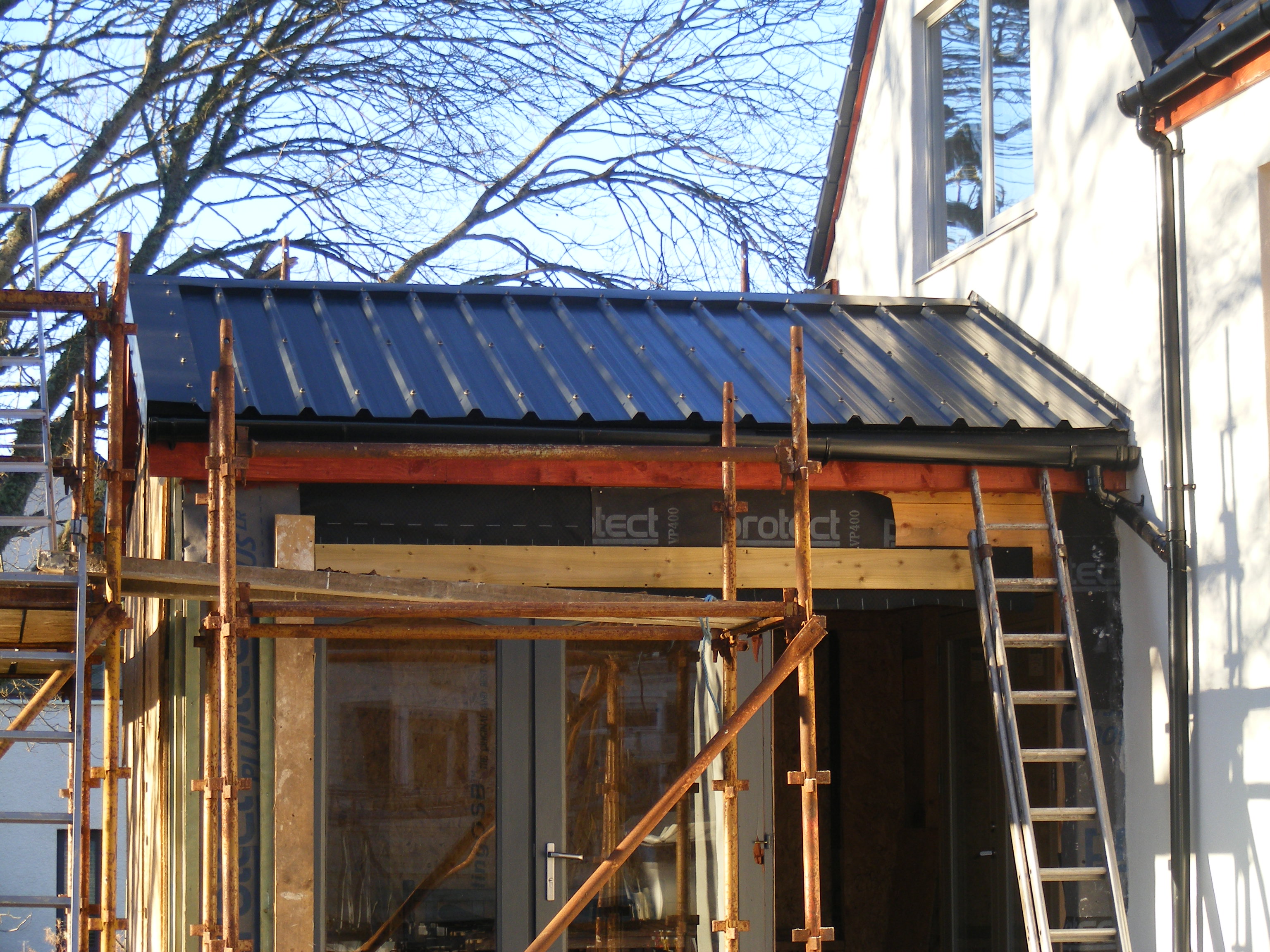
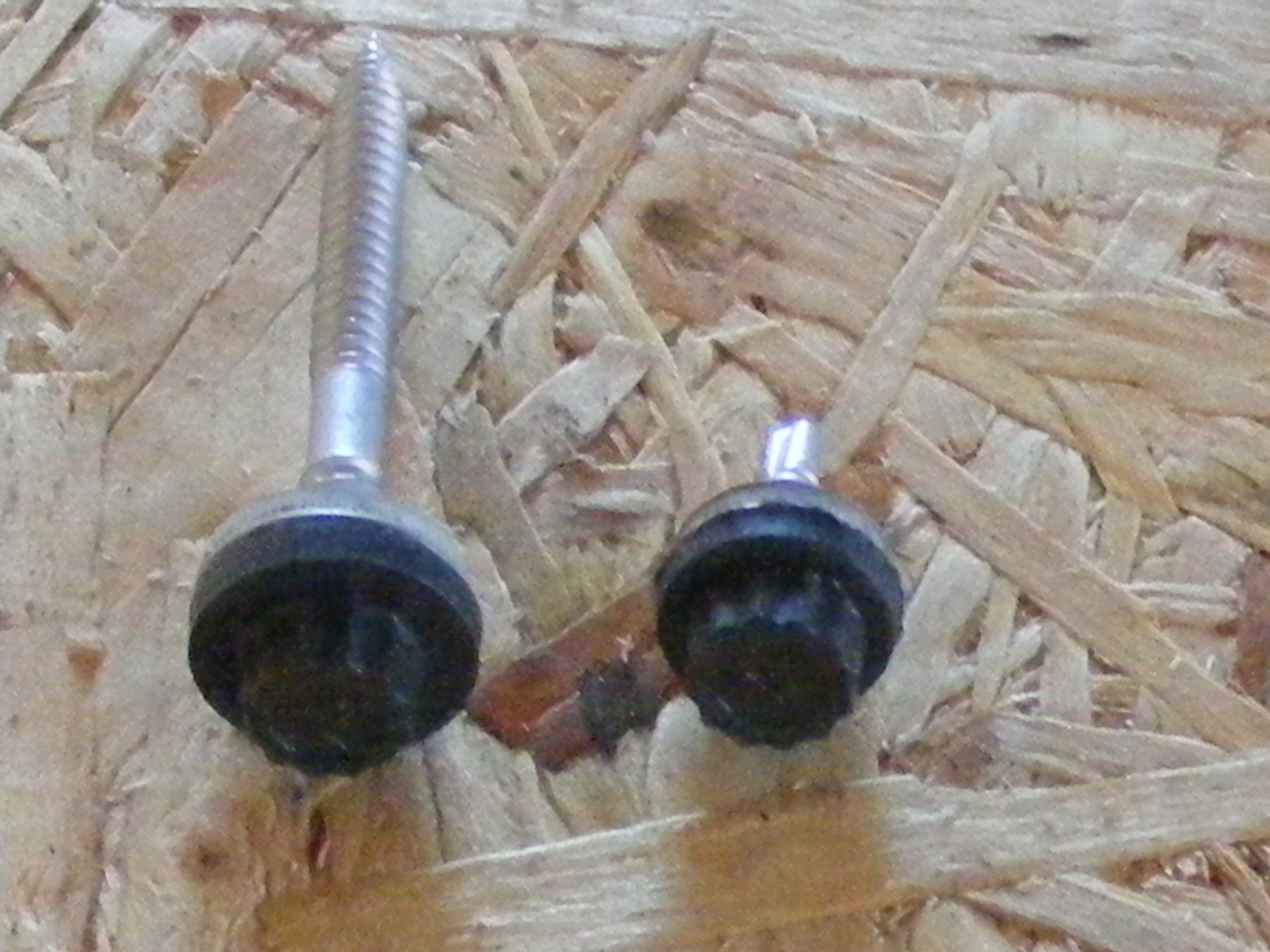
Well I just went by the fact they sent me two packets of screws. Short ones for screwing metal to metal for the ridge and verge pieces. And long ones that were long enough to screw through the ridges and still have plenty to bite into the purlins. This is narrow profile ridges and tightened to the point you just see the metal start to deflect. To me it's obvious that little water runs down the ridges so that's the best place to fix. If you drill the valleys then it's obvious a lot more water will run there and it's so much more important that any fixing screw seals 100%. Again being relatively wide valley sections, you might argue if fixing through the valley you would need two screws in each valley section, one at each side. I also pondered whether to screw into every ridge piece or every other ridge piece. I counted the number of screws they sent and there was just enough to screw into every ridge (I had just ONE of the long screws left over)
-
^^ Don't give me ideas.
-
It is indeed a good feeling when you have a builder that you know and trust. Mine was the same. I had worked with them before (I wired a house they were building) and knew their craftsmanship and attention to detail, and knew they had a skilled team that worked together well, and were very easy to work with. It will surprise some on here that I employed them without a written contract, just a handshake. I paid in stages in arrears so they put trust in me to pay for the work done, as I put trust in them to do a good job.
-
So I said to SWMBO "We need a house name sign. Underneath it will be an arrow pointing left saying post, and an arrow pointing right saying visitors" "No. This is not bloody tesco" (other supermarkets are available)
-
I wired a whole house where the owners had OSB as the finished internal face. They loved it. I hated it, it looked like an erm, shed. So 2 by 2 frame, 18mm OSB inside and out, and timber cladding outside. Sounds good to me.
-
I think some sineage may be necessary. I notice next doors new front door doesn't have a letterbox, and neither do they have a post box on the wall. I wonder how the postman dealt with that today?
-
Our Design Drivers
ProDave commented on TerryE's blog entry in The House at the Bottom of the Garden
I think the WC door issue is a little more complicated. The WC has to be "accessible" and that means a certain amount of "activity space" in front of the pan, and nothing is allowed to intrude into that activity space (except a basin may partly overhang that space) and the door must not swing over the activity space. So unless you have a very large WC, the door would swing over the activity space, hence solving it by hinging outwards. Our downstairs WC is unusually combined with the utility room, and the door into it will be a long way from the pan, and will open into the room. building control have confirmed this is okay as it will not interfere with the activity space. They have also agreed that the door through from the utility / wc into the garage, would not normally be used by anyone in a wheelchair (due to the mandatory step between the house and the garage) so it does not matter if THAT door swings over the activity space, so that too can open inwards if we wish. -
Main house has triple glazed doors and windows, no letterbox (or cat flap) We were originally thinking of an external post box on the wall. Due to the tight budget, when I built the garage, I left out the doors for now (both pedestrian and vehicle) Yesterday I noticed my neighbour was having a new front door fitted. A quick word with said neighbour, and that door is now the pedestrian door into my garage. Remarkably they got the frame out undamaged and it fitted the hole left for a door almost perfectly. It's a good quality Swededoor in good condition, so it might well remain as the permanent door. So being an ex "front door" it has a letterbox. So now we are thinking to just educate the postman that the post goes through the door on the side of the garage and no need for a box on the wall by the front door.
-
I think the radio interference issue will depend how close you are to your local radio transmitter. At the moment I am sold on using GU10 downlights with LED lamps. You just can't beat the simplicity. The only caveat being the variation between brightness and colour of different LED lamps, so the plan is to buy enough to do all lamps in the house plus a good number of spares to keep in stock. The new build I have just finished wiring has all GU10's with 6W LED's and it's very bright indeed. Downlights about 2 metres apart.
-
Credit/Debit Reward Cards, Discounts etc
ProDave replied to Ferdinand's topic in General Self Build & DIY Discussion
So have I. What a shame that first thing this morning I submitted an order. I now have until the 18th to make another order, large enough to get free postage, in order to use it. -
^^ and that shows the substantial gusset plates either side of each beam at the joints.
-
A few ASHP / UFH bits of information.
ProDave replied to ProDave's topic in Air Source Heat Pumps (ASHP)
But you very craftily hid the strikethrough button way over there with the superscript and subsctript buttons. Not with the bold, italic and underline buttons where most people would look for it. -
True. I have seen this type of construction, and there are were gusset plates bolted at the eaves and ridge joints.
-
I doubt that CE mark means anything other than Chinese Electronics If it has a flying flex as it's input, is should be double insulated, as in a sheathed flex. That's glorified speaker wire there. I would be tempted to replace that speaker wire with some proper 2 core sheathed mains flex and then into a choc box or wago box if it's going to be in an inaccesible location. I would put one on an extended soak test to see how hot it gets.
-
You will almost certainly need to have it all detailed by a structural engineer. that is similar in some ways to my build, and the SE specified that on some walls, I had to have two layers of OSB with staggered joints to give adequate racking strength.
-
When you do that, try adding the 2 digit suffix to the order code from the latest weekly offers flyer. A surprising number of items that are not in the weekly offers do appear to be discounted if you care to try.
-
What provides the racking strength? Is that meant to be a layer of OSB on the inside of the frame for that purpose?
-
As I said in the OP, it was knowing what to call it. It's obvious that it's not am 8mm hex drive socket, but it's a magnetic nut runner. Why didn't I think of that? I will order one of those and one of the socket adaptor sets so I can do other sizes with a standard socket. P.S you might have noticed CPC's website search tool is not the best.
-
I need to buy a tool. I know they exist, but not knowing what the correct name is, I can't seem to find one. It's ever so simple. I want an 8mm hex socket, but instead of it having a square female drive (to be used e.g with a ratchet) I need it to have a male hex drive so I can use it with a cordless screwdriver to run in coach bolts that have a hex head. I can't seem to find one. but that's because I don't know what they are called (hex drive socket didn't get me very far) It would be great if CPC had them as I am about to place an order from CPC. But the bext I have found from CPC is this http://cpc.farnell.com/hilka-tools/37955003/socket-adaptor-set-3pc/dp/TL17207?ost=tl17207&selectedCategoryId=&categoryNameResp=All%2BCategories&searchView=table&iscrfnonsku=false which would do what I want in conjunction with a standard square drive socket, but I really want the dedicated tool, hex drive to 8mm socket.
-
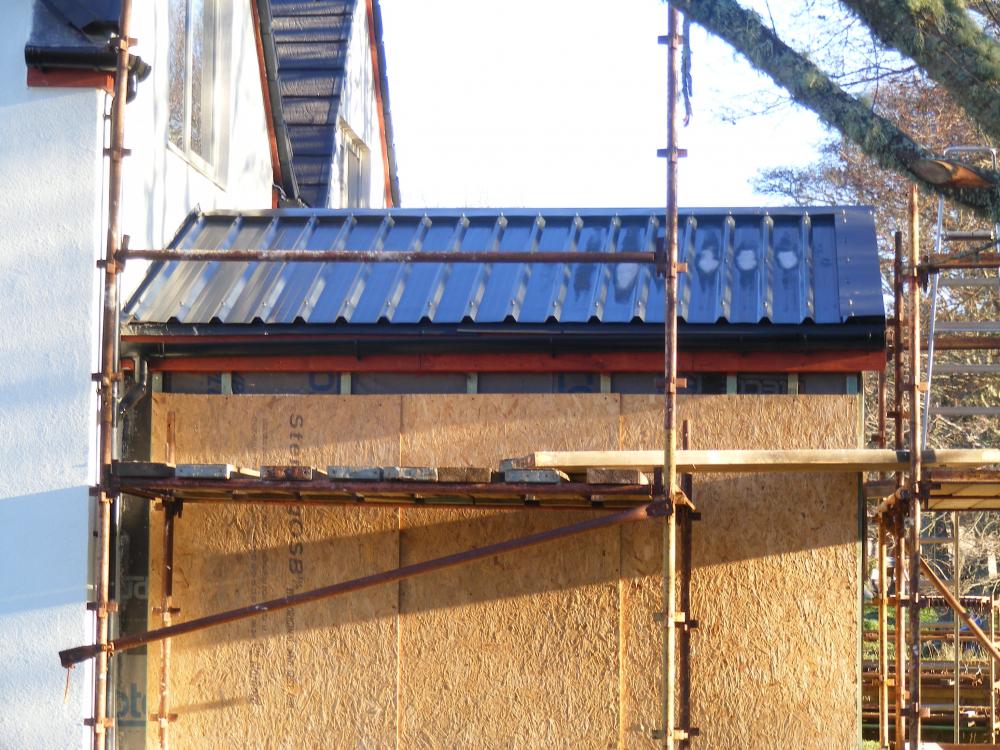
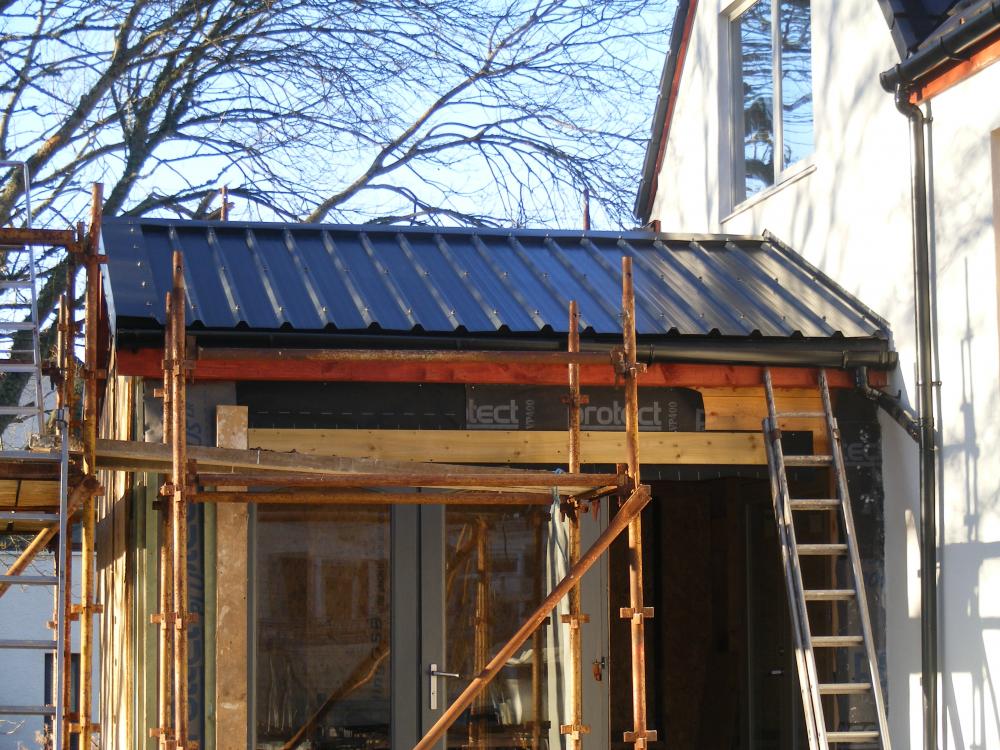
Finished it today: And here are those plastic headed screws:
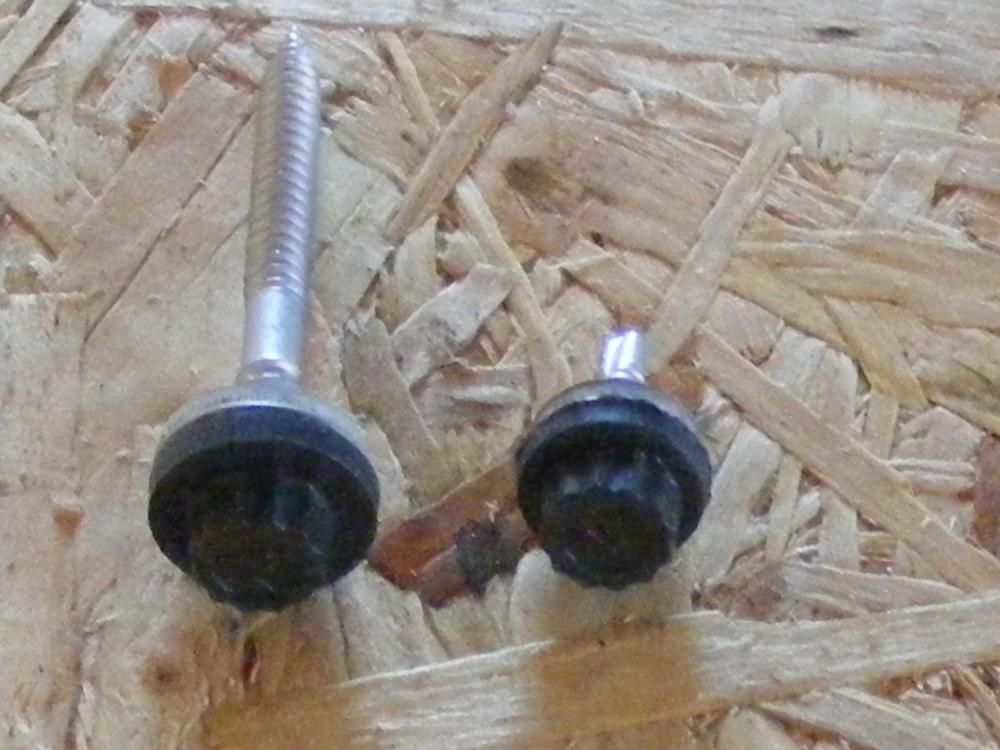
-
Bath Surround / Boxing In, and concealed pipework
ProDave replied to Onoff's topic in Bathrooms, Ensuites & Wetrooms
(loosely) on the subject of French Lavatories, where I lived as a boy there was a coach company called Crappers. And they were. And on the SEF subject, wait until you turn 50 (In Scotland at least) and every 2 years receive a Bowel Cancer testing kit. No I won't describe what you have to do, just wait and see. -
Discount Offers of the Week
ProDave replied to Ferdinand's topic in General Self Build & DIY Discussion
^^ I need a lot of 9mm OSB soon. VERY disappointed to find their "offer" on 9mm OSB3 is only 1p cheaper at £14.99 if you buy 3 sheets. That's about double what it should be. -
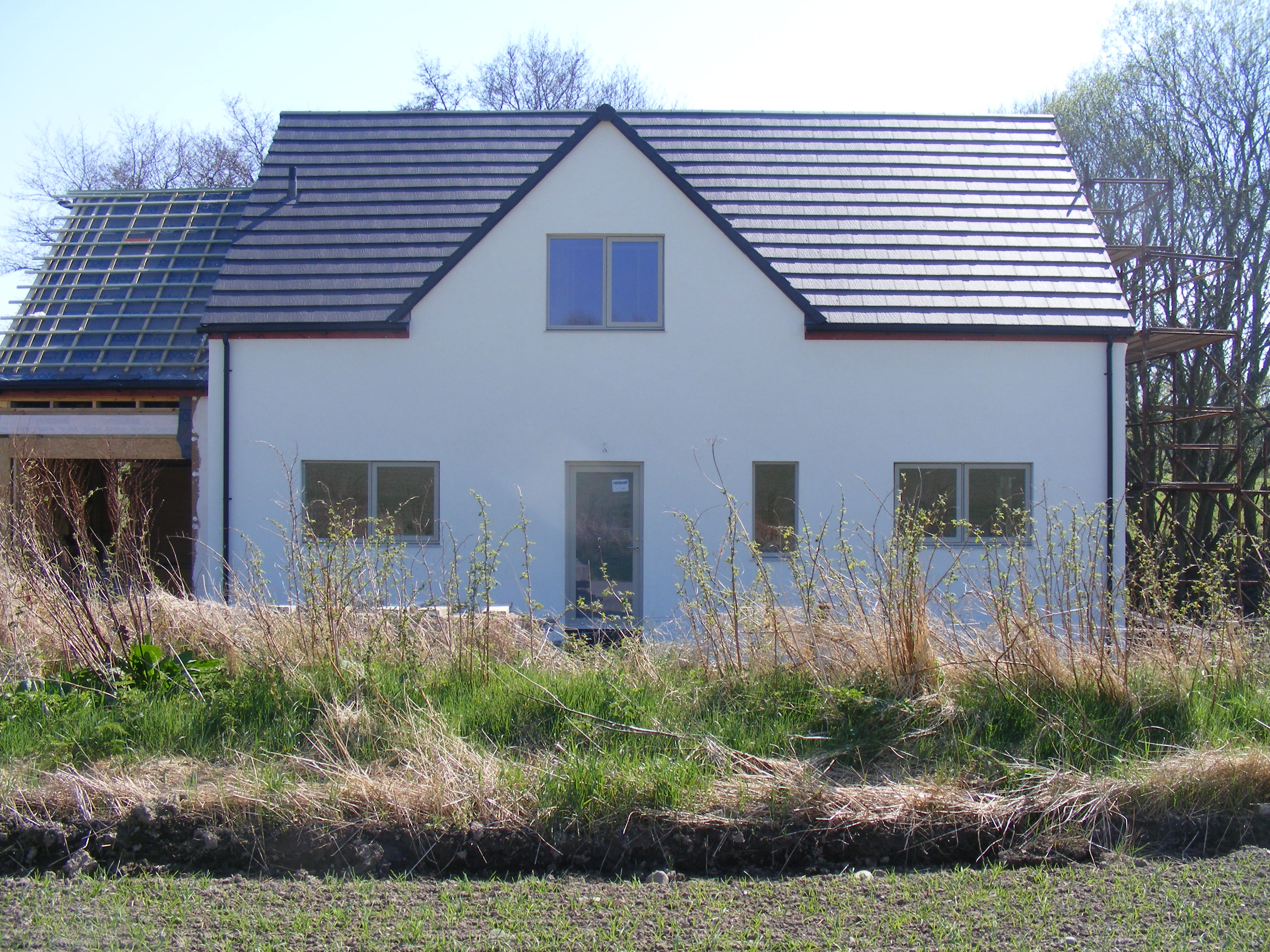
The Baumit website I did not find very helpful. So I'll give you a leg up. The base coat is MC55W, mixed from powder and lime based. then a painted primer DG27 is painted on. Finally the "Silikon Top" top coat is applied that comes ready mixed in a tub. You can buy that in different colours and different textutes.