
ProDave
-
Posts
30688 -
Joined
-
Last visited
-
Days Won
424
Everything posted by ProDave
-
Choose an inverter driven heat pump. 1: is it's electrical input rating, less than 2kW for a 5kW heat pump for instance. 2: single phase unless you want something massive 3: Soft start inverter drive 4: starting current same as running current in 1: And pick a make and model that you might choose. Of course you might change your mind.
-

Temporary heat source for UFH: Willis heaters
ProDave commented on oranjeboom's blog entry in Kentish RenoExtension
On the new build I am on I noted today, that the D2 pipe has 9 bends or elbows in it. 22mm pipe. That would reduce it's allowable length to just 1.8 metres. but it must be at least 6 metres long. What's the betting BC never notice. The plumber is not always right. -
Temporary heat source for UFH: Willis heaters
ProDave commented on oranjeboom's blog entry in Kentish RenoExtension
It was sadly such an incident that resulted in a child in bed, getting drenched with scalding water when the tank did burst, that led to the introduction of the safety cut outs.- 159 comments
-
- 1
-

-
- willis heater
- ufh
- (and 1 more)
-
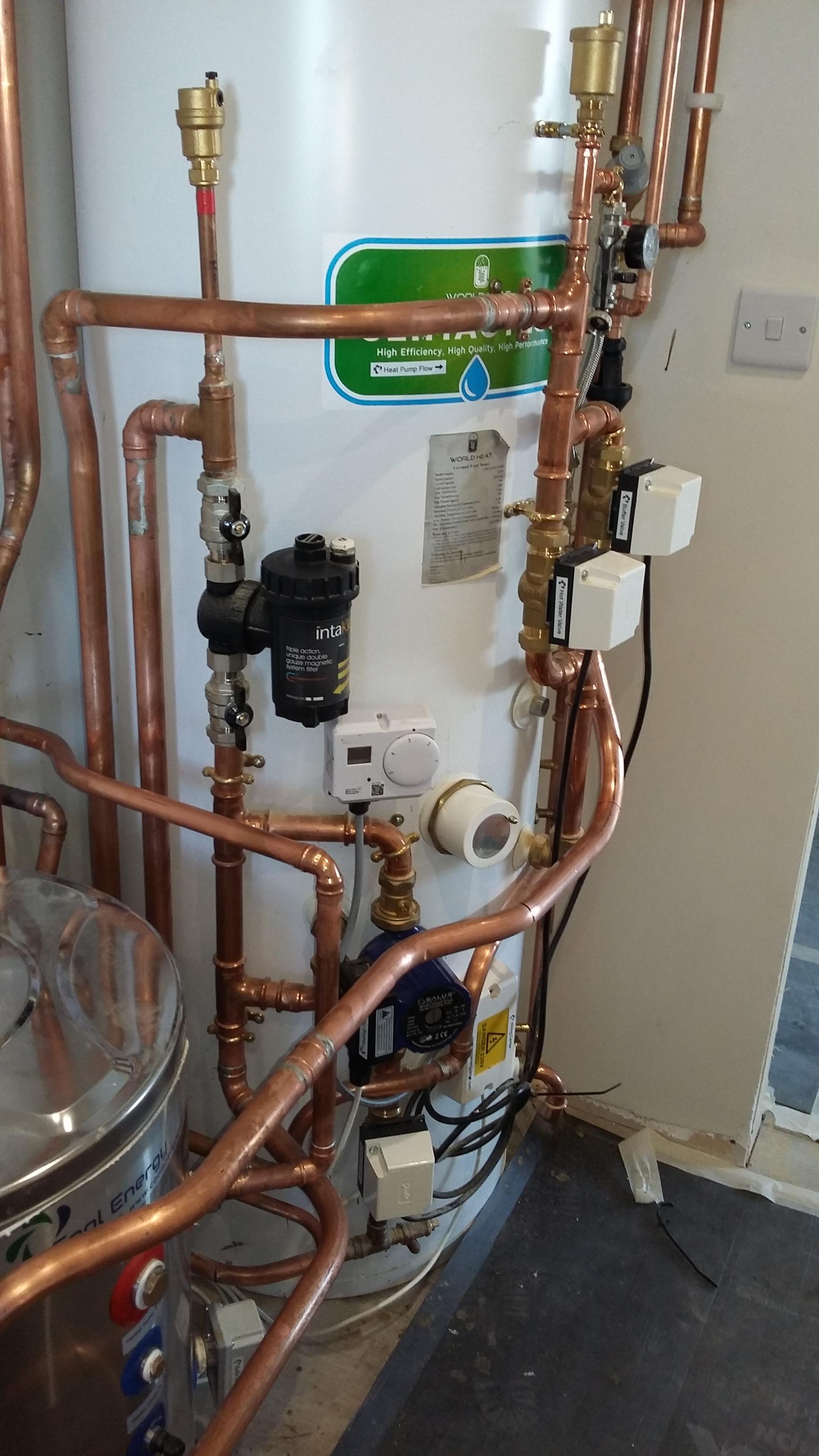
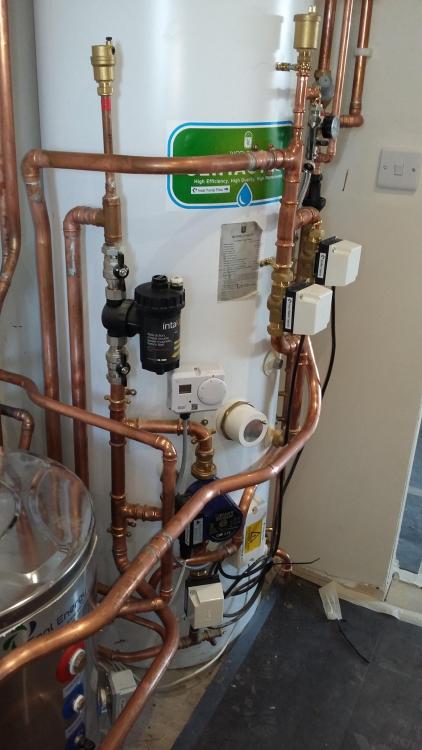
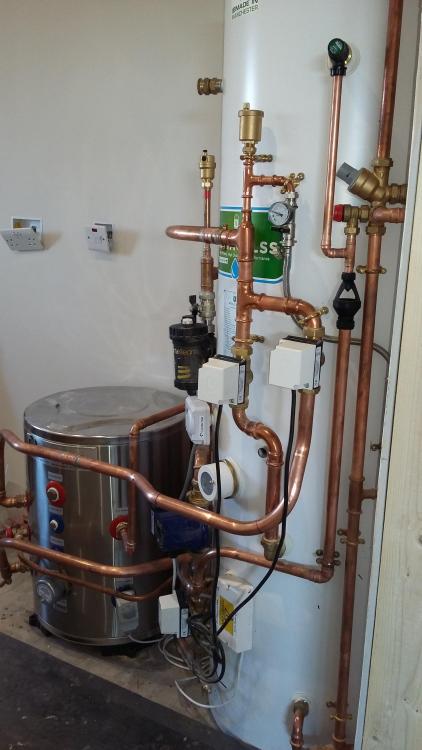
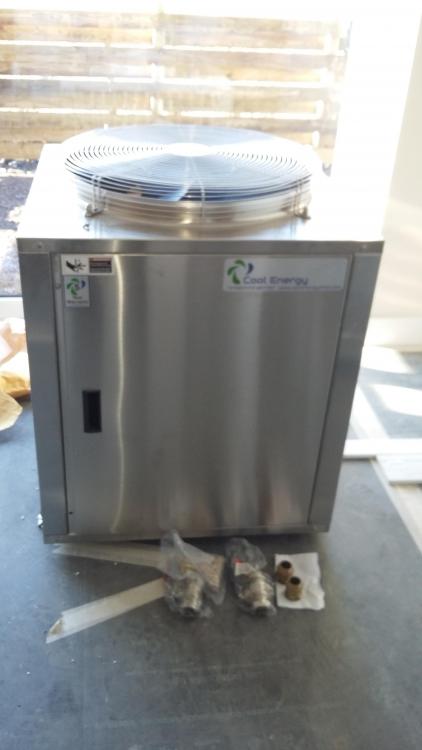
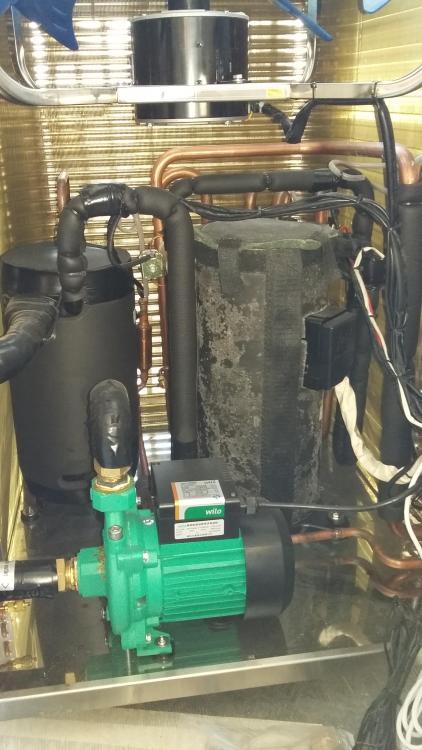
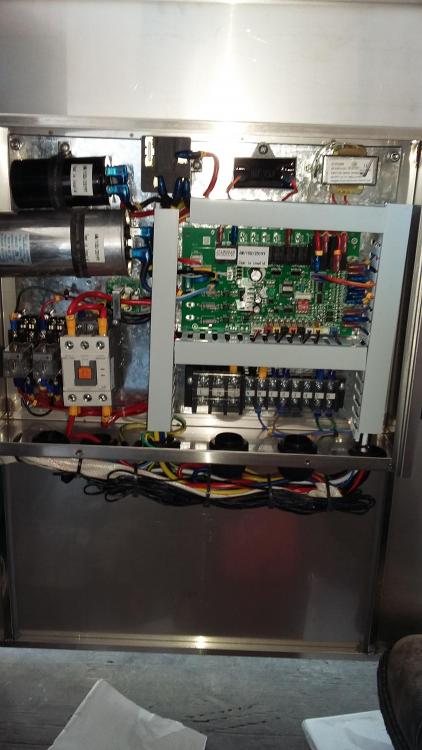
A few people have mentioned these. As it happens I am wiring one at the moment. So I thought I would make a post about it. This is not my house and I did not choose it, so this is not a recommendation, just some facts and pictures that you may find interesting. It's going into a new build 3 bed semi, but the house is not built to a high standard. In the end the system was specified by the supplier as despite trying I could not get the owner to produce the SAP assessment that might have got a better system sizing. So it's a 12KW unit that has been supplied, complete with pre plumbed unvented hot water tank, and buffer tank. It will be driving radiators to heat the house throughout. So some pictures: the pre plumbed tank and buffer tank And the heat pump itself I must admit, I was not expecting it to have the fan on the top. That strikes me as a particularly odd design, as there is nothing to stop rain entering so it will be testing the IP rating of everything inside. Here is what's inside That's a particularly large circulating pump. It will be interesting to see how noisy that is. I do hope the plumbers will be using flexi hoses when they connect it. All the controls are inside a stainless steel box on the inside of the door As we have discussed before, this version is not inverter driven. It has a rated maximum current of 17A but they say to protect it with a C32 circuit breaker so they obviously expect a high start current. The controls could not be simpler. The HP just needs power and a volt free call for heat demand already provisioned for in the pre wired wiring centre. There are also pre made cables that have to be fed through, one for the programming unit, and one for a temperature probe that has to go in a pocket on the hot water tank. I will be back later this week or early next week to connect it once the outside unit has been put in place and to comission it when the plumbing is finished so more to follow.
-
I have never been a fan of combi boilers though plenty are happy with them. What people are suggesting to you is a "system boiler" that heats the heating and heats a hot water tank. The fact people are confusing you calling it an "immersion tank" While it does have an immersion heater, it is primarily heated by the boiler, so won't be any more expensive. An Unvented cylinder would be my choice so you get mains pressure hot water and the tank should be able to run more than one shower at a time (which I doubt a combi boiler would manage)
-
In the village i lived in down south one cottage by the river regularly flooded, but only to a few inches deep when the river came up. They had made it resilient by quarry tiling the entire ground floor including quarry tile skirtings. All electrics were well up the wall. The kitchen units were on taller than normal legs. When the flood came, the furniture went up on blocks and the kitchen kick boards came off. When the flood went down it was a case of mop out and put everything back. Due to the location the tenant had to wear a pair of waders to get in and out, sometimes even when the cottage was not flooded. Oh and remember to park his car further away.
-
And why would you want a hotter temperature upstairs? Many of us find no need for any heating upstairs.
-
Wood Fibre Insulation - Pavaflex/Pavatherm
ProDave replied to Joanna Susskind's topic in Introduce Yourself
I am intrigued to know what is so different about your design. It is surely a timber frame clad with wood fibre board (as is mine) and something (which may or may not be wood fibre) filing the frame. Have you tried the likes of insulation superstore for the wood fibre board? Perhaps the compromise needed as as I did, keep the wood fibre board on the outside but change for a different material to fill the frame with. -
I was trying to work out what that meant. If there was a gap in the chimney breast, filled with sawdust, I would not be lighting the fire.
-
The tank will have an immersion heater and many heat pumps also have an auxilliary electric heater that can all be turned on if you need a quick re heat.
-
Then just fit a normal ASHP. you have the option with a new build to fit UFH or large capacity radiators that work well with lower temperature water so the ASHP will work well. The hybrid oil boiler thing is really aimed at a retro fit where you are stuck with normal radiators that have to run at high temperatures. the theory is the ASHP heats the water the first stage and the boiler heats it the last bit, but I am unclear how that really works in practice.
-
Is this for a new build or retro fit? What makes you think you will need a hybrid?
-
I just phoned all the merchants and SIG (Sheffield Insulation Group) were by some way the cheapest for Frametherm 35 and they delivered with their own lorries. But just because they were cheapest 3 years ago does not mean they will still be the cheapest. All the wood fibre for my build came via a local builder but I don't think retail is their normal model. In any event they went into liquidation afterwards and have since been swallowed up by another larger local builder, so unlikely to help you unless you are close by here.
-
As I mentioned in another thread, I provisioned for a "plant room" but all that is in there is the MVHR unit (quite a big one) and some of the heating controls. The HW cylinder is in an airing cupboard to put it at the middle of the house for short hot water pipe runs, and the ASHP is outside.
-
How big is all this 'utilities' equipment?
ProDave replied to puntloos's topic in New House & Self Build Design
I provisioned for a "plant room" That was almost a waste of time, The only thing in the "plant room" is the MVHR unit (which is quite a large one) and some of the heating controls and an expansion vessel for the heating. The hot water tank ended up going in an airing cupboard just like a "normal" house to get it closer to the main points of use. And of course a monoblock ASHP lives outside. -
Getting started on the PV G99 (and G100) minefield
ProDave replied to dnb's topic in Photovoltaics (PV)
One thing to bear in mind is they will expect the inverter to be G100 or G99 compliant. This might prevent you for instance picking up a G59 complaint inverter cheap from ebay as the DNO could be awkward and say no to it,. You can still install up to 3,68Kw and notify them afterwards, but if you want more you must apply. It sounds like it would be worth applying to see what they will allow and what the costs are. -
My only advice is look at your wiring before you buy. Unscrew the cover of the pendant and see how many wires are there. If more than 2 (one pair) then choose a light fitting where the base that fits to the ceiling is quite large. Some of the smaller ones can be really hard to terminate "loop at light" wiring.
-
Why are you against MVHR? A new build near my tried to get away with just trickle vents, but the air test result was too good and BC insisted he fit MVHR to the property.
-
You may not be passive, but I would expect it to be to a reasonable level of insulation. If you put in the detail to make it reasonably air tight as well, then MVHR is the final bit of the jigsaw to get your heating bills down to the minimum.
-
Yes, providing the house is reasonably well insulated and not too draughty. I am heating a house just under 150 square metres with a 5Kw ASHP
-
A simple VAT question
ProDave replied to ProDave's topic in Self Build VAT, Community Infrastructure Levy (CIL), S106 & Tax
Yes the plan is to reclaim the VAT with the temporary habitation, that might then give us enough capital to get on with the sun room which is what will hold up completion. I know that by doing so I will miss out on the VAT we spend on that, but some things I will still get zero rated, e.g if we buy the windows "supply and fit" they should still come to me zero rated as the house has not had completion sign off. It is only materials I buy to incorporate myself that I will lose out on. But however I run the numbers, borrowing to complete just so I can get all the last bit of VAT back, works out more expensive that forfeiting some of the VAT. -
I am planning soon to apply for a temporary habitation certificate, and use that as my evidence of completion to do my VAT claim, even thought the house is not yet finished. I understand I have 3 months from that being issued to get my VAT claim submitted. My question: Is spending AFTER the date of the temporary habitation certificate but before the date of submitting the claim still eligible for the VAT refund? Or must I complete all my eligible spending before applying for the temporary habitation?
-
Maybe outside your area but Black Isle Renewable seem to do Mitsubishi.
-
choose decrement delay over u-value for room in roof?
ProDave replied to MarkyP's topic in Heat Insulation
Here is another angle to look at it: Are you having any solar PV? If so then best absolute U value will serve you well to minimise winter heating, knowing that you will have free electricity when it's hot to run active cooling for free, making decrement delay less important.