
ProDave
-
Posts
30688 -
Joined
-
Last visited
-
Days Won
424
Everything posted by ProDave
-
At our last house we had upstairs and downstairs UFH in biscuit mix both on suspended floors. Downstairs was tile or wood floors, upstairs was carpeted. The floors need to be specified for the extra dead load of the biscuit mix. At the present house we have downstairs timber floor UFH using biscuit mix and the small amount of upstairs UFH just in the bathrooms, uses spreader plates.
-

Ensuring vaulted ceiling won't get hidden condensation
ProDave replied to Jilly's topic in Ventilation
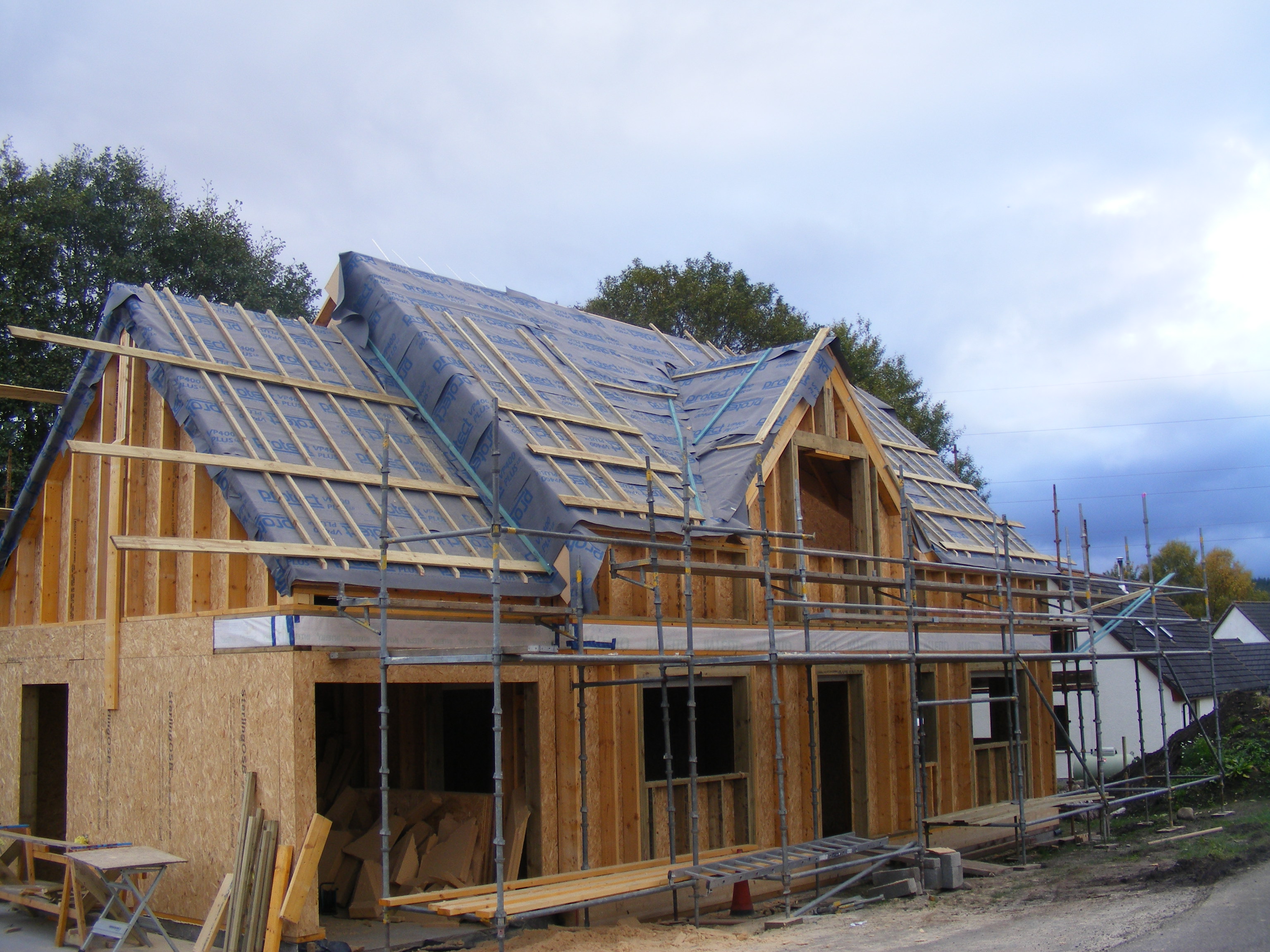
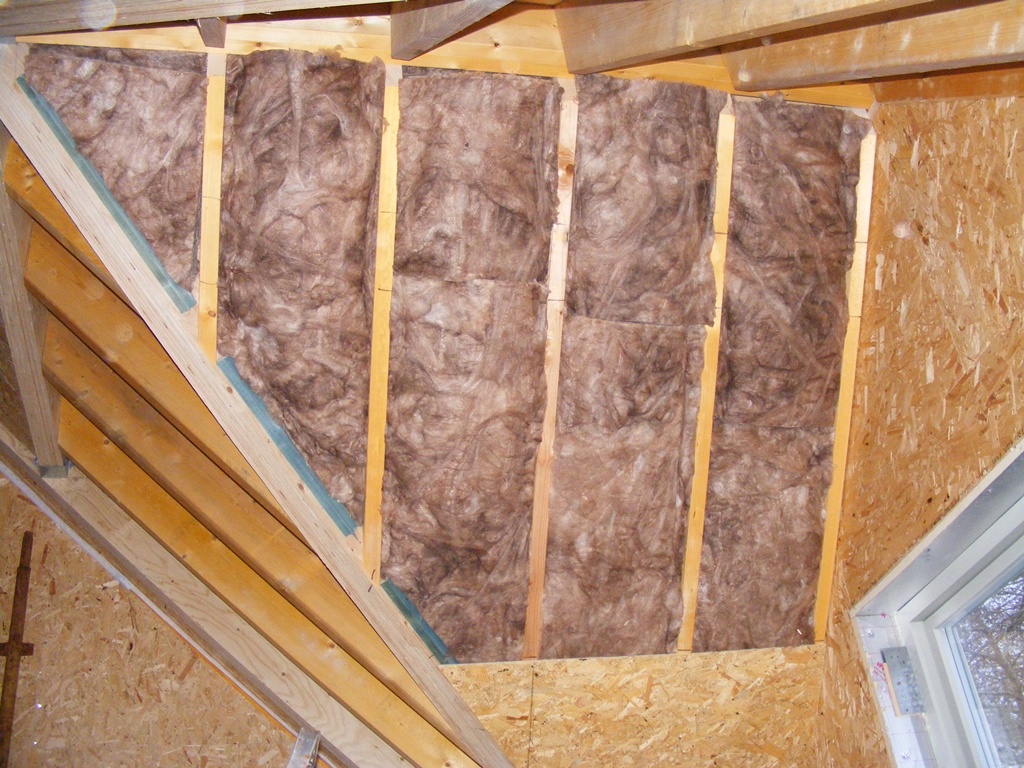
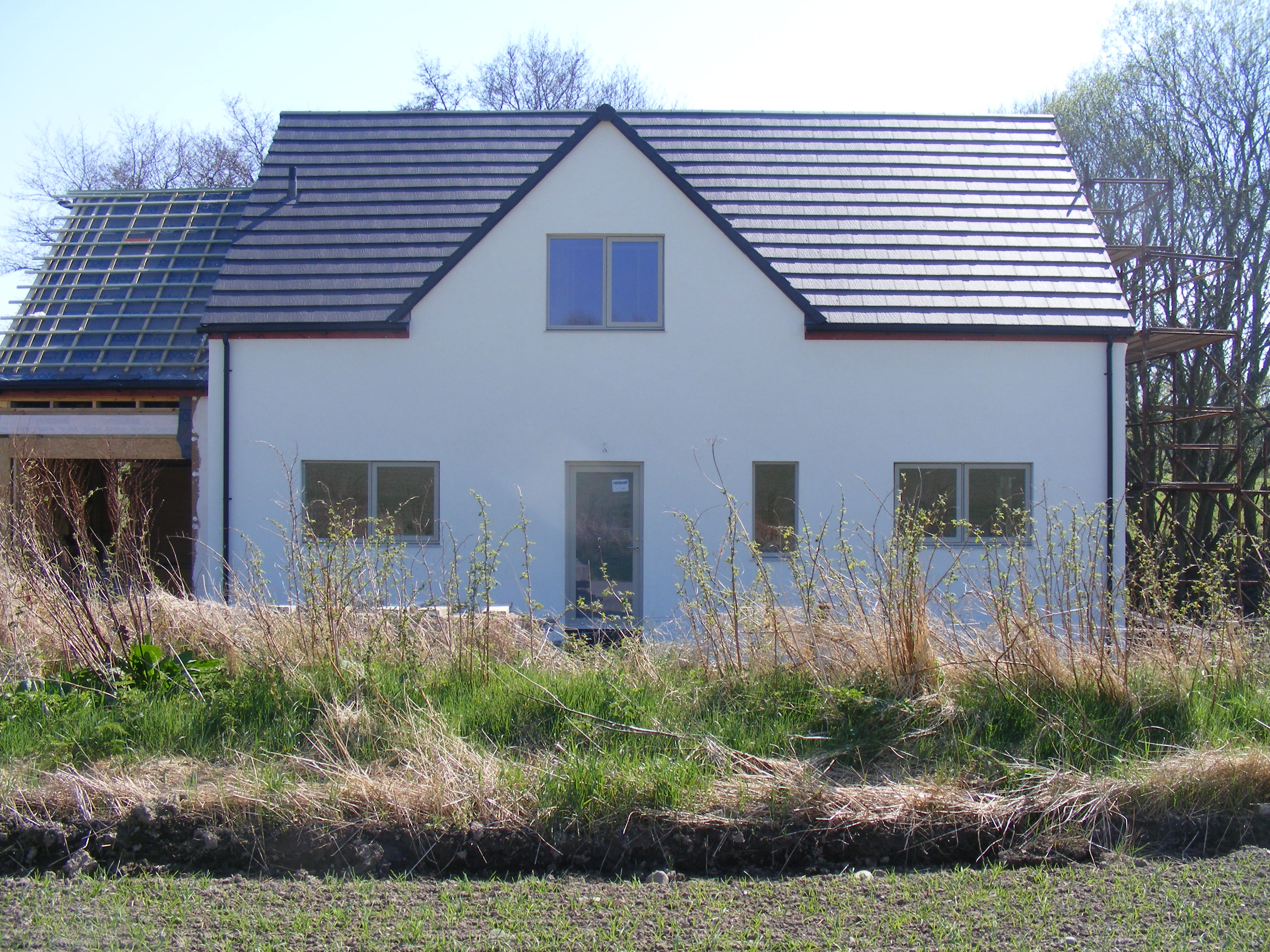
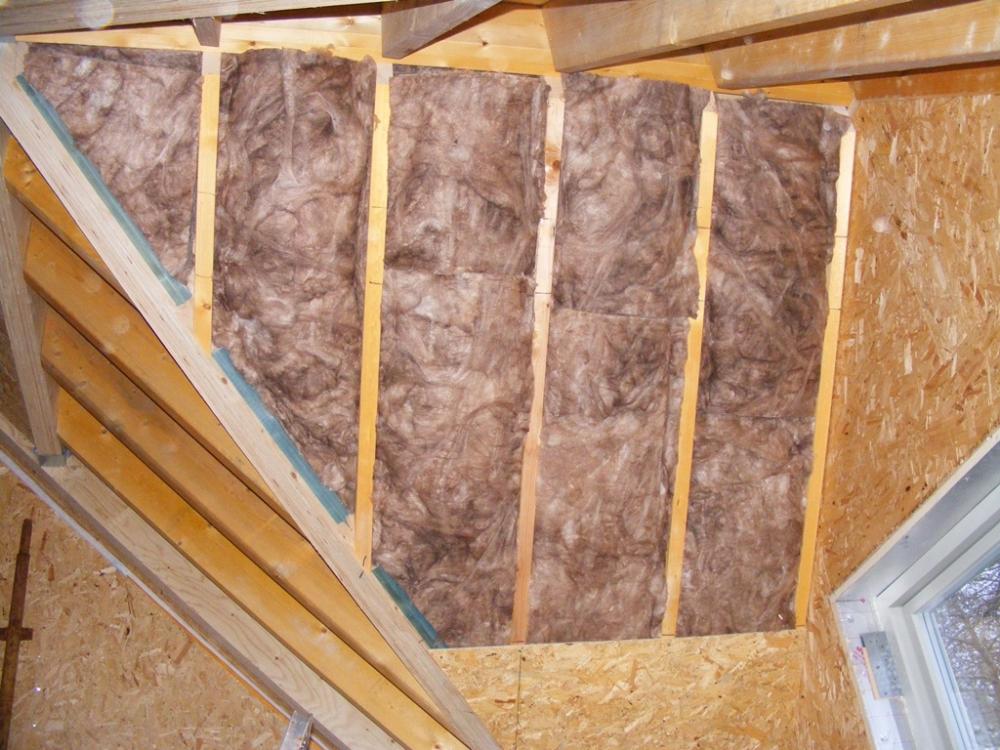
Outside to in: Concrete tiles tile battens counter battens (forming a ventilated cavity vented at ridge and eaves) Breathable membrane 100mm wood fibre board acting as sarking board. 200mm rafters, insulated with Frametherm 35 (fitted from inside) 11mm OSB racking layer Air tight membrane 25mm battens forming service void 12.5mm plasterboard, plaster and paint. Frametherm insulation in ready for OSB to to on. Roof from outside, membrane over wood fibre board, counter battens going on.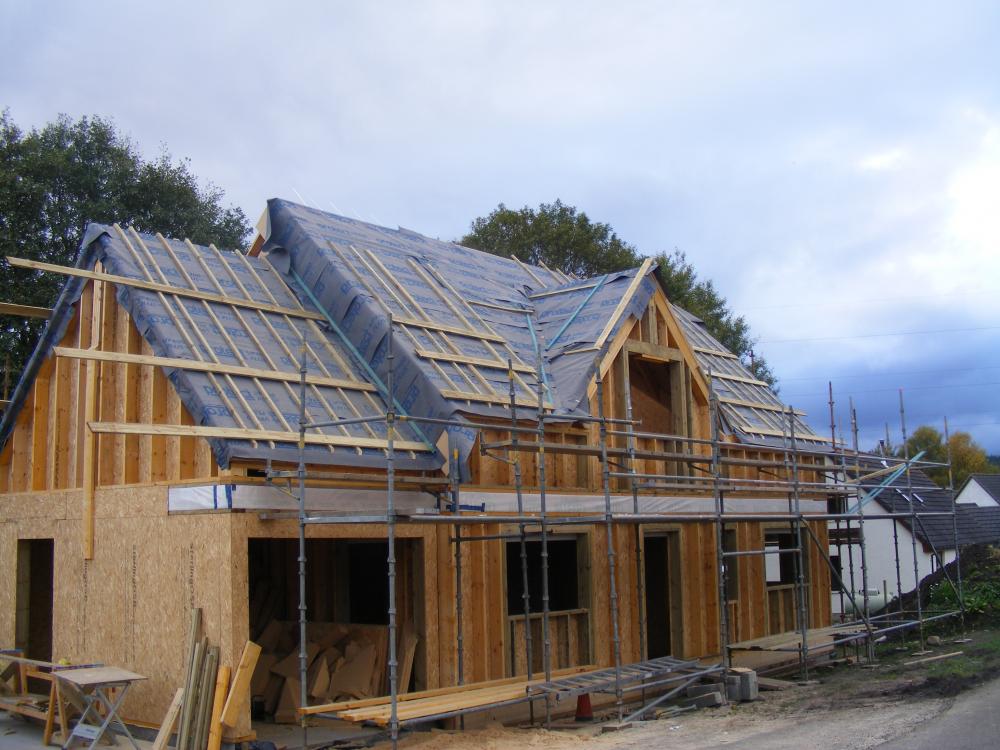
-
Ensuring vaulted ceiling won't get hidden condensation
ProDave replied to Jilly's topic in Ventilation
Is the roof on yet? What is above the membrane in the photo? If roof not on why not fit external insulation above the rafters and make it into a warm roof (very much like my own)? Then you have eaves vents and a ridge vent to vent the gap between the breathable membrane and the tiles, and are you really telling me it is possible for a bat to enter through the standard eaves vent profiles? (e.g the OV10 that I used) If the bats can't get in the type of membrane wrt bats is not an issue. -
No the circulating pump should only run when the HP is running. The noise might just be that a lot of heat pumps demand a high water flow so need the pumps running on a faster setting than might otherwise be required
-
Running out of hot water
ProDave replied to canalsiderenovation's topic in Air Source Heat Pumps (ASHP)
That could be it. the temperature probe wire enclosed by a bit of flexible conduit. The white wire at the bottom is the immersion heater. That looks to be halfway up the tank and I don't see a lower down pocket to move it to. If so the ASHP won't even know the tank is getting used up until half your water has gone. Up to that point, the water in the tank stratifies, that is the hot water does not mix with the cold coming in at the bottom to replace the hot that is drawn off. but as soon as the ASHP starts heating the hot water, convection starts within the tank, and that will cause the remaining hot water in the tank to mix with the cold at the bottom, so the first thing that will happen as the ASHP starts to heat the water, is the temperature of the hot water at the top of the tank DROPS before it then starts to heat up again. EDIT hadn't seen the second photo, the sensor looks to be more like 1/3 of the way up the tank. -
Running out of hot water
ProDave replied to canalsiderenovation's topic in Air Source Heat Pumps (ASHP)
An ASHP will usually heat the hot water according to a sensor supplied with the ASHP that is inserted into a thermostat pocket on the cylinder. Can you see anything that just looks like a thin wire disappearing into a small hole on the side of the cylinder? If so post a picture, and an idea of how far up the cylinder that sensor is inserted. When i set ours up first, I put the sensor into the higher of the 2 available pockets, which was half way up the tank. that did not work well, because the ASHP would not sense the water needed heating until half of it was already used up. It works a lot better in the lower pocket. Even so, the lower pocket on my tank is about 1/3 of the way up, so again the HP won't know the water wants heating until 1/3 of it has already been used up. Then remember a HP is much lower power than a normal boiler so takes longer to heat a tank of water than a boiler will. Re shower usage, I measured our rainfall shower at something like 15L per minute full tilt and if used at full would use half a tank of water in not much over 10 minutes. -
OOOh I never knew that. I had always quoted the whole message then deleted the bits of it I did not want to include.
-
@zoothorn We keep going round in circles your new room is nit getting hot. Turn the radiator off and just try heating it with a fan heater of know power. If the fan heater gets it toasty warm then the problem is with the heating system. If a fan heater can't even get it warm, then the problem is with the room.
-
Was the flooring laid before the doors were fitted? I would have expected the flooring to go right up to the door threshold.
-
Wetroom shower tray formers and vertical outlet trap options
ProDave replied to cwr's topic in Bathrooms, Ensuites & Wetrooms
I would be interested to see that. It mentions "valve" not "trap" so is it a version of a fanny trap? I wonder how it would stand up to a drain pressure test? -
Looks good, probably as close as you are likely to find, Let us know how it goes.
-
Okay so 12V out, I would try and find a 15V transformer. Buy the largest in terms of power that will fit the space. If you can find a pcb mount one with a matching pinout then happy days but unlikely and you might need to do some butchery. These are linear regulators and so they might be happy with a higher input voltage you don't want to go too high as it will just get hotter than whatever heatsink it has can cope with.
-
WC / Shower Room on Ground Floor vs Building Regs
ProDave replied to BartW's topic in New House & Self Build Design
I am still not understanding where the stairs from the ground floor appear on the first floor? All I am seeing is the stairs from the first floor to the second floor. -
Towel rails: easy to install right? Wrong.
ProDave replied to ToughButterCup's topic in General Self Build & DIY Discussion
Just say the word and it will be disappeared. -
Are you fitting the stone worktops yourself then? I thought most came supply and fit. If supply and fit, try and convince the supplier that this is a new build house and the fitting of the worktops is the last item needed for completion and then they will zero rate supply and fit.
-
Towel rails: easy to install right? Wrong.
ProDave replied to ToughButterCup's topic in General Self Build & DIY Discussion
My take would be phone the supplier and say "I have searched everywhere in the box and all the packaging, and I can't find the fixings that attach it to the wall" And delete this thread PDQ -
2700 sqft is (al bar some rounding errors) 270 square metres. Does it need to be that big? Our last house was 5 bedroom 4 bathroom in 180 square metres, they were not large rooms but adequate, with kitchen utility and 2 reception rooms downstairs. One way to get the cost down and probably the easiest for a first time self builder, is pay a builder to build a complete shell and then do some of the internal work yourself. But it is unlikely you will get the cost below £1500 per square metre. Other cost saving measures are cheap doors, cheap kitchen etc all of which can be upgraded later when you have the money to make it more posh. Is there a house design that would let you build a smaller livable house o a limited budget and then build an extension to make it into the house you really want later?
-
Yes that's right, 62kWh of heat using perhaps 20kWh of electricity, costing perhaps just over £3 per day at the coldest time. What are your actual winter electricity bills (which will include everything else you use as well as heating)
-
On the face of it that should be a pretty energy efficient house. But see if you can do that "turn half the house off" test for say 24 hours? 5671kWh of heating, which you will only need for 6 months of the year, is about 31kWh per day average. A very rough assumption is in the coldest time it will need twice that (and a lot less at the start and end of the heating season) so say 62kWh on a cold day. It's a 7kW HP so will take just under 9 hours to deliver 62kWh of heat running continuously. How long have you got it set to run for at the moment? is it as simple as not long enough? Remember also a HP will only do DHW or heating, and it is probably spending an hour a day for DHW so you want to be looking at it to be on for longer. Ours is set to come on at 6AM and off at 9PM During the day the room thermostats will turn it off once up to room temperature so it won't normally run all day but it could if needed.
-
Then that sounds like the ASHP may be too small for the house if it is failing to heat the UFH up to the set temperature. To test that theory, if you are not using all the rooms, turn the room thermostats down in some rooms so you are say heating only half the house and see if it then reaches the set temperature. How big is the house? What levels of insulation? Do you have any heat calculations e.g SAP? what size is the HP?
-
There are usually separate settings to set the water temperature for DHW and heating mode separately. Running the heating temperature at the lowest temperature it will work at will give the greatest efficiency for a number of reasons. If it is heating the house okay at this temperature then leave it alone, but if it struggles then find the setting and increase it a bit. Most units also have an option of weather compensation so will automatically increase the heating temperature as the outside air gets colder. Do you have the manual and do you understand how to change system parameters?
-
The back panel of the drawer unit is to give it rigidity. But if it is adjacent to and fixed to other units, you could remove it completely. That would give you access to the standpipe simply by removing all the drawers from the unit. Unlike a cupboard unit, you don't need the back panel to make the unit look nice on the inside because you never see the back. Put the water feed and 13A socket there as well, but you want an isolating valve in an accessible place to shut off the water so I would put an isolating valve in the back of the sink unit clearly labelled so it is easy to shut off the water in a hurry.
-
Running external supplies (borehole and TP)
ProDave replied to SuperJohnG's topic in Electrics - Other
Are you talking outside now? I just ran SWA cable buried in the ground next to the drainage pipes to the treatment plant. Why dig a separate trench when it can go in the same one as the drain pipes? they come into the house in different places so the SWA just branches off from the drain pipe and in through it's own duct and up right under the consumer unit where the SWA is glanded into the case of the CU. If I had a borehole I would have done the same, it's cable would have been SWA buried direct entering through the same route. The SWA is buried direct in the ground but does pass through ducting under through the foundations and up under the floor, with the duct sealed where it emerges. -
Which plywood to use?
ProDave replied to TheMitchells's topic in General Self Build & DIY Discussion
You are building it onto a frame, that is the stuctural bit, so I would not worry about getting non structural ply. To be honest I would go and look at what they have and choose based on the finish of the face that will show. "Construction industry" is still open during this lockdown. Go dressed in your "builders" clothes and you should be okay. -
Still -4 here. No ice forming at all and I am not aware of the ASHP defrosting for some time. It is at or just above 0 with high humidity (fog) that is the problem region. We don't seem to get that often here.