ProDave
-
Posts
30862 -
Joined
-
Last visited
-
Days Won
427
Everything posted by ProDave
-
For these sorts of permanently on big loads, they are best fed from their own radial circuit with a 16A mcb in the consumer unit, and then you don't need an FCU but a 20A double pole switch instead. As others have said this is common with some makes of FCU.
-
And also https://www.thefusecompany.com/
-
Retrofit non-combustible insulation sleeve on flue?
ProDave replied to MarcelHoldinga's topic in Stoves, Fires & Fireplaces
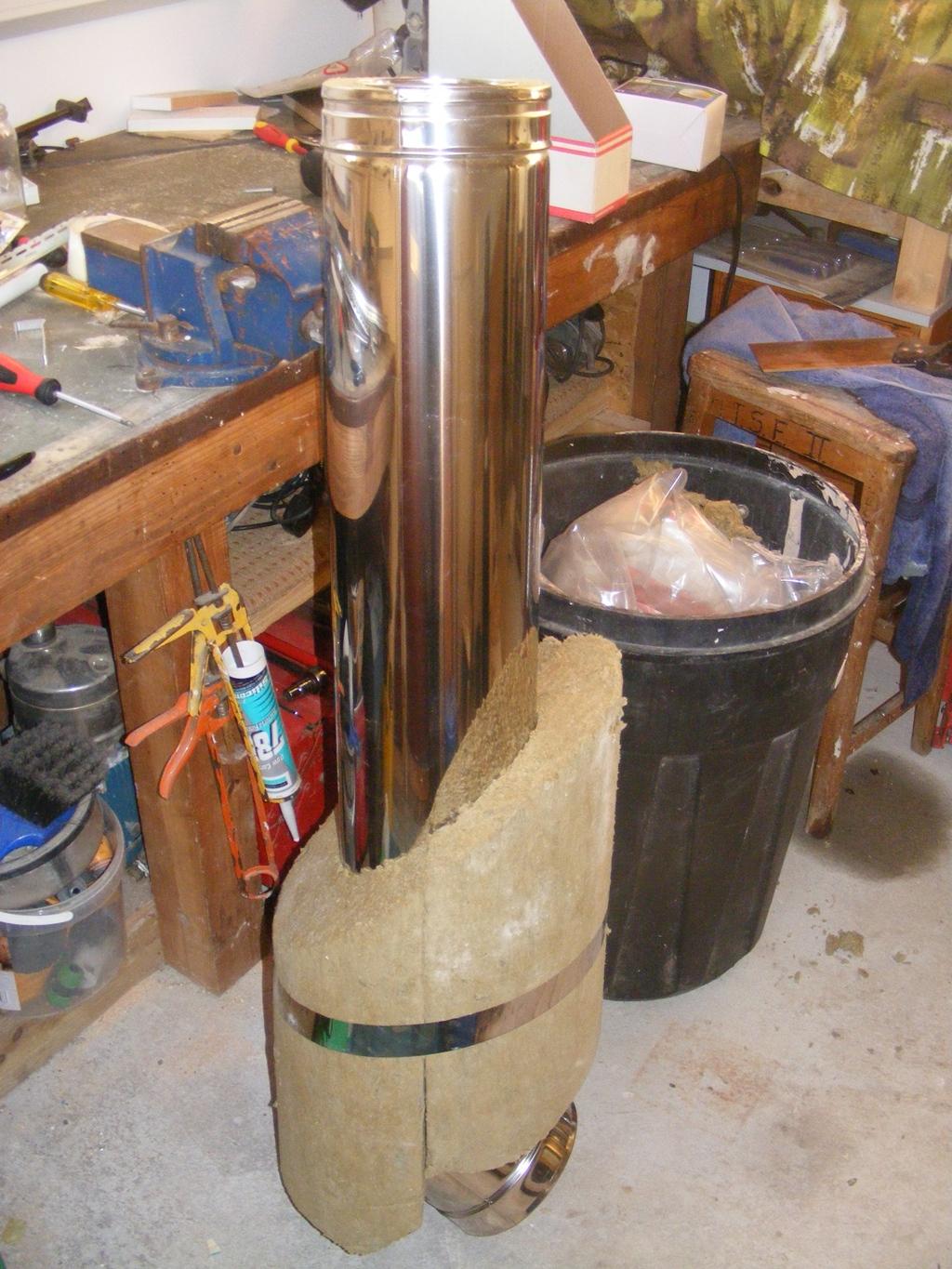
In my case the insulated sleeve that I used was made and supplied by the same manufacturer as the twin wall insulated flue, so one should be able to trust that a product sold for this use should be safe indefinitely for use in contact with that flue. In practice, in my case, the twin wall flue at the roof exit, approximately 7 metres above the stove, gets barely tepid even when the stove has been burning for some hours, but in other installations that may be very different, e.g. you might have a very much larger stove than mine. -
Generally no, you should not mix and match. Unfortunately although certain aspects of an MCB are defined by various standards, these do not extend to the height and size of the terminals. So a wrong make of mch or switch the terminals may not line up with the height of the busbar. It is in theory possible to mix some makes together but no electrician would admit to doing that other than for research If it's an MK board, there should be no problem finding an MK RCD for it or alternatively individual MK rcbo's
-
Retrofit non-combustible insulation sleeve on flue?
ProDave replied to MarcelHoldinga's topic in Stoves, Fires & Fireplaces
I wish I had known about the air tight grommet mentioned above, but would be stupidly difficult to retro fit. -
13A unless there is a good reason for lower.
-
Yes but I would prefer a 45A DP switch or a switched FCU
-
Re the floor. A guy near here started converting a steading. He needed to lower the floor 6" to get enough headroom for an upper floor. Once he had scraped 6" off the floor (he needed to go deeper for insulation and concrete) he had reached the bottom of the "foundations" that the walls were built on. He ended up knocking the lot down and doing a new build.
-
If it is just the lower part of the roof that is affected (i.e. below the ties) can you not prop up the rook on acro's dismantle and rebuild the wall and repair the damaged parts of the roof? Cut off the damaged parts of the rafters and sister new timber alongside?
-
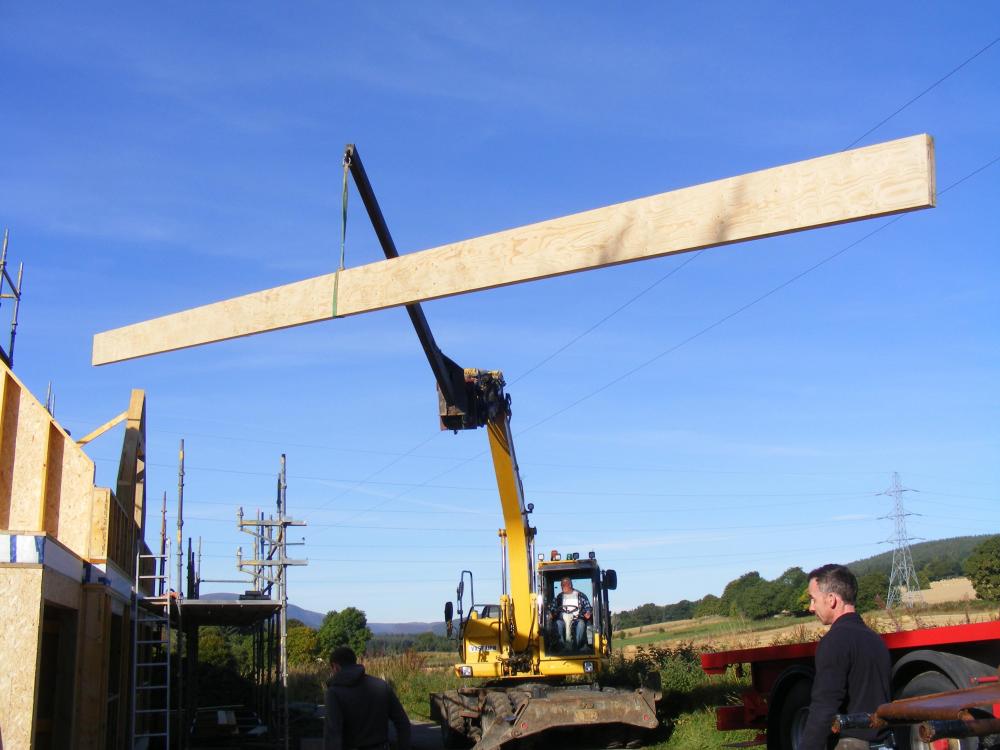
Here is my 11M ridge beam being lifted on with an extended jib on the digger. Larger beam so did not bend significantly and once balanced lifted from a single point.
-
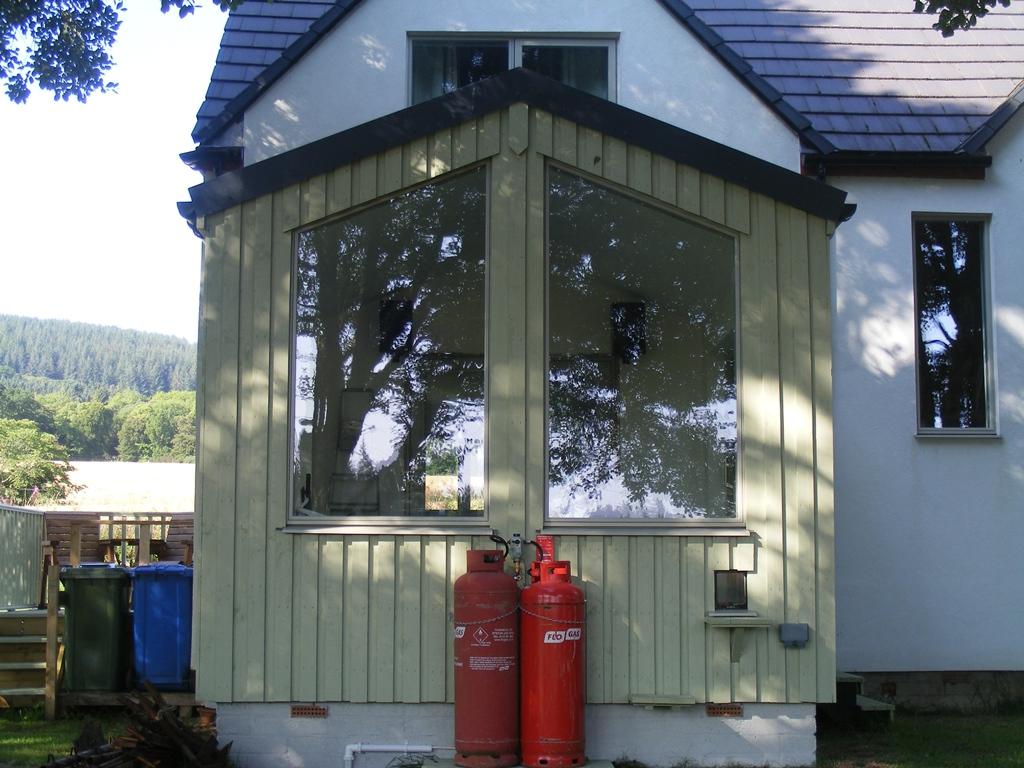
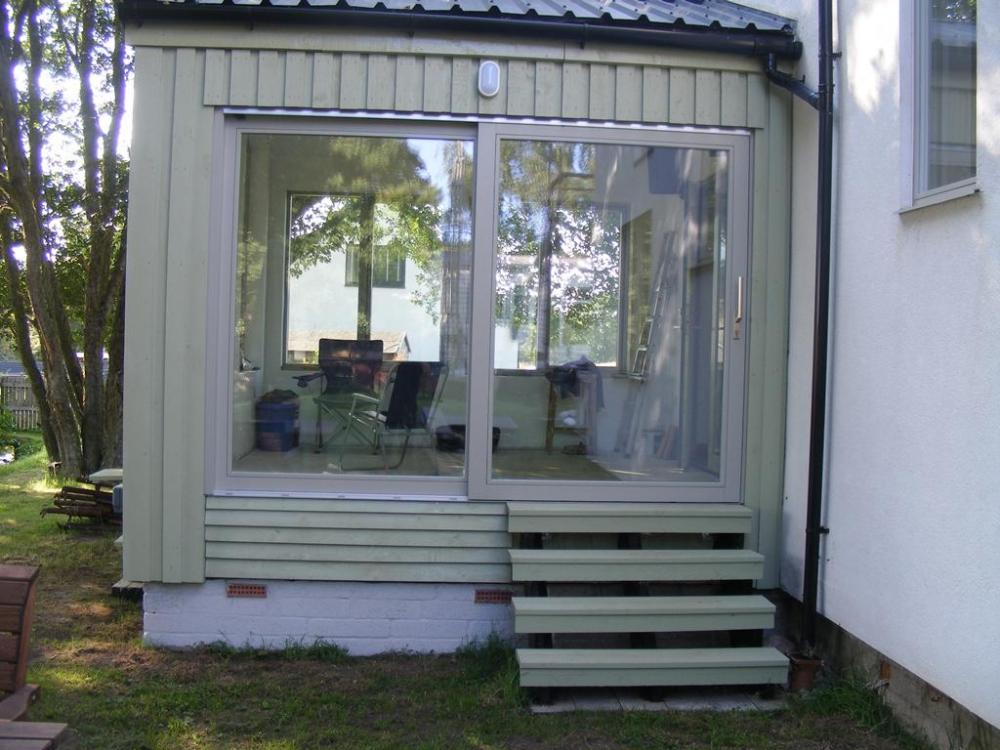
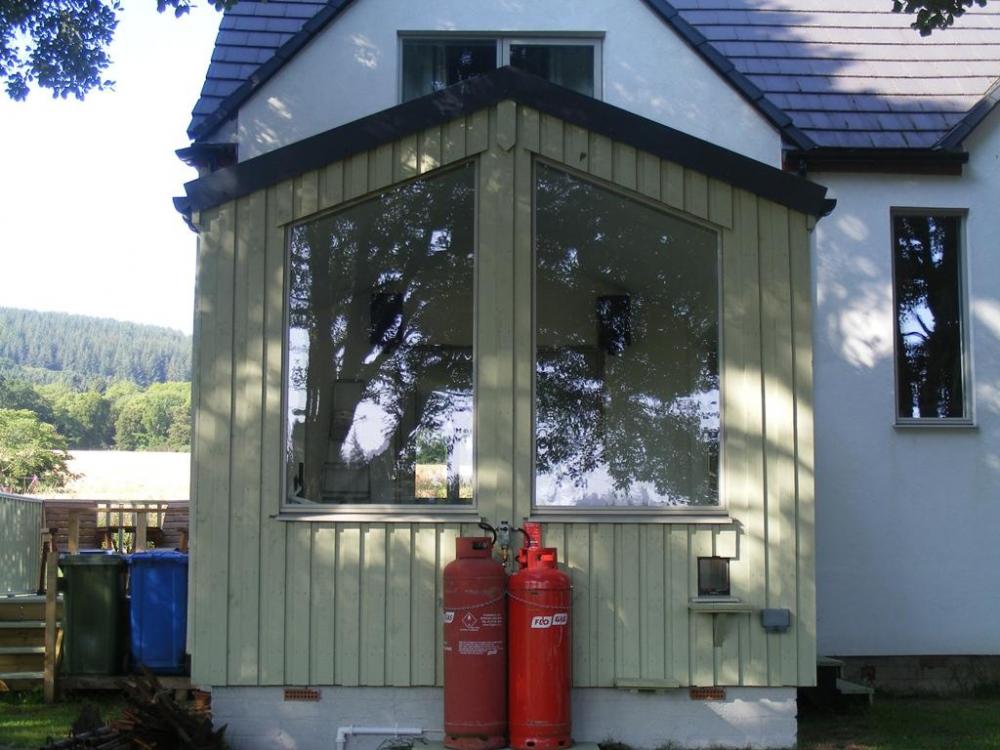
There is now a platform just outside the cat flap, and another level with the bottom of the cladding. The cat has to jump.
-
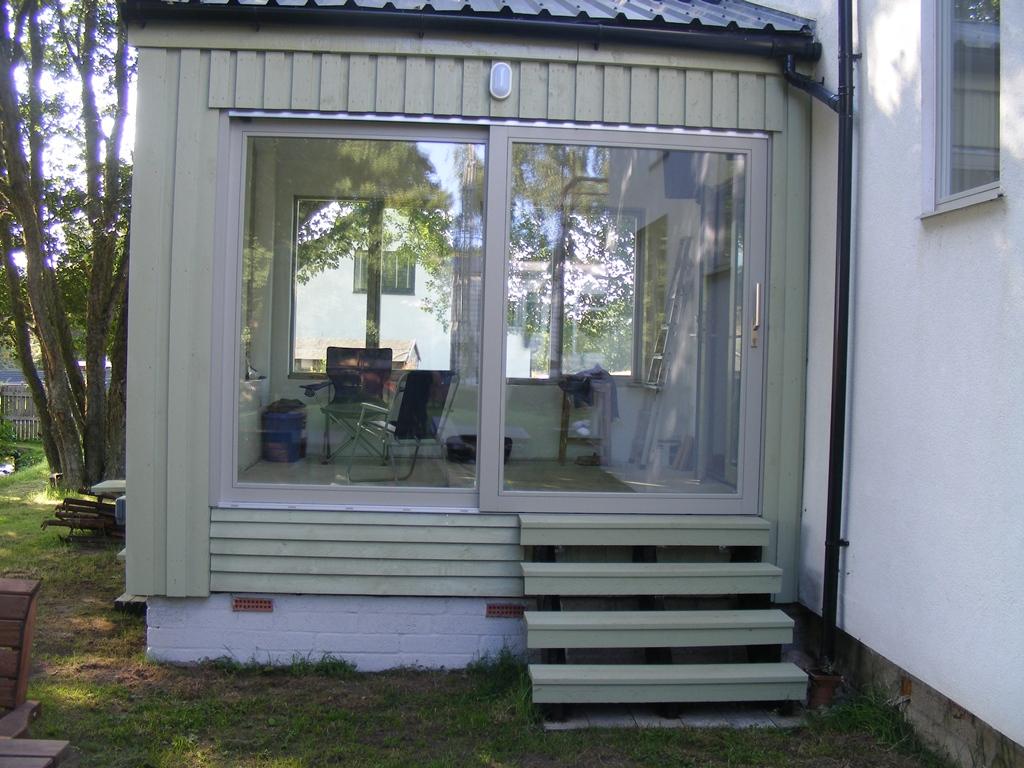
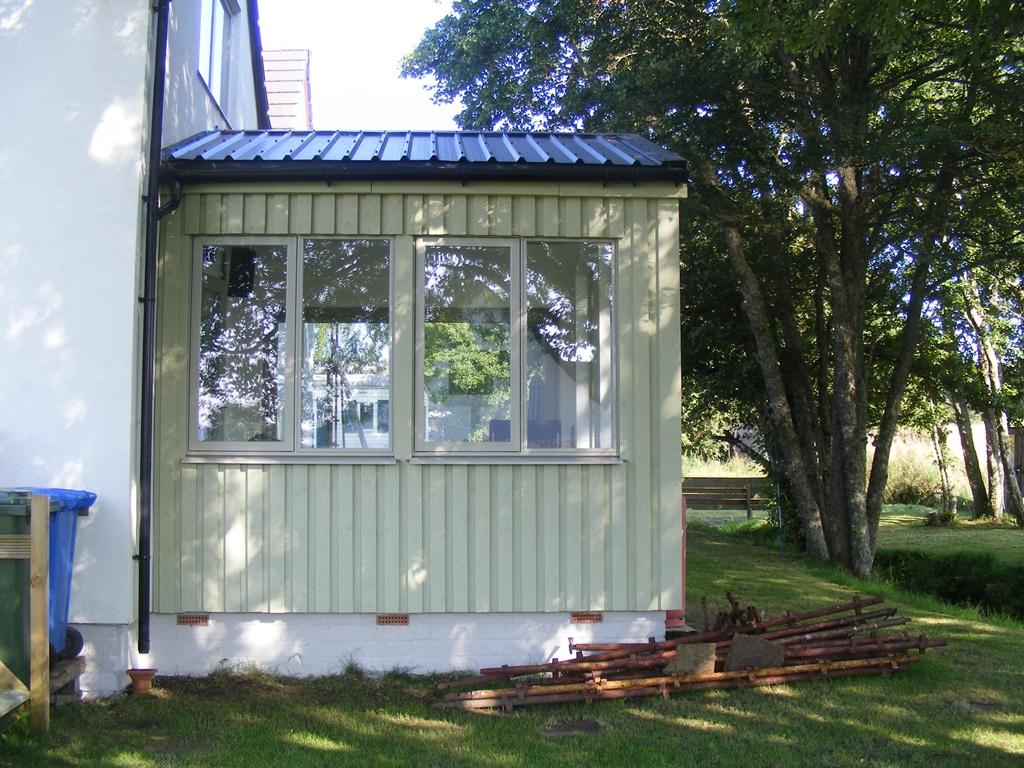
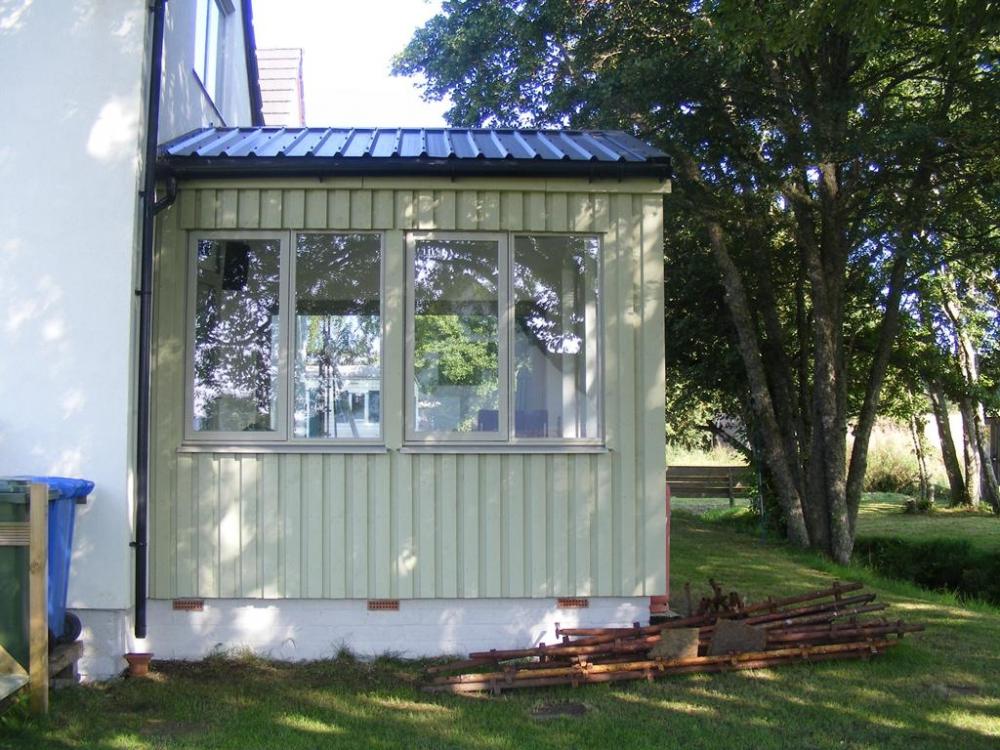
That's the cladding of the sun room now completed.
-
Left over engineered oak flooring made the upstairs door frames, most of the window boards, the under stairs cupboard door, and there was just enough left to make the loft hatch.
-
If I understand it, you have built ONE replacement dwelling that in the original plans contained an annex that must be used as part of the main house. So I don't see how this will affect a VAT reclaim for that ONE dwelling? The planning was just making it clear that it is ONE dwelling, not two.
-
Downlight/spotlight on pitched roof with insulation
ProDave replied to richie9648's topic in Lighting
Flush downlights in a 45 degree sloping ceiling will probably not shine the light where you want it to shine. For our vaulted ceiling I used surface mount spotlights that you can point any way you want them to, and they work well. -
Yes we do have a stove. In theory it is room sealed, i.e. combustion air ducted from outside. But when the blower was on, the roof penetration for the stove flue was one place where a small draught was just detectable. That and one of the velux windows had a leak in the corner, not between the frame and the building, but between the frame and the window, i,e, it was not sealing perfectly. Yes I am happy with the EPC and it and the air test will be submitted to BC for completion and then just filed.
-
Yes we do have a stove. In theory it is room sealed, i.e. combustion air ducted from outside. But when the blower was on, the roof penetration for the stove flue was one place where a small draught was just detectable. That and one of the velux windows had a leak in the corner, not between the frame and the building, but between the frame and the window, i,e, it was not sealing perfectly.
-
That opens a minefield of "statistics" Floor area is 158 square metres. I believe they have included in that the unheated "plant room" above the garage that is included in the air tight envelope of the house. The calculated heating energy usage of 6295kWh calculates to 41.95 kW per m2 My measured heating energy use of 1712kWh calculates to 10.83kWh per m2 but that is electricity in to the ASHP so at a COP of 3 would be 32kWh of heat per m2 So some way short of PH but still a "low energy" house.
-
If the light momentarily blinks when you flick one of the switches, then you have messed up the order of the strappers between the 2 switches. Seriously, you could spend days, and hours of our time taking pictures and trying to figure out what you have done wrong, or you could pay a local electrician an hours labour and he will have it all sorted very quickly.
-
Yes the figures are good. It's perhaps my expectation that was set too high. This was never designed to be a passive house but I kind of hoped it would get close. It is certainly way above the requirements for a building control pass. I won't be arguing the finer details with anyone.
-
Following on from this, the air test results enabled me to submit that and a whole host of other paperwork to get the design SAP updated to the as built SAP and the final as built EPC issued. The result is an EPC of A94. The usual recommendations that it could be improved to A96 by adding solar thermal (at a cost of £4K-6K) and could be further improved to A109 by adding a wind turbine at a cost of £15K to £25K I won't be doing either of those. The calculated space heating is 6295kWh per year which compares to a real life electricity consumption for heating of 1712kWh which either suggests my ASHP is averaging a COP of 3.67 or the real heat requirement is lower than calculated. The calculated DHW is 2336kWh which compares to the ASHP consuming 997kWh for DHW so again suggests the ASHP is achieving a COP of 2.34 for DHW. Obviously those are only very approximate. Just one thing that confuses me on the EPC. On page 2 there is a "Summary of the Energy Performance Features of this home" Here all building elements are given a star rating from 1 to 5 stars. Everything here gets 5 stars, except the Main Heating, which is correctly listed as ASHP / UFH that only gets 3 stars for Energy Efficiency and 4 stars for Environmental. Why is that?
-
Builder cut 4.5cm off joists due to floor level screw up
ProDave replied to Loz's topic in General Structural Issues
Get building control to look at it. If BC says no the builders won't be able to argue with him and they will have to correct it at their expense. -
I would say get a Telford Stainless steel UVC with a standard and solar input coil. Nothing to stop you using the PV and the ST at the same time.
- 5 replies
-
- 1
-

-
- thermal store
- uvc ( unvented hot water cylinder )
- (and 1 more)
-
As I have eluded to, the 3 port valves are complex things with a couple of microswitches resistors and diodes. As well as being able to stop and mid position, they also create the "call for heat" signal to the boiler. In principle you could connect a 2 port valve direct to the boiler flow and return to power the UFH independent of anything connected to the 3 port valve. However there would be 2 issues doing that. Firstly the 3 port valve at rest connects to the DHW port, so whenever the UFH was on, water from the boiler would flow through the tank coil and also ignore the cylinder thermostat in the process. And secondly you would probably have issues if you just connect the call for heat from the 2 port valve in parallel with the call for heat from the 3 port valve. Feeding 230V into the 3 port valve like that might have some unexpected complications. So i still say replace the lot with 2 port valves.
-
Retrofit non-combustible insulation sleeve on flue?
ProDave replied to MarcelHoldinga's topic in Stoves, Fires & Fireplaces
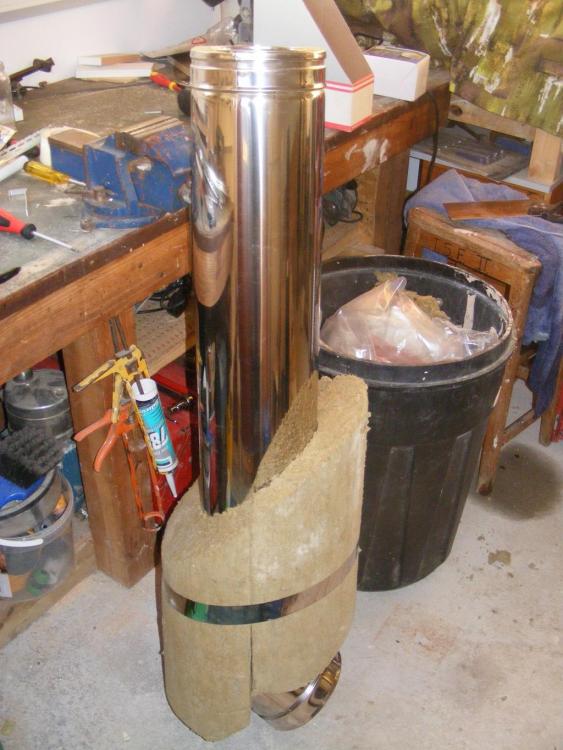
I bought an insulated sleeve as part of my kit from flue-pipes.com but they don't seem to sell it any more, but at least this gives an idea what you are looking for. It comes as 2 halves with a band to strap them together. I fitted the sleeve to the pipe before putting it through the roof.