markc
-
Posts
3754 -
Joined
-
Last visited
-
Days Won
22
Everything posted by markc
-
Another option (used many times on old walls or dot and dab etc.). Make a big hole, fill with plaster with a bit of cement added - goes off quickly and rock hard. Drill and fix into this.
-
When you look the tiles are almost horizontal so water will be blown up and user the top of tiles quite easily. As for the fixing I would fix fix OSB, insulation and OSB as one fix and then the sheets as a separate fix
-
Hi, not much experience of garden lighting but when it comes to 12/24v lighting used outside on heavy equipment I can say that names and price tags mean nothing. Red and white marker lights for example, think the ‘branded’ version are around £28ea and are garbage while the £4.50 made in China but bought from Poland are 100x better. Definitely worth trying a few depending on specific design or colour requirements etc.
-
Think I married her 😷
-

Meter tails, that aren't meter tails...
markc replied to HughF's topic in Consumer Units, RCDs, MCBOs
As this is an inverter supply, not a DNO head, I can’t see anything wrong with just breaking the single inverter supply. A DP switch would be “nicer” straight after the SP breaker but can’t really see it makes much difference in an off grid situation. -
I never thought about cork, but looking at it again I reckon @Alan Ambrose is right. If you squash a piece does it spring back to shape? If so then yes it must be cork, the white stuff will probably be a mould growing on it.
-
MVHR help water in pipes!
markc replied to hotnuts21's topic in Mechanical Ventilation with Heat Recovery (MVHR)
Condensate drain running up hill? No wonder it’s filling with water -
Effectively forming a rebate the frame sits in will work. If you wanted something less bulky you could put shear studs/pugs into the beam and have these in clearance holes or even sleeves in the top of the frame.
-
old paint pulled off wall... in places. Best way to prep?
markc replied to Del-inquent's topic in Decorating
Scuff with glass paper or emery etc. emulsion won’t stick to the smooth surface. May even need a wash over with dilute PVA. -
2 years and a bit after breaking ground....
markc replied to Moonshine's topic in General Self Build & DIY Discussion
Well done, any idea (or want to share) your build cost? -
It could be vermiculite, but possibly brown asbestos. Do you need to remove it? just re read your post, is this under the plaster? Or filling a void?
-
old paint pulled off wall... in places. Best way to prep?
markc replied to Del-inquent's topic in Decorating
I think it may be enamel or coach paint if this is an older property. If so then yes it’s hard! -
Typical wall build-up at solid brick party wall
markc replied to maxdavie's topic in House Extensions & Conservatories
Hi, you can do timber frame, build the wall (as for off site construction) horizontal, fully finish the outside (assuming you want to minimise gap to existing wall) and then raise into position, a little thought / details and planning needed as you can’t get back in the void. insulation in timber frame or inside new block wall, leave gap to existing wall empty -
Typical wall build-up at solid brick party wall
markc replied to maxdavie's topic in House Extensions & Conservatories
Do yourself a big favour here and don’t use the walls, build free standing on the inside. No grief from the neighbours that you have damaged the wall or gone over their side, no damp coming through because neighbour has heaped soil or compost against their side. No party wall agreement (discreetly put in your new foundations) -
Yes this is pretty normal, sometimes you are lucky and get it just right and they come apart without any grief, but getting the sleeve end through the gripper ring without grabbing is rare.
-
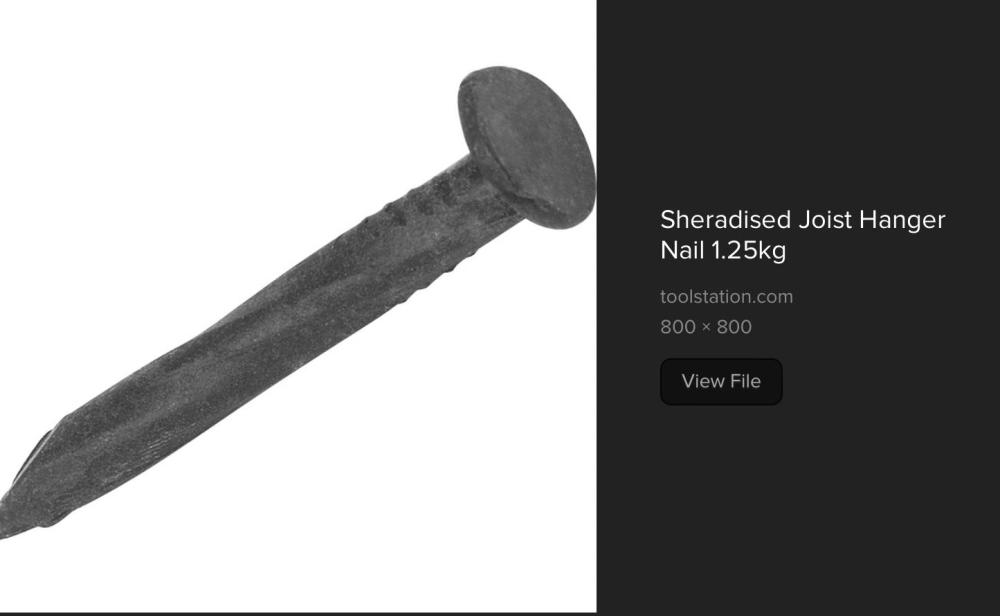
And the nails are
-
You can use screws, look for connector screws as these are made for the job, or you can use connector nails (these are very good in shear and have a twist in them, very tough nails) no problem packing the side gaps but it won’t make much difference to noise or deflection. Adding noggins will help if the joists are twisting. Replacing floor with 22mm boards fully glued and screwed will make a big difference
-
Grants come from the tax payer and just inflate the cost of something.
-
Encasement doesnt (normally) include base plates as grouted underneath and usually/often screed over the top. Baseplate is unlikely to fail or deform due to heat
-
I did too! “There’s mould in the bathroom” sure enough the fan was turned off.
-
Electric rads, I would say no switch needed as no regular maintenance/cleaning needed.
-
Good morning and welcome, If the basics are so “wrong” it is usually easier to start again than chase problems and improvements around the system. full re wires are disruptive but as floorboards etc are up then re plumbing is easier at the same time. as above, make a list of what needs doing and prioritise based on benefits and cost etc.
-
Nothing wrong or difficult in creating your own niche, main thing is ensuring water does not get into the stud work or behind the tiles.
- 1 reply
-
- 1
-

-
Patio / aco drain / air brick locations for
markc replied to richie9648's topic in Landscaping, Decking & Patios
In that case, why the Aco? Is it to reduce splash? -
Patio / aco drain / air brick locations for
markc replied to richie9648's topic in Landscaping, Decking & Patios
Is it an optical illusion or is the inside floor at the same level as air brick?