


ricardo100671
-
Posts
39 -
Joined
-
Last visited
ricardo100671's Achievements

Member (3/5)
1
Reputation
-
Wondering if treated timber is really a necessity if I will be fully and maticulously wrapping with breather mambrane, counter battening and cladding with T&G. Reason being I am buildiong a sauna and would rather not have treated timber that can offgas even though I will be lining with sauna foil. I will use treated for battens though Has anyone build with just C16/C24 and had it last years without issue ?
-
@Tony Thanks for your input. Yes I think that is a cencern that I may have overlooked, but, initially the room will be used as a workshop and if/when converted will be vapour barried before plasterboarding. Would this not address this ? Also modern, I believe, OSB sold in the UK and EU is typically manufactured to E1 formaldehyde emission standards, and many products emit very low levels of VOCs. The highest emissions occur when the boards are new and diminish significantly over the first few months.
-
Thank you @LaChab Exactly what I neded to hear and the idea of OSB in the inside is genius, even more saving as no need to plasterboard and have good service for securing
-
Any reason why I should not use 19mm over 25mm roofing battens for gapped rainsceen cladding - have a large project and every penny count. Some arguments have been about splitting during nailing, but if they are used for roofing, I can't see that it would be an issue. Also is the difference of 19 vto 25mm ventilation gap really that significant.
-
Thanks @SimonD I should have said, I am planning to use C16 47x95 stud, o fit the 90mm PIR and thanks for the tip on OSB size.
-
I am planning a small garden room build of 2.4x4.8m and was hoping to use 600mm stud centers with 11mm OSB sheathing and 90mm PIR to, not only, save on materials costs but recon this should also reduce thermal bridging. Since most ready-made garden shed typically have the same and given the extra rigidity of the OSB and insulation, I feel this should be good enough, but would like to hear from anyone who has experience having done similar or if there is some really obvious reason why this is a bad idea please. Thanks in advance.
-
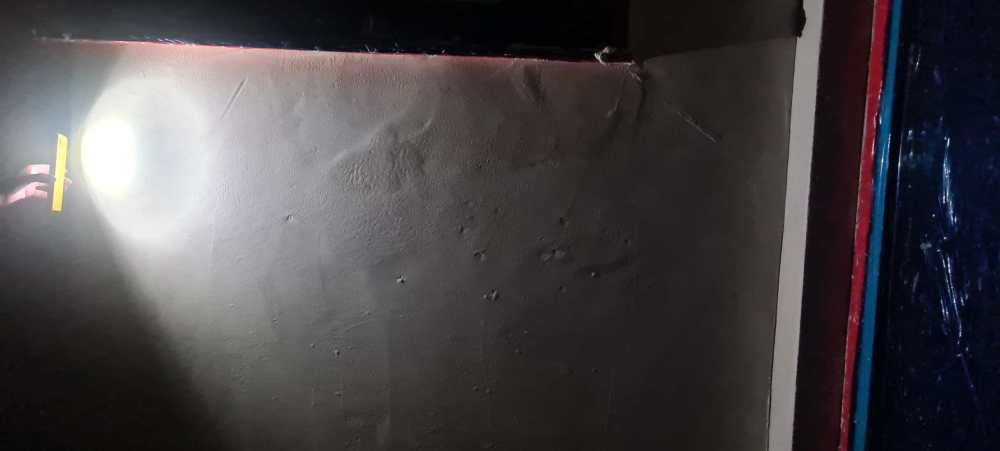
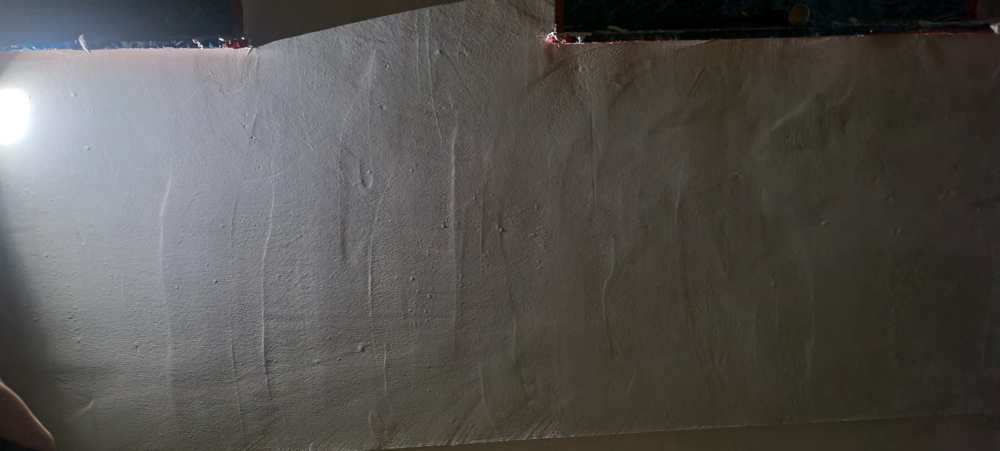
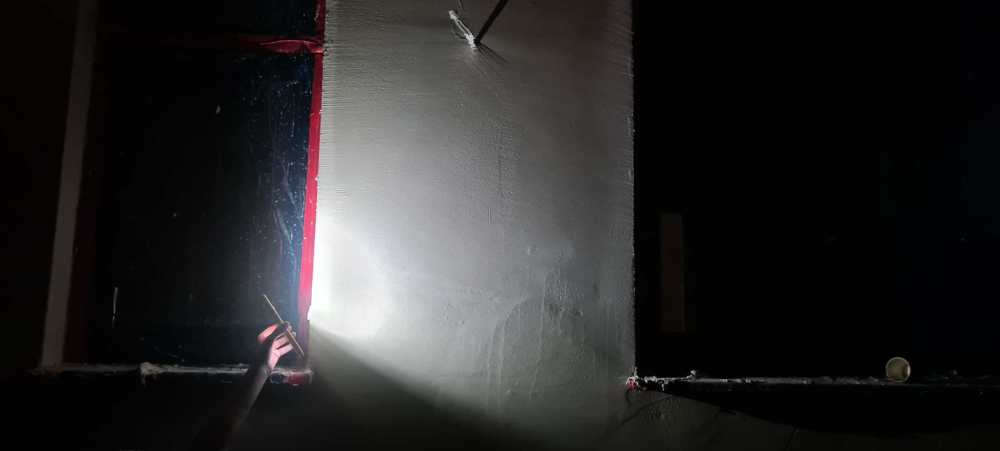
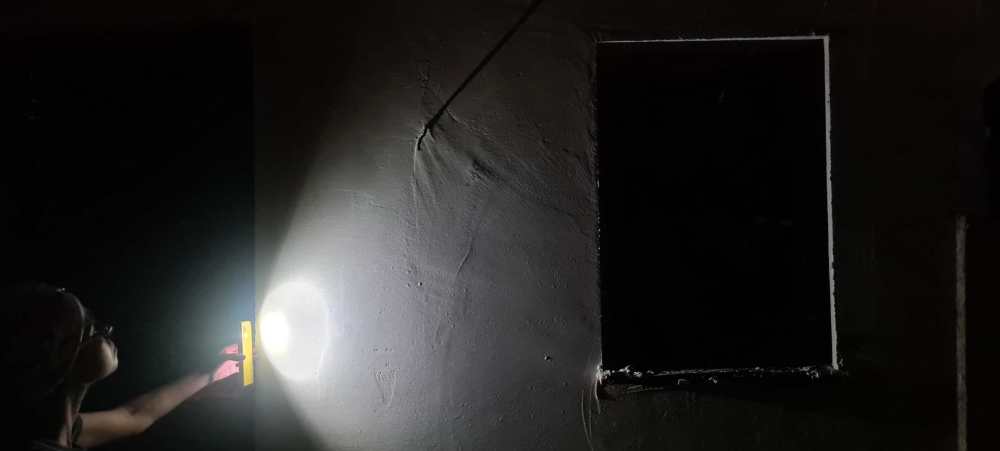
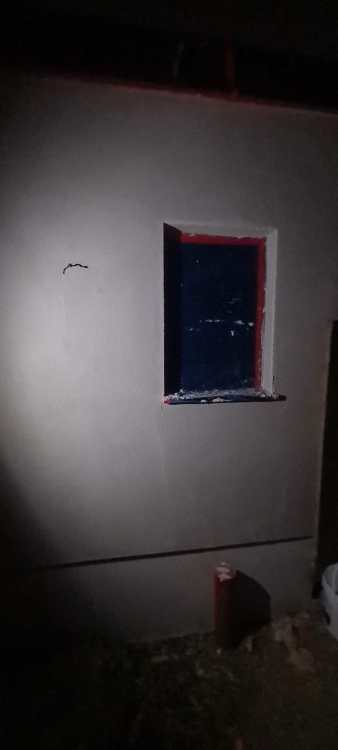
We are have our EWI finished with 1.5mm silicone render and plan to iluminate the walls with up/down lights, so need a good surface finish. Looking at the my plasterer's mesh and skim coat under makes me very worry that the finish will not be flat good. I understand that there is still the top coat to go on, but given it is only a 1.5mm by understanding is that it will reflect the skim finish and therefore should be representative of the final result. But I do't want to be over reacting, in the event that this is an acceptable skim coat finish that will still give a give finish. Please see photos




-
In response to your points - Vaillant wiring centre to wire in the mixer .... Yes I have now bought the VR71, which I think may be overkill, I think VR70 would have been enough, and have a sensoComfort and weather compensate connected already - You need a pump on the UFH ... Based on UP other vids about caldulating heads etc. I figured my system is low enough to be handled adequately by the boiler pump, since it is all ground floor and all rads are fed from manifold all with smooth curves. As for the flow rates, Can't understand why this can't be managed by flow restrictors on the manifold. I could check the deltas on the return to ensure I get correct flow for every loop, incl. rads. Any reason this would not work ? - You need temperature sensors on your pipework so that ... I see, yes I will have this as part of the VR71, but, I wonder, is this why I need the hydraulic separation .. I did note his mention on this, but did not elaborate and I guess I did not quite understand. If it is about sensing different temps for each circuit, would a sensor on flow before each manifold input not achieve this ?
-
Yes Correct
-
I did that based on the Urban Plumber's vid you posted above. You can see right at the start his manifold setup seems to tee off both flow and returns. If I need two circuits would I need 1 or more valves on this pipework somewhere ?
-
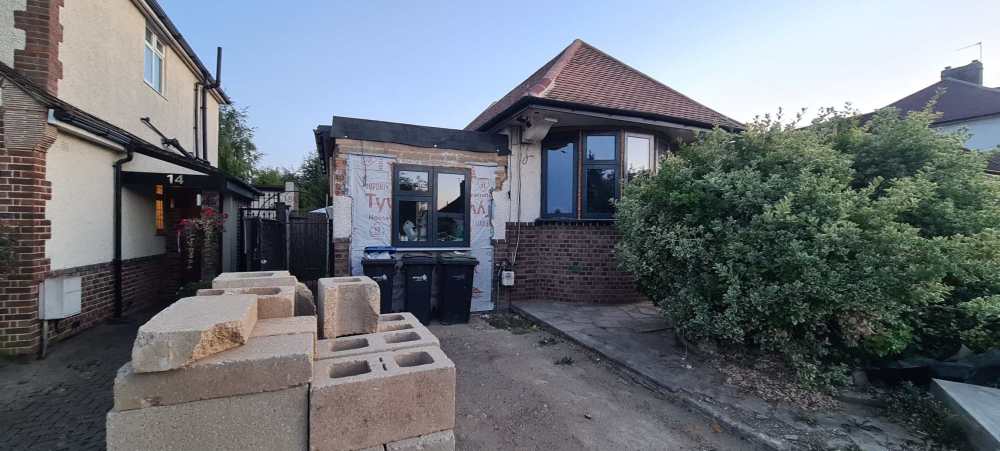
We have a 193 Bungalow, plannig to attach 2 layers of 50mm K5. Problem is Upper half of walls, is pebble dash, protruding by ~25mm and therefore would like inlfill lower half, as cheaply as possibe. Thinking to use 25mm XPS all the way to the ground, then over the lot with the K5. So, effectively, would have three layers on lower half (XPS+K5+K5) and two upper half (K5+K5). Would glue first layers with EWI 225 Premium, possibly full face coverage for the XPS and D&D for the K5. Then mechanically fix next layers with centered single fixing per board, followed by top layer with 5 fixings per board. Folks at EWI store told me I could not do 3 layers i.e. XPS+K5+K5, something about the K5 faces being to smooth, or something, allowing movement between layers, and advised to build up lower half with their mortar infiil, which would require 153 bags costing 1600 ex VAT and labour ! If movement between layer is really an issues, could I not just also add thin layer of adhesive between layer? Thanks in advance for any aevice
-
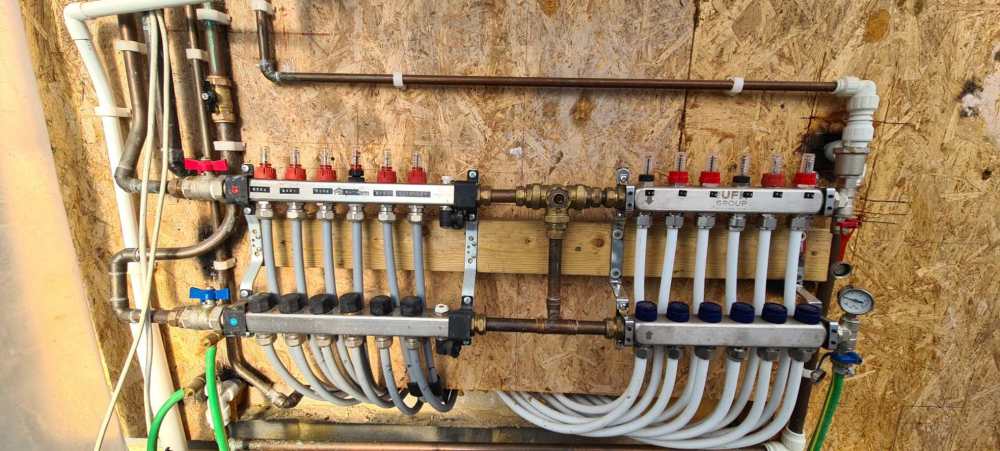
That is great ! Thank you. Just a couple questions after watching that - At around 1:00 he seems to describes how the valve maintains temperature by pushing the flow out to the return, but the at 1:40 he seems to state just the oposite that cool water is coming in to the valve from the return, which is how I thought mixers valves actually work ? - Do I need to have two circuits, if I only have a single zone, my thinking was that the ESBE will just always keep the UFH set at a relative temp to the RADS. So system flow would be 50 and I would restricit the ESBE set point so the UFH flow is only 26. Then the system should remain balanced if. i.e. if boiler lowers or raises flow temp depending on weather compensate rads/UHF flows should remain constant at same ratio. (hope that makes sence) - Why would I want to turn the system off if outside temperature reaches certain temperature ? I that not the job of the Stat, based on inside temperature ? This is how my system was plumbed. Aside from the controll centre and pipe sensors, I dare ask how wrong it is and what else I am missing on it to get it working ? Thanks again for all the advise
-
Thanks @JohnMo. Yes I have mixed system. My rads need to run at 50degC and UFH at 28. Did not get the wiring centre yet as not sure which one to get, of if I even need one, given my simple system. If I do get one, I assume would treat the mix valve like any other actuator, but what is confusing to me is that, my understanding is that the actuator is controlled bassed on the related connected stat, so that the actuator is closed when the stat reached setpoint, but for the mixer valve there is no stat. Does that mean I should have fitted a floor sensor stat and that is what is paired with the valve at the wiring center ?
-
I have followed this advice, from Urban Plumbers, and fitted an ESBE motorised valve to my manifold as mixing valve for UFH, but not sure what I need in order to connect it to my Vaillant ecoTech Plus. It is a single zone setup with 1 sensoHome Stat and weather compensate. Thanks in advance for any help.



