markc
-
Posts
3826 -
Joined
-
Last visited
-
Days Won
22
Everything posted by markc
-
Good toning and welcome
-
If the draught is coming up through the gap I would say it wasn’t sealed underneath the new door. Pretty easy to fill the gap under the door and the strip inside. If draught/s are coming around the side, pull the cover strip off and fill the side and top gaps they probably left.
-
Some of the led work lamps (for plant and recovery trucks etc) are small and low profile and will give the spot effect without the bulk of a traditional spot fitting. Run on 12v and cheap as chips. I got some off eBay for my digger, approx 2 inches square and 1/2 inch thick and they are fantastic, think i payed about £4 each
-
Yes you can swap the fixings once the hollobolt (big Rivnut) has been set.
-
In this instance some leeway normal. Anyone working around that socket would (should) see that it’s an odd ball and additional care needed if drilling holes etc.
-
Hi and welcome
-
Even better if there is access to put tubes inside the box to prevent deformation of the box walls and subsequent flex in the posts.
-
Good morning and welcome, sounds like a great project
-
Hi, you won’t push it through, really needs pulling. Drain rods through first then use them to pull a rope through, then use rope to pull mdpe through. if you have a decent size compressor then air can be used to blow the rope through in place of drain rods.
-
A cavity tray is there to. Force any water collecting on a cavity bridge outwards away from the inner skin, if your cavity is deep enough for the box not to reach the inner skin it shouldn’t be needed, but, boxes taper towards the back so any condensate or water running off the top of the box would be directed towards the inner leaf and the wrong side of any insulation.
-

Polished concrete floor with underfloor heating. What are the steps?
markc replied to flanagaj's topic in General Flooring
Depends what finish “look” you are thinking of, structural slab generally has large aggregate, others prefer the ground surface to have much smaller and/or coloured aggregate and much closer together (less sand/cement) so a screed layer (but concrete) over the structural slab -
Hello and welcome,
-
Even the very best old welsh slate degrade over time, take the advice above and go with all new, working with old slates or tiles is horrible and only worth it in a conservation or listed building scenario
-
Going back to the switch, yes I recon the neutrals were linked in the box, not on the switch plate. .. they could have been used as lives but should have been taped accordingly if so. Put them in a wago or block on their own …. For now lol
-
No! Do not put neutrals in common, neutrals stay separate. Post a pic of what you have in the other box. simple switch is common and L1 or L2
-
Anyone had first hand experience of Shower Power Boosters?
markc replied to Del-inquent's topic in General Plumbing
12w just isn’t enough, to put it in context my cat water bowl pump is 4w and that’s just to move a trickle of water up around 6-8 inches -
Regulations for landing balustrade (banister)
markc replied to MortarThePoint's topic in General Construction Issues
Uniform/uniformly distributed load -
Instead on sitting rafters on top of wall plate you could notch them over the wall plate and support the lower edge with hangers onto wall plate. This would reduce your height while keeping the full depth rafter
-
As long as the adhesive is flexible and has a good hold they will behave as a composite panel and you will be surprised how stiff it becomes. Once did a temporary floor and put thin tiles on 6mm ply so it would peel back up easily … oh god no! It might as well have been 18mm ply.
-
Steel Beam Thermal Break Alternatives?
markc replied to bildbildbild's topic in General Structural Issues
Loads of ways to thermally break, which “steel beam thermal break” are you wanting an alternative for? -
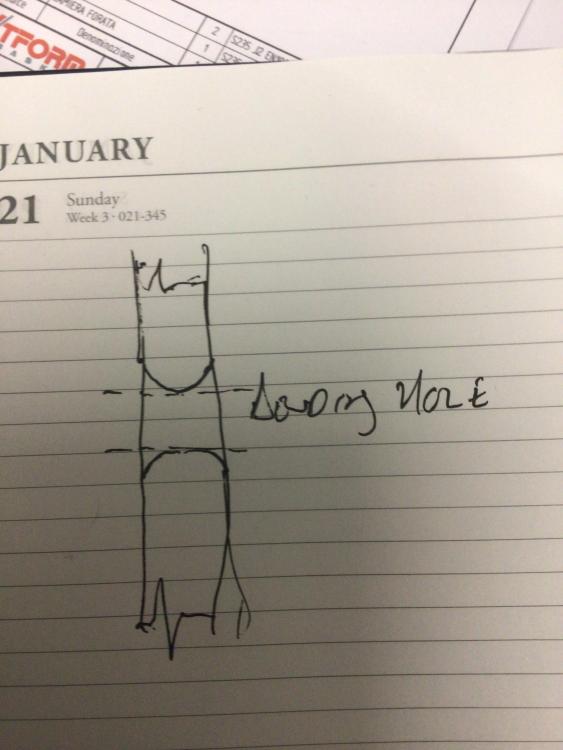
Not as hard as you may think, drill a hole in a piece of timber, 20-25mm thick and then use drill to bell the hole (get rid of the sharp edge) put tube through hole and lever gently … old sparkles way of bending conduits etc.
-
You can ease a bend into them, don’t try to bend the 15mm bit even with a spring or you can distort the end that’s going into the hep20. Gently bend the thinner section/s. If you have a small tube bender even better
-
Yes the straight end is 15mm copper so will go into hep20
-
Hello and welcome, several members have done their own, a search of past threads should bring up loads of info