markc
-
Posts
3826 -
Joined
-
Last visited
-
Days Won
22
Everything posted by markc
-
Thunderbolts are good as long as they are not close to the edge of the blocks, chemical anchors are better because they effectively stabilise the block and hold it together as opposed to trying to bust the block open
-
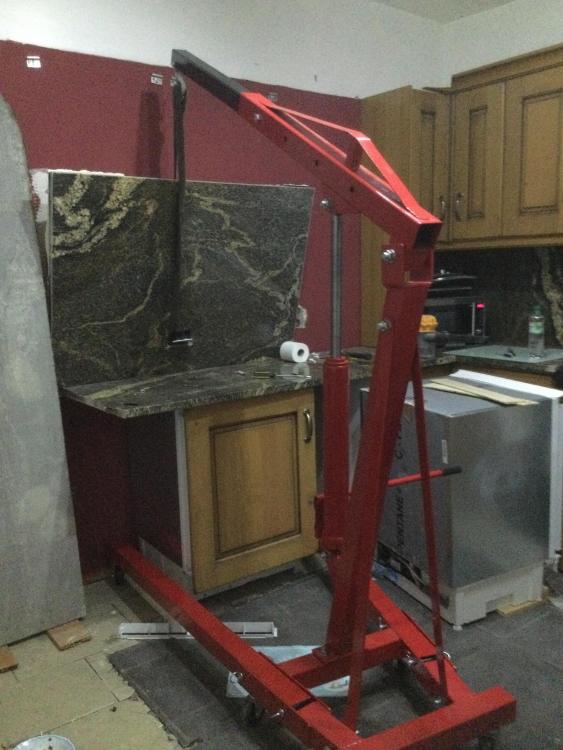
Taking out heavy worktops on my own.
-
After putting big panes in with a crane and suckers, or one of our guys grinding near a pane we used white scotchbrite pads to polish any marks out
-
I’ve never understood why radiators were under windows, one idea was that a window is a less likely place to put a piece of furniture.
-
I’m guessing these are narrow gaps? More that likely everything just settling down and bedding. Nothing to worry about, you can brush some sand/cement around if you feel the need to.
-
Ideally a render will be 6:1:1 sand, cement, lime but for your job just use a 6(ish) to 1. trowel it fairly smooth then give a brush with a hand or soft sweeping brush if you want the gritty texture finish.
-
Tomorrow will be ok, let the whole thing plus the render dry out slowly.
-
Noise transmission in modern building techniques can be horrendous. in days of old with big heavy solid joists and individual floor boards the mass and joints have a deadening effect. Now you have light weight joists and a solid skin top and bottom so the floor acts like a drum. Insulation and strategically (best guess and experimentation) placed timbers screwed to or between joist can make a massive difference. fit the floor then jump up and down and add a few timbers to see what has a deadening effect….before fitting ceilings underneath of course.
-
Screw fix do not sell metres, CEF used to do but not bought one in years
-

Hanging a pull up bar on external wall
markc replied to kilometres101's topic in General Self Build & DIY Discussion
The load imposed on the bricks depends on the fixing plate size and orientation etc. however, a pull up bar (unless it’s for an elephant isn’t going to put much load into a brick wall …. Unless it cantilevers off a long way. chemical anchors are the best as they do not try to bust the brick open. some details of the bar and I’d be happy to recommend fixing detail -
Haha, whenever we had to move machinery or big structural members by hand we called it the Egyptian Method, rollers, skids, etc.
-
The edge of the bath slopes outwards instead of towards the bath. if you put water on the side it should run into the bath.
-
Firstly make sure everything on site belongs to you. if the builder has been supplying materials then the supplier may retain the right to removal if not paid for. if you know who the suppliers are, it could be worth contacting them, … then again you could be opening a can of worms and end up paying twice! if the builder had any morals they would be speaking to you and working with you, sadly many companies going bust simply run with whatever money they can grab leaving you to pick up the pieces.
-
If you want an insurance backed guarantee you need to get a specialist in. why would an insurance company take a costly risk on your DIY work?
-
Is what normal? Are you saying you have water running under the screen and onto the floor? If so then it’s the bath at fault and not the screen.
-
Silicon would minimise the amount of water getting under the frame, but the top of the bath should slope inwards and prevent water running under the door and then over the edge
-
I’m going to side with your neighbour … it’s a big ugly unimaginative, box!, if you had an open garden and your neighbour built this, how would you feel? how about speaking to them to see if you can make some changes to make it look better? Add gutters (will need an agreement because they will be on the neighbours property. agree you will maintain the shared wall it is sat on etc.
-
50m2 is not a lot of space for 12/13 pallets and working room so do not be tempted to push them into a group in the middle, keep them as close to the edges or on supported areas if you have them
-
@Tony K What I don't understand is why, if the slab can only take a quarter of a tonne per m2, the engineer has described one pallet as 'borderline to exceed the load allowance'. Surely one pallet will be more than five times the maximum weight allowance? the per m2 is a distributed load over the entire slab, say the slab is 10mx10m at 250kgs/m2 then the load capacity is 100x250 or 25tonnes, so as long as you don’t have a high point load that could punch through the surface then the larger loads are fine as long as they are spaced apart and do not exceed the total.
-
It’s a cellar … if this is an older house then it was built to be cold and damp. If you want to stop water getting in then it’s a big outside drain as above, otherwise you can only manage the water once it’s inside, drainage channel, sump, pump etc.
-
That’s just dashed a dream … and put me off my lunch.
-
Good evening and welcome
-
Tear it out and fit a new hanger, an hours work and say £5 for a few replacement hangers. much easier and cheaper than bespoke hatches etc.
-
2nd layer will be ok after say 24 hours, actually sticks (I couldn’t spell adheres ?) better if the underlying stuff hasn’t dried out completely
-
Getting there @zoothorn these PITA jobs are all good learning exercises. ( PITA - Pain In The Ar#&)