IanR
-
Posts
1841 -
Joined
-
Days Won
6
Everything posted by IanR
-
I think the build-up is very cost effective and I would go the same route again. A service void is nice to have, but is it worth the extra cost and wall thickness? That's for you to decide. There are no downsides that are specific to this buildup. If you get your air tightness from a rigid layer then your detailing of corners and junctions needs to be good. I'm sure CTD will get the design correct, so you'll need to ensure the build quality is up to the job. I was told an external breather membrane was needed for the roof but not necessarily for the walls, but chose to cover both to protect from the weather while cladding and roof was going on. Electrical 1st fix was very simple within the cavity (pre-insulating), but any penetration through the DHF (wires for outside lights, door bell, MVHR ducts to outside etc.) need an air tight gasket. I'd question your decision for mineral wool. Blown cellulose will improve air tightness and I assume has a higher decrement delay (I've not checked mineral wool). You should also perhaps get some advice or a Wufi analysis on mineral wall to make sure it's suitable behind the DHF for clearing any moisture out. Maybe the insulation manufacturer will be able to support this or can confirm it's suitable for this application.
-
Nope, it's the cost of battens, OSB and labour. My build up from out to in is: Cladding vent gap breather membrane T&G DHF Egger (airtight layer & racking ) I-Joist Foil-backed PB (VCL) & skim So unless the loads on the structure require a structural layer inside and out the extra OSB is just closing off the cavity to hold the insulation.
-
Why's that Dave? it's a lot of extra cost.
-
...another thought. Are you going with blown cellulose? If so that's a lot of holes in you airtight layer to re-seal.
-
I hadn't seen OSB used as an Air tight layer, but have just checked and MBC have updated their build-up and appear to use the OSB inner layer for air tightness and VCL, When I considered using them (a few years ago) they used an additional membrane for this. If that is a robust solution then both it and T&G Egger DHF would not be necessary. But, if you go airtight layer on the inside skin you do need a service cavity to avoid penetrations. If you went airtight on outer skin you could avoid the extra cost of service cavity - other than where you can't avoid plumbing routing along/down an external wall. With regards external vent gap I was encouraged to go 50mm minimum.
-
Are you planning on the (T&G?) Egger DHF being your Air tight layer? If so perhaps its cost is not so high, What would be your alternative airtight layer if you didn't use DHF Do you need a Service cavity? You could use foil-backed PB as VCL rather than OSB and the service cavity. Perhaps just put the Service cavity where you need it. Electrics can run through insulated cavity, only plumbing (and MVHR) needs to be kept out of the insulated cavity. 38mm Is a small vent gap to external cladding.
-
I couldn't live with the uneven gaps on the skirting. But the actual shadow gap on the bottom tread to the floor is doing its job.
-
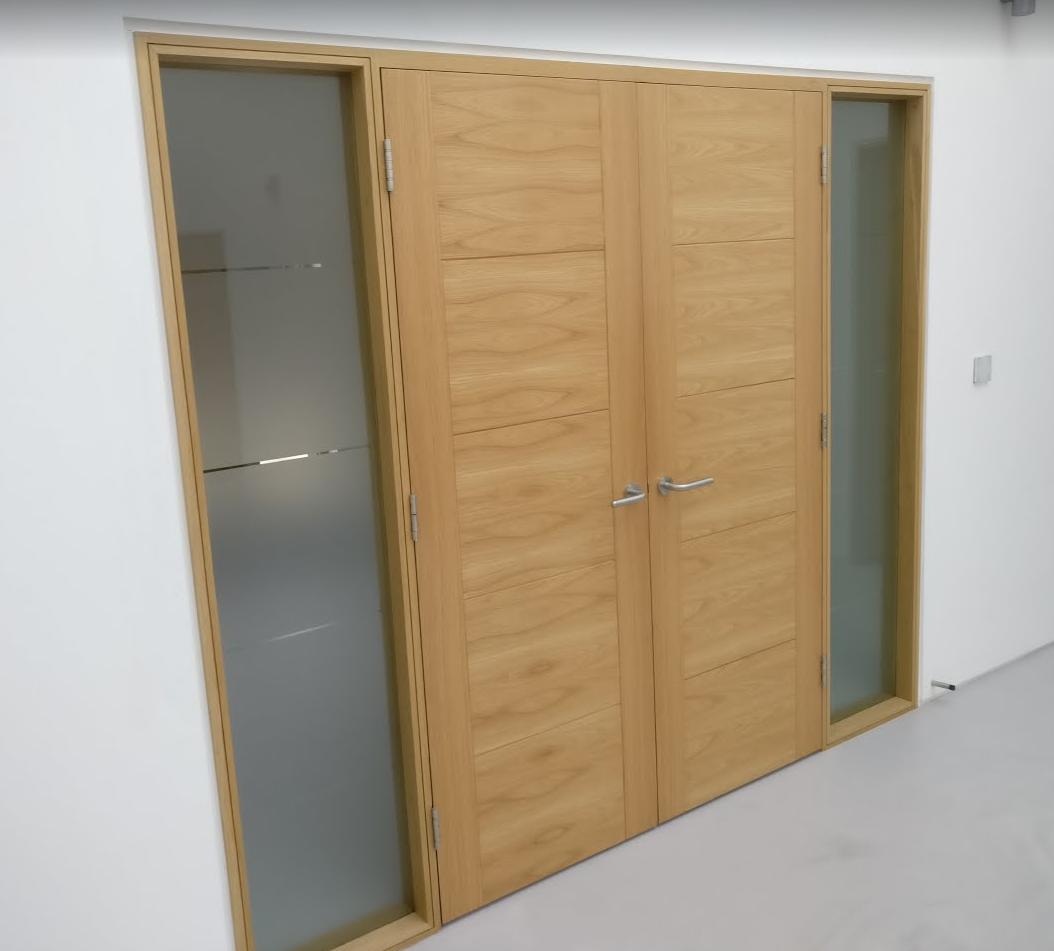
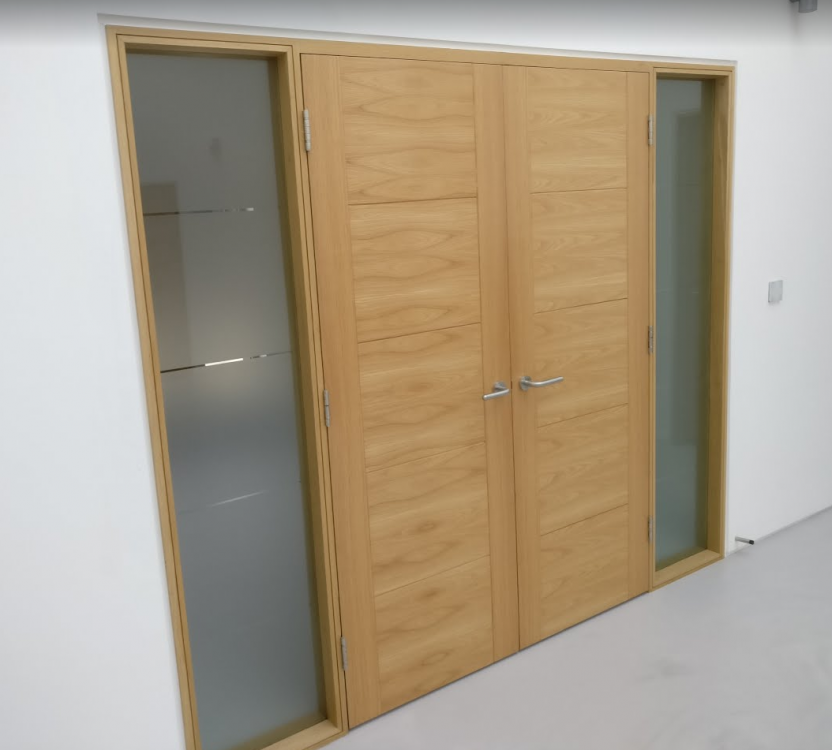
Thanks! They are a nice door - LPD Vancouver 5P Oak. Very heavy! But what's made that opening come together so well is the frame made by a local Joiner. (and the chippy that put it all together with minimal gaps) Lesson learned for me here. I'd bought pre-made liners for all the standard openings and only used a Joiner for the non-standard stuff. Maybe I got lucky with the local joiner but he was cheaper and soooo much better!
-
Thanks! My experience was that they're not available off-the-shelf in the normal BM's. I also found that tackers and plasters were not familiar with them so I had to set out how I wanted them to use them. When I searched for them I found only a couple of different manufacturers, but lots of re-sellers, some re-branding them to make them appear different. Qic Trims seemed to be the most prolific and often re-sold under different names. I went directly to Qic Trims. The pricing they show on their site is the RRP and is to not be seen to compete with the re-sellers. I found they offered a good discount, but you have to order in packs of 25 x 3m lengths and pay a delivery charge of £25. As I used 100's of meters of the stuff it worked out very economic.
-
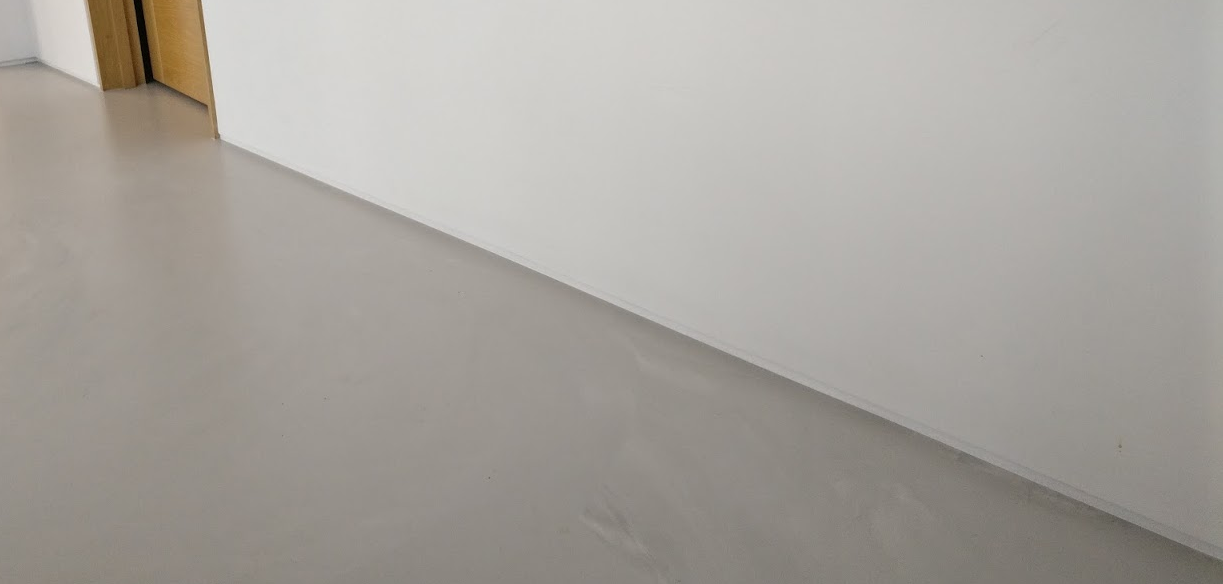
We've put shadow gaps at all floor-to-wall joints and around all door linings in the living areas of the house where we have hard floors. We haven't used them in carpeted or tiled areas. We've used them for their aesthetic. We have minimal steps/rebates/shoulders etc. around any features and have tried to keep that theme running throughout the house. We have used a very simple skirting/architrave in carpeted areas. Our logic to this was that the more hoovering required in these areas would risk damage to the bottom edge of plastered walls if we used a shadow gap against carpet. We also wanted a slightly softer look in the bedroom areas. Some thought needs to go into how it is best to deliver shadow gaps around door linings. Two schools of thought: 1. temporary ply liners in to board and plaster to, then remove ply liners and fit final liners, or. 2. fit final liners and mask/protect then plaster up to them. We went with 1. and found we got some cracking around the liners as we fitted the final door liners. As the liners were screwed in they pushed against the edge of the shadow gap trim and the plaster cracked behind it. This happened on a couple of doors and required chipping out the cracked area and filling. If it was a painted or varnished finish to the door liner I'd try 2. next time, but natural, lacquered or oiled finish and I'd stick with 1. to avoid staining on the finished door liner. We used Qic Trims https://www.qic-trims.com/product/type-r/ After decoration you will need to mastic the gap from the edge of the shadow gap trim to the floor/door liner. There will always be gaps that need finishing. Shadow gaps do seem to mean different things to different people. To me they are a small rebate at wall-to-floor and wall-to-frame junctions that disguises the actual joint in a shadowed area. I know they are also used in conjunction with skirting to create a rebate above the skirting, but to me that's not a "shadow" gap. Our version of a shadow gap:

- 39 replies
-
- 4
-

-
- shadow
- shadow gap
- (and 1 more)
-
Welcome @Cambs and good luck. The shape doesn't look too bad to me for PH Certification, hopefully you'll be pleasantly surprised.
-

Systemair VSR 500
IanR replied to Stones's topic in Mechanical Ventilation with Heat Recovery (MVHR)
Nope, I have a small, commercial Airflow Unit. There was a setup step called "fan orientation" where you're asked to identify which is the Supply Fan. When I entered this wrong the controller swapped the Supply and Exhaust temps. -
Systemair VSR 500
IanR replied to Stones's topic in Mechanical Ventilation with Heat Recovery (MVHR)
I can't see that the Extract Air Temp is measuring what it should be. As part of the commissioning was there a setting to identify which fan was which? It's possible this has been set the wrong way around and along with it the Sensors are incorrectly identified. It would make sense that 11C is the Exhaust temp rather than Supply Temp. I know this one as I made this mistake myself! -
Systemair VSR 500
IanR replied to Stones's topic in Mechanical Ventilation with Heat Recovery (MVHR)
What are the extract air and outside air temperatures when it's achieving 9C? Sounds poor unless very low outside temp and house not yet fully heated up... unless the MVHR is in Summer Bypass mode. Has it got the heating season correctly set. -
I've used Magnet for Larder, Utility and Kennel and am happy with quality and price. Really good Service and delivery, including correcting a couple of errors. Had issues with Howdens in the passed with loads missing from the delivery and then taking many trips back to get it corrected, so wasn't going to do that again. A Trade account gives discounts equivalent to their "70% off Sale", and the sales assistants can then generally do a little bit more, if pushed, by throwing a few bits in for free. We ordered via a Magnet Trade store rather than via a retail store.
-
Conceptual and detail design software
IanR replied to LouiseSJPP's topic in New House & Self Build Design
I see little use in "3D" for the detail design, accept maybe where there are non-standard details/junctions that would benefit from teasing out the issues before it comes together on site. A 2D drafting package should therefore be fine for producing the Building Control drawings and all plans and layouts that the onsite trades will use. An Architectural package will have workstreams optimised for producing such drawings so should save time. Their capabilities are all rather similar so take your pick. For the concept design phase I found a huge benefit in using a 3D application, to get proportions, scale, flow and material selection all the best it could be. I can't see it matters whether that's a virtual 3D CAD model or a physical 3D model, as long as it's a medium that's relatively quick to change and trial different options. The important bit is that is fleshes out any awkward junctions and make you think about how the structure will come together. I used the CAD and visualisation packages I was already familiar with for doing this as the "best" CAD package is the one you already know. However if I didn't have that existing knowledge I'd have used SketchUp. It's free, quick, and very flexible for applying materials and textures for reasonable quality renderings. -
I'm not familiar with the "wicked slabs" and went with Rockwool RWA45 and some very similar Flexi-Slabs. Easy to put in, 100mm bats easily compresses down to a 90mm cavity, and they're very effective at stopping sounds transferring between rooms. This was discussed before here:
-
What does First Fix really mean?
IanR replied to ToughButterCup's topic in General Self Build & DIY Discussion
How are you creating your shadow gaps, mine were as cheap as chips to create. Trim comes in at £1.35/m, with no decoration needed, put up by the tacker at almost no extra cost. Better spread as there's a hard edge to work to and no skirting or architrave to fit or decorate. Win-win. It's not an aesthetic that would look right in every house though. -
Not on a slider, but on a "normal" door threshold my main contractor bodged up the the lapping of the DPC into one of the thresholds. Created a fold that trapped water and funneled it under the threshold and into the mat well. I trimmed off the excess DPC and silicon sealed and with the cill in place it's never leaked again.
-
I'd leave it at 30 (perhaps lower to slow down the warm-up) and give it time for the heat to come through.
-
Before going to 45, can you feel any heat in the floor? What actuators do you have on the manifiolds and what is controlling them? Are they opening?
-
After a long negotiation, ours came in at just under £75/m2 for a 250m2 job. But, as I mentioned in the thread I linked to, the price dropped from £85 to £75 when I added an additional area, but not much extra product was required, just less waste. The quotes I got ranged from low £70's to high £120's per meter. You could tile cheaper, using smaller format ceramics, but pricing is comparable to large format porcelain tiles.
-
We like ours a lot It will take knocks and bumps without showing permanent marks. So far any marks have been able to be rubbed off. We did however have a disaster when the worktop fitters dropped a 2.4m x 1.1m granite breakfast bar on to the floor as they were bringing it into the house. Destroyed the breakfast bar and put a hole in the resin floor (and chipped the structural concrete slab). It's been repaired and the repair is not invisible. While I see every time I walk passed it, nobody visiting has ever commented so it can't be that noticeable. What it is vulnerable to is dropping sharp objects on it, knives in the kitchen for instance. Just like a stone floor, I'd recommend felt pads on the feet of furniture.
-
We went 32mm for 130m run. Any bigger and you have to chlorine rinse before commissioning. I was surprised that the meter, restricts to 15mm, but was told there's not another option. Still get 6 bar at the house though.
-
Anyone used Magic man for window repairs?
IanR replied to Moira Niedzwiecka's topic in General Self Build & DIY Discussion
Yep, we have used Magicman for dents and scratches on anthracite, aluminium clad windows. Make sure you have a very well lit area when they come to do it.