


JohnMo
-
Posts
13292 -
Joined
-
Last visited
-
Days Won
200
Everything posted by JohnMo
-
Not really clear what you are doing to the roof. A warm roof typically is externally insulated. The fleece backing will add little or no additional insulation value. If your roof covering is sound, you could insulate and then add the new covering. To give a warm roof. Typically you should be looking to add 150 to 200mm of insulation. What roof buildup is each installer offering, have you asked for a specific buildup? Or just leaving it up to them to offer what they think you want?
-
 More ports good, flexibility and don't have to use them just blank off
 -
Several issues, other than mentioned. How would you close opening in wall when sliding doors are closed, you need to stop vermin and insects getting in. Assuming each panel is 75m thick the opening could be 150 to 225mm deep. How do you tie the external skin to the internal one? You would need to add an additional depth to that wall, as above, may start to look strange. Other than that sounds great, but expensive, and full of issues.
-
Get other quotes
-
Hi, steep learning curve ahead of you. Hope you enjoy. If you have to do electrical work get that out of way first, as they will make holes everywhere, walls, floor ceiling, same with plumbing. As you start to seal the house, you need a ventilation strategy. Options are MEV, dMEV, MVHR, dMVHR. Both MEV, dMEV require trickle vents to function the others provide balanced supply and extract air. Then once that's out the way you can get down to sealing things up and insulation. Windows and doors, the gaps around them can leak air like a sieve if not correctly installed. So worth adding to list of jobs. Also if you have single glazed windows (U value 5) they leak lots of heat, old double glazed ones (U value 2.5 to 3) leaked less than half, good modern ones 1.2 to 1.4) are way better, triple better again (0.7 to 1). External doors can vary in heat loss by the same margins as the windows, so worth keeping an eye on that. Plenty of material to read on here and the internet. Passivhaus institute has some great articles, don't be put of passivhaus as being not what you want to achieve, the articles make good sense and explain the benifit or otherwise of different ways of thinking and doing. If you have storage heaters, they may just need a good clean out. As you reduce you heat required they will perform better also. Overall it's worth noting that really well insulated houses need very little heat.
-
Did you mean to attach an image?
-
You will have a gas valve by meter and also under the boiler. These both need to be open. Has gas been cut off? If you have just purchased the house things like boilers are normally covered by a short warranty by the seller. Check with your solicitor.
-
You've been sold short
-
CEF sell them, but at 3x the price.
-
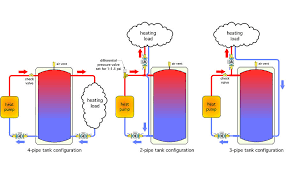
Can see schematics below but basically the hot side is an oversized tee as per 2 pipe, the bottom cold connection goes into cylinder and back out same as a 4 pipe. Has all the advantages of a 2 pipe and 4 pipe.
-
https://www.backerelectric.com/shop/domestic-immersion-heater/?index=24
-
There are three ways to plump the buffer, 2, 3 and 4 pipe, each has its own advantages and disadvantages. The 4 pipe as drawn, has to be hot before it will deliver heat to the system hence the need to have a thermostat on the buffer. You heat buffer as Joe90. Or you could do it like this as a 2 pipe without buffer thermostat. https://www.kensaheatpumps.com/installer/tech-focus-part-2/
-
Octopus Energy and Ilke to build self powered homes
JohnMo replied to Adsibob's topic in General Alternative Energy Issues
I have thought for a long time that new housing schemes should be made to bury gshp pipes in the roads and amenity spaces they have to build. And do district heating schemes. All roofs should have solar on them, but not as an option. -
Regs for self builders - Which parts did you read?
JohnMo replied to giacomo_z's topic in Building Regulations
I tried to read all of them, but in an as required basis. So the ventilation when I was trying to get many head around those issues, then moved on to the next thing etc. -
Not read it yet, but great, will feed back as I go through it.
-
I would be interested also, would heat our house most of the time, which fine for me
-
Obviously not in fuel poverty by any definition.
-
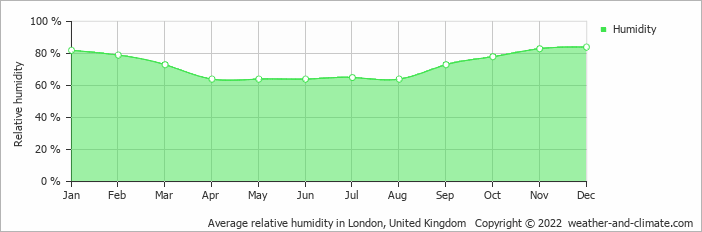
It be worth digging around on here as I have seen reports of condensation of triple glazed windows with enthalpy MVHR. Your relative humidity levels seem very low compared to a London monthly RH of between 75 and 60.
-
Why are going for an enthalpy mvhr in the UK? There is really no point, we don't have the sustained cold temperatures, which lead to internal air drying out - which is what the designed to combat.
-
Some reading https://www.open.edu/openlearn/nature-environment/energy-buildings/content-section-2.3#:~:text=The key factor in determining,fresh cold air from outside.
-
To add to this, other countries, Germany, Austria for example, require a long detailed apprenticeship, to allow you to practice professionally as builder, joiner, plumber, electrician (in fact most hands on trades). Here many go through apprenticeships which are much shorter, they not compulsory. Here in the UK, anyone can call them self a builder or just about any trade if they want.
-
Ours were also HETAS qualified installers all Scottish based. Hetas say "Scottish Building Regulations do not make it mandatory to be a member of HETAS. However HETAS Registration may be a means of demonstrating competence for works carried out under Building Regulations." Scottish building regs say "The Heating Equipment Testing and Approval Scheme (HETAS) is an independent organisation for setting standards of safety, efficiency and performance for testing and approval of solid fuels, solid mineral fuel and wood burning appliances and associated equipment and services for the UK solid fuel domestic heating industry. It operates a registration scheme for competent Engineers and Companies working in the domestic solid fuel market. The Official Guide to Approved Solid Fuel Products and Services published by HETAS Ltd (http://www.hetas.co.uk/) contains a list of Registered Heating Engineers deemed competent in the various modules listed, e.g. for the installation, inspection and maintenance of solid fuel appliances. There are other organisations representing the solid fuel industry but neither they nor HETAS have a mandatory status. Either way, use of a registered installer demonstrates compliance to building regs and they have a much stronger position, than your none registered builder or individual, whenever any challenge is presented by building control.
-
Didn't realise it cost so much, I should have gone round building sites and taken it away for free, as we have just imported 750T, which we had to pay for.
-
You can always do a trial, a couple of days of lots of one-off and a couple of days on for two set periods and compare, the running cost and how long you wait for hot water
-
We used Speyside Stoves (NE Scotland)




