


JohnMo
-
Posts
13292 -
Joined
-
Last visited
-
Days Won
200
Everything posted by JohnMo
-
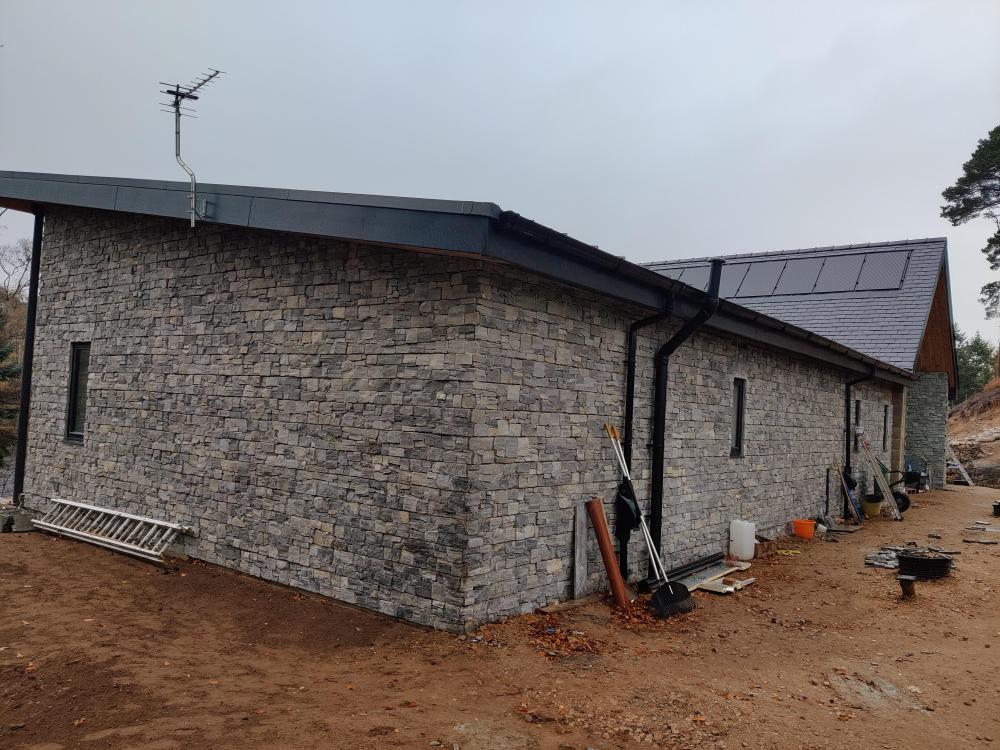
We used https://www.realstonecladding.co.uk/natural-stone-cladding-panels Real stone, not composite
-
Or you could go for something similar to this, with integrated PIR https://www.tlc-direct.co.uk/Products/SLEA4DLC.html
-
Go to an electrical wholesalers/ trade place, ask them what it is. If they have no idea it a good glue no one uses it, if people do, it will be on the shelf.
-
If they are building and priced to your building spec, they have a contractual obligation to build to your drawing spec. and to a good standard. The foil missing from plasterboard will allow moisture to pass through the plasterboard, where vapour could condense to water and cause issues. Insulation missing will affect your long term heating costs for the worse. Spilling insulation is poor workmanship.
-
I used airtight paint. But I would wait until you have screed down. Not sure parge would be very successful, it wasn't when I did mine, hence using airtight paint.
-

Advice Needed on Invoices after Contract Termination
JohnMo replied to Ralph's topic in Party Wall & Property Legal Issues
Anyone employed to do work by the builder, has a contract with the builder, you as the end user are not part of the contract in any shape or form. Do as stated above -
TF House about to start, and last minute pondering... Insulation...
JohnMo replied to BartW's topic in Timber Frame
OK -
TF House about to start, and last minute pondering... Insulation...
JohnMo replied to BartW's topic in Timber Frame
First the OSB layer has done 90% of your airtightness especially if you use airtight OSB on the joints to worry about. Or if using a membrane a great flat surface to affix to. Your service cavity will have your plumbing and electric stuff within it, why would you want then to make loads of holes for light switches etc in the OSB to allow it to be installed? Seems like a double work effort to me for less gain -
TF House about to start, and last minute pondering... Insulation...
JohnMo replied to BartW's topic in Timber Frame
Looking at your wall build with respect your service cavity. You have plasterboard, OSB, batten for service cavity. This should be plasterboard, batten for service cavity, OSB. If you floor has a ventilation within the void it's there for good reason. If your insulation is above the ventilation why are you worried? -
We had a 1830s sandstone house lathe and plaster walls. Wall about 3 foot thick, still got really hot in summer. No insulation to speak of. But wasn't so bad to heat in the winter. New house has 47 Tonne of concrete in the floor, Durisol walls, be but can still get really hot from solar gain; if you let the sun in for too long. Maybe we get longer exposure to the sun, before it gets too hot,compared to a lightweight house, but difficult to compare.
-
If woodcrete ICF, directly attach with external flexible tile cement. If EPS maybe the same, but not sure.
-
To complete the thread, I have attached an approved G98 Schematic, now my system has been approved by DNO. Also included was the G98 form completed. Electrical Contractor signed as installer. I signed everything else. Also attached type approval certificate for the inverter with my application. G98 PV Schematic example.pdf
-
Does anyone understand how ADSL broadband actually works?
JohnMo replied to ProDave's topic in Boffin's Corner
We had a similar issue at or old house, speed all over the place. Took them lots of visits to identify the issue. We call them they would test while I was in the phone and mostly they would identify an issue. Send engineer out, he would find nothing. Issue was finally found as a broken wire on a pole down the road. -
Boarding a warm roof / cathedral ceiling
JohnMo replied to markocosic's topic in Plastering & Rendering
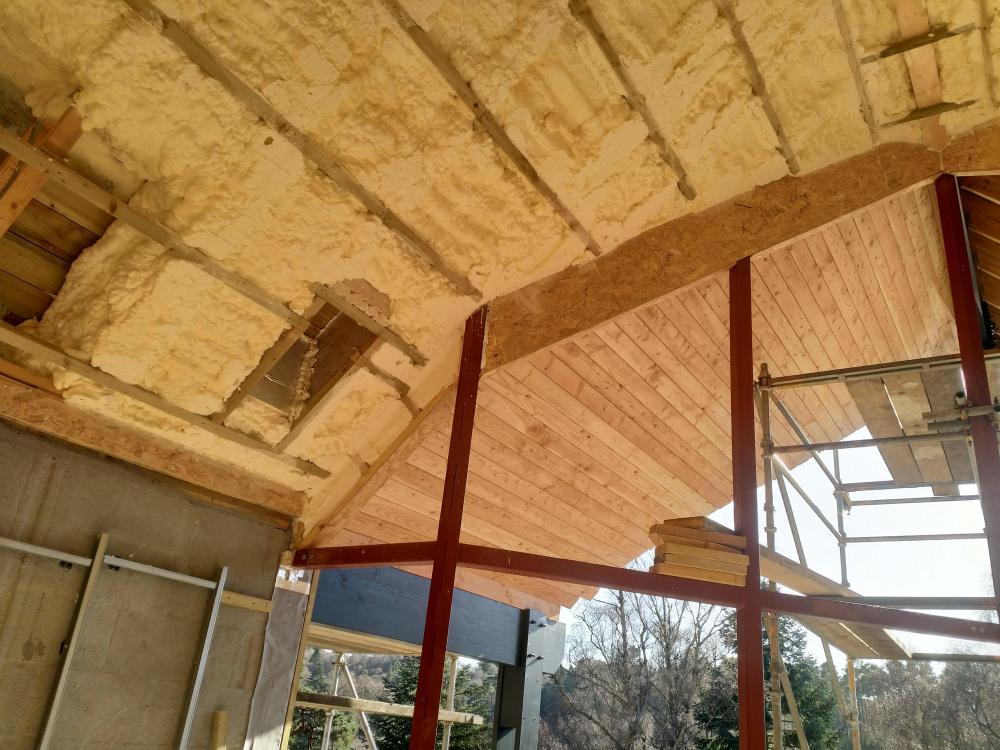
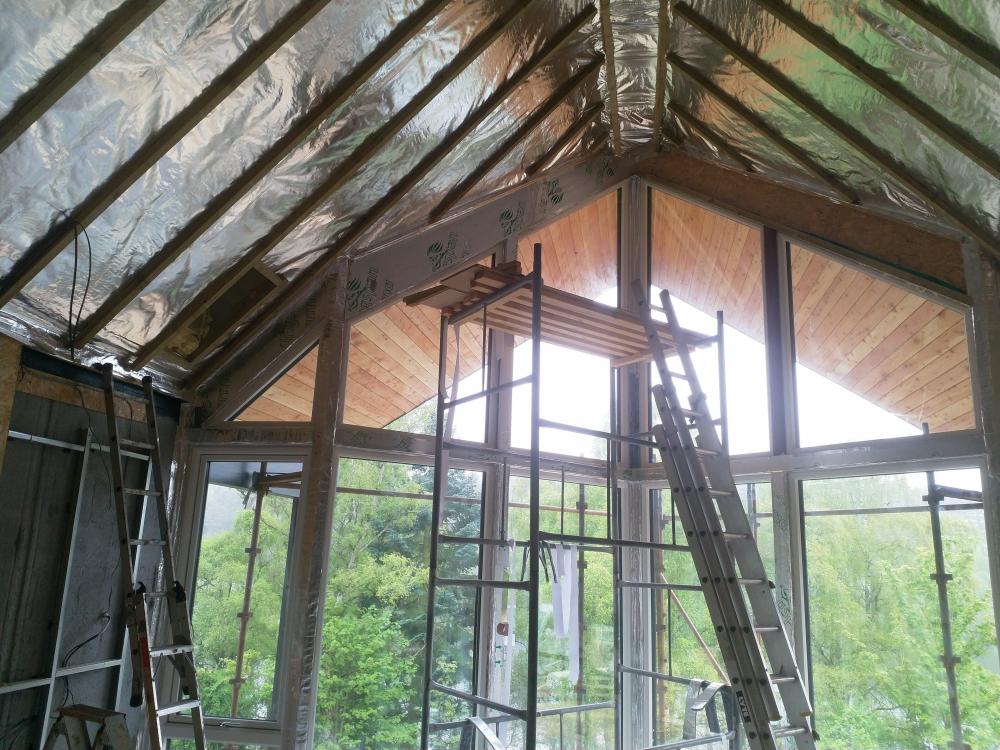
We just used battens. The battens are vertical, but mainly because I had counter battens at the rafters to increase insulation thickness and kill off repeat bridges. -
Boarding a warm roof / cathedral ceiling
JohnMo replied to markocosic's topic in Plastering & Rendering
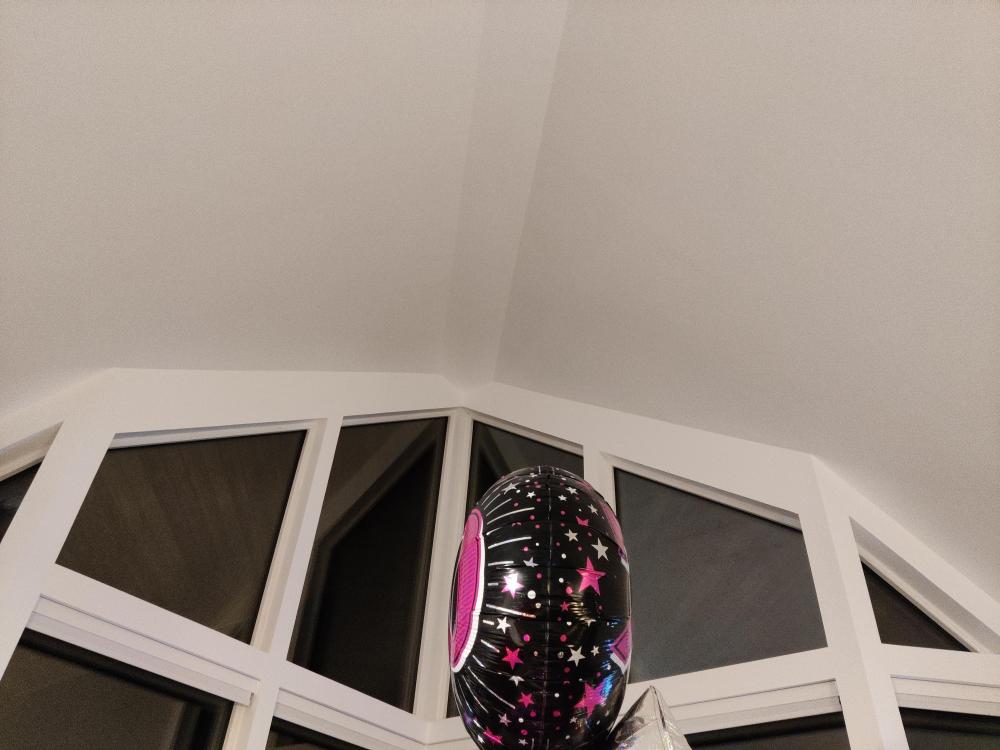
Similar to ours we used taper edge plasterboard, which taped and jointed, not skimmed. 9 months since jointing and taping no cracks.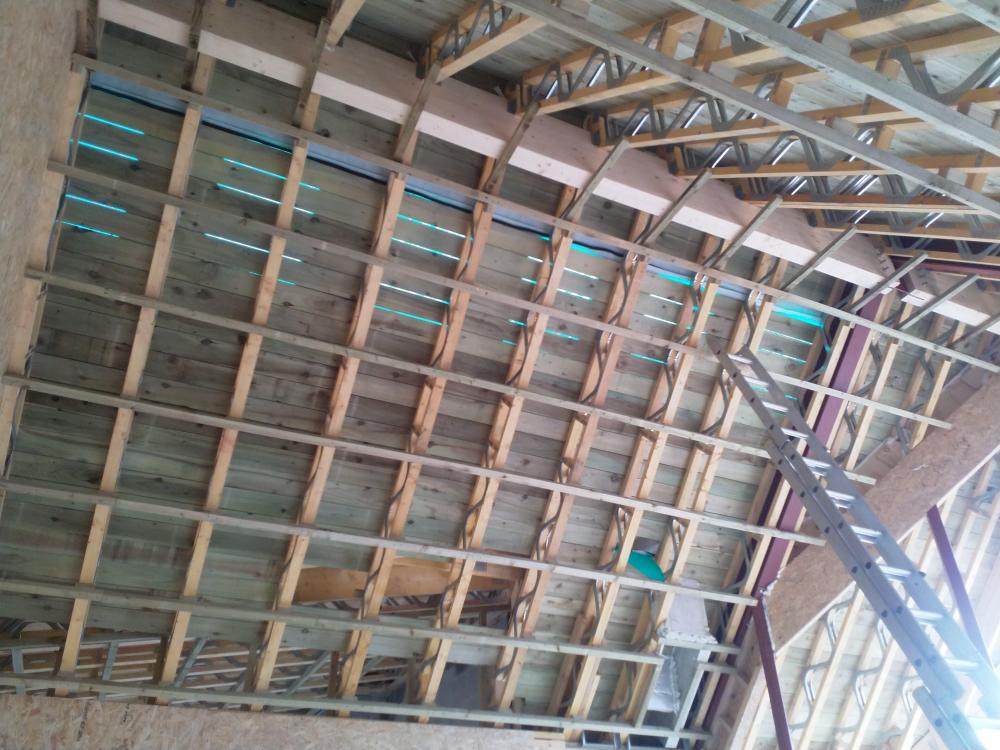
-
As many are aware I built with Durisol, as first time builder. It was chosen for four reasons. I could do it myself and had witnessed two builds underway prior to ordering, the two self builders were on top of what they were doing and I could freely ask questions. Second, the build manual was clear easy to understand, as long as you follow the 6 layers then a pour and use the corner, end and normal blocks correctly there should be no issues Third the system did not require any special props or much in the way support except with OSB screwed to cut joints and at corners. Very little rebar required. I followed the instruction manual, had no blow outs, no sagging window or door openings, very little block movement during the pours. I think most people have issues because they think they know what to do, don't read the manual, build too many rows between pours. Only real criticism and thing I would change. 1, the blocks do not have parallel sides, this does lead to a bit of rework, until you realise. Possible redesign of moulds could fix this A thing not well covered in the manual is airtightness, this should be beefed up.
-
Rookies diving into the passive house deep end
JohnMo replied to Jake Smith's topic in Introduce Yourself
Welcome. Are you doing a timber structural for this build? How are you heating the house? Are you building yourselves or getting someone to do it for you? -
Officially confused about first floor wet UFH
JohnMo replied to Tadpole's topic in Underfloor Heating
I would do wet or even electric UFH in bathroom/ en-suites and electric towel rads (for towel drying, not heating 300 to 400W). And provision for an electric panel heater in bedrooms. UFH in bedrooms has no real place, we have it and its a complete waste. Very slow to heat up and even slower to cool down. You need (possibly) a warm hour in the morning and evening. But cool when you go to bed. I would keep the cash in your pocket. -
Plans in for approval keep having to be changed
JohnMo replied to Deejay's topic in Planning Permission
We had a similar issue about 10 years ago. Basically the size of the garage lent it's self to converted into house. The roof angle added to that feeling. Which is really what the planner were objecting to in our case. Maybe yours is similar. We made the footprint bigger and changed the roof steepness ( much shallower) the plans went through fine. In our case they didn't like the room in roof aspect/possibility. -
The points I had to have building control come out and see work was after digging out foundation, prior to plasterboard, inspection of drains (even then he said wait until final inspection for that). Final inspection when we get to that point.
-
I would be inclined to make the whole downstairs a single zone, use a single thermostat centrally located. I have one in the hall. Kitchen/diner, lounge, bathroom are all served by this thermostat. En-suites have no thermostat the come on whenever there is a call for heat from the main living space or bedrooms. My bedrooms each have there own thermostat, but very often set so low they are off. But I am thinking to make them a single zone also, because if one room needs heating they all do in reality. Or as Joe ditch all the thermostats. If you go on to the heat geek website it goes in to detail of how to balance the system.
-
This what I did. Had supply run to close to where I wanted it prior to digging foundation trenched. Temporarily buried cable. Completed the trench concrete pour. Had SSE connect to meter and screwed the whole lot on a wooden post inside the location of the hall cupboard where the meter would live. A double socket was added by electrician. White box by guy with yellow gloves. Second photo shows stub walls up and box still on post but now sat on the stub wall to allow next concrete pour. Bit of a faff but was ok.


-
Our manifold isn't in the plant room, as it would have meant lots of long runs of pipes. So it's right in the middle of where it needs to be. Hot water Kitchen goes off to the left in the plant room and isn't on the manifold, manifold pipe goes right and it located in the utility cupboard. One supply to each room and branches of within the room. Cold water Manifold same place as hot, all room piping is under the floor insulation within the concrete (ducted). A supply branches off to plant room. I have secondary circulation to the furthest away room only, this heat the manifold up by default.
-
These are what I used. https://www.outsourcedenergy.co.uk/product-category/manifolds/plumbing-manifolds/






