Dave Jones
-
Posts
3573 -
Joined
-
Last visited
-
Days Won
11
Everything posted by Dave Jones
-
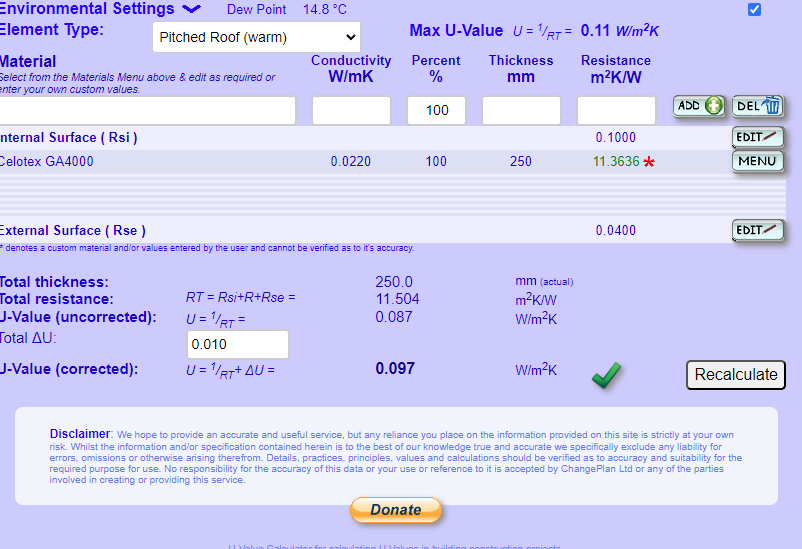
you need 250mm of celtex to meet new build regs or 150mm for a refurb. Issue putting it externally on the trusses (warm roof style) is how are you going to fix the tiles ? Putting it between 8 x 2 trusses and then 50mm again under that works. You then have the issue of making it vapour tight which is very hard as you are left nowhere to run cables unless you batten again to make a service void but it wont be deep enough for downlighters unless you use 4x2 at which point you have now lost 150mm of headroom all over the roof. No easy wins.
-
had a samsung with 10 year motor warranty. bearing failed after 18 months, refused to honor warranty.
-
planeings is what you need. £250ish for an 8 wheeler load. compact down lovely.
-
2 words. dust extraction.
-
what an unfortunate series of cock ups. All too common and easily done. These are the things that a professional site manager/project manager would catch as they know to look out for them. You are saving the cost and not having the benefit of this experience so you can spend it elsewhere like we all do. It's a learning curve, once you start on your third there will be a lot less mistakes trust me!
-
Last one I just bit the bullet and bought the festool (only comp who make one?) insulation cutter with dust extraction. It runs on a track and you can do 2x 100mm sheets per pass. don't forgot gapotape the edges, no bodging with foam. https://gaposhop.com/shop/ols/products/gapotape-gt10-slash-100 good practice for complying with the new regs, pictures of everything.
-
Would ashp benefit from power factor correction ?
-
Fan Coil Units for use with a (cooling) ASHP
Dave Jones replied to ProDave's topic in Air Source Heat Pumps (ASHP)
interesting..... These are also on my todo list on our current build, I want them built into the stud walls though so all that is visible is the grill. BPC sell the Panasonic one https://www.bpcventilation.com/panasonic-fan-coil-unit -
get the new supply installed now before you exchange. Can you not route it up the drive to the new build, even if its shared ? Totally a standard practice in England having easements for sewers, water, gas, electric, telephone etc.
-
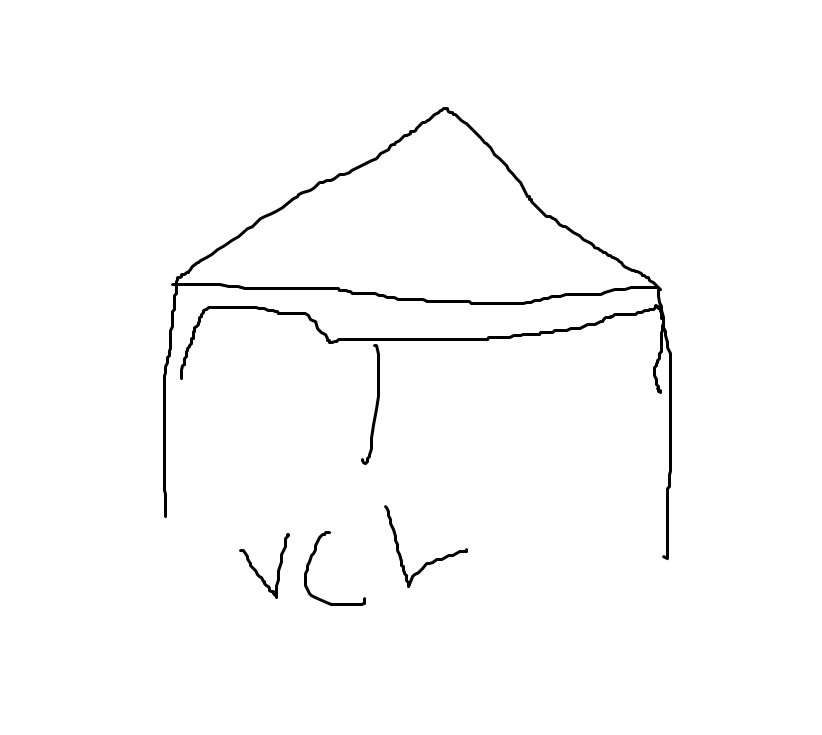
no not correct. The VCL is there to prevent any moisture in the house migrating into a sealed warm roof where it cannot then get out. VCL backed plasterboard isnt a real VCL either. Assume you are going to making lots of holes it in anyway for lights and cables and its next to useless. As you do not have a warm woof you need ventilation under the roof covering, you can use abutment vents, eaves vent and mushrooms. Your cold roof (you do not have a warm roof)can become like this very quickly without ventilation.
-
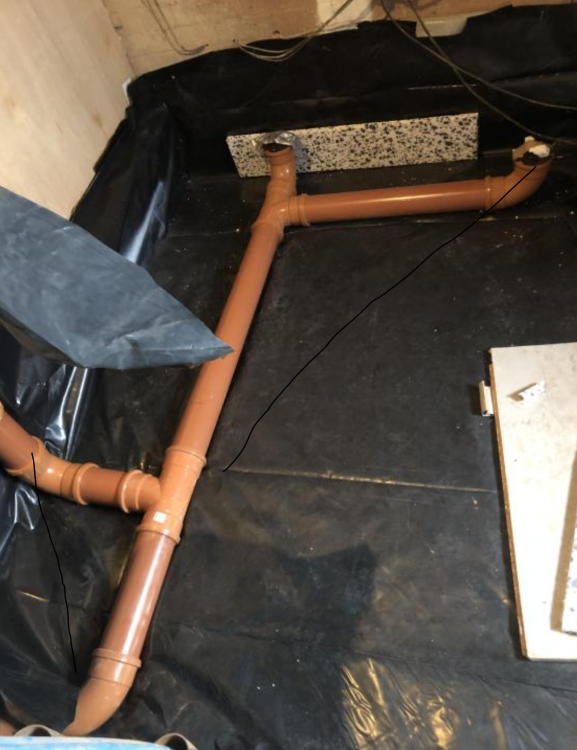
you want to use swept 'Y' not T's https://www.speedy-plastics.co.uk/shop/underground-drainage/110mm-underground-drainage/45d-t-s-swept-y-branch/
-
The new regs put the onus on the builder to document everything and if they dont you dont get an EPC which means you cant sell / get mortgage. No way the majority of builders are ready or even aware of this. Great step forward though, particularly like the condition that geo-location needs to be on to stop the legoland firms using a generic set of photo's Sets of photographs need to be taken which are unique to each property. For example, in a block of flats or row of houses, one set for every plot is needed rather than a sample. 1. Foundations/substructure and ground floor, to show thermal continuity and quality of insulation in the following places: a. At ground floor perimeter edge insulation. b. At external door threshold. c. Below damp-proof course on external walls. 2. External walls: for each main wall type, to show thermal continuity and quality of insulation for the following: a. Ground floor to wall junction. b. Structural penetrating elements. 3. Roof: for each main roof type, to show thermal continuity and quality of insulation at the following: a. Joist/rafter level. b. Eaves and gable edges. 4. Openings: for each opening type (one image per wall or roof type is sufficient), to show thermal continuity and quality of insulation with photographs of the following: a. Window positioning in relation to cavity closer or insulation line. b. External doorset positioning in relation to cavity closer or insulation line 5. Airtightness: additional photographs for all details 1–4 to show airtightness details (only if not included or visible in continuity of insulation image). 6. Building services: for all plant associated with space heating, hot water, ventilation and low or zero carbon technology equipment within or on the building, show the following: a. Plant/equipment identification label(s), including make/model and serial number. b. Primary pipework continuity of insulation. c. Mechanical ventilation ductwork continuity of insulation (for duct sections outside the thermal envelope). What should the photos look like? The Part L document tells us that: • Photographs should be of good enough quality that an independent auditor can look at them and verify what is being shown without ever having been to site or worked on the project. More than one image of each detail may be needed, i.e. close ups and the whole item. • Geo-location should be enabled to confirm the location, date and time of each image. This is a key requirement which we think will catch a lot of people out. Most smart phones have this feature but it’s often not switched on by default.
-
out of curiosity. What is to prevent doing all the underpinning prior to implementing the planning permission, e.g. commencing building regs ? Wouldn't that be permitted development ? A farmer can concrete floors, build internal walls etc without needing planning afterall.
-
i used the enphase microinverters. it was explained to me they are much more efficient, also means not having to mount a large single inverter. https://www4.enphase.com/en-uk/products-and-services/microinverters
-
yep, they normally fix to the bracing for obvious reasons.
-
Warm roof - which vapour control layer and which PIR?
Dave Jones replied to BotusBuild's topic in Flat Roofs
-
Trusses to ridge beam - who to call to design?
Dave Jones replied to Pabbles's topic in Roofing, Tiling & Slating
depends on the span, if you can use span tables to keep building control happy then do it yourself. if the spans means silly sizes of timber (££££) steel may be cheaper and you will need a n SE to design it. Either way id get a trussed solution quoted first as they will be by fare the cheapest. -
restraint straps, requirement of building regs. bit close together though.
-
yeah i wouldn't be happy with that. who signed off the order with the measurements ? You could pack out the internal frame with more timber to get it to work but your going to want the render line to match the reveal of the sliding door below it.
-
Cost to get Utilities installed
Dave Jones replied to IronMike's topic in General Construction Issues
also depends on the type of road, major A roads could be 5 figures to permit, traffic management, sunday working etc . good luck getting them to share a trench on the same day. Never had any luck with that as the firm that seals the trench is also responsible for maintaining it for 5 years after. -
if you wanted bankrolling i'd hope the builder increases their margin accordingly. Fortunately they are in a good position to pick their customers.
-
its because there isnt one trade responsible for air tightness. The buck just gets passed as its labour intensive to get right. I'd insist on a pre-plaster air test to confirm everything is going to plan so corrections can be made while they still can. or the easy option you do it yourself.
-
Reducing the size of an existing, very deep, door lining
Dave Jones replied to jayc89's topic in Doors & Door Frames
make a liner either out of 2 normal ones joined together or use a sheet of mdf and make your own to size. -
what about taking out the blocks in the floor and replacing them with insulated ones https://www.cellecta.co.uk/product/tetris-beam-and-insulation-on-block-system/ your bound to have some that you cant as walls will be built but it would be a neater solution and no problems with messing with DPM.
-
Creating access hatch in existing beam and block floor
Dave Jones replied to embra's topic in Floor Structures
your going to have the same issue as the other guy here trying to do the same thing. you somehow have to get a continuous dpm below the insulation lapped into the inside skin. somehow need to keep those blocks dry after covering them with insulation.