


Gone West
-
Posts
4668 -
Joined
-
Last visited
-
Days Won
20
Everything posted by Gone West
-
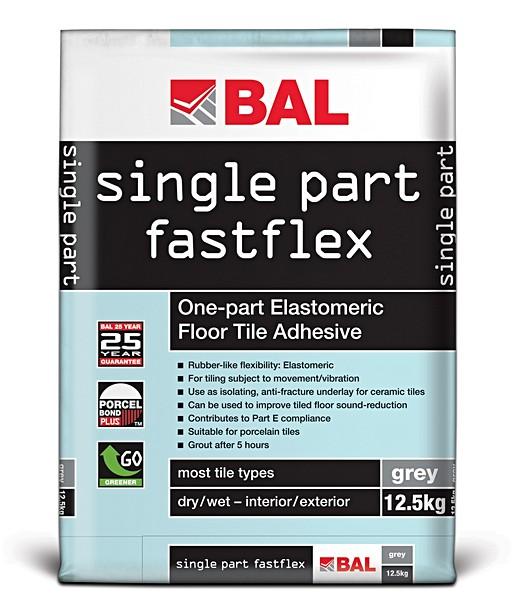
@pocster All I can add is that we used this BAL flexible adhesive for all our porcelain ground floor tiles back in 2015. We didn't use a decoupling mat and tiled onto concrete with expansion joints at doorways.
-

New build with basement Essex/London boarder
Gone West replied to Hyside's topic in Introduce Yourself
PM Admin and ask to set up a blog. -
Ugly House to Lovely House New Series
Gone West replied to Ferdinand's topic in Property TV Programmes
Quite possibly that is the case, as you say, you don't necessarily get to see the whole picture. It's not how I would do it though, I set a budget and stick to it. -
I wouldn't fit an ASHP in an old poorly insulated house because I wouldn't want all the walls covered in radiators.
-
For our demolition we paid £4400 to have the asbestos removed and then dismantled the bungalow ourselves. We crushed the masonry onsite and reused it. All the timber was given away on Freegle. Not a significant part of our build costs.
-
Ugly House to Lovely House New Series
Gone West replied to Ferdinand's topic in Property TV Programmes
That programme showed to me the wisdom of not using an architect for that type of project. Given a budget he comes up with a scheme that cost nearly twice as much and then says if you haven't got the money just do a bit of it. Nonsense. -
It was a timber frame around 7.5m square on brick plinth and concrete ring beam. On the back there was an old block cavity extension around 30m2 on concrete slab and footings with block internal wall. It was crushed to 50mm.
-
We had our masonry crushed on site and it was noisy but I guess it depends on how built up the area is and how the sound is reflected around. Not bad around here.
-
EPC/SAP unfinished new build
Gone West replied to Pocster's topic in General Self Build & DIY Discussion
Yeah, he said as the house wasn't finished enough I could make a final test result worse. The result was 0.49ACH so yes policing/conning. -
EPC/SAP unfinished new build
Gone West replied to Pocster's topic in General Self Build & DIY Discussion
We had a preliminary air test done to find any leaks and it was good enough to pass easily but the tester wouldn't issue the certificate because the house wasn't finished enough. So we had to get him back to do a final test, bit of a con. -
It looks like burnt mastic, old school sealant. https://www.womersleys.co.uk/shop/stone_repair_grouts_and_mastic/burnt_sand_mastic_10_litres
-
@Levo TBH I never considered an enthalpy heat exchanger as an option.
-
Road scalpings, what the farmers around here use on their tracks.
-
Yes as @PeterW says we got permission to discharge surface water directly onto the adjacent lane. We would have needed a large storage tank and soakaway area and we have only a small site. I asked the BCO if he would object and he was happy as long as the Highways Department were. Highways were more than helpful and as there is no formal drainage on our lane and it slopes down away to a ditch 200m away it was allowed.
-
Any good build-related books?
Gone West replied to Mulberry View's topic in General Self Build & DIY Discussion
The David Snell book covers all aspects of a self build from sourcing a plot onwards but doesn't specialise in any particular type of build. The Green Building Bible covers all aspects of low energy type builds. The Green Self Build Book covers the same area as GBB but in less detail and it also covers the Segal Build Method and gives examples of individual builds. Some books provide inspiration rather than technical knowledge but for me those three were the most useful. -
Any good build-related books?
Gone West replied to Mulberry View's topic in General Self Build & DIY Discussion
These are some I've collected over the last 40 years.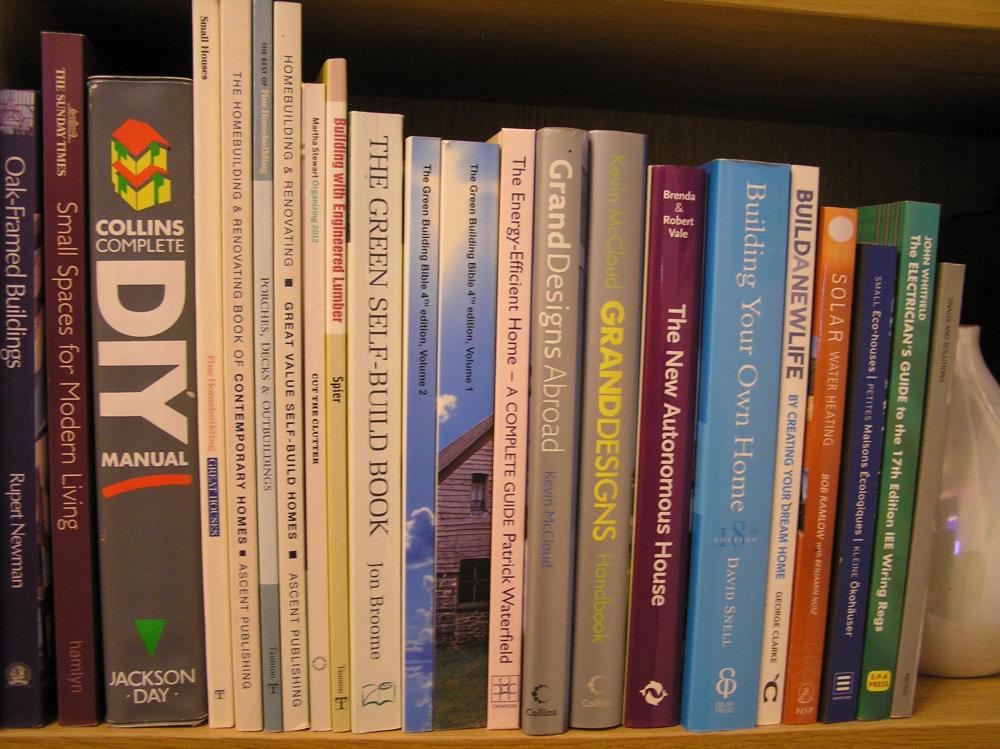
-
I've found in the past that type of hygrometer gives readings that vary quite a lot depending on the type of surface they're on. If it's on an absorbent surface the readings are lower.
-
I'm only three miles from the English Channel and it's been raining now for a couple of hours and it's 96% outside and it's gone up 2% inside to 52%. The inside RH always seems to track the outside value but it's never extreme inside.
-
I don't understand how RH can vary so much. The RH in all our rooms is more or less the same and is between 45 and 50 most of the time. The fans run at the same speed all the time and I didn't fit the humidistat because it hasn't been required. The RH increases when showering but it is temporary and is back down again after 10 minutes. It's strange there is so much variation between houses. Maybe it's down to vapour buffering or where you live.
-
We have an inward opening Rehau Geneo porch door which is under a verandah but if it is very windy and wet we still get a small amount of water creep in. It's exactly as Dave says I don't think there's anything you can do about it.
-
Ugly House to Lovely House New Series
Gone West replied to Ferdinand's topic in Property TV Programmes
The episode we watched last night was IMO the best of the lot so far. -
That is why I ran lots of iterations of PHPP in order to design a house that didn't need an expensive central heating system.
-
Had to look that one up.

-
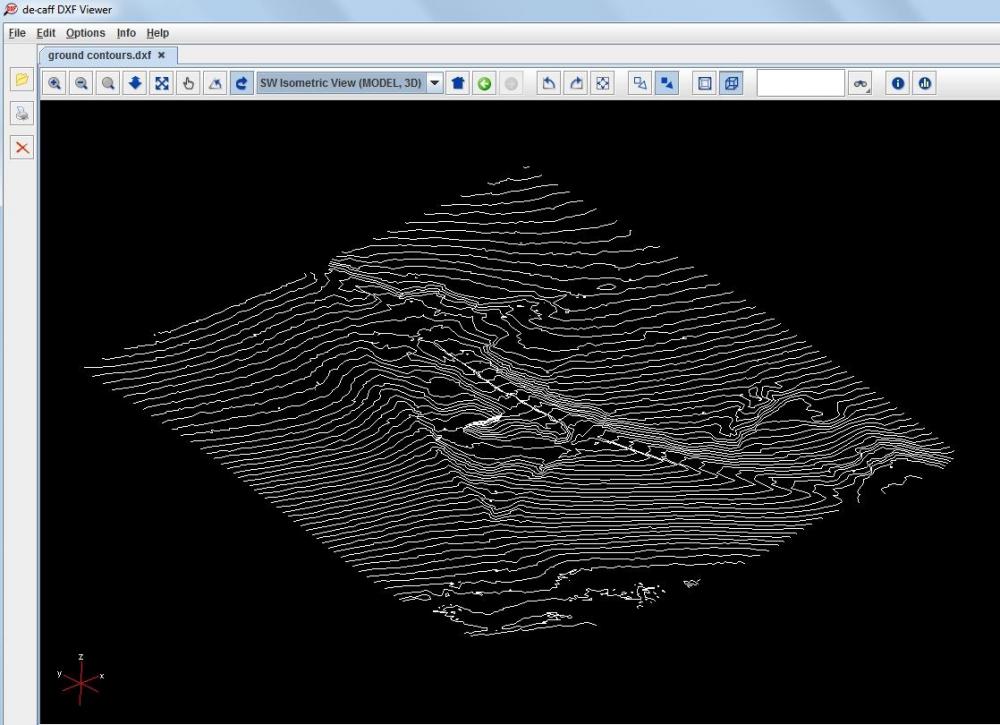
Been busy today so haven't been able to do much with the data today but just downloaded a simple DXF viewer that allows me to rotate the image. I'm getting there, thanks again.
-
We had a 1920s bungalow where the whole of the inside, walls and ceilings, were boarded with Chrysotile asbestos sheets and then had plasterboard put on top. If the area has been completely boarded out and there is no suspicious material visible I would leave well alone. If you have a sample of the material it can be tested very easily with a test kit from Amazon. https://www.amazon.co.uk/Asbestos-Sample-Testing-Instructions-Postage/dp/B0862B9JZB/



