billt
-
Posts
499 -
Joined
-
Last visited
Everything posted by billt
-
Anyone with experience of. Honeywell evohome system
billt replied to magunn's topic in Central Heating (Radiators)
There is some justification for their stance. Combi boilers have built in temperature switching between heating, which has controllable flow temperature and hot water which has separate temperature control. It's easy to separate temperature control between hot water temperature and heating temperature as the boiler does this. The typical heat only boiler only has one temperature control, so hot water doesn't get to a high enough temperature. I came across this issue with the Viessman 100 heat only boiler which I wanted to control with a Drayton Wiser control. Both claim to talk Opentherm, but they won't. Drayton will only use Opentherm with combi boilers. Viessman actually sell an adapter which sets the flow temperature to maximum when hot water is demanded, so Opentherm should be usable for heating water control just like a combi boiler but in reality it doesn't work. As combi boilers are by far the dominant boiler type in the UK I can understand why they don't support other systems. -
AIUI the assessors are only allowed to take officially documented information into account, so BR certificate for insulation improvements would be acceptable, evidence supplied by the homeowner wouldn't. This seemed to be the case when we had an EPC done several years ago, may have changed since. Of course insulation has very little impact on the EPC anyway.
-
I have several RPis, but I've started using J4125 or N5105 based PCs which can be had fairly cheaply from Aliexpress. They are much more computationally powerful than RPis but consume similarly low amounts of power. (And you can run Windows, which I find much easier; I'm not a Linux expert (although 2 of them are running Linux - PFsense and Frigate..)
-
An electrical circuit needs to be complete for current to flow. If your PV panel is not connected to anything the electron doesn't go anywhere as it has nowhere to go. When the panel is connected to an inverter the inverter can, in effect, disconnect the panel from the load if there isn't enough load. It actually continuously varies the load presented to the panels.
-
With very low roof angles that's probably correct. As a general rule the inverter should reduce the current drawn from the panels to match the load. IOW energy is not collected if there is no load for it to go to.
-
Yes, that's cloud, i.e. a normal days output. The first image was very unusual, a day with unbroken sunshine.
-
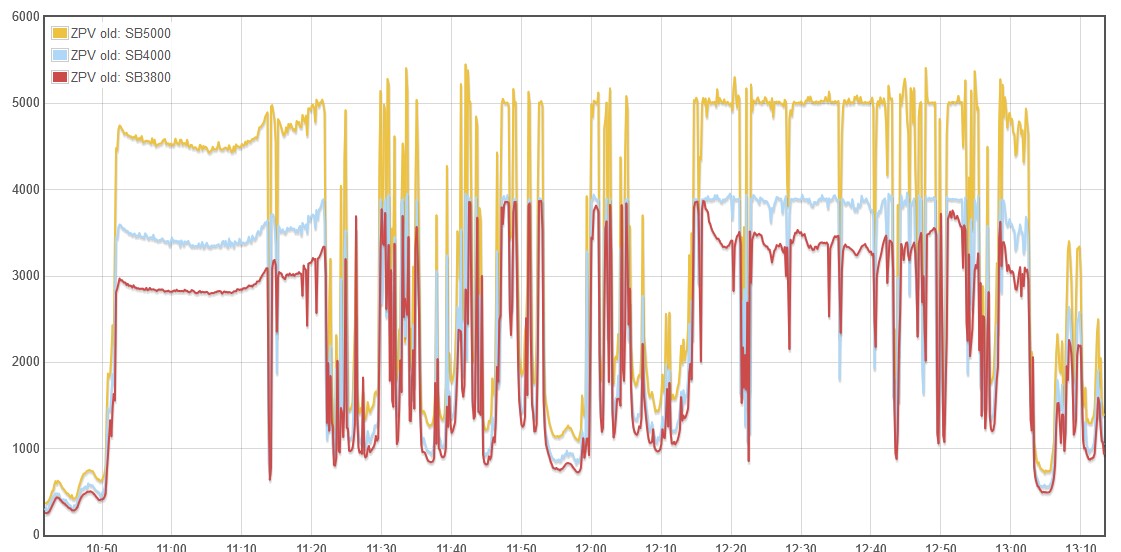
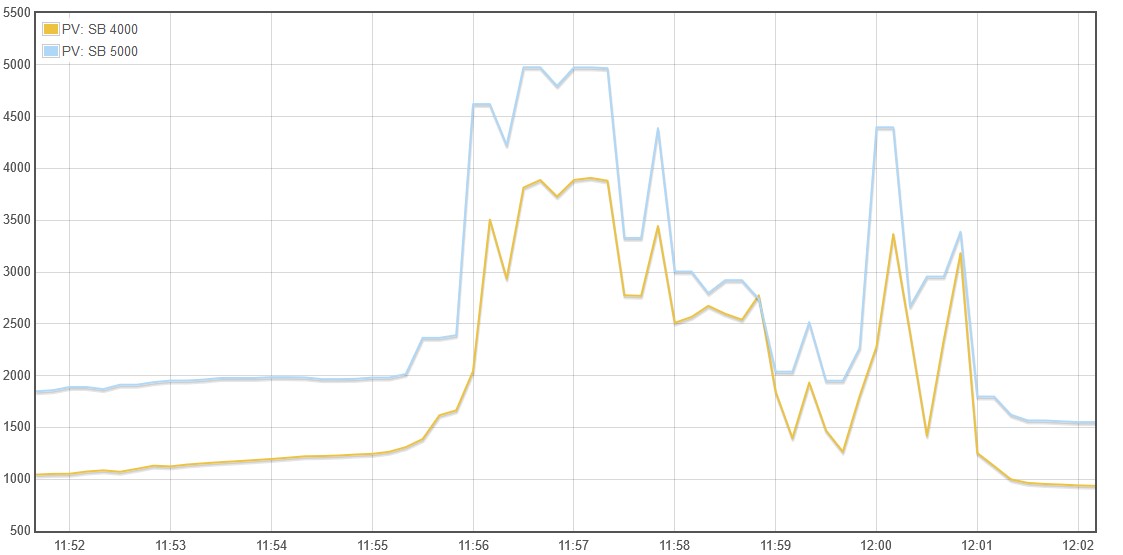
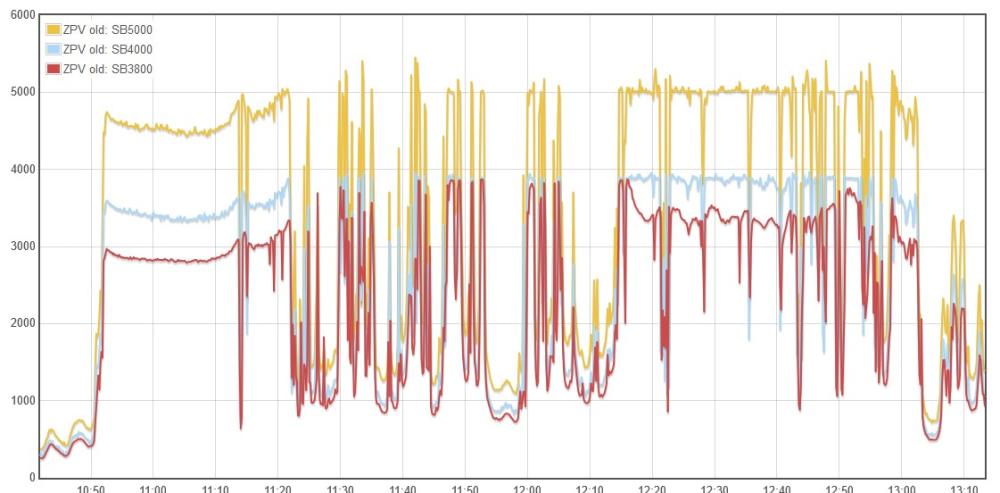
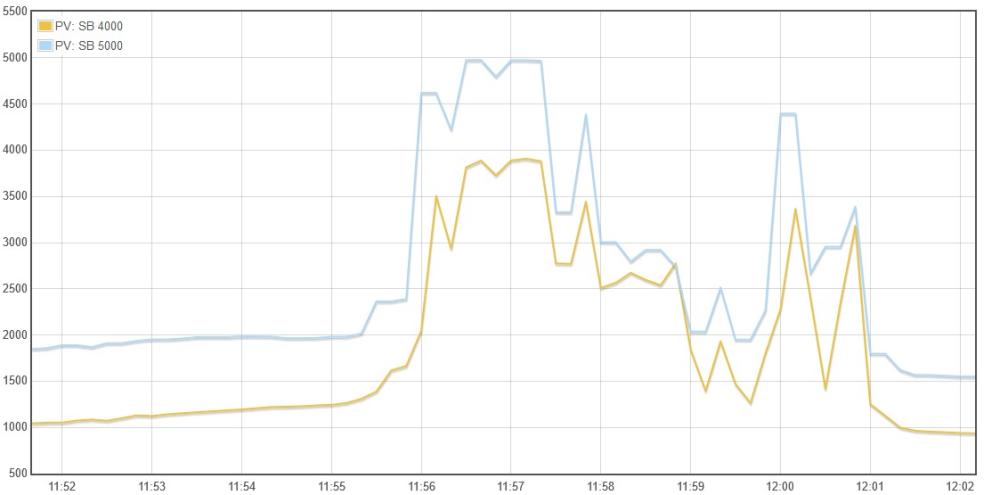
They are actual measurements. It's the reported output from the inverter sent to PVoutput.org at about 5 minute intervals. That was an SB5000TL-20, no longer current, it was installed in 2013. Here's another example. This has the SB5000TL-20, an SB4000TL-20 and an SB3800. The SB3800 is a transformer inverter and was installed 2 years earlier. The nominal array is 3870 watts, so only clips very occasionally. This is measurements of the AC output and much more frequently. You can also see that the SB5000 has brief overshoots sometimes. I've found an instance of the current inverters limiting. They are an SB5.0AV and an SB4.0AV. It doesn't happen very often because of the panel orientation, and lack of oversizing on the SB4.0. I take it that your installer hasn't been doing this for long. It used to be very common to undersize inverters for the array.
-
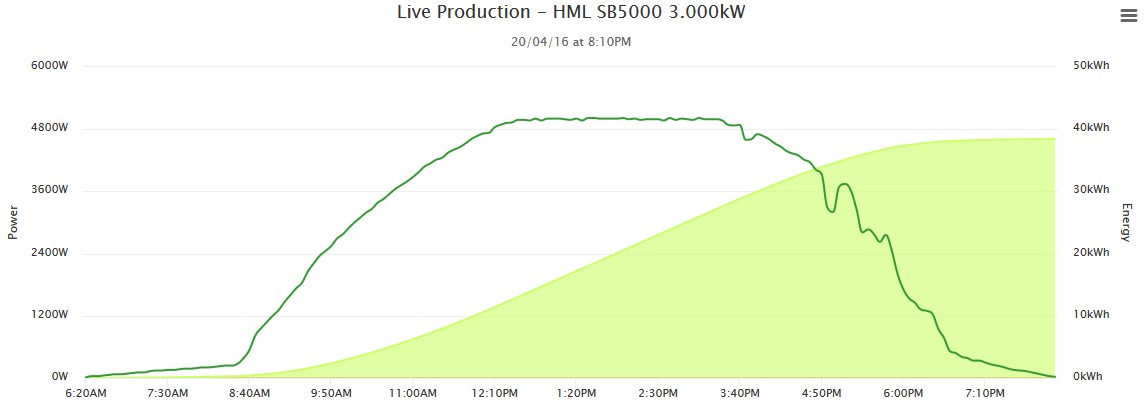
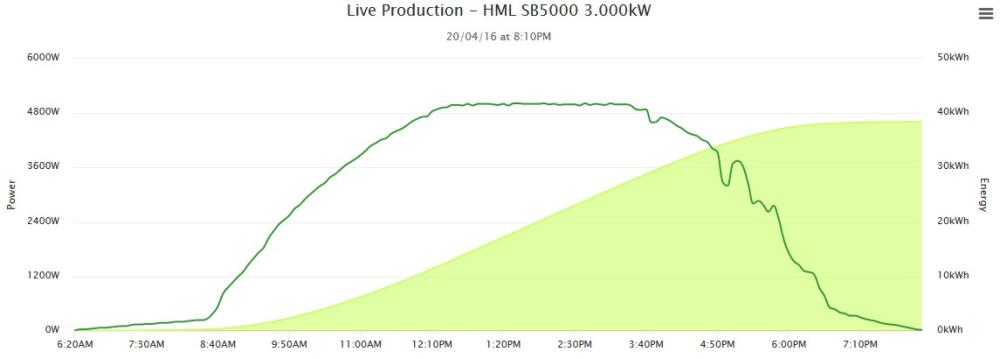
Here's an example of what actually happens to the output. It limits at 5kW in the middle of the day. The SMA Sunny Design web site lets you try various combinations of inverter and panel and will tell you if there is a significant mismatch. https://www.sunnydesignweb.com/sdweb/#/
-
I've done this. At a previous house I had an SB5000 with 5.6kW of panels and an SB4000 with 4.4kW of panels, all facing the same direction nearly south. There was no issue with the inverters, they just restricted the output. Here I've got an SB5.0 with 6kW of panels, but they face in opposite directions so they'll never produce 5kW.
-
Samsung Gen6 8kW.
-
Have a sneaking suspicion that you're underestimating the costs here. The ancillary components soon add up. I bought a heat pump for £2700, which I considered a reasonable price, but I'm up to £4500 total so far which doesn't include a cylinder, extra cu tube and fittings or replacement radiators. Things like flexible mountings, flexible pipe, insulation, valves various, filters etc add up to quite a lot of money. I'll be lucky to get it all done for £10,000. (Still cheaper than the quote I got and it will be a better system.)
-
Hardly balanced, in fact very selective, hardly surprising considering the source. It's possibly true that a modern room sealed stove emits less pollution inside the house than cooking does, but the important pollution is that outside the house which will be very much greater than the pollution from cooking and has a deleterious effect on other people than the stove owner. IOW burning solid fuel is a pretty anti social activity in urban areas.
-
I guess the main use would be in systems without wet heat distribution, e.g. if you use air to air heat pumps. More efficient than an immersion system. It's also potentially useful if you want to dissociate hot water heating from room heating. I'm changing my heating to an ASHP system and it would have made installation easier to install a heat pump hot water cylinder separately from the main heating system. I decided against it because of the noise being unwanted where it would have been installed.
-
Diversity is a wonderful thing (our system runs off a 6kW continuous inverter but the total potential load is well over 22kW), however diversity cannot be applied to EV chargers, for obvious reasons (they will be consuming 22kW for several hours without a break) so it looks as if your electrician is correct. If the chargers have some sort of demand reduction a reduction in supply capacity may be possible.
-
Don't get one like this https://www.amazon.co.uk/gp/product/B07VXM6V4M/ref=ppx_yo_dt_b_search_asin_title?ie=UTF8&psc=1 it's virtually impossible to use. The cable doesn't uncoil easily and you cannot direct the camera from any distance from the head. You lose orientation straight away. It would be OK if you could actually point the thing at what you want to see.
-
Solar Quote
billt replied to bob the builder 2's topic in Environmental Materials & Construction Methods
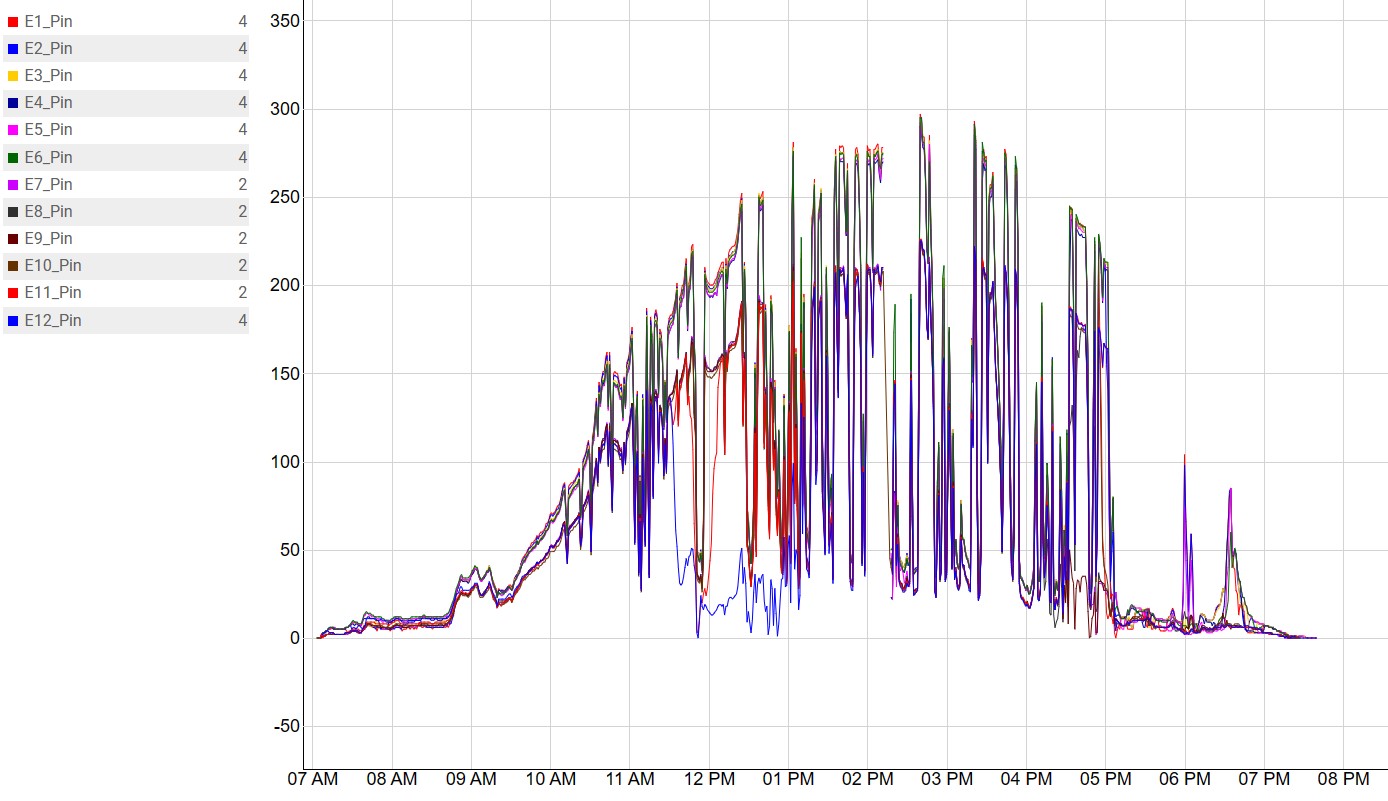
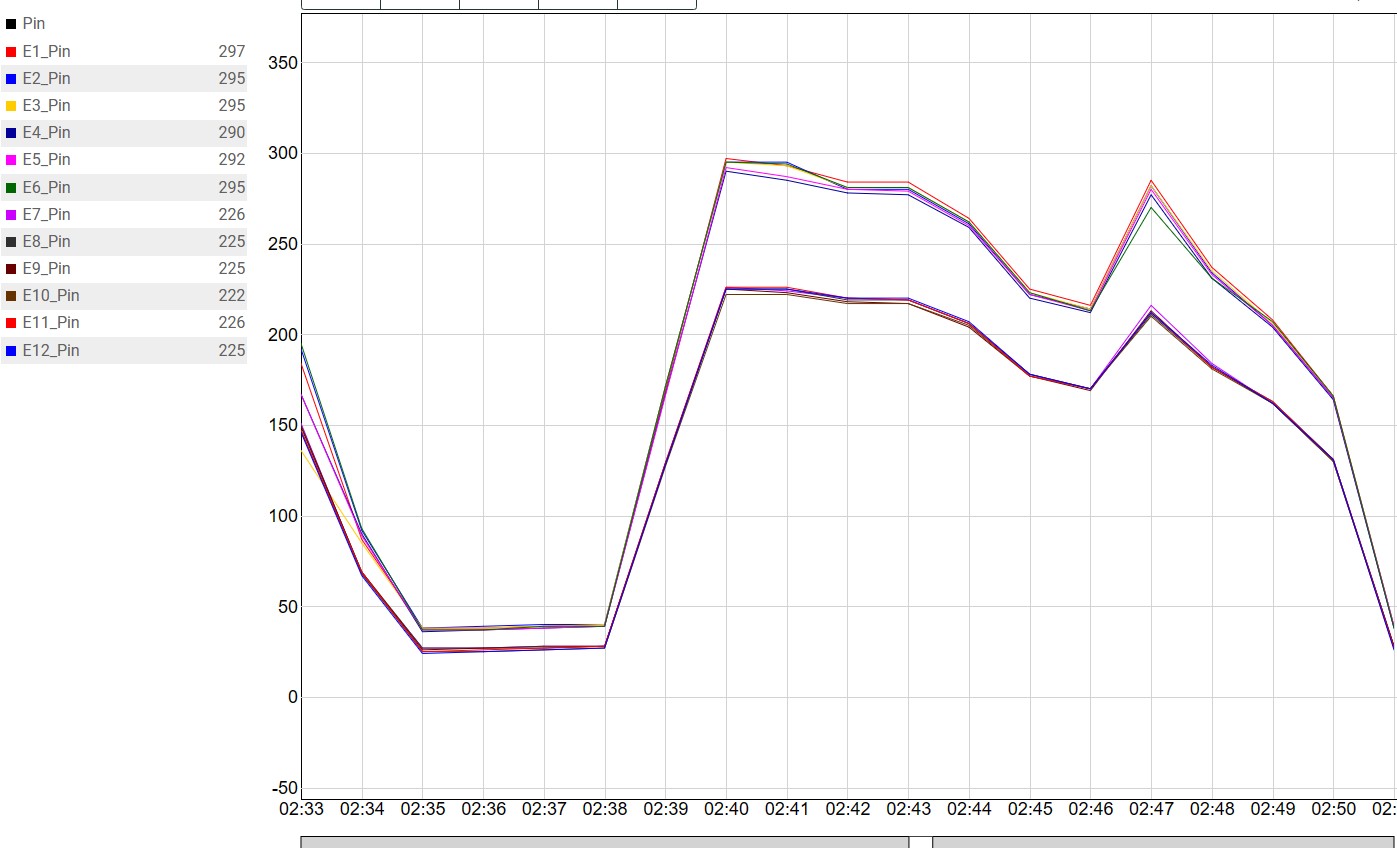
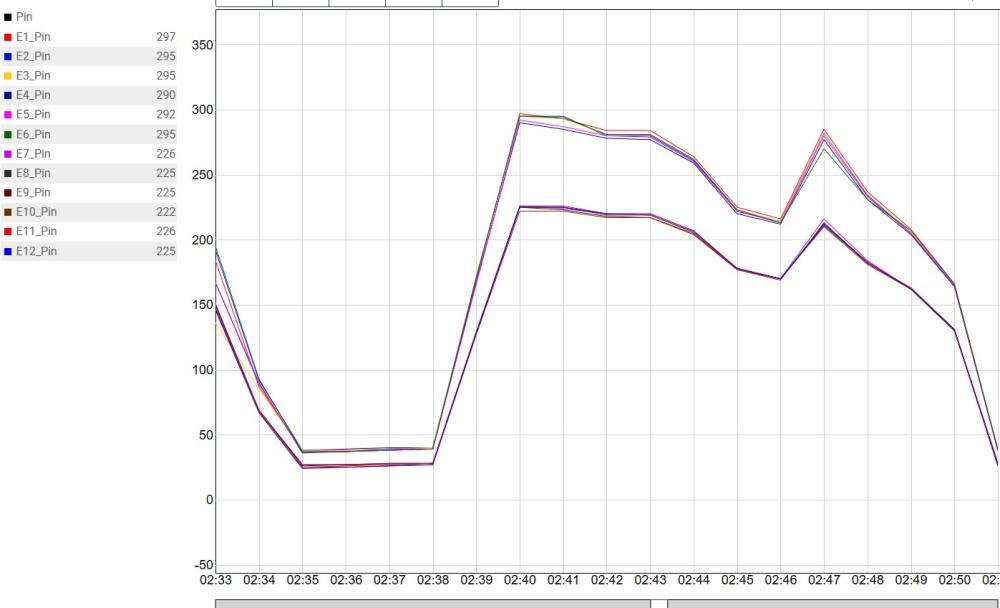
But then again you may not. These panels nearly 10 years old, bought in March 2013. The top lines are nominal 280W per panel and the lower lines are nominal 220W per panel. The 280W panels managed a peak of 297W and the 220W panels a peak of 225W.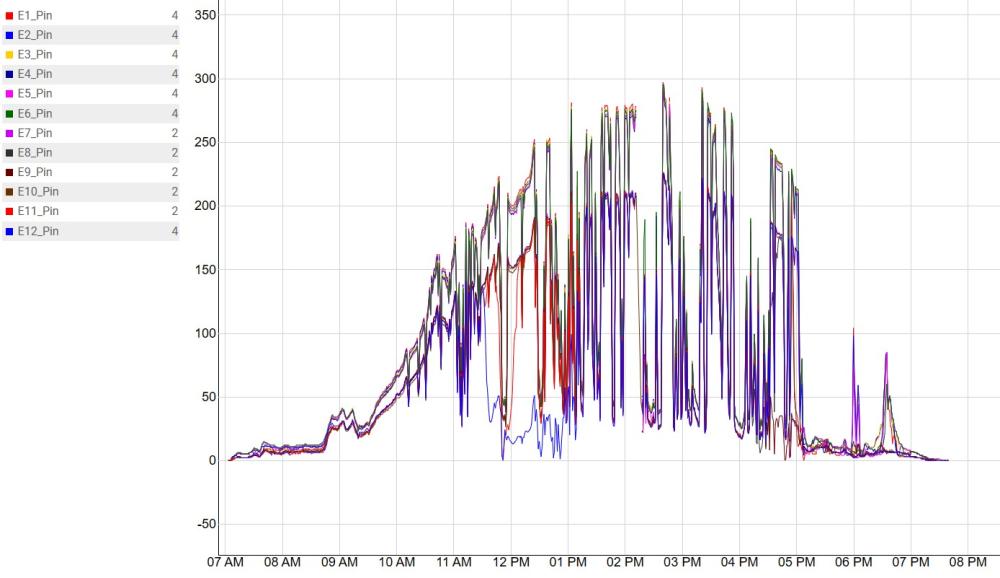
-
Using a PV energy diverter to heat a hot water tank.
billt replied to Marvin's topic in Electrics - Other
That's the reality of the commercial world. You might be able to source the components for £50 or so and then spend several hours assembling it, but to make a commercial offering you have to produce an acceptable enclosure, ensure that it's safe, possibly have to pass compliance tests. Once you've produced it you've got to persuade people to buy it; if you sell it through resellers they'll want their 30-50% mark up and you can't undercut them with direct sales. It's a tiny market so there aren't likely to be economies of scale. £300 or so doesn't seem a totally unreasonable price. Then a man in the street is going to have to pay someone a couple of hundred quid to install it. I've never understood why people think that it's worth while paying that much money to save a few pennies. -
Solar+Battery - more PV AC coupled vs less PV hybrid?
billt replied to DragonQ's topic in Photovoltaics (PV)
The fibre interface box needs local power, so you'll still lose internet if local power goes. -
Anyone can make a mistake. But how many is too many?
billt replied to ToughButterCup's topic in Power Circuits
Radials might be better in theory, but you need a MCB/RCBO for each circuit. Already have 20 RCBOs in the consumer unit here. There are 38 sockets, so another 23 breakers needed, so an enormous CU and lots of extra expense. (We don't actually have enough sockets.) And that's just in the house, the outbuildings would also need extra circuits. The danger of a broken ring are somewhat overblown. the ring is only likely to get broken after it has been disturbed and the continuity should be tested after a disturbance. These days it is quite rare to have many high consumption devices on a ring so overloading the ring is unlikely. The multiplicity of sockets is used for the many very low consumption devices that get accumulated. -
I think you can find an installer easily, just look for air conditioner fitters. Someone's coming from a local air conditioner company tomorrow to quote for one for one room in our house. As to why they're not common: Not generally discussed so people don't know about them, but that is slowly changing. Multi room systems become complex and expensive - you are only allowed one heat pump under PD rules so planning permission would be needed if you need more than one outdoor unit. The draft might be uncomfortable and the noise of the indoor unit might be unacceptable. After some discussions on here I thought about the possibility of using air to air, maybe with a heat pump cylinder, but the complexity ruled it out. We have 10 rooms needing heating and 2 circulation areas, the house is long and narrow so multiple outdoor units would be needed, it would still be difficult to sight some of the indoor units. It's simpler and cheaper to use an air to water heat pump.
-
I'm that bad. I'v eordered the OEM heat pump monitoring kit for the new heat pump. I want to know that it really is working as it is supposed to. If you read some of the negative comments on youtube heat pump videos you won't think that the country will be rushing to install heat pumps; apart from anything else they are stupidly expensive as a retrofit when done properly.
-
Why should they need to update the firmware? Presumably they got it right in the first place. In my experience many firmware updates in consumer electronics make the functionality worse not better. I understand that they need internet connectivity for TOU tariff data, but that's not necessary for the core functionality, and not something that I would use. No doubt they also scrape outside air temperature from weather stations rather than having a local sensor, but that's sub optimal. (That's what my current heating controller does, but it still operates without an internet connection. Does the Homely?)
-
I was considering Homely, but being reliant on the cloud really puts me off. Why do they need to use the cloud except to harvest your data?
-
Difficult to read a massive block of small text, but if you want some real world data I recommend the Open Energy monitor site. https://heatpumpmonitor.org/ By and large these are well designed and installed installations so the performance should be good.
-
No. As long as the voltage and current are compatible with your inverter there will be no problem, the difference in efficiency will be swamped by natural variablilty in insolation. Some of my panels are over 10 years old and they work perfectly. They're probably only 15% efficient but that isn't particularly important unless you have a restricted area.