


Onoff
-
Posts
21181 -
Joined
-
Last visited
-
Days Won
207
Everything posted by Onoff
-
I don't mess around with PTFE tape on compression fittings anymore. Just a smear of Jet Blue and it lubes and seals in one go. Tbh I think it's more a case the lube stops the fitting binding / squealing as you tighten it allowing more compression and the olive to do it's job. As for push fits Hep2O all the way. Reminds me, I must put some pipe lagging around the long 15mm PB tails where it goes from copper under the bath. They go "bonk" when you turn the bath taps on.
-

The panel is ready do I need to protect the tails?
Onoff replied to MikeSharp01's topic in Electrics - Other
Thinking about it the tape the meter monkeys is wider as in bigger numbers... http://solutions.3m.co.uk/wps/portal/3M/en_GB/ElectricalMkts/ElectricalSupplies/products/electrical-tapes/marking-tape/temflex-1700p-printed-phase-marking-pvc/ -
The panel is ready do I need to protect the tails?
Onoff replied to MikeSharp01's topic in Electrics - Other
This is a useful bit of kit: http://solutions.3m.co.uk/wps/portal/3M/en_GB/ElectricalMkts/ElectricalSupplies/products/cable-identification/scotchcode-wire-marking/ The Scotchcode dispenser takes little reels of pre printed numbers or indeed phase "numbers". The basic dispenser comes with 0-9. You can then get the L1, L2, L3, N & E pack. Try CEF just down by TP in S'oaks. There's also a new Neweys too opposite Screweys...or eBay! -
The panel is ready do I need to protect the tails?
Onoff replied to MikeSharp01's topic in Electrics - Other
I've a Dymo Letra Tag here you're welcome to borrow. If buying one now I'd get this from Staples: http://www.staples.co.uk/labellers/cbs/200043995.html Half the price compared to Screweys. -
No, I've had some input, others have had a hand! These "planks" are often the first cut off the log and as such random widths and lengths. He (we?) may try and regularize them width wise but leave the lower edge "natural", for effect. Good to know creosote is still out there. (I am seriously debating a pallet based garden room as I think I might have a supply).
-
I reckon just Creocote both sides. Does old engine oil mix with Creocote like it used to with Creosote? I'm 50 and know parent's neighbours who used that old mix, religously applied annually and their sheds/fences are still standing. Mind you they've had various nasty cancers!
-
Not a bad shout, make a dipping tank. As you say though it would use a lot and he's on a budget. I was thinking to leave "as is" i.e. no colour and just maybe treat against future (existing?) insect attack with some "5 Star" type treatment.
-
The nephew, building his timber pallet shed has been offered some planked, untreated timber to use as cladding. The timber is from long felled trees and a variety of beech, ash and I think some cherry and lime. Planks are circa 20 - 25 1mm think and not feather edged. I think it could look pretty good. Any tips for using it? The shed frame as I say is pallets. This has a breathable membrane over it and will have vertical battens added for the cladding to attach to. I thought that if he only treats one side with say Creocote the untreated side could swell causing the boards to swell. Best to treat both sides before it goes up? And where to nail...at the top only? Cheers
-
To ferrule or not ferrule and where to grommet
Onoff replied to MikeSharp01's topic in Power Circuits
Grommets will let the creepy crawlies in. Glands won't. -
Good for Hager cu's too and they do the odd bits like extra N bars, blanks etc
-
Done it. I think it was because I'd originally drawn in Draftsight. I saved to Dropbox then opened it up in AutoCAD. I redrew over the shape then used PEDIT.
-
Do you get a big discount from Buildbase? Hager WMSS82 Switched Double Socket: Buildbase £4.37 inc VAT Gil-Lec £2.15 inc VAT http://www.gil-lec.co.uk
-
"Nexus" stuff I think you'll find is made by BG, "British General". Completely separate company to Hager. Hager is French and really good gear. I've always liked French control gear tbh and grew up on Telemecanique...who are also French...now part of Schneider...who also do domestic switches and sockets under the GET name. BG...very popular at the sheds and Screwfix offering consumer units and USB enabled sockets in 2 for 1 deals at silly prices. Owned by Luceco plc with a lot of the stuff made in China. I've honestly only ever used I think one BG IP65 enclosure and I seem to recall something odd about that...
-
MK, Hager Sollysta, Scolmore Click Mode, GET Ultimate...
-
Vacuum cleaner recommendations?
Onoff replied to Jeremy Harris's topic in Kitchen & Household Appliances
I'd buy TWO of these in a heartbeat if they were still available. Take some serious wet & dry abuse. Bought mine branded as Wickes but Earlex did them too. A bit noisy maybe but super powerful. Got to be careful to by decent wet and dry filters rather than the "yellow" copies which are crap. I'd have this if it was nearer. Tbh I hose my filters clean and re-use. I WISH I'd bought the spare hose sets and filters when TLC Direct had them on clearance. https://www.gumtree.com/p/wet-dry-vacuums/wickes-wet-and-dry-hoover-/1266426054 -
Evening, Using Acad 2010: I can't remember the command... I've drawn a complex shape in 2D. I want to turn it into a polyline, nothing I haven't done a thousand times before. So I enter PEDIT, then use JOIN. Not having it, must be a gap. There is a command that lets you click and sort of plots around the shape so you can see where the gap is? Name escapes me! Anyone? Cheers
-
Final offer 70 & 121!
-
70 & ?
-
Cheers all, he's gone for @Temp's first link. I cut the tilting fillets for him and ply strip. Cheers
-
Thanks. Just digesting it all. Should have said that here the first thing on is supposed to be a row of half tiles if that impacts on the advice above.
-
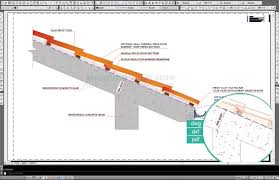
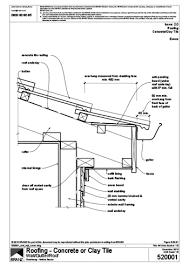
Morning, Looking to help tile my nephews shed roof with some secondhand, freebie tiles, these: https://www.marleyeternit.co.uk/Roofing/Clay-Tiles/Acme-Single-Camber-Clay-Plain-Tile.aspx Pitch is nom 30deg. Plan is some breathable roofing membrane first. What I can't figure is the detail at the gutter. Googling generic sections, some show the same thickness batten right down to the gutter. So the last tile is at a slightly greater angle than the ones above: Others show the last tile at a flatter angle, "kicked" up by the higher fascia board. At the mo he has the top of the fascia level with the top of the joists and planed off, along its top edge to the same angle. ??? Any pointers appreciated! Cheers
-
Bio-gas V8...everybody's happy!
-
No help whatsoever I imagine but I ordered one of these, a Bernstein: https://m.ebay.co.uk/itm/RIMLESS-WALL-HUNG-WALL-MOUNTED-TOILET-NT2038-Ceramic-Soft-close-duroplast-seat-/282355252671?_mwBanner=1
-
I've been looking at that exact site. A huge variety from diy rated to trade and professional though not sure what the difference is between the last two!
-
I've used Zarges through work for 35 years now funnily enough, not just ladders but bespoke travelling gantries in building atriums, aircraft steps etc. I've an aluminium ladder standoff like this: https://www.machinemart.co.uk/p/adjustable-ladder-stand-off-bracket/ Lightweight and dead easy to use but a bit fiddly with it's wingnuts etc. The fixings to attach it get shared with the "wheels" attachment that hooks over the ridge. I've also a Climba, steel ladder standoff that came with the garage. For my mate I was looking for a one stop shop for both bits.

