


Mr Punter
-
Posts
8581 -
Joined
-
Last visited
-
Days Won
27
Everything posted by Mr Punter
-
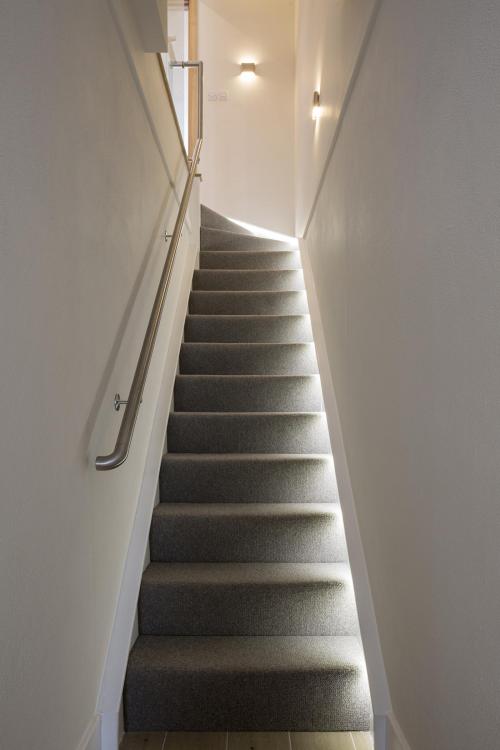
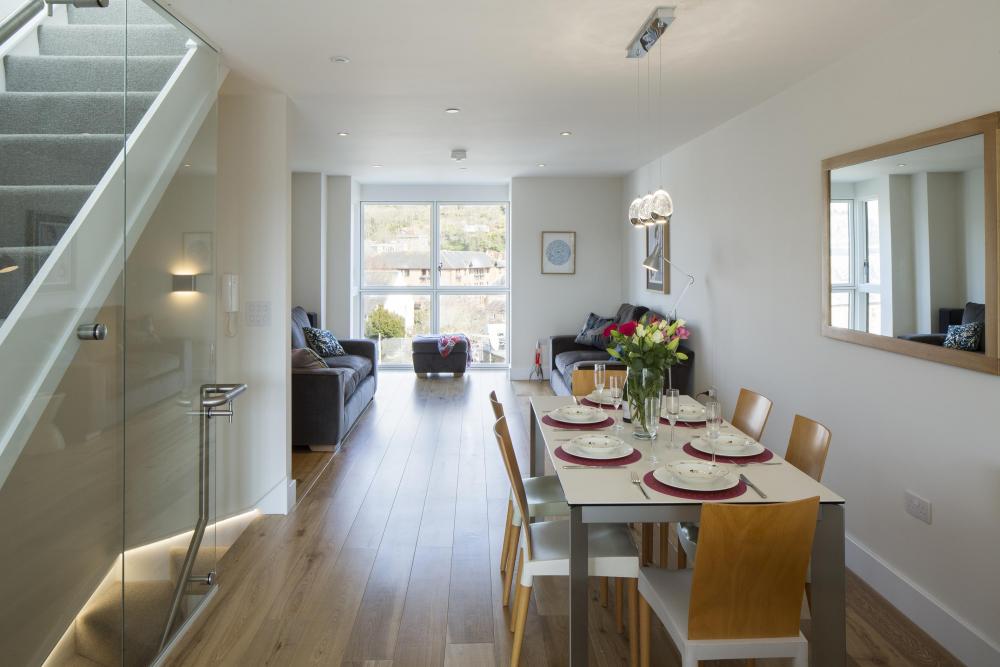
The lack of newel post gives the stairs a modern look, but most firms base the structure around newel posts. We cut our newels down and fitted stainless handrail and glass balustrade.
-
Should be fine in medium density blockwork if they are non-loadbearing, otherwise you may need to ask a structural engineer.
-
Getting exciting at last!
Mr Punter replied to EverHopefull's topic in General Self Build & DIY Discussion
Make provision for a water and electric site supply. If you are outside Conservation Area, remove any trees that are in your way. Secure the site against unauthorised entry. -
Building extension over a private water pipe
Mr Punter replied to DC5's topic in Party Wall & Property Legal Issues
I wouldn't be using a digger to "find" a live water pipe, especially if it may be brittle. -
See https://www.planningportal.co.uk/info/200130/common_projects/45/paving_your_front_garden Should be fine. Mostly drainage, dropped kerb and footway crossover as issues.
-
Building extension over a private water pipe
Mr Punter replied to DC5's topic in Party Wall & Property Legal Issues
Not sure why you think it is 4m away. It should be fairly simple to find the water stopcock just by following the line of the black pipe you have traced. You should not need a digger as the lid should be at ground level. -
This is a cut string. It is a more traditional look. I don't think it would work with your glass infill.
-
We have a Rangemaster extractor above the range cooker. It is ducted up through a services room and out, all via 6" ducting. Not bad, but quite noisy, so I wonder if anyone could suggest an inline fan I could mount on the wall of the services room? I am looking for something powerful, with speed adjustment. I would be OK if we used the Rangemaster for lighting and grease filters only and maybe had a separate control for extract.
-
A cut string is where the top part of the string between the underside of the tread and the riser is cut out for the tread to sit on, instead of it being routed out. It is an aesthetic thing mostly and it works well where the outside of the string is visible (not for stairs built in between 2 walls).
-
Yeah yeah whatever...
-
I have often thought that a 3d printer would be ideal for producing scale models of proposed buildings for consultation and planning, but I have not heard of anyone who provides this service.
-
@newhome please tell me it was Naked Jungle!
-
Link please!!
-
Just go with this and build the garage after the house is signed off. If you want you can use a private Building Inspector for the garage but there should not be any issues.
-
Morning and welcome. At 5500ft2 that is an enormous house. At that size, you will need to be very careful about what is specified, as the impact on the budget will be large and anything less than a 5 star hotel standard finish will not do it justice. I assume you are not considering physically taking on the build?
-
Windows sealing strategy
Mr Punter replied to magnethead's topic in Insulated Concrete Formwork (ICF)
Insulated reveals are more to prevent condensation cold spots than heat loss. -
I think chipboard may be cheapest. Sealing all the edges will be good. @ProDave I think this is a ground floor with sleeper wall supports.
-
Before I break my legs, some advice please...
Mr Punter replied to ToughButterCup's topic in General Joinery
If they are the heavy duty Euro Pallets - all the same size - it might be doable by stacking 2 per tread, fastening with long timber screws and supporting mid way from the ground. This construction would weigh about 400Kg and represent a significant trip and fire hazard. -
Preliminary plans have arrived
Mr Punter replied to Robert Clark's topic in New House & Self Build Design
If you choke the stove down to 1kW it will be very inefficient at combustion, so higher emissions. Even at this level you will swelter. The nominal output is 3kW, so good for a sauna. -
I think they do a minimum pressure and a minimum flow rate, both pathetically low.
-
I know it is more work but have the WC door lead to the utility, not the kitchen. Not sure what is going on with the stairs.
-
ASHP and MVHR are not renewable energy sources. Solar PV seems most sensible unless you are constrained by Conservation Area, Listed Building or design practicality issues, in which case write to ask that the condition be removed or deemed satisfied.
-
The one for "built according to the approved drawings" is fairly(ish) recent, to make amendment applications more straightforward.
-
Hi Oliver Did they give you an external wall section where the proposal was for timber cladding? How far into the build are you?
-
Gripfil but you will need to let it cure before you you put studs in.




