


Mr Punter
-
Posts
8581 -
Joined
-
Last visited
-
Days Won
27
Everything posted by Mr Punter
-
This will make the UFH very slow to react. Also there will be heat lost to the ceiling below. The optimum concrete / screed or whatever is probably between 50 and 150mm, with a bit of insulation under to stop the heat going downwards.
-
Concrete is heavy and expensive and that is a very deep makeup for residential. If it is deflection or sound insulation you are interested in, compare it with timber / engineered joist solutions. 15mm plasterboard is better than 12.5 as it is less likely to sag.
-
Thanks @JSHarris that is good to know, as I prefer not to need to add a caveat saying "The charge point will only be compliant if you install a TT island and you will be responsible for any damage to underground services."
-
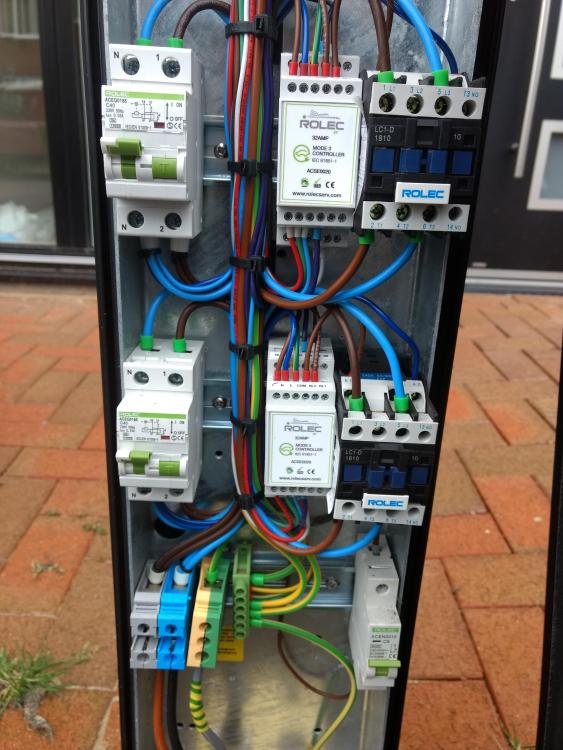
@JSHarris & @ProDave I know it is off topic but this is one of the charge points. Would it be unsafe to use?
-
I have had 7 charge Rolec BasicCharge pedestals installed on residential driveways without TT islands, as there was too great a risk of damaging other services where they were fairly congested underground. Is the risk just to do with a neutral fault on the network that is undetected?
-
I make it 170mm dig down from the IC cover (but 15mm wont make much difference).
-
@lizzie what is the difference? I found the kettle furred up before we fitted ours.
-
I understood that it was 45m between inspection chambers. I also think you could just put a rodding eye for the foul and not bother with the surface water. Ask Marley or Polypipe technical for backup if required. Easier to send them a drawing than mess with digging up drains.
-
I have a Combimate, where you have to change some magic marbles in once a year. The kettle does not fur up but there is still residue where cold water evaporates such as in the tray of the fridge water dispenser, in spite of the fridge also having a water filter.
- 199 replies
-
- 2
-

-
- hard water
- water softener
- (and 1 more)
-
Best stage to lay a concrete garage floor slab.
Mr Punter replied to epsilonGreedy's topic in Foundations
As far as foundations and NHBC / LABC go, for retained or proposed trees it makes no difference on the size of the tree, just species, proximity and soil type. -
I don't see dry lining contractors using collated screw guns. Maybe @nod will comment as it is his field. A friend bought one and it was prone to jamming and the screws are expensive.
-
Real World SIPs Experiences
Mr Punter replied to LA3222's topic in Structural Insulated Panels (SIPs)
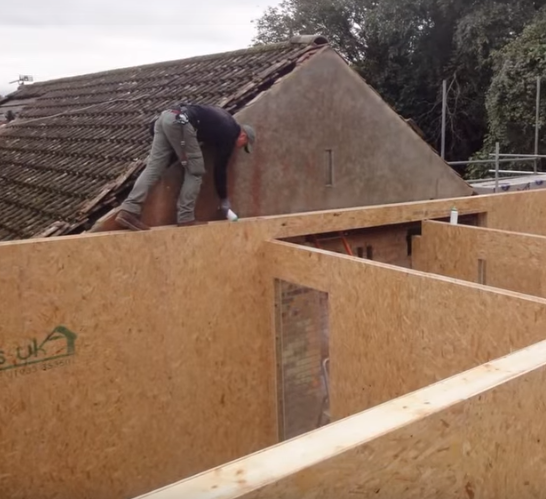
Or these bits (and I have certainly done far worse):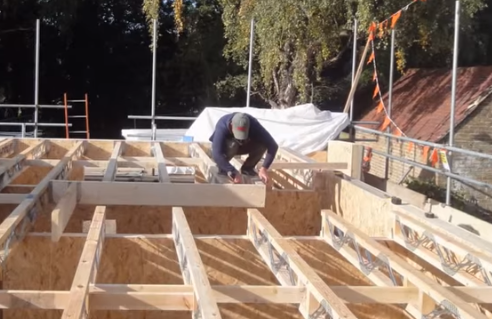
-
How to plaster around hole in the wall gas fire?
Mr Punter replied to JohnW's topic in Plastering & Rendering
I would have thought plasterboard and skim would be OK. Why did you rule it out? BTW that is a VERY impressive range of back boxes on the left! -
SUDS drainage design quote? High?
Mr Punter replied to Dreadnaught's topic in Rainwater, Guttering & SuDS
Oh dear I was using the paved are data. Should be 2.64! -
SUDS drainage design quote? High?
Mr Punter replied to Dreadnaught's topic in Rainwater, Guttering & SuDS
Yes as @JSHarris says. Assuming the most negative you would have 0.016l/s/m2 so 0.016 * 120 = 1.92l/s. Can I have some of the £1,350? -
I think metal stud for ICF and brick and block, timber stud for timber frame and I would get the TF company to do it. Get them to quote to insulate the walls as well.
-
I have only ever done floating chipboard over a solid floor, as I would fear the joins weakening if not fixed to the joists. We used a product called ScreedBoard in a flat conversion. It is an overlay board with a soft backing so you would fit this over your chipboard. The sound test results were excellent.
-
Drain rods or Cobra rod must be easier than digging and then making holes in the pipe.
-
Drain rods without fittings (you may need to borrow some extra sets) will let you establish where the blockage is.
-
Access seems pretty good. Was it garages on the plot before? Well done on the VAT. It is easy just to let these thing go and regret it later. Hopefully the weather will stay good for you.
-
I think it is worth waiting a year, unless there are bits that will be a real pain to get to later on (like your swimming pool ceiling or the tiger enclosure).
-
I find multi tools and petrol strimmers much noisier than impact drivers. And Paslode guns indoors.
-
I had not heard of the oil pulse ones. I have a Makita and it it great for driving in coach screws and long timber screws but never used for more than an hour at a time. The oil pulse ones sound good for plasterboard but I would never use it enough to justify one.
-
Bear With Small Brain challenged by studding head....
Mr Punter replied to ToughButterCup's topic in General Joinery
Nice drawing Ian. Like @Construction Channel says, cut the studs straight as it is simpler. You can wedge a bit of batten in the gap at the top to get a better fixing to the rafters. The top row of pb screws will still be fairly close to the top of the board. Are you building the wall on the floor, then raising it? -
Normally it is one vent per room. Some systems have a manifold and smaller ducting.


