Mr Punter
-
Posts
8303 -
Joined
-
Last visited
-
Days Won
24
Everything posted by Mr Punter
-
Ideal Combi ( Windows / Glazing )
Mr Punter replied to canalsiderenovation's topic in Windows & Glazing
I get this often. Lots of firms decline to quote for stuff, unless you go through, say, an expensive architect or engineer who the seller / contractor wants to keep in with. -
Flow rate is not pressure.
-
Yes but I don't know if it will solve your problem. (any of them).
-
Pressure reducing valve?
-
Ideal Combi ( Windows / Glazing )
Mr Punter replied to canalsiderenovation's topic in Windows & Glazing
I used them for a project with about 100 windows and doors - 280m2. They were OK. I would take what they say at face value - they are too busy to want to quote on your project. -
I would set the cill at 450mm from FFL so you can use it as a window seat. The window as drawn looks a bit wide and squat.
-
From your photo it looks possible that you may have asbestos board around the existing window. You can get it checked really cheaply and it will give everyone peace of mind. Some can be removed DIY and some is v. dangerous.
-
Angled wall: Pretty, but worth it?
Mr Punter replied to puntloos's topic in New House & Self Build Design
If there is no reason to do it (like boundary or physical geographical feature) then I am not at all keen. Don't waste your money there is no WOW factor in this. The top window is clashing with the roof btw. -
I doubt it will increase the valuation much but it will give them confidence that there are not abnormal or unknown costs for these.
-
Fire regulations package for build control
Mr Punter replied to hallega's topic in Building Regulations
@redtop You can have a tank and pump if the rising main is cost prohibitive, but straight off the main is far cheaper and simpler. -
I can't see why these things would have any bearing on valuation. More relevant would be quotes / plans for utility connections, surveys, contamination assessments etc.
-
Where is @pocster when we need him?
-
Can you remortgage your house with perhaps a buy-to-let? In my experience lenders will not give much, if anything, for a plot with PP. They want to see income to cover the repayments as there is lots of risk if you are highly leveraged. If you have a decent income you can borrow money to buy something worthless as the lender will still get their money back. Having to repossess an asset as the only way to get their money back is not the model they follow. You can obviously sell your house first, but I guess you have a plot in mind and need to act quicker?
-
When you do the tree assessment for foundation design it assumes the tree is fully grown, even if it is currently a sapling. Mainly it shrinkable clay soil that will be an issue.
-
Bear in mind there were over 400 posts on his "Basic cement / Ballast" post and over 1600 on his "Help with kitchen renovation / 1st house" post. I know he seems a bit spammy / troll-like, but I quite enjoy @zoothorn's topics, if not always his sometimes tiresome posts.
-
Don't underestimate this. It may need you to employ a qualified archaeologist to do a written scheme of investigation, a watching brief where they monitor as you excavate, and a report. Perhaps budget between £2,000 and £4,000. We used to be able to just make a small donation to the local archaeological society, but now this is "developer funded" it is a full on business!
-
Setting out DIY
Mr Punter commented on Patrick's blog entry in Timber Portal Frame - but stick built
Setting out a simple layout on a clear level site is not too tricky to DIY. A complex design on an undulating site with different slab or foundation levels would be well beyond me. -
GCSE Electrics: Build Hub Level One exam
Mr Punter replied to ToughButterCup's topic in Electrics - Other
For appliances that come with a plug I like trailing sockets on flexible cable behind the plinth. You can just release the plinth and unplug them if needed. Cutting off the plug and wiring into a flex outlet, with a switch on the wall, looks messy, makes it more difficult to remove and I doubt it does the warranty any favours. -
Schadenfreude fest!
-
I have paid £4,900, £1,080 and £540. The expensive one was in 2007 but it did help us gain consent and the rules were not so clear cut then.
-
It was supply and fit from a metal cladding firm. It comes on a roll and they cut and bend on site. They are Brighton based.
-
We did some in dark coloured aluminium, but anthra zinc would look similar..
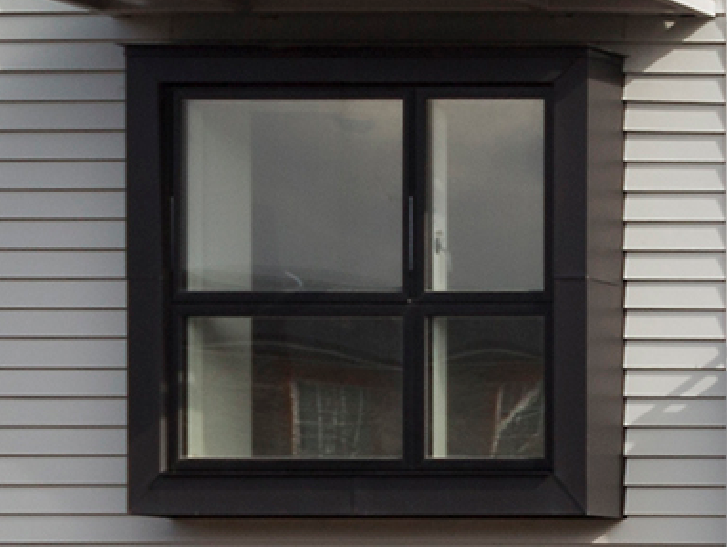
-
I have done several houses in flood risk areas near a river. A flood risk assessment was carried out which looked at historic flooding - depth, velocity, speed of inundation, likely return period. They consulted the Environment Agency and were informed of minimum habitable floor levels. The ground floors are flood resilient - concrete floor with tiles, rendered concrete block internal g/f walls, brick and block external. Non-habitable rooms only on g/f (office / study / store / garage). Upper floors for kitchen, living and bedrooms. In the event of a flood you would probably need new skirtings, pipe boxings, a couple of internal doors and redecoration, so not a catastrophe.
-
I have some of these oriel windows in timber frame, but 2300mm wide and 330mm deep. Your cavity wall looks about 275mm, so you will have quite a deep cill and reveal with your 400mm add-on if you set the window near to the outside. If you clad the sides with OSB it will act as racking resistance. Ours are just timber frame panels and they don't have gallows brackets.
-
Wow. Never seen this before. Is it just mortar? Looking forward to seeing the flint infill (although obviously not trying to rush you). The panels look more substantial than I imagined.