


Mr Punter
-
Posts
8582 -
Joined
-
Last visited
-
Days Won
27
Everything posted by Mr Punter
-
The Fibolite blocks are made with expanded clay beads. They are not the aircrete crappy ones. The Marmox are good for a single course. Get your SAP person to let you know if they make any difference to your rating.
-
Do you think that is a bricked up fireplace?
-
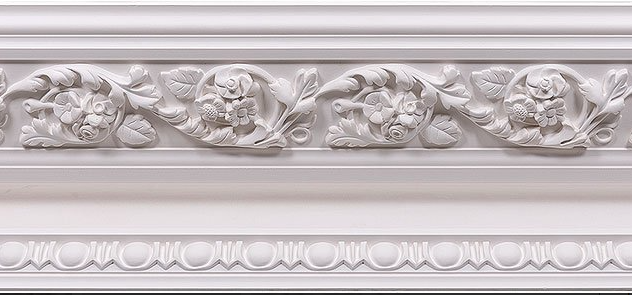
You could replace the quadrant with a decorative plaster cornice to cover the error:
-
Yes @KevinG. I don't see the need in a concrete floor if the ground underneath is decent and not too wet. The walls are (I hope) supported on foundations, so the floor just needs to be stable, dry and well insulated.
-
Building Control: hot water pipes and storage of material
Mr Punter replied to ToughButterCup's topic in Building Regulations
A bad plan if the cases contain butter, otherwise suggest that BCO sticks to Building Regulations compliance. -
It is difficult to match up sprayed paint finish. You need to lose the edges with some fine sandpaper and do as @joe90 says. It that a ceiling or a floor? It is a bit hard to tell in your place.
-
It is probably not going to happen as it is a terrace with higher ground and solid floors at the back. I would guess it is the same all the way along the street. I would like to remove all the floors, dig out at the back and get all floors levels to 130mm below where you want your finish. At the front you will need to make the level up and you could use hardcore from the back plus some MOT or sand. Use a wacker to consolidate the floors. Lay 1200 gauge DPM and lap up the walls a bit. Lay 100mm Kingspan type insulation. Lay 22mm chipboard as a floating floor, leaving a 15mm gap at perimeters and your chosen floor finish on top. If you have services running in the floor you can have some areas of, say, 2 x 50mm insulation and cut the runs out.
-
Cheapest most efficient way of insulating external walls
Mr Punter replied to Reetster's topic in Heat Insulation
The reason for a ventilated cavity is to prevent water crossing into the structure. The cavity ideally needs to be next to the rainscreen - in your case the cladding. Given where you are with this, I would fill or part fill the 150mm cavity with Rockwool slab, fixed to the ply and cover with a fire resistant membrane. You may need a starter profile at the base. -
The wall looks quite new. Maybe saturated / badly installed insulation and / or poor pointing.
-
Uses up some offcuts and some fittings that were rattling round in the van I suppose!
-
I understand that the Grenfell system was tested with cement board and failed, so was tweaked until it passed. Agreed there is a world of difference between a high rise strongly vented cavity and a low rise semi closed cavity.
-
No, it isn't. The Inside Housing article was about polystyrene external wall insulation being flammable in high rise flats. It may be that in the future any flavour of flammable wall insulation is unacceptable in any residential building.
-
It is quite common on developer houses to have partial fill insulated cavity walls with dot and dab plasterboard, where outside air freely circulates around both cavities. I like wet plaster as an airtightness barrier. I have been looking at poly bead fill but I am moving towards premium mineral wool. It has the same R value and none of the fire risk. Flammable insulation may be going rapidly out of fashion, especially in walls. https://www.insidehousing.co.uk/news/widely-used-polystyrene-insulation-system-shown-to-be-similar-to-grenfell-style-cladding-in-australian-fire-test-69005
-
To update his profile picture. I think we all know it is for a webcam.
-
I just googled it. It looks a great product.
-
It looks similar to Marmox. Are you having undertile heating?
-
There is quite a big gap above the flush pipe of the wall hung WC. Offer the pan up to make sure the gap is covered before you grout the tiles. What is the wire at the end of the bath for?
-
I think yes, especially as it is large format tiles. It is really easy to keep clean. We used to use it for tiled worktops. Make sure you are happy with the colour.
-
I would download the plan for the neighbours title if it is registered. Erect a fence around your land if you can afford it. Given the small size of the plot I would doubt you would be able or allowed to build on it.
-
Is insulation *outside* studs considered unconventional?
Mr Punter replied to lineweight's topic in Timber Frame
I think the risk may be where you have some insulation in the frame without a vapour barrier and the dew point moves within the frame and the condensed water cannot escape. Don't ask me a follow up on this as I am struggling now! -
Is insulation *outside* studs considered unconventional?
Mr Punter replied to lineweight's topic in Timber Frame
I doubt that Celotex will propose any solution with their insulation externally plus rainscreen cladding. Grenfell put a stop to that. There may be an increased chance of interstitial condensation if you us a foil backed board externally, but not enough to lose sleep over. If the cladding is heavy and the insulation is thick, fixings can be an issue. With the insulation internally you only have the plasterboards and the floor can take the weight of these (I prefer on packers in case of leaks). -
It looks like the windows were foamed, then mortar over the foam. You could run a bead of silicone down if you can finish it neatly. The low modulus stuff may be good for this. Whare you have to bit of missing mortar, fill with fresh mortar first.
-
@trialuser the Compriband will normally seal between the window and whatever the reveal will be finished in, so you could run your cedar or tin into the reveal 50mm past the line where the Compriband will be, fill the gap with Compriband externally and foam internally. The Tyvek is the last line of defence and should prevent any water that has got through the cladding to run away.
-
He is an engineer. I have no idea why he took this on.
-
He is, I fear, a virgin butcher.


