Mike
-
Posts
1484 -
Joined
-
Last visited
-
Days Won
8
Everything posted by Mike
-
Personally I wouldn't put tarmac over the top - chances are it will crumble and create more expensive potholes. If the base is already firm, I'd look at edging it with proper road kerbs and lay paving bricks on a sand bed - the surface may deform, but it won't crack as readily.
-
Be prepared to do lots of the work yourself - check out the Walter Segal method, build your own timber panels or learn to lay blocks. Go for the open-plan industrial look: ditch everything other than structural & bathrooms walls, cut out all unnecessary surface finishings and stick with OSB / fair faced blockwork, keep ducts and pipes exposed... You might also be able to get some tips from the BBC2 programme The House That £100k Built - not on air at the moment, but you may be able to track something down. Don't remember if anyone built anything close to 147m² though.
-
I've no problem using plastic above ground - any of the main brands - but have never used anything other than Hepworth SuperSleve clayware underground. It will cost more, but it's inherently more robust.
-
It should do - you have to do very little to legally commence work - see Section 56, particularly the examples in part 4 : http://www.legislation.gov.uk/ukpga/1990/8/part/III/crossheading/meaning-of-development
-
If it has a BBA certificate for the purpose, it's fine.
-
I'm not familiar with those particular membranes, but the key aims are to keep the wind out of the insulation and provide protection against rain ingress. For a thin sheet the thermal performance isn't going to make a huge impact, but why not take it if the cost increase is minimal. 'Aged' just means the value after a few years of use - the performance will deteriorate somewhat from new.
-
I've not used them but did consider them for a project a few years ago. I'd suggest that their main advantage over aerated concrete blocks would be their resistance to cracking (so no need for bed reinforcement and fewer movement joints required). If you could buy the perlite-filled versions in the UK - when I looked you couldn't - then their improved thermal performance would significantly boost their attractiveness if you need to minimise wall thickness. Maybe it would be economic to import them in those circumstances? Compared to concrete blocks their main advantage would be their light weight for similar or better load bearing capacity. Fixings are not supposed to be a problem provided you don't attack them with a hammer drill, but @AliG obviously found otherwise. Regular wall plugs are supposedly OK for light to medium loads, with chemical anchors for heavy loads.
-
What advantages do you hope to achieve?
-
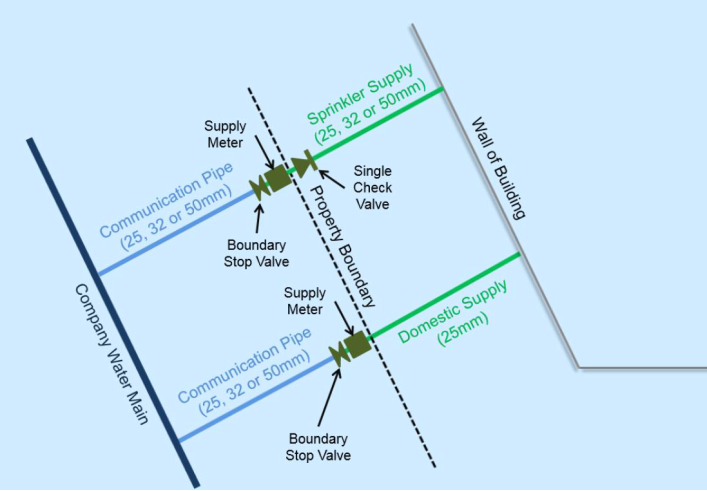
Are you looking at the current document? Found a copy here (pdf), probably from 2018 from the file name, and the diagrams differ significantly from the one posted above. Have you considered installing a misting system as an alternative to sprinklers?
-
The standing charge is usually more for 63m too.
-
Compensation Claim - Building Preservation Notice
Mike replied to janelondon's topic in Party Wall & Property Legal Issues
No, however the answer seems to be in the the section of s29 that you posted - "any loss or damage directly attributable to the effect of the notice". So the question becomes, what loss or damage have you directly incurred, and do you have evidence, or a reasonable calculation, that will quantify it? 6 months payments on a bank loan? Telephone bills? Legal fees? Your own lost time? -
Their use of 'amount of ventilation' doesn't relate to a specific volume, IMHO. The regs require a vent pipe at or near the end of the drain run to allow potentially explosive gasses to be vented out of the sewer. An AAV does the opposite, allowing air to flow in if there is a negative pressure, to preserve the seal in waste traps. As Peter suggests, a separate external open-vented stack is the likely solution. That could run up the outside of the house, but a short stack in a nearby hedge would probably be ideal.
-
MVHR is Largely Bogus
Mike replied to DavidHughes's topic in Mechanical Ventilation with Heat Recovery (MVHR)
The building regulations set only set the minimum standards for ventilation, and it's more-or-less accepted that those standards are fine for day-to-day living if the users use them properly. If the turn off the MVHR, don't change the filters, close off the trickle vents, don't open windows, etc, there will be a problem - and that's more likely in poorer households where people struggle to pay for heating. However a new house may or may not have a VOC problem, depending on the products chosen, particularly during the the first two to three years. I have seen a study on this but don't have the details. At the moment, in the UK, there's not even much awareness of the issue. France, in contrast, has had a mandatory labelling scheme for key construction and decorating products since 2013, linked to the levels of 10 key VOCs, plus the voluntary 'intAIRieur' auditing scheme for the indoor air quality of new housing. Since you have time for research, you may want to check out the Natureplus database (an Austrian initiative, so mainly Austrian / German products) and the USA Healthy Building Network and Healthy Materials Lab. Plus the work of the UK Green Building Council and Alliance for Sustainable Building Products.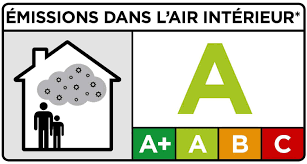
-
MVHR is Largely Bogus
Mike replied to DavidHughes's topic in Mechanical Ventilation with Heat Recovery (MVHR)
There have been various studies looking at this, mostly with positive results (no I've not read them all in detail), for example: Snijders et al (2001) : Dedicated ventilation Systems may slow down the development of Chronic Obstructive Pulmonary Disease Harving et al (1994) : Allergen-producing dust mites and fungi in is significantly lower Feist et al (2001 & 2005): PassivHaus occupants report high levels of satisfaction (Note: Feist developed the PassivHaus standard) Brunsgard and Jensen (2008 & 2009) : Ditto Bretzke (2010) : Ditto for schools There is also the possibility of including additional filters to reduce levels of pollution - NoX, for example - compared to outside air. Pollution generated from the fabric, fittings and furnishings is a key topic, though. If you choose products that off-gas lots of VOCs, for example, then you're going to have an air quality problem irrespective of the nature of the ventilation system. -
MVHR is Largely Bogus
Mike replied to DavidHughes's topic in Mechanical Ventilation with Heat Recovery (MVHR)
I though that the figures for my next project may be of interest; there are some peculiarities as it's France: 1. My winter temperatures are somewhat lower, and summer temperatures somewhat higher, than the UK 2. Air change 90m³ / hr 3. Running non-stop through the year + 2 hours boost per day. 4. All electric, at 0.1375€ / kWh 5. No account taken of heat loss through the fabric (air losses only) 6. PassivHaus certified MVHR unit at 92% heat exchanger efficiency, 0.42Wh /m³ electricity usage 7. PassivHaus levels of airtightness (0.6 air changes at 50Pa 8. The spreadsheet is provided by an MVHR retailer, so I'm hoping it's reasonably reliable From the first chart, the annual saving in energy use is projected to be around 230€ / year, against a cost of running the unit of around 45€ + 10€ for defrosting - an overall saving of 175€, ignoring the cost of filters. From the second, the projection is that 87% of the heat in the air will be recycled, with 5% lost due to infiltration, and 8% lost from the MVHR system. I don't have a definitive cost for all the kit, but in round figures say around 4,000€, self-installed. So the rough payback time is in the region of 23 years. Ignoring NPV and also the fact that I'll likely dial down the ventilation rate. That doesn't bother me, as for me the financial aspects are outweighed by improved air quality, helping to limit the extent of summer overheating, and avoiding the noise and draughts of trickle vents.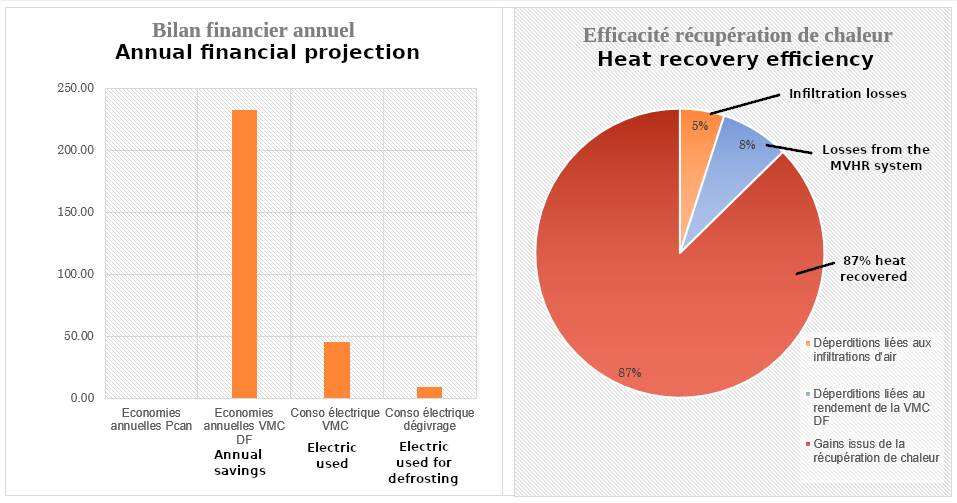
-
I'd also like some kind or draught lobby for the main entrance doors, but would put them further north, in line with the end of the windows (moving the door to room 4), and us regular doors rather than pockets. I agree that the en-suite isn't over-generous - though it does work. If I were to keep the layout I'd probably enlarge it to the east, rather than into Bed 2, and make the snug a little snugger. That's because I'd fit a wardrobe in Bed 2 against the wall with the en-suite; the Bed 2 wardrobe as-drawn is pretty tiny and really only suitable for short-stay visitors. Plus a wardrobe would deaden the sound of the WC & shower. I'd do the same in Bed 3. However, subject to a variety of other matters (views, possibility of changing windows, etc) what I'd really like to do is to merge the en-suite with rooms 17, 18 19 and 20, to form a single master suite in that westerly wing - it would be a fabulous space, and cut off from any noise in the rest of the house too. Then run the corridor more centrally though the central wing, with a bed either side with small en-suites (so ditching the family bathroom), and cutting the utility (13) down to plant-room size - you already have a utility.
-
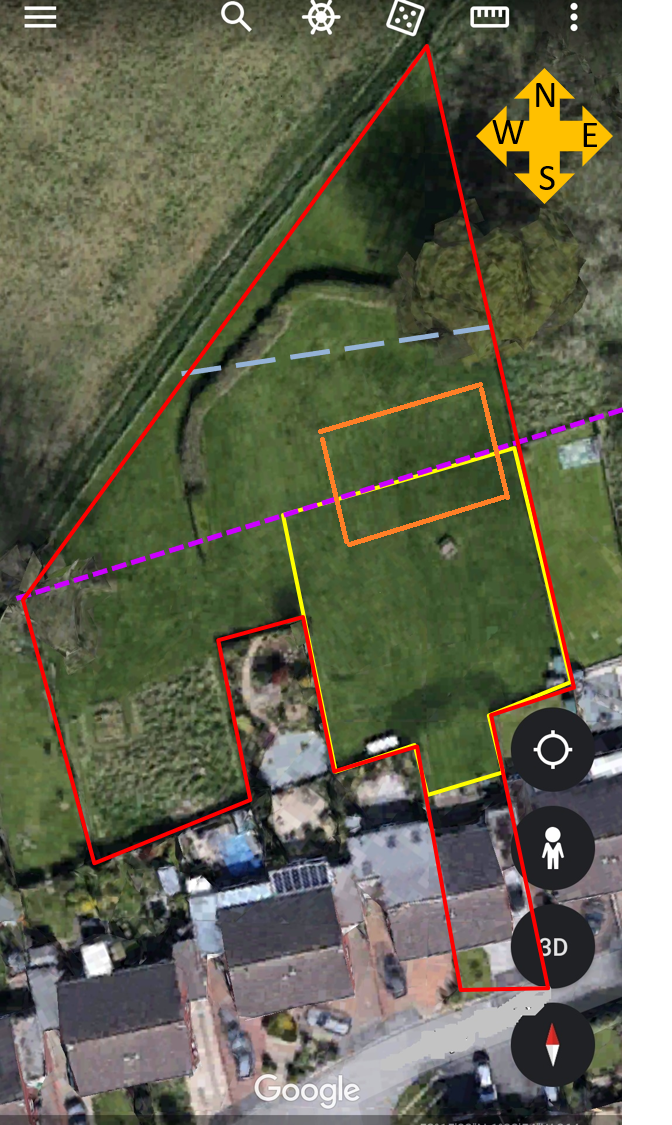
How would you orientate a house on this site?
Mike replied to AshandOak's topic in New House & Self Build Design
There's nowt so strange as planners... Then I'd want to take advantage of the north and west views, so probably something like below, keeping a compact form to minimise heat losses. If you need to minimise the visual impact on the neighbours I might think about curving the roof into the ground at the south, with a grass roof & rooflights.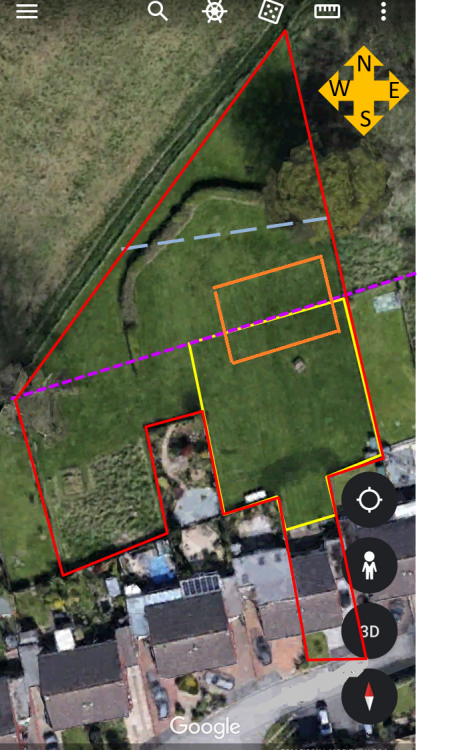
-
How would you orientate a house on this site?
Mike replied to AshandOak's topic in New House & Self Build Design
From the image, a regular second property looks unlikely. Expanding the existing property looks the best bet. -
Is it necessary - Cooker Extractor Hood
Mike replied to canalsiderenovation's topic in Kitchen & Household Appliances
I have a recirculating hood and wouldn't be without it. I don't fry much - maybe a stir fry once per week - so although it in daily use it doesn't get changed more than once per year, but it does collect muck that I wouldn't want to end up in the MVHR ducts. -
That's often the case. However note that Passivhaus certified units come with a more realistic measure of their heat recovery rate compared to non-certified units (Paul have a short explanation), and that heat recovery rate and electrical power use determine the long-term payback.
-
What’s the best and simplest security system
Mike replied to recoveringbuilder's topic in Networks, AV, Security & Automation
Ring seems to have an unintended downside too: Police hunt down masked man who is stealing expensive video doorbells -
I'd be interested to know what they propse too From your avatar it looks like they've disintegrated entirely...
-
Thanks - not a scheme I'd come across, so interesting to know about it. I found a Government PDF which indicates that 'low income, vulnerable and fuel poor households' are eligible, and that the cash is from the energy companies, rather than the Government. Some more at https://www.gov.uk/energy-company-obligation From elsewhere it seems like any Green Deal Certified Installer is able to sign up to install under the 'ECO3' scheme, though no idea if all have. CES are listed.
-
I may be out of touch with the latest developments, but I'm not aware of any full grants for ASHP heating. Under what scheme are they claiming that you're eligible? As ProDave says, heat pumps perform best when they are supplying water at lower temperatures - which makes then a particularly good match for underfloor heating (compared to radiators). That certainly doesn't mean it's not viable, but does mean that you need a proper assessment, from a company you trust, to understand what you're getting. Don't be bounced into signing up with the first company that happens to have contacted you.
-
Too right. Not so easy to find good plasters now thanks to the amount of taped and jointed plasterboard about.