Mike
-
Posts
1565 -
Joined
-
Last visited
-
Days Won
9
Everything posted by Mike
-
What's the reason for not just using a contactor?
-
Well after a few hours investigation, I'm inclined to specify a Siemens model instead - probably the 30A 3RF2330-1AA22 in my case - for a few reasons: It has a significantly bigger heat-sink At the planned loading it doesn't require additional space around it (though the 30A module is 45mm wide, thanks to the sink) The datasheets are clearer on the acceptable currents : 22A @ 40°C according for resistive loads (category AC-51 of IEC 60947-4-3) for the 30A version; 13.2A for the 20A version* Prices not too dissimilar to Crydom The range is certified for domestic use to IEC/EN 60335-1 (fairly certain I spotted only a reference to industrial applications for the Crydom models). *Siemens have an article discussing current specifications & the need for additional precautions in higher ambient temperatures for this range here.

-
On the question of durability, and looking at the thermal de-rate graph (below), while the 20A model has enough headroom to switch 3kW, I guess it may be worth paying the extra £10 to upgrade to the 30A version? Presumably it either handles the heat better, or generates less, as all models seem to have the same finned case.

-
Thanks - that's what I'd hoped! The fins were a clue that there may be a heat issue. The installation guide mentions that 'to achieve maximum ratings, there must be a minimum spacing of 0.8 in (20 mm) between the devices (horizontally) and of 3.15 in (80 mm) measured between DIN clip tabs (vertically)', so I was going to follow that. I'm planning this one in France so don't want to frighten the electrician (or the inspector who has to sign off the installation) with anything non-DIN rail, if I can avoid it
-
As SSRs I'd expect the Crydom CKR range to be quiet, however I can't spot any claims to them being 'silent' on the Sensata website, nor anyone having mentioned it here. It's perhaps more of a consideration for my project as they'll be sitting in a cabinet in the hallway, rather than a plant room... I know that a few of you have used them - well, @TerryE at least - so I'd be interested in your experience.
-
MVHR flow rate - safe to reduce it ?
Mike replied to ollie's topic in Mechanical Ventilation with Heat Recovery (MVHR)
For deeper information, these may be of interest: The effects of bedroom air quality on sleep and next-day performance; Strøm-Tejsen, Peter ; Zukowska-Tejsen, Daria; Wargocki, Pawel; Wyon, David Peter Associations of Cognitive Function Scores with Carbon Dioxide, Ventilation, and Volatile Organic Compound Exposures in Office Workers: Allen, Joseph G., Piers MacNaughton, Usha Satish, Suresh Santanam, Jose Vallarino, and John D. Spengler. -
MVHR flow rate - safe to reduce it ?
Mike replied to ollie's topic in Mechanical Ventilation with Heat Recovery (MVHR)
Lack of oxygen isn't a problem, other than that it will be displaced by carbon monoxide in the blood if you have a carbon monoxide problem - possible if you cook with gas or have a fire. CO2, however, is a significant; research has shown that brain function & sleep quality decline as CO2 levels rise. Less than 700ppm is generally regarded as acceptable*, based on current knowledge. It's possible to control MVHR ventilation rate using a CO2 sensor, and that would be advisable rather than cutting the rate manually. Volatile Organic Compounds (VOCs) are also a concern. VOC levels are likely to be high for around the first 3 years of use, so better not to rely on CO2-based control during those first years - unless you have consciously built & furnished your home with low-VOC materials (see my post here) BTW, if you're in an urban area you may also need to filter your air to to remove outdoor pollution (particularly PM2.5 and NOx). *The recommended level for schools is 800ppm; it's concerning that many schools with monitors show CO2 levels >1500ppm - see https://www.nasuwt.org.uk/article-listing/survey-shows-government-failing-ventilation.html -
Not online, but if you have a university nearby check if they have a printing service open to the public. Mine does, with excellent quality and unbeatable prices. .
-
Check your deeds - there may be provision for repairs I'd imagine that should be possible under the Party Wall Act, if you can get planning permission.
- 1 reply
-
- 2
-

-
Inset electric fireplace recommendations
Mike replied to Happy Valley's topic in Stoves, Fires & Fireplaces
How about a 55" TV + virtual fireplace screensaver / video (which can come with a soundtrack too). Even better if you can raise it up and use it as a spare TV... -
That's not a Building Regulations requirement for regular homes, though I wouldn't normally put them closer than that anyway. If you can plan far enough ahead, coordinate the positioning - vertically and horizontally - to suit your planned wall tiles (if you're planning to have any). For light switches, I always have them coincide with the axis of the door handle, where possible.
-
It looks a good replacement to me :)
-
If it's anhydrite, then yes, well sealed after it's dried. In other cases check the technical information for your particular screed. Yes, at least 6mm wide at room edges and doorways. If you have large rooms then divide them into bays of no more than 40m², with a maximum length of 8m per side. I also choose a 'flexible' adhesive - rated S1 or (better) S2 - suitable for the tile type and size. Your supplier will be able to advise you.
-
How do you organise and keep cables tidy? Tips please
Mike replied to SimonD's topic in General Self Build & DIY Discussion
You can: House worth £1,350,000 has enough plug sockets for everyone in the street -
Chips are always a risk. Some materials are more prone to chipping than others...
-
Victorian Terrace - 45 Degree rule queries
Mike replied to Brett's topic in House Extensions & Conservatories
The 45° 'rule', if there is one, will be a local planning policy. Your council should have information explaining how they apply it - you may need to ask if you can't find it on their website. -
It would appear, however, that they are no longer in business: https://app.insolvenz-portal.de/Insolvenzverfahren/exklusiv_hauben-gutmann-gmbh/2950265
-
Parts of the regulations apply - or don't apply - according to particular circumstances (set out in the regulations), but none of the regulations are optional.
-
Agree that it's not a problem. I'd be much more concerned by the use of the flexible connector on the cistern water supply. They are quick, easy and widely used, but tend to degrade with time: Faulty hoses dampening Australian households
-
This.
-
See also Perfect [kitchen] worktop doesn't exist - but how about optimal?
-
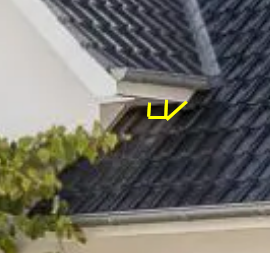
If you're up for modifying the roof, I'd create a vertical abutment in plywood where the dormer eaves meet the roof, with lead flashing, here:
-
Schwegler provide a very wide range of habitats, including some that can be built into a wall. They do - or at least did, pre-Brexit - have UK stockists.
-
For more quiet appliances, see Quiet Mark
-
You can also do similar using a pair of BoardMate tools.