Jeremy Harris
-
Posts
26430 -
Joined
-
Last visited
-
Days Won
360
Everything posted by Jeremy Harris
-

VAT CERTIFICATE
Jeremy Harris replied to lizzie's topic in Self Build VAT, Community Infrastructure Levy (CIL), S106 & Tax
It's nice to see that HMRC have got around to doing this at long last. Years ago, someone on Ebuild knocked up a certificate that quoted the relevant bits of the VAT notice and worked well, I used it, as did several others, and as it was so useful it's been copied here some time ago, I believe, or at least sent by PM to a few people. -
Fixing Solar Panels: is there a standard method?
Jeremy Harris replied to ToughButterCup's topic in Photovoltaics (PV)
I've been pondering this, and whether or not it would be possible to make up some cheap dummy panels as an interim measure. They'd probably have to look reasonably good, but something like plywood panels covered with EPDM might do the job. -
Fixing Solar Panels: is there a standard method?
Jeremy Harris replied to ToughButterCup's topic in Photovoltaics (PV)
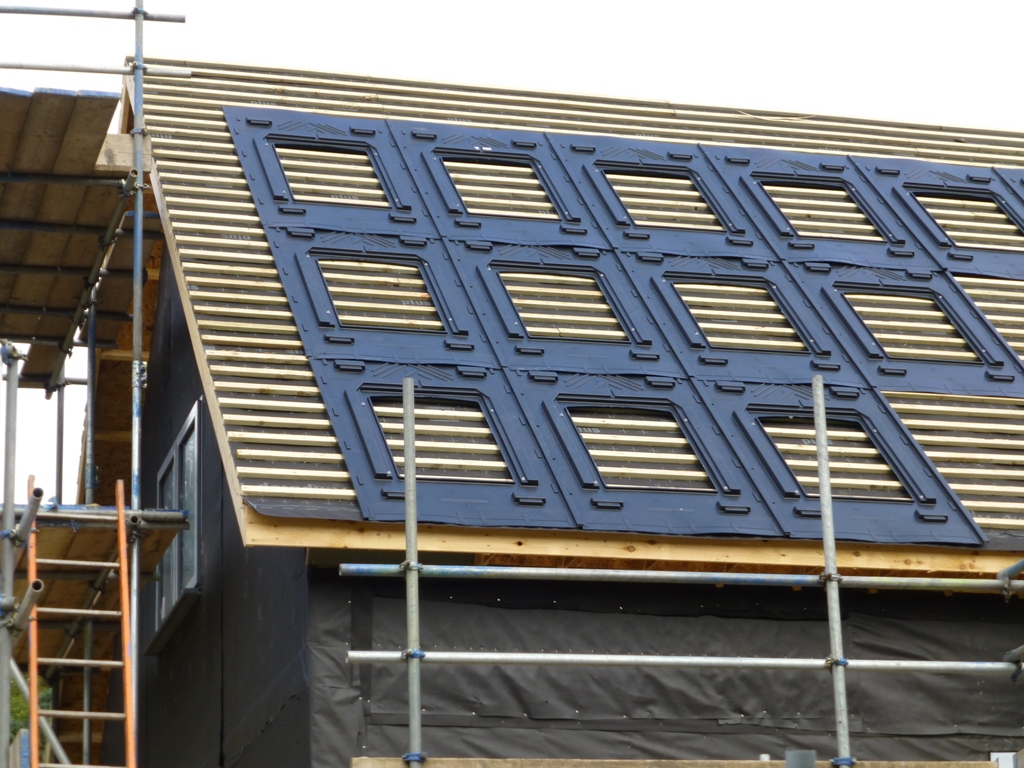
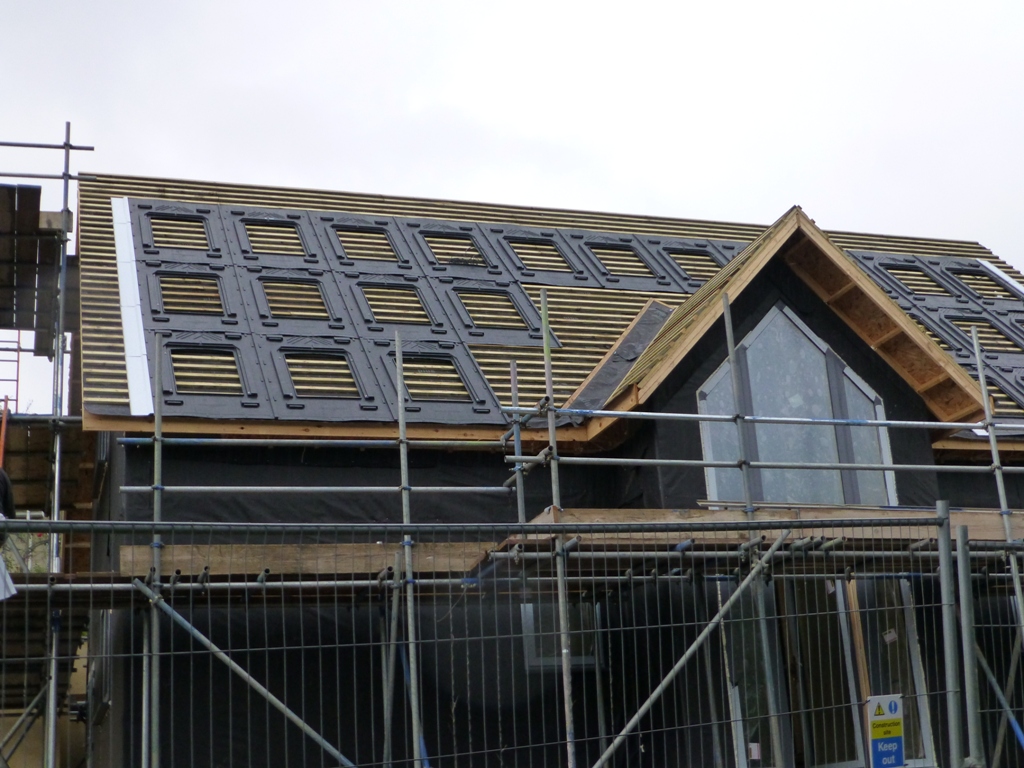
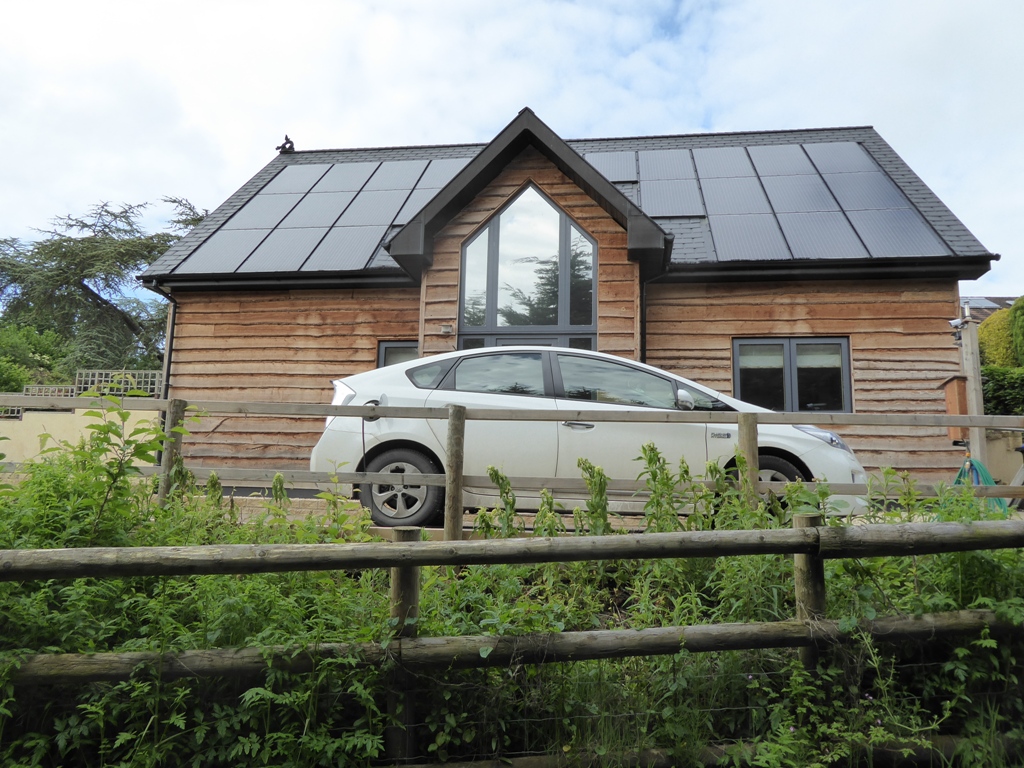
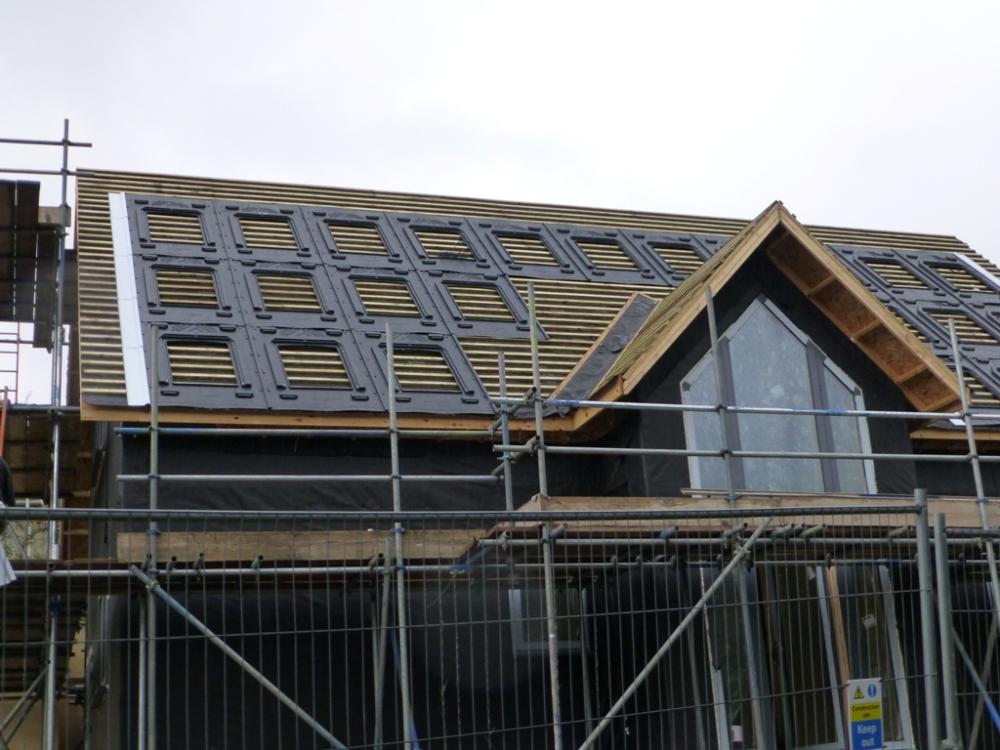
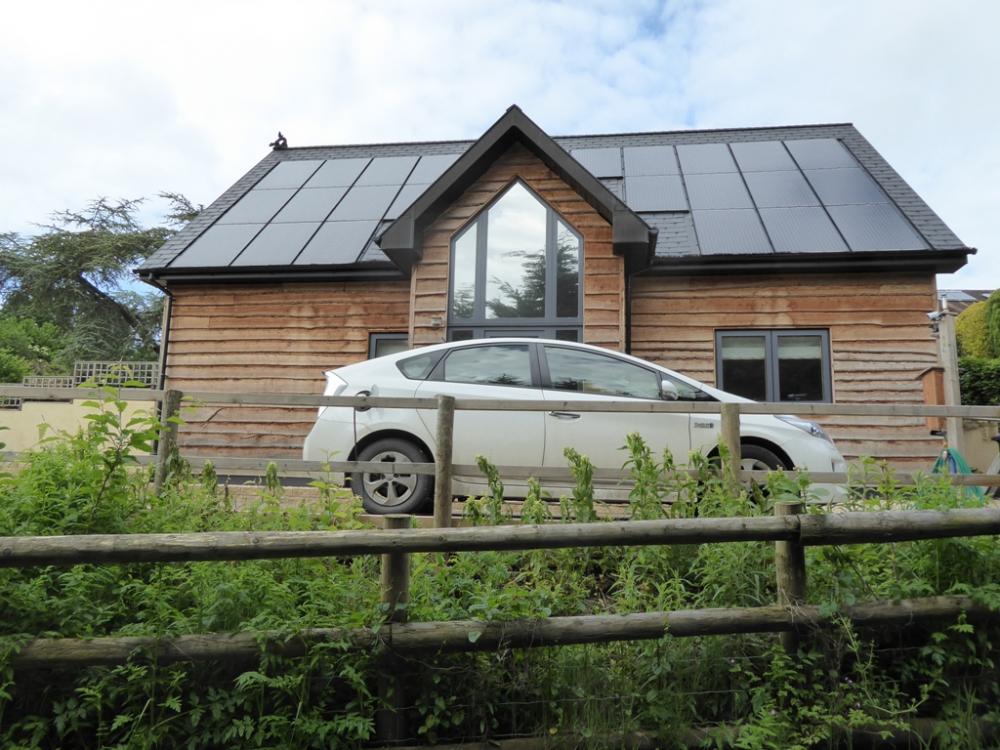
Ian, I've just posted some photos in answer to a query by @Juj that might help with what the in-roof system looks like: You can save a fair bit of money on slates/tiles by doing it this way I found. -
I'm really confused! Please help
Jeremy Harris replied to Juj's topic in General Alternative Energy Issues
These entries show the in roof PV system: http://www.mayfly.eu/2013/11/part-twenty-two-roofing-and-mvhr-and-a-quick-video/ http://www.mayfly.eu/2014/01/part-twenty-six-the-scaffolding-comes-down-at-last/ And here are some photos of the in roof PV system being fitted and the completed front elevation, which looks on to a GII listed building and is inside an AONB and Conservation Area, so we had a fair few planning issues over putting PV on the roof: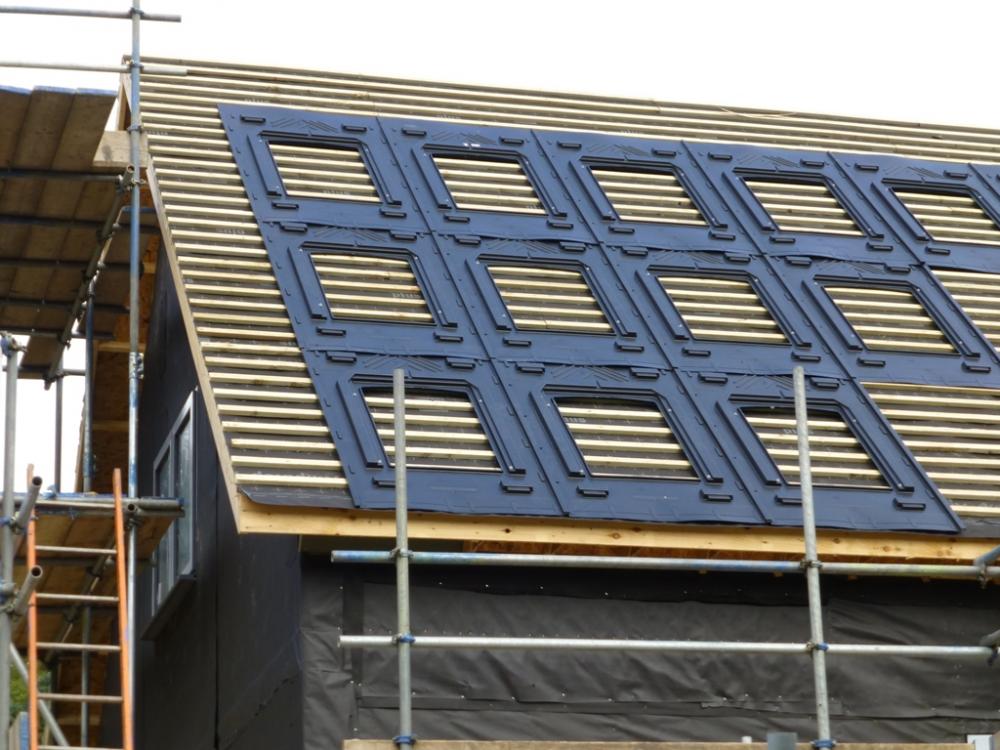
-
If you're dealing with mains water, it almost certainly has residual chlorine in in anyway, especially in some of the hardest water areas in the South of England, so I'd not worry too much about microbial growth, especially as often the larger units will be sited outside the house, in a shed or garage. As for reliability, then having stripped both a Harvey metering head and a Clack electrically driven filter/softener head, I can't say there's much in the way of reduced complexity in the motorised head, if anything it's more complex than the metered head. The only known weakness with the Harvey type unit was the brine water level valve on early models, something they fixed with a re-design. It is a heck of a lot harder to strip and rebuild a Harvey type unit, but something like changing the ion exchange resin is dead easy, primarily because it's a lot easier to lift the small twin tanks out and empty and wash them out. The bigger units are a bit more effort to empty and refill, just because of their size, but do have the advantage of having a larger empty and fill port than the Harvey/Kinetico type. I have both types, as our water filter and iron removal system uses a standard Clack softener valve running on a timed cycle. Instead of sucking in brine on the regen part of the cycle it draws in air to re-oxygenate the inside, and it's programmed not to bother with a rinse cycle, but other than that, and not having a brine tank, it't the same as a softener. Interestingly the Clack head has already needed a new O ring on the drain outlet - not sure why the old one failed, but it was dribbling water down the tank on every drain cycle. Easy to fit a new O ring, but worth remembering that the Clack, Autotrol and Fleck valve heads are made in the USA, so use imperial sized O rings. The Harvey is made in the UK and uses metric O rings. The Kinetico also uses imperial sized O rings I believe, as that's a US design too,
- 42 replies
-
- 2
-

-
- water
- soft water
- (and 2 more)
-
Protect your Fence Posts with a Postsaver
Jeremy Harris commented on Ferdinand's blog entry in God is in the Details
I wonder how well painting a band of bitumen paint around a post would work? Or, perhaps, painting the lower half, to just above ground level, with bitumen paint? -
In essence that's spot on. The process is pretty simple, chemically, in that the ion exchange resin swaps calcium and magnesium irons in the incoming water for sodium ions that it has obtained from being regenerated using salt (sodium chloride). During regeneration, sodium ions are swapped out in the resin for the stored magnesium and calcium ions, discharging chlorides of calcium and magnesium down the drain. The ones that are metered tend to use a lot less salt for those whose water usage is variable, so can be a fair bit cheaper to run. The ones that are timed may well waste a lot of salt by flushing brine through the ion exchange column when it doesn't need it. If you use roughly the same amount of water evey day of the week, all year around, then a well-set up timed softener may not cost any more to run than a metered one. However, if your water usage tends to vary a bit then the greater the variation the more salt will be wasted. Over-use of brine doesn't do anything other than waste salt, as once the ion exchange resin is charged the excess brine just flows down the drain. The valve head flushes any remaining brine in the column to waste with incoming water anyway, so salt can't normally ever get into the house pipe work*** *** I mentioned normally, but on some units if the outlet pressure from the softener momentarily exceeds the inlet pressure during a regeneration (say from an anti-water hammer accumulator) then it is possible for brine to get into the house pipe work, due to the way the valves operate.
- 42 replies
-
- 1
-

-
- water
- soft water
- (and 2 more)
-
We draw water from an aquifer that's so far down that the water we're using probably predates the use of man-made fertilisers. The hydrologist reckoned it would be 200 years old or so, and that fits well with the fact that there are no seasonal variations at all in the standing water level - the pressure in the aquifer is high enough to raise the level in our borehole to around 35m above the level of the Lower Greensand, which tend to support the view that it's "old water" that is now under significant pressure within the aquifer itself (roughly around 3,5 bar). Had our ground level been around 5m lower the borehole would have been artesian, with water freely flowing out of the top. We're in the bottom of a valley where the stream has eroded the deep layer of overlying chalk and the Upper Greensand formations, and is now running along the exposed Gault clay.mudstone layer. The water that feeds this stream comes from many springs that originate along the base of the chalk and which flow through the relatively thin Upper Greensand formation, and that has no iron in it at all (untreated, the water from our borehole has over 200µg/l of iron in it), but does have a lot more calcium, which it's picked up from the chalk. The level of the stream is very variable with both the season and local rainfall; right now the stream is as high as I've seen it in a fair while, most probably because of the long period of rain we've had recently. It seems probable that the nitrates in our borehole water may well come from a natural source in the Lower Greensand aquifer, as there's a ~40m thick layer of Gault clay/mudstone over the top of it that acts as an aquatard, preventing surface water from percolating through directly. The Lower Greensand aquifer that we are drawing from is hydraulically isolated from the two similar larger Lower Greensand formation aquifers that supply water to the London and South East, those within the Hythe and Folkestone formations, well to the East of us. The Lower Greensand in our area overlies hard Wealden sandstone that is at a depth of around 51m from the surface and below that are the Purbeck formations that are closely related to the oil-bearing shale formations further to the South West and that have been producing oil from onshore wells in Dorset for a few decades now.
- 42 replies
-
- 1
-
-
- water
- soft water
- (and 2 more)
-
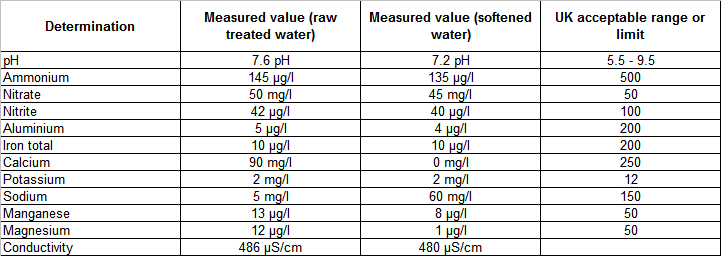
As we needed to get our water tested anyway (as I have means of getting this done cheaply, but unofficially!) I had samples of both the unsoftened and softened water tested. These were the results: All the values in the softened water were well within the UK acceptable limit, and in the case of the sodium ions that were substituted for calcium and magnesium ions in the softener, the softened water is less that half that allowed from ordinary UK tapwater. The pH dropped a tiny amount, but is still just alkaline, so there is no corrosion risk from that. For comparison, the pH of the water in Cornwall can often be around 6 or so, so significantly more acidic than ours, even after treatment.
- 42 replies
-
- 2
-
-
- water
- soft water
- (and 2 more)
-
I put together a heat loss calculation spreadsheet ages ago, really as a "what if?" tool to try and see what effect changing different aspects of the construction etc had on the overall heat loss. It does mean putting in some basic data about the internal areas of outside walls, floor, ceiling (or roof), window and door areas, U values etc, but generally gives a reasonable estimate. Others here have used it and found that it comes pretty close to reality, but it doesn't take account of any incidental heat gain, from occupants, appliances etc. You can download it from here and have a play with it, it may or may not be helpful!: http://www.mayfly.eu/wp-content/uploads/2017/01/Fabric-and-ventilation-heat-loss-calculator-Master.xls
-
Kingspan heating (or lack of) issue
Jeremy Harris replied to Lynford's topic in Air Source Heat Pumps (ASHP)
So, is there a wiring problem that is switching the valve the wrong way, I wonder? The fact that manually moving the valve seems to suggest there may be. -
I rented a workshop that was built like this; insulated steel cladding down to ground level over a stock steel portal frame (these are off-the-shelf items from agricultural and industrial building suppliers often - worth looking to see if there is a stock size portal you can use - might be cheaper!). The big problem was there was nowhere to fix shelving etc, even running cable conduit and airline around the inside walls was a pain, because of the wide spacing between the frames. Having a block wall would have made life a lot simpler, as things could have been put up anywhere. If you want it to be comfortable to work in, it's worth looking at something like SIPs or ICF. I have 150mm insulation in the walls of my workshop, and around 200mm in the ceiling, plus some EPS under the slab, and it makes a tremendous difference. Even with no heating it's not uncomfortable working in there in winter.
-
Is it practical to just lash the small sheets on with rope? Probably easier to do that making up some form of clamping system, and with some over-length bits of 2 x 2 across the outside in the grooves of the corrugated and then lashed tightly to the kwikstage it should be pretty easy to do and hold the sheet securely (with the grooves in the sheets horizontal).
-
Me too!
-
Our frame is held down with steel hammer fixings through the inner sole plate to holes drilled in the slab ring beam. Pretty quick and easy to do, with no requirement for awkward straps. Using fixings through the sole plate seemed normal to our building inspector, but he hadn't seen the steel expanding sleeve hammer fixings that our guys used, so asked to see a sample.
-
We used Ironmongery Direct for hinges and latches on all the internal doors, including their heavy duty stainless ball bearing hinges . I was pretty impressed with the quality, the only thing I wasn't impressed with were the screws supplied, so I used some decent quality stainless ones instead of the ones supplied. IIRC, the main issue was that the heads had the slim cross head profile that's neither Phillips not Posidriv, so they were a pain to use.
-
I'm not at all sure this is a good idea, as the wind loading on the scaffolding will be increased a very great deal by something solid, like corrugated sheet. It's one reason why a common way to provide a wind/object falling barrier on scaffolding is fine netting, as it slows the wind down enough to be less of a nuisance, but doesn't put such an additional load on the scaffolding as to need lots of extra bracing. If you take a look at scaffolding where they have used solid plastic sheeting as rain/wind protection you'll often see that they use a lot of additional bracing to take the load. There's a house just down the road from me that's being refurbished and that has plastic sheeting all around and over the roof, and the scaffolding is really robust - the ladder section stuff you often see used to make temporary stage covers has been used on the sides as well as the roof, with normal scaffolding inside it and fixed to it. I'm not sure how easy it would be to add bracing to kwikstage to take the additional load, but bearing in mind your experience of the winds you can get up there I think some additional bracing would be essential - the last thing you want is for the wind to take your scaffolding down and hit something (or someone).
-
Coconut oil keeps without refrigeration for at least a year after opening, and most probably a lot longer, as that's what's on the package marking, so is bound to err on the side of caution. If it's mixed with a tiny amount of antioxidant and stabiliser it would probably keep for several years.
-
Bath Surround / Boxing In, and concealed pipework
Jeremy Harris replied to Onoff's topic in Bathrooms, Ensuites & Wetrooms
Yes, it needs a fair bit of water in order to hydrate and cause the chemical reactions that make it cure. It doesn't really "dry out" as such, apart from any excess water that's been added to make it flow better, and generally that excess will come to the top pretty quickly, leaving enough water behind to allow the reactions to complete. The chemistry is damned complex, and even now not well understood, but keeping concrete/mortar damp during the initial curing phase is pretty much essential. After a day or so it doesn't matter normally, as most of the water will be locked up inside and will continue to help the cure. The stuff is really weird, as it can go on curing internally for decades, reaching peak strength after maybe 20 or 30 years or so. -
Perhaps I should keep records of ours. I read the generation meter a couple of weeks ago and it was around 23.4 MWh. System went live four years ago, and the estimate at the time was 6 MWh/year, so we seem to be about on target. In contrast, we've had the heating and hot water running 24/7 for two years, plus charging my car every weekday, and the total site consumption from the grid seems to be averaging around 2 MWh/year over the past couple of years. When we're finally moved in I reckon our grid consumption will probably be around the same, maybe less, as I won't be charging the car as much, and although I try and charge when we have an excess of generation, there are quite few days/weeks/months when that doesn't happen, so I'd guess that the car has used around 200 to 250 kWh/year from the grid, maybe more. I have a meter in the house that just records the house consumption, so everything that's fed from the grid to the consumer unit, which includes all the house-related stuff, like heating, hot water, ventilation, lighting etc. That's showing an annual consumption that's a bit less than the main meter, the annual average seems to be around 1550 kWh, or a bit under 12 kWh/m2, which is at least under the PH limit. It looks like the car and garage have upped consumption a fair bit (relatively......). That's probably reasonable, as there has been a fair bit of work going on in the garage during the build, plus all the power for things like the cement mixer, saws etc has been in there.
-
Pretty much the same stuff, yes, so should work the same.
-
The PD guidance is here, and worth a read: https://ecab.planningportal.co.uk/uploads/miniguides/outbuildings/Outbuildings.pdf Worth bearing in mind that if it's over 30m2 in floor area build regs will apply, and that may impact some of your design and construction decisions.
-
I'd not worry about it if it's that high up. The only time it will have anything other than a barely detectable flow will be when the system is on boost, and it's unlikely to be on boost when people are sleeping.
-
White retro reflectors seem to work OK. I bought a bag of mixed red and white ones, about 50mm in diameter, to fit to our fence posts and found by accident that a red laser shows well on the white ones. You could also consider using a bit of the white reflective tape, the stuff like this: https://www.ebay.co.uk/itm/White-High-Intensity-Reflective-Tape-25mm-50mm-100mm-1m-2m-2-5m-3m-4m-5m/141961676553?var=441087551075&hash=item210d934709:m:mAexwak8OiBVkg26oiCIO5Q I've not tried it, but it may well work pretty well.
-
There's a difference between the ones that really use a modulated laser to measure distance and the cheaper (usually for indoor use only) ones that use an ultrasonic measurement beam with a laser as a guide. If it's a genuine modulated laser one, then the distance is the line from the front of the unit (or the offset reference mark) and the actual red dot. If it's an ultrasonic one, then the red dot is the approximate aiming point, and the distance measured will be the closest ultrasonic reflection near that dot. Most of the decent outdoor ones are pretty good now. The same can't be said for the ultrasonic ones. The early ones were pretty good, the later (and much cheaper) ones can be a bit less accurate. Worth checking the description carefully and looking at the front of the unit to make sure it really is a laser measure. There are a few sellers on a certain auction site that are selling ultrasonic ones as if they were laser ones, just because they have a guide laser.