jamieled
-
Posts
639 -
Joined
-
Last visited
-
Days Won
1
Everything posted by jamieled
-
Sealing between riser sections of an I/C
jamieled replied to ToughButterCup's topic in Waste & Sewerage
The rubber ring was in place on my 600mm risers. Didn't know you needed to buy seals separately for some. -
SP Energy Networks - Easement/Servitude Fees
jamieled replied to iSelfBuild's topic in Party Wall & Property Legal Issues
Yep, agree with the above. They will be looking to cover legal costs. If it is an easement (as opposed to wayleave), then it needs to go on the title deeds of the land I think. -
Hi James. I'm also just out of Inverness as it's a bit cheaper. Nice area. 4 months is quite tight to start building if you don't yet have a plot - is there a reason for the rush?
-
One other thing. They have a spec supposedly around backfilling the trench containing the duct with some sand to bed it in. It's not always necessary to do this and in our case was completely impractical. We agreed a variation with them on site.
-
Class 1 is the highest spec, class 3 is the lowest. The main difference between enats class 2 and 3 is the operating temperature. The compression strength is the same. I also had a new connection from SSEN recently with the same spec as you and nobody batted an eyelid about me using class 3 ducting. I found jd pipes quite competitive for this sort of thing.
-
In Scotland you need an SER sign off for structural work for the building warrant. I found an engineer who had worked with insulated rafts previously and got them to do all our structural design.
-
As we did it ourselves we could take the time to do it carefully. Making sure the surfaces were muck/dust free undoubtedly helped. We used tescon tape which stuck well to the osb and timber. A month or so later I needed to adjust a velux slightly and the tape was pretty difficult to remove, which is reassuring. In retrospect we had a lot of fiddly taping which could have been designed out earlier on, but that has nothing to do with propassiv vs ordinary osb. Will let you know how the air test goes, hoping it wont be too far away now.
-
We have taped with osb3 but until we get an air test done it I can't tell you how well it has worked!
-
From the image posted earlier it seems that an application only goes to a committee if a parish council objects based on a relevant planning consideration ,not just any old objection. So unless the objection is based on relevant planning grounds it should be ignored. If it is based on valid planning considerations then that's what the system is there for surely? Or else we could just do away with the planning system and make it a free for all. It's similar up here I think, albeit that we have community councils rather than parish councils.
-
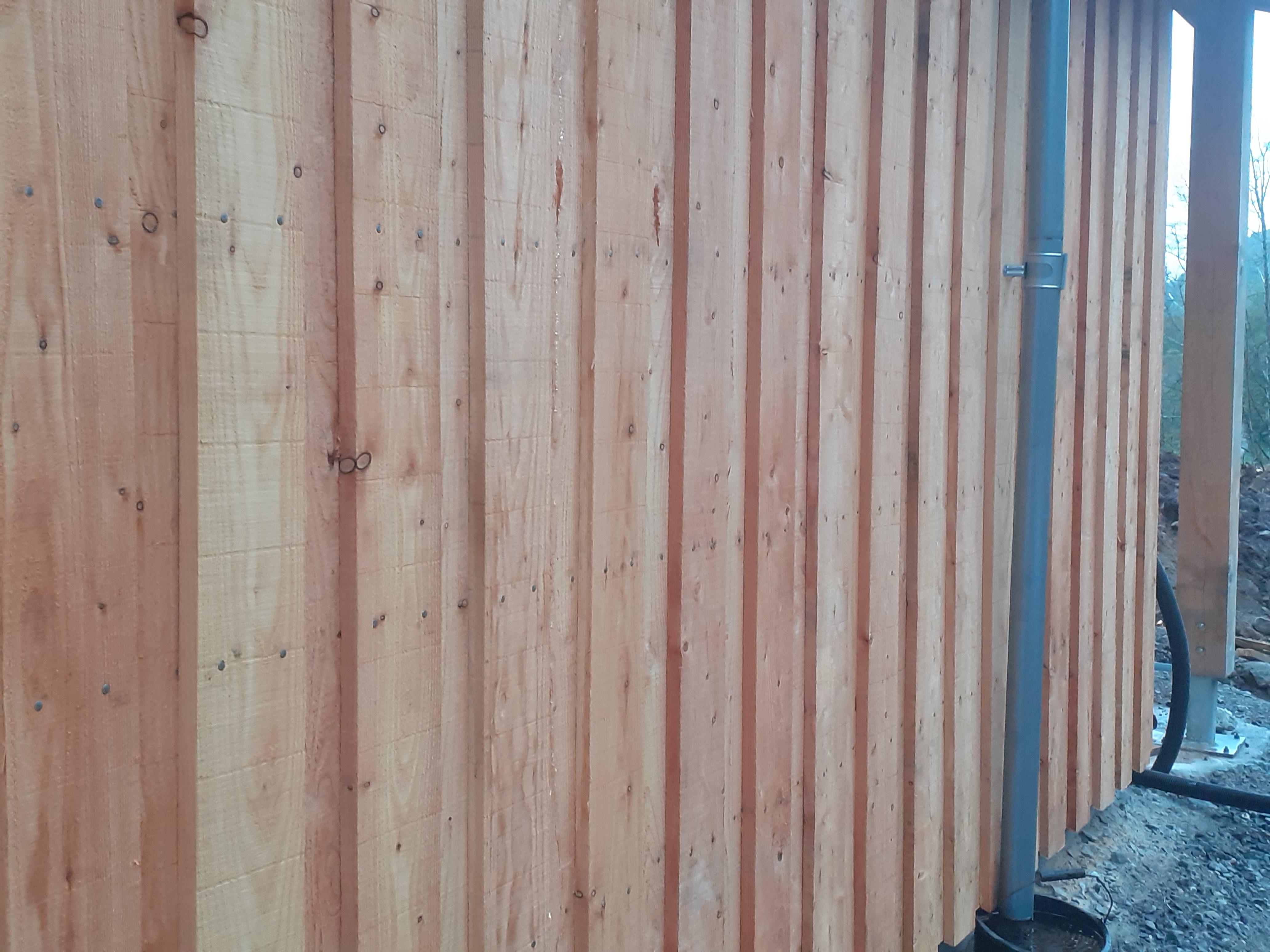
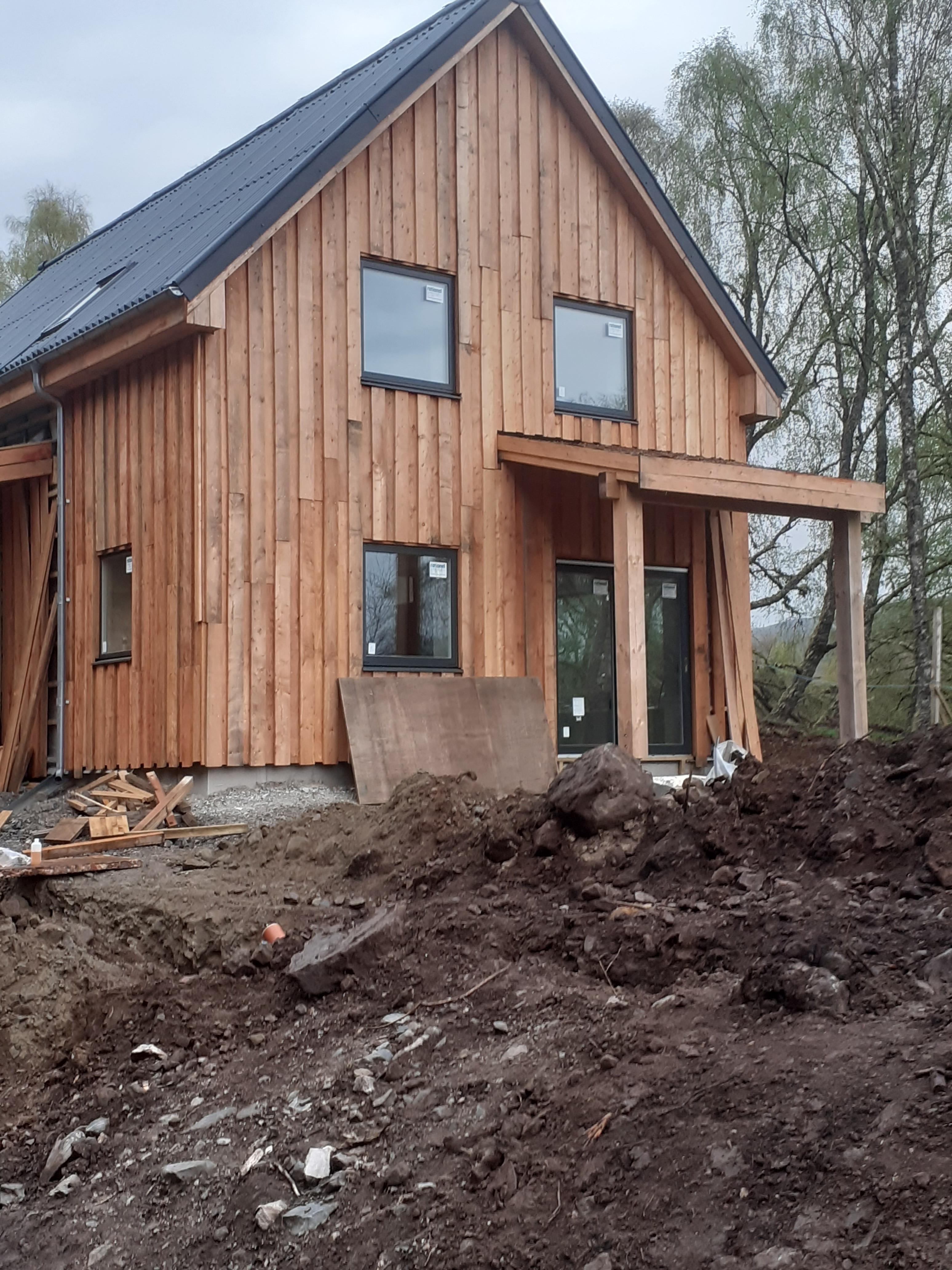
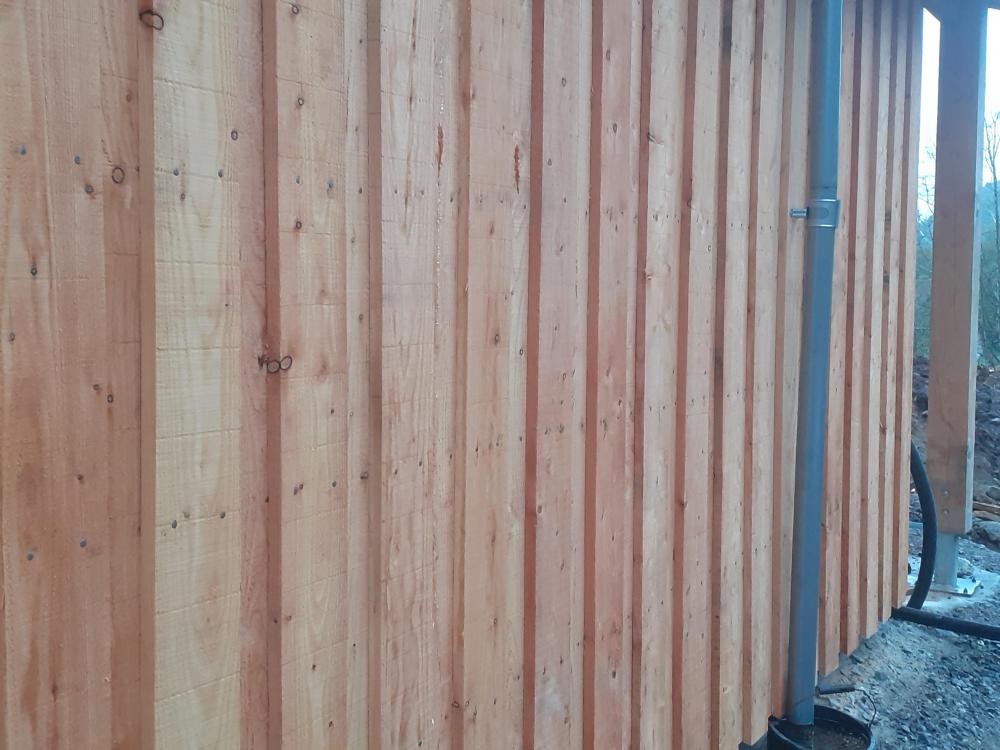
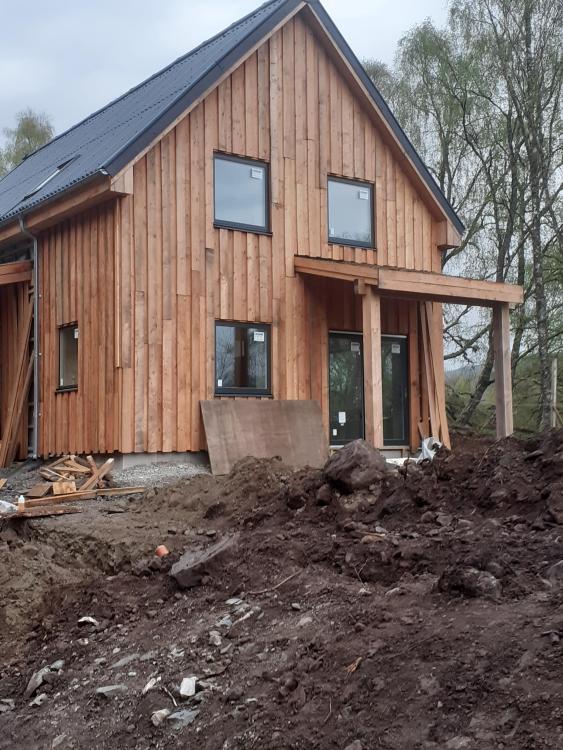
@Russell griffiths as requested. You can probably spot the earliest efforts as we learnt quite a bit as we went through it. The lean to turned out quite nice as we were able to use single boards from top to bottom (third photo). Any questions, ask away.
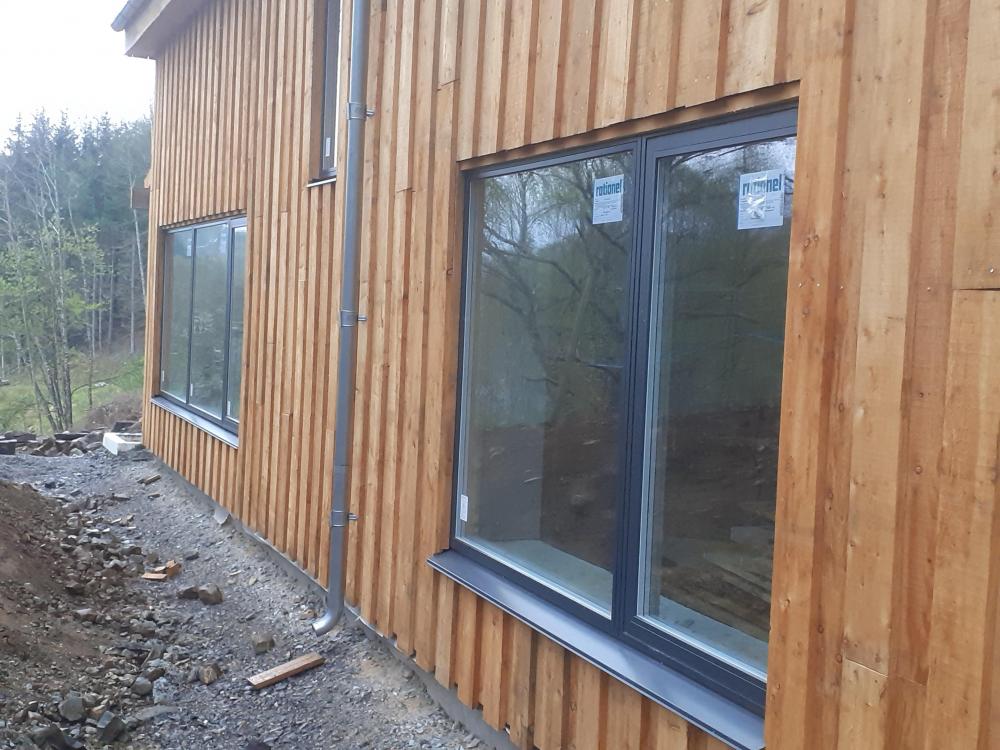
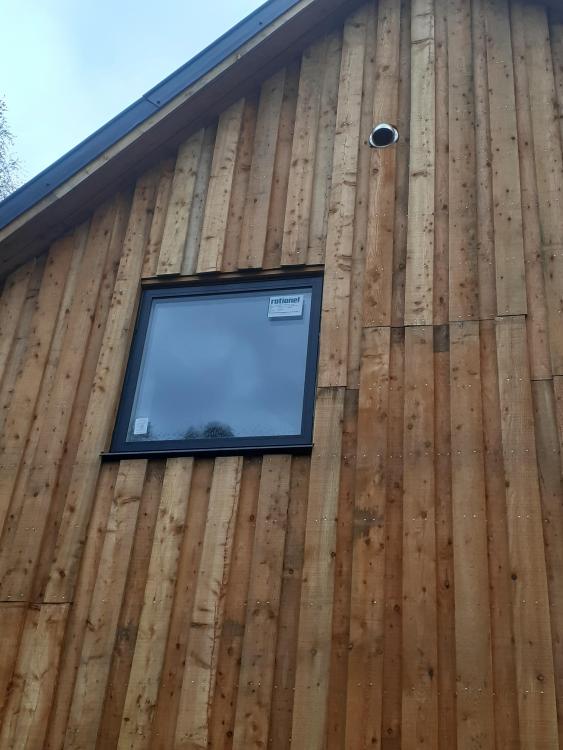
-
I doubt they have the manpower. Some are using systems involving analysis of aerial photography.
-
In terms of leisure batteries, we've been living in our wee caravan for a year or so now using a bog standard halfords leisure battery. It is charged off a 100w pv panel mounted on a pallet. Struggled a bit in winter but you wouldn't need it then anyway.
-
Cheers all. Pleased to report some success with some low tech methods. Red Indian style ear to the ground while ramming a rod down the duct. @Russell griffiths of course. Piccies tommorow. We went with a fairly rustic approach - rough sawn larch heartwood, board on board.
-
The water level in the ducts hardly drops when I do that, making me think the end of the duct is crushed or blocked. I haven't tried divining, but would happily give anything a shot.
-
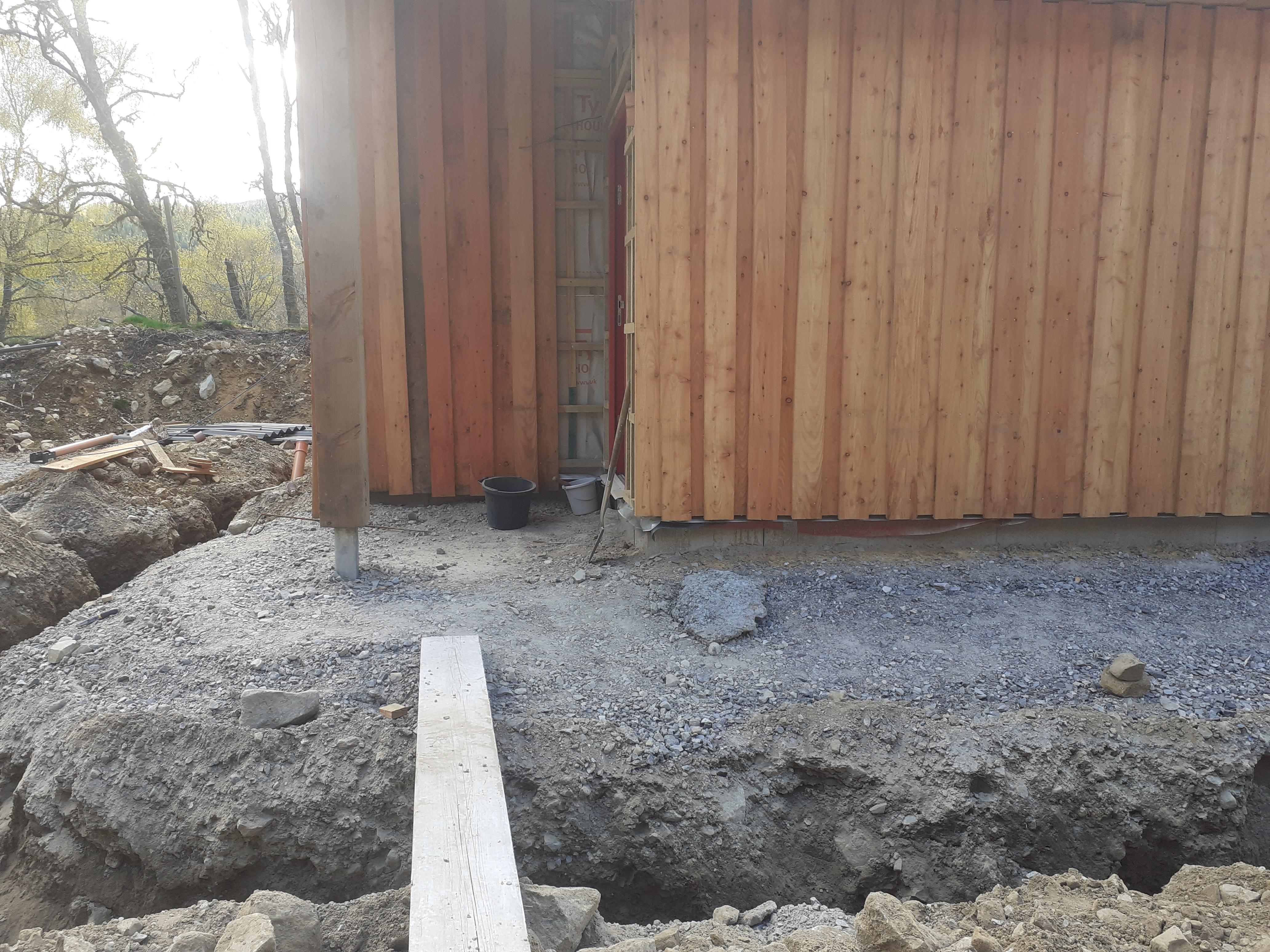
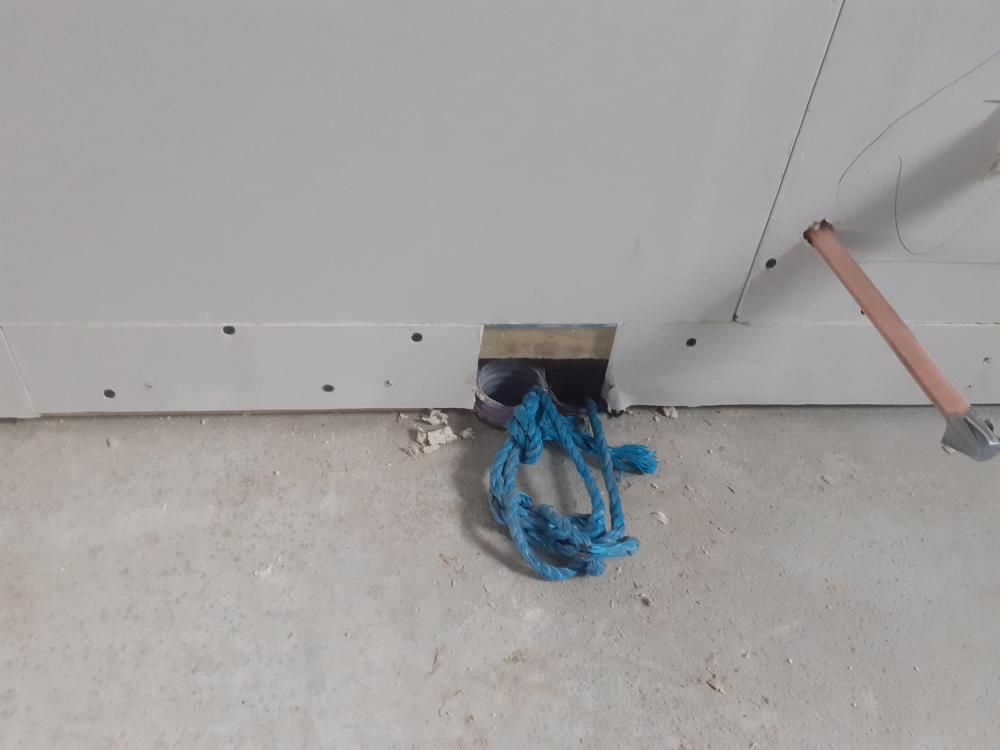
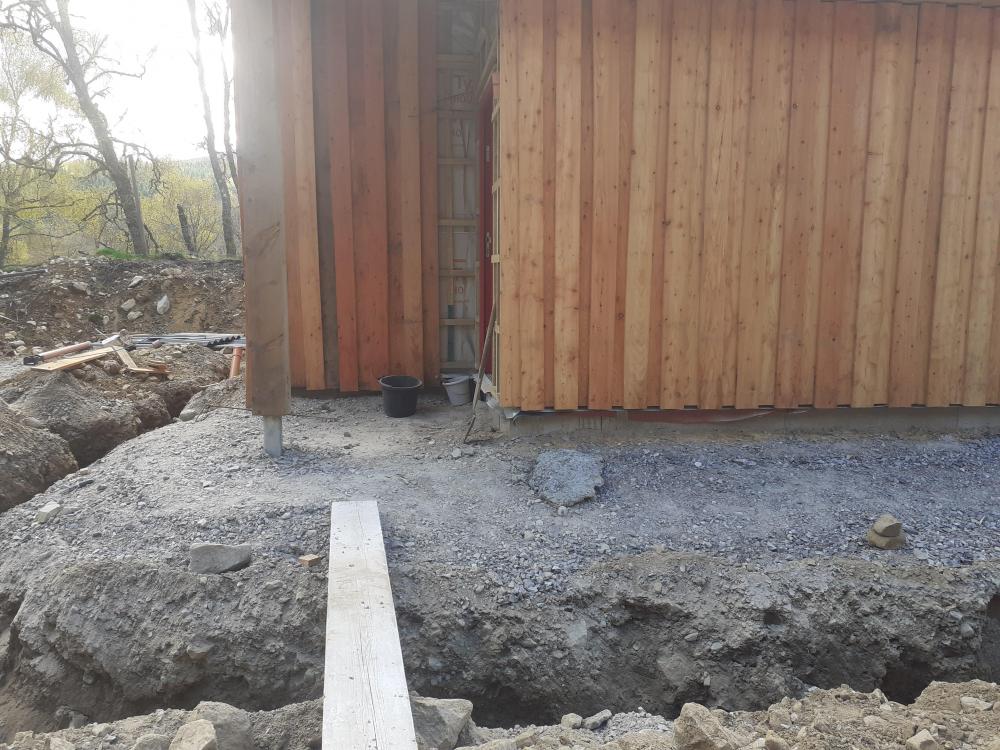
The background is that about a year ago, our foundation slab was put in, with two ducts to pull through bt and electrics when the time was right. I didnt see them go in, but I told the groundworkers where to put them. The ends of the ducts were buried. Fast forward a year, I need to get the services in, the ducts are nowhere to be found. In the first photo below the ducts are shown coming up through the slab. In the second photo, the area where the ducts should be is shown. They should theoretically come out just to the right of the black bucket. Things I've tried: - phoned the groundworkers to jog their memory. - Dug a massive trench right round this area. - Rammed a water pipe down and tried to see if I can get water to come out into the soil at the other end. -put a bit of light down the duct to try and find the direction. At the moment I'm a bit nervous about continuing to dig around the pad holding the post up. Anyone got any words of wisdom or ideas? Have a plan b not involving the ducts, but I'd rather avoid that if possible.
-
I might have misinterpreted the original post. Not sure about through a single posi. I'm only aware of strong backs connecting posi's. We have some pretty wide posi's due to the span, and this was also to minimise deflection.
-
Strong backs can (and should generally) be fitted through the posi web and this reduces deflection I think. What to use and where depends on the span. There was a thread recently about this.
-
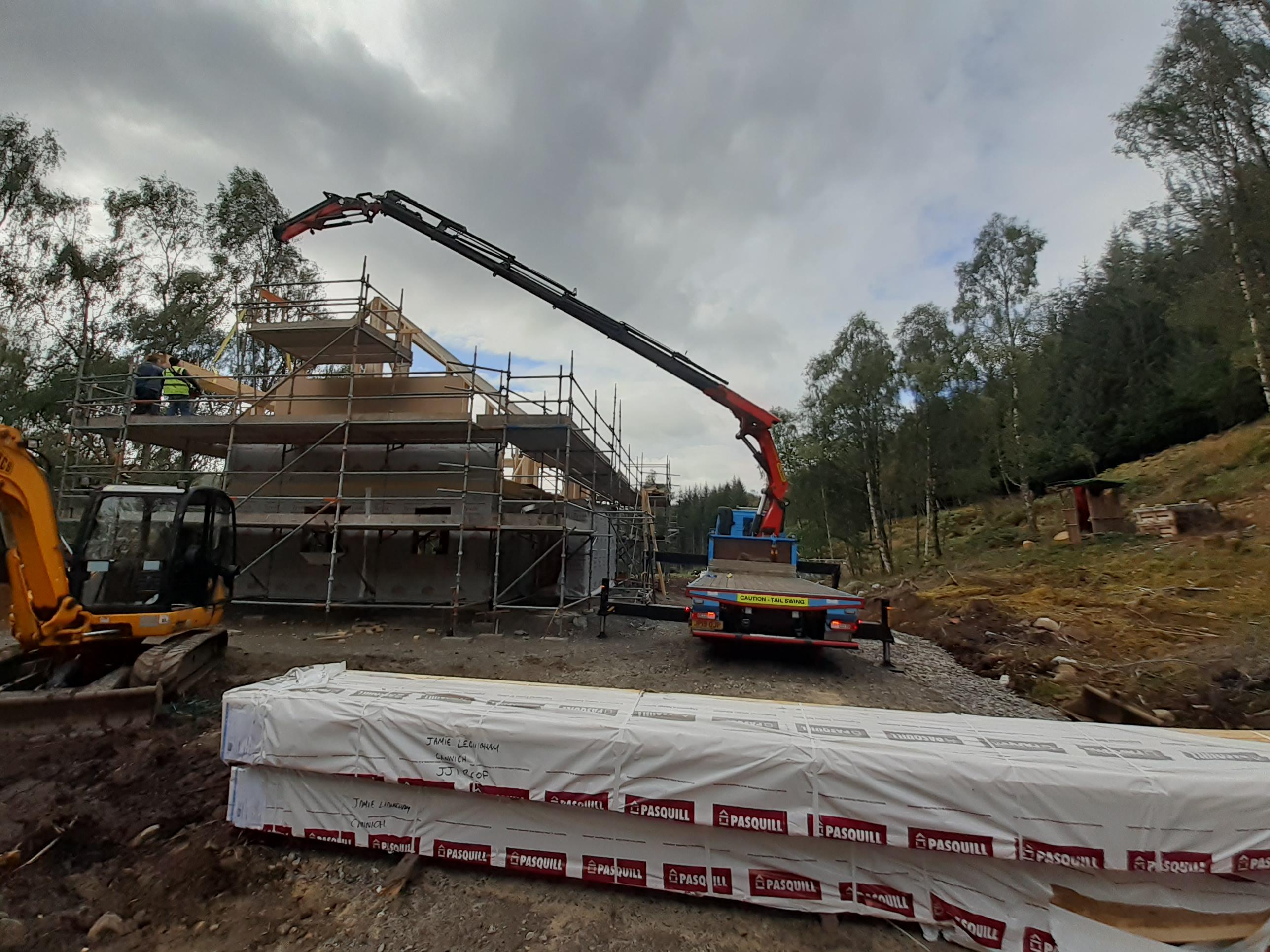
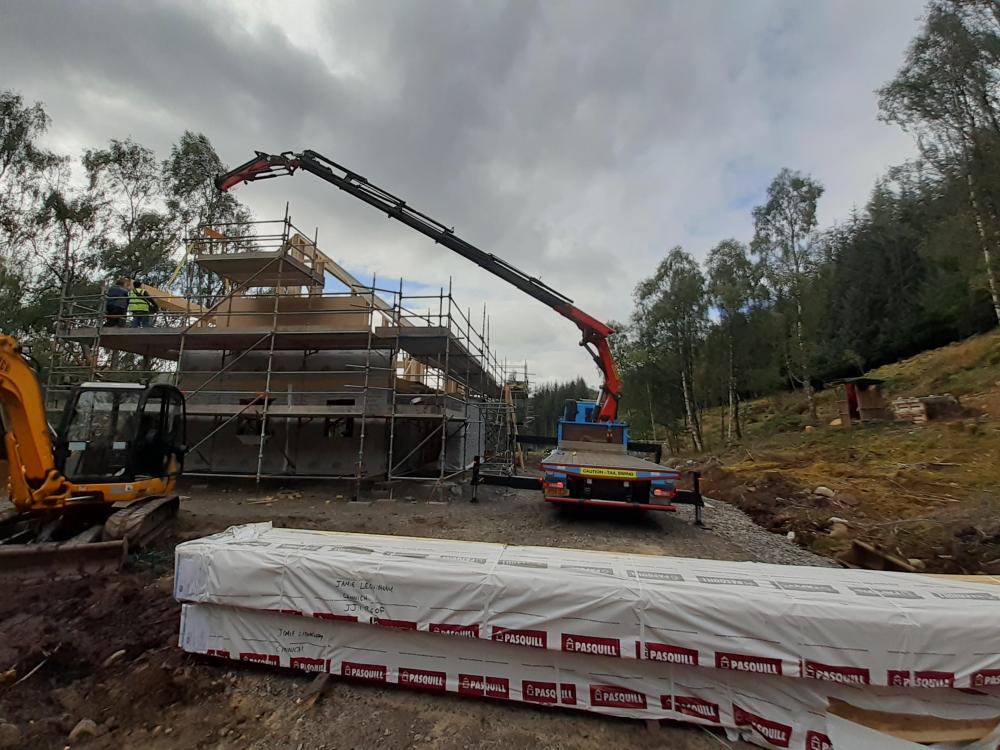
Some hiab lorry firms will charge by the hour for lifting work. That's what we did. Cost about £50/hr from memory.
-
@dpmiller isn't that propassiv osb rather than a membrane?
-
Make sure you get the adhesive for sticking epdm to itself - you can also buy adhesive for sticking it to the roof deck which I don't think will work as well.
-
Most people working with big beams for timber framing don't dry them out before they are used, they build using green timber and then it slowly dries. This is because big beams take years to dry properly. There is a difference between previously dried wood wetting and green wood. You may think the wood is very wet, but if it was previously dry, you may find it will dry out quite quickly compared to green timber. This is because the wood will not absorb water into its structure in the same way that green wood holds it. Do as suggested above, stickering it under cover, with plenty air circulation and some weight on the top to stop movement. I wouldn't worry about bugs too much. If you wanted to, you could resaw it first as that might help it dry. As a rough guide, you can air dry timber at about 1 " per year for hardwood slabs. This is from green, so you may not need that long, and in our experience most of the drying happens in the spring/summer anyway. Depending on when you need it, start it off outdoors to get the bulk of the drying done, then take it indoors if you have space so it can get to equilibrium with the conditions where its final resting place will be! The association of hardwood sawmillers has a useful and cheap guide you can buy on drying timber if you want a bit more info. Good luck, and don't worry too much if you don't get it perfect, it's just called character!
- 13 replies
-
- 1
-

-
- oak
- reclaimed oak
- (and 5 more)
-
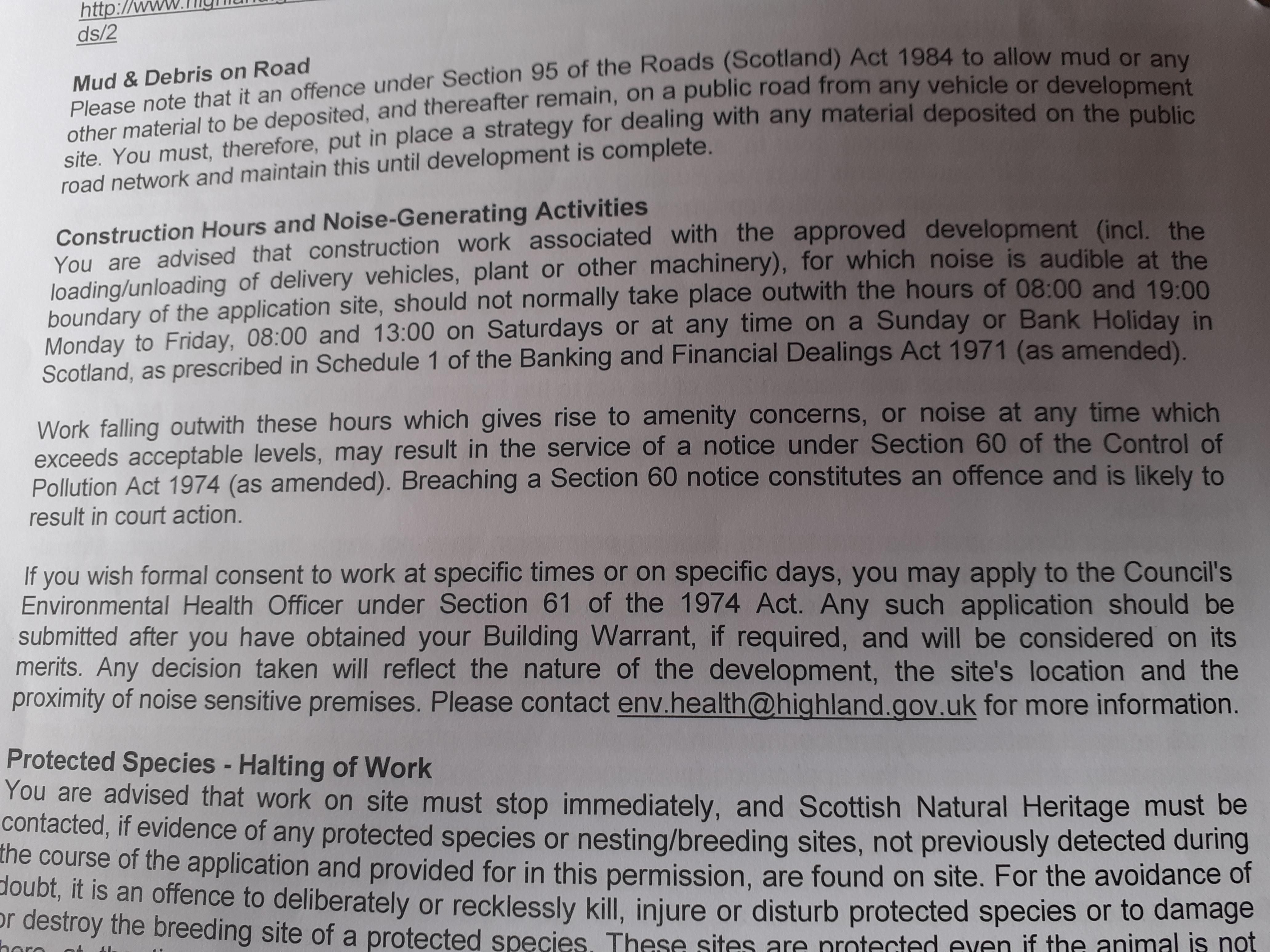
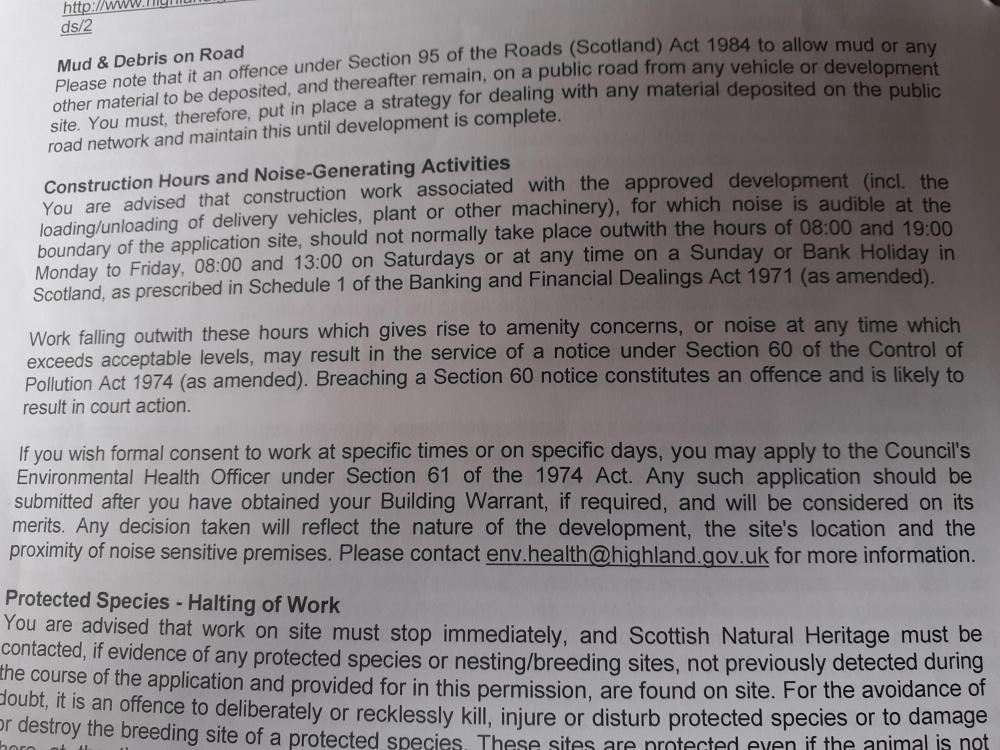
Control of pollution act 1974 is the reference legislation. As others have mentioned, self building is sort of irrelevant - it's still classed as construction and as a construction site. In practice, perhaps consider how noisy it is actually going to get and whether most of the noise generating activity can be managed to certain hours.
-
We have a theoretical restriction, but it is not a planning condition. It refs the relevant legislation, but this is in Scotland. Tried to take a pic of the text, not sure how clear it is.
-
Total MVHR cost/quotes
jamieled replied to gc100's topic in Mechanical Ventilation with Heat Recovery (MVHR)
I paid BPC £150 for design which was knocked off the cost of the kit when I ordered it from them. -
It is quite traditional in Scotland to slate directly onto sarking, I've only ever done this on a cold roof setup. I'd have though the battens and counterbattens are essential if you need some kind of ventilation above the sarking (typical with a warm roof setup) which is what we have.