jamieled
-
Posts
639 -
Joined
-
Last visited
-
Days Won
1
Everything posted by jamieled
-
+1. We have a composting toilet for our touring caravan on site. DIY'd for about a tenner.
-
Thanks! The windows look the same. Did you fit the 20mm baton yourselves or did they come with them attached from Rationel? In any case it sounds like a way I can deal with the window that has no groove.
-
Nope, we're also alu clad, so I'm still confusing you! In my first photo, I see two grooves. One very narrow one, which I assume is for fitting/replacing the glazing. The second, wider groove is where the window shuts into the window frame when it opens and closes. To me it looks similar to what I can see on your photo when I zoom in.
-
The broad groove is just where the opening windows fit into the window frame. There is one less groove on the fixed frame windows. Or are you referring to something else?
-
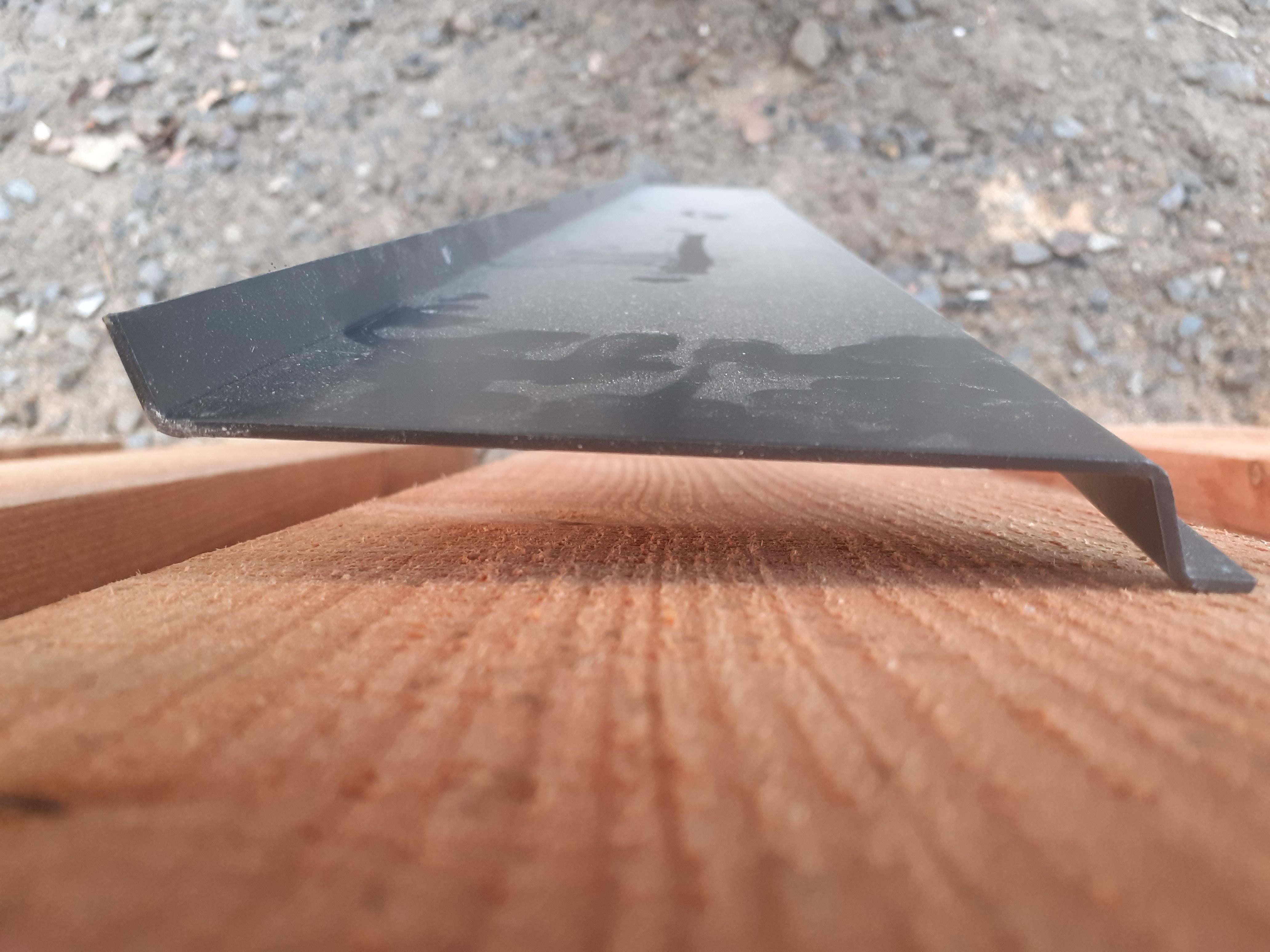
@ProDave, thanks. Profile photo below. The left hand side is the side that fits into the groove on the frame. Not sure the groove on the front face is anything more than cosmetic (assuming we're looking at the same thing). Main issue is that I can get the cills into the groove, but they won't stay there and so some support is needed. Considering thick glue/sealant dabs at the moment. The fixing holes are a red herring I think. Frustratingly, one of the windows has no groove at all. I've only just found this out, and so I'll need to bodge something as I don't really want to take the window out.
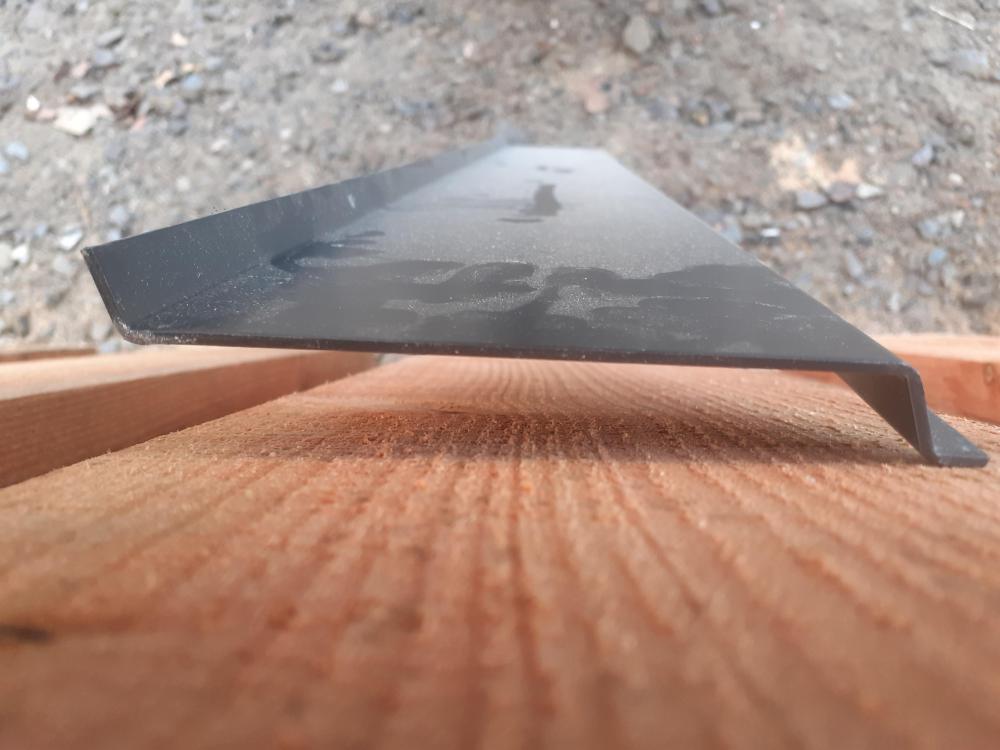
-
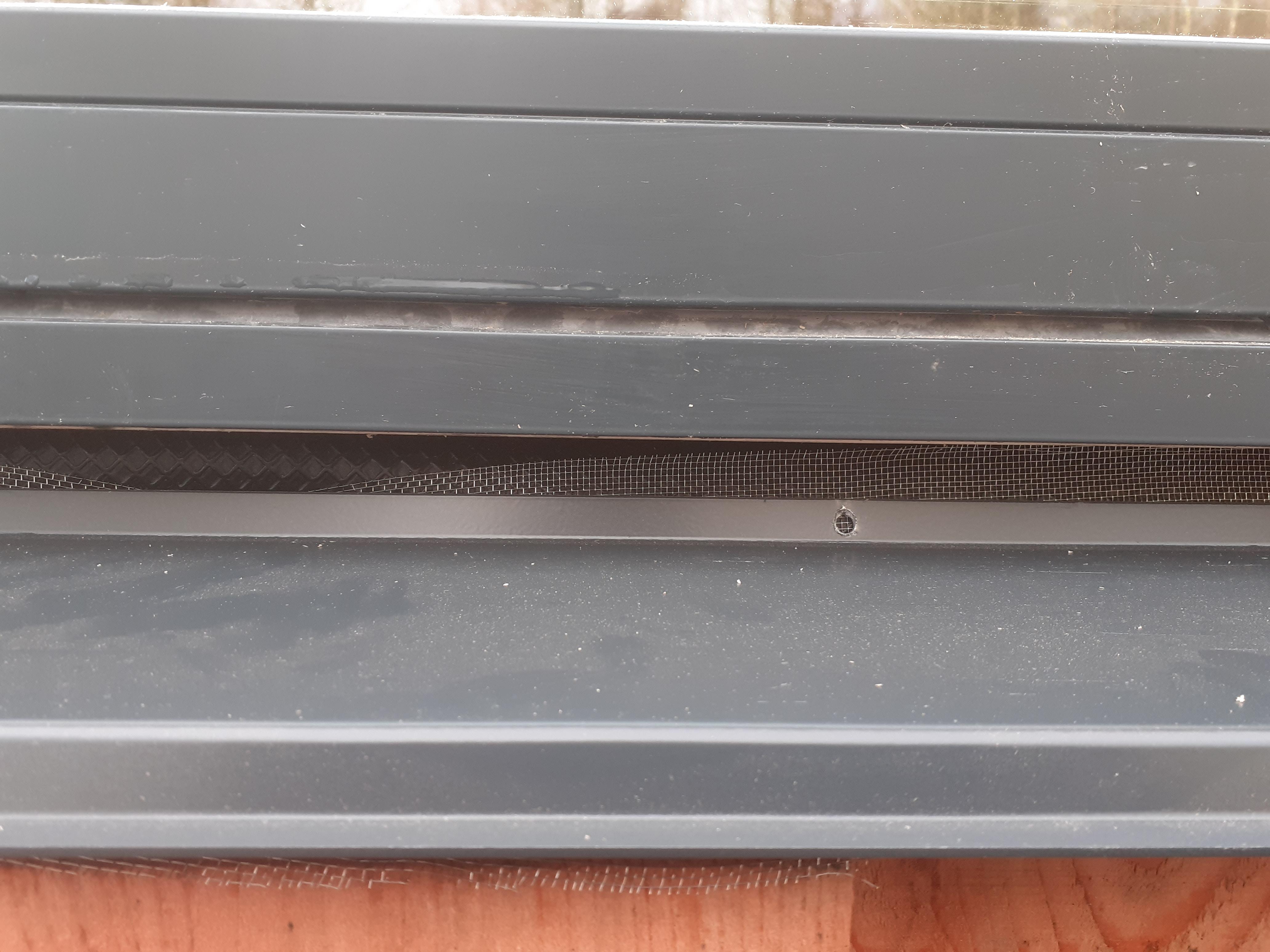
Our Rationel windows were supplied with some aluminium cills. The windows themselves have a small groove routed into the bottom of thr frame, we assume to take the cills. For anyone else who has these, how did you fix them to the window frames? The cills have a couple of holes in them, but once they're pushed into the frame the holes disapear and become useless. If it's relevant, the cills project out over vertical board on board timber cladding. The pic below shows the cills sitting under the frame, on top of the cladding.
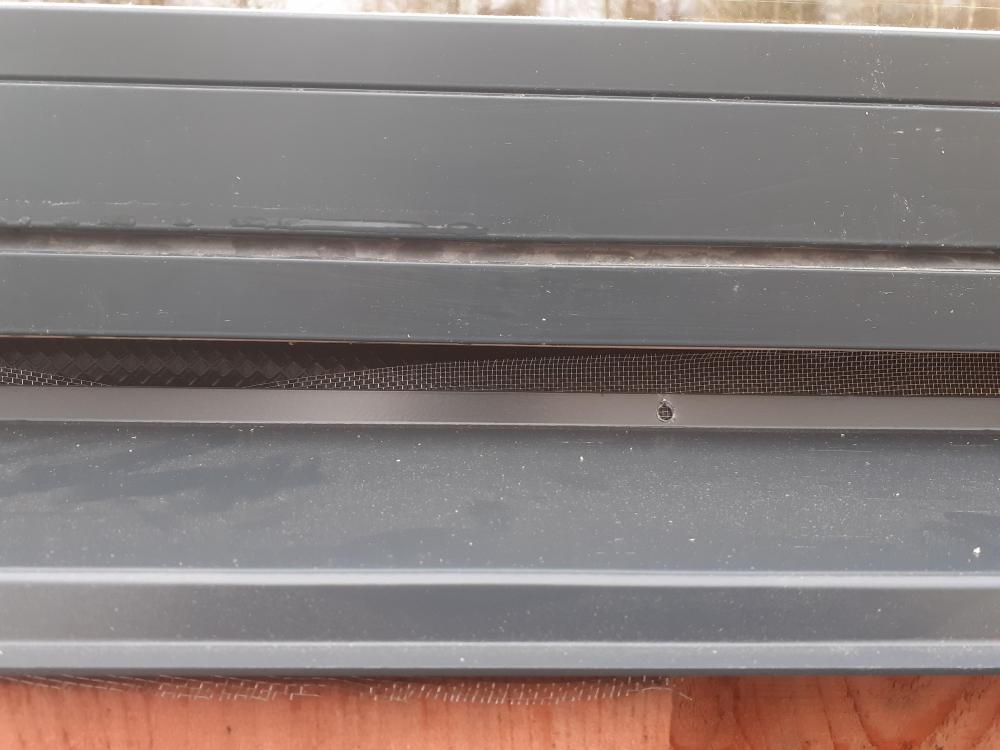
-
Good luck to you downing a pint of sewage treatment plant output!
-
Their policy currently requires tertiary treatment (rumble drain or reed bed) where the flow is either low or potentially intermittent. This is because of the low, or non existent dilution.
-
Yep, that's what we're doing. PYC (Warmcel distributors) can help you arrange quotes from installers and check your wall build up is suitable by running condensation calcs etc. There may well be other blown cellulose producers who do similar though.
- 26 replies
-
- 1
-

-
- hemp
- insulation
- (and 1 more)
-
Alternative accommodation - caravan
jamieled replied to canalsiderenovation's topic in Planning Permission
We've had a touring caravan on our site for over a year now without planning permission. Nobody had batted an eyelid. We are out in the sticks a bit though. -
@ProDave, if I understand the above correctly, your rockwool offcuts between the joist ends are open to the floor void (i.e. there is nothing between the rockwool and the first floor void).
-
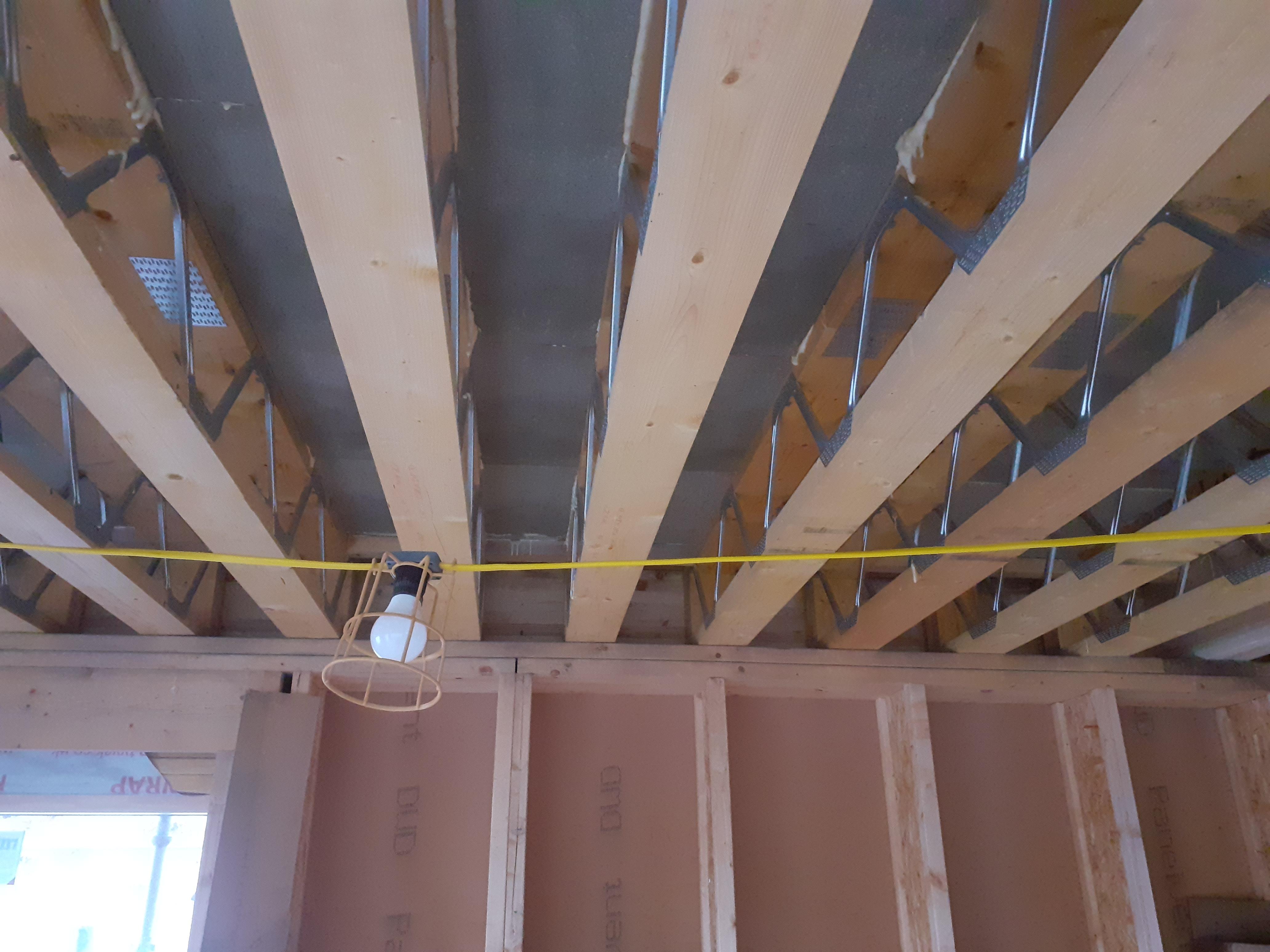
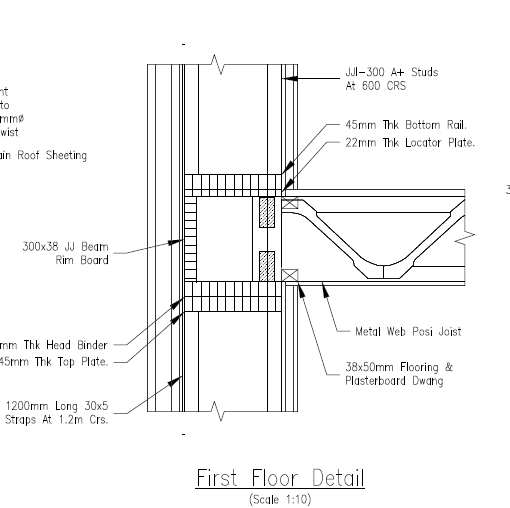
I'm getting myself in a bit of a pickle trying to figure out what to do about the following, so I'm hoping the buildhub collective can help. We have a 1 and 3/4 storey timber frame, built from JJI joists. The first floor joists are posi-joists, and sit directly on top of the ground floor panel wallplates (see pics below). The rim boards are single pieces of glulam, one for each side of the house, with a timber locator plate and bottom rail for the first floor above that. 0 Our plan for the rest of the house is to have blown cellulose installed through the OSB (not currently installed where the photos have been taken). However, the posi's are a problem, partly because of the fiddling required both between the joists, and also through them (as they are open). I'm not overly concerned about airtightness , partly because of the single piece rim boards, the weight above them and the fact that I can probably seal around the perimeter with airtight foam if it was looking like being a problem. I realise now (a bit late on), that I should probably have installed some sort of airtight membrane prior to the posi's being installed, to lap onto the airtight layer on the inside of the house (in our case OSB).My current thinking is to forget blown cellulose around the first floor perimeter and just stuff some rolls of insulation in. I have a couple of queries: There would be no vapour barrier in this location, and even using the traditional detail of a membrane lapped around the end of the joists and onto the walls above and below, there would be no way of preventing vapour entering the insulation. Can I take it this is not really a problem in this area? We are planning to use foil backed plasterboard on the walls and ceiling which would reduce vapour movement a bit anyway I suspect. Has anyone successfully insulated around the first floor perimeter with cellulose, and if so, how was it done? My felling is that it can't be done without a lot of fiddling and that trying to tape round the joists to get an airtight seal is overly optimistic given the number of potential seals required. It might however, be possible to do some fiddling to create something to keep the cellulose in there.
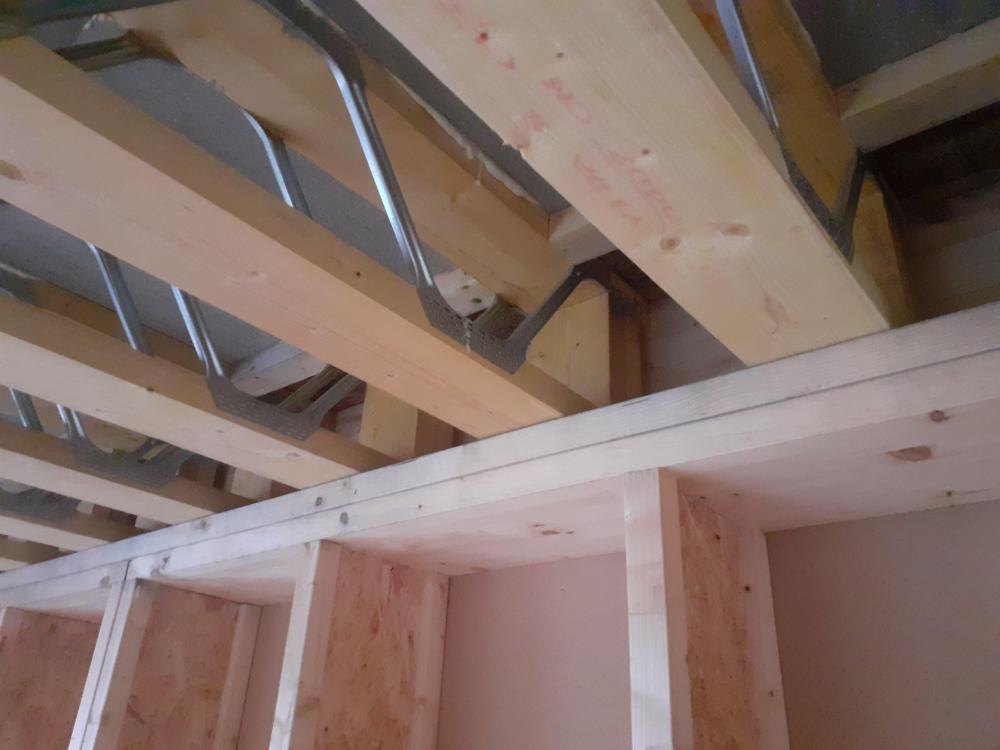
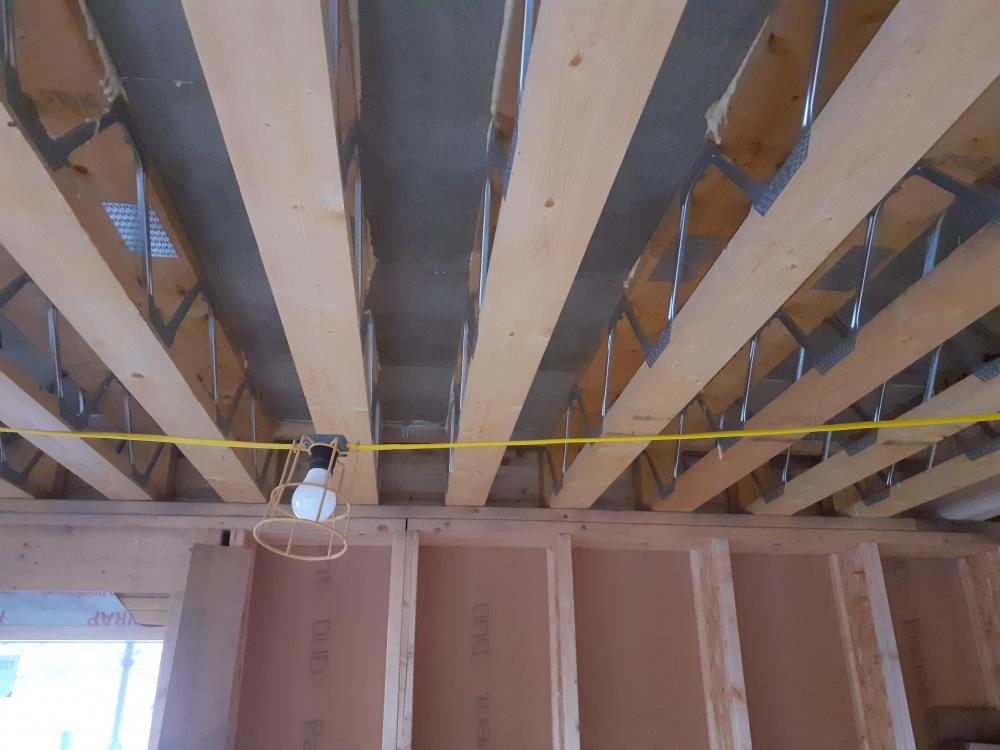
-
Advice needed on palette construction project
jamieled replied to H F's topic in General Self Build & DIY Discussion
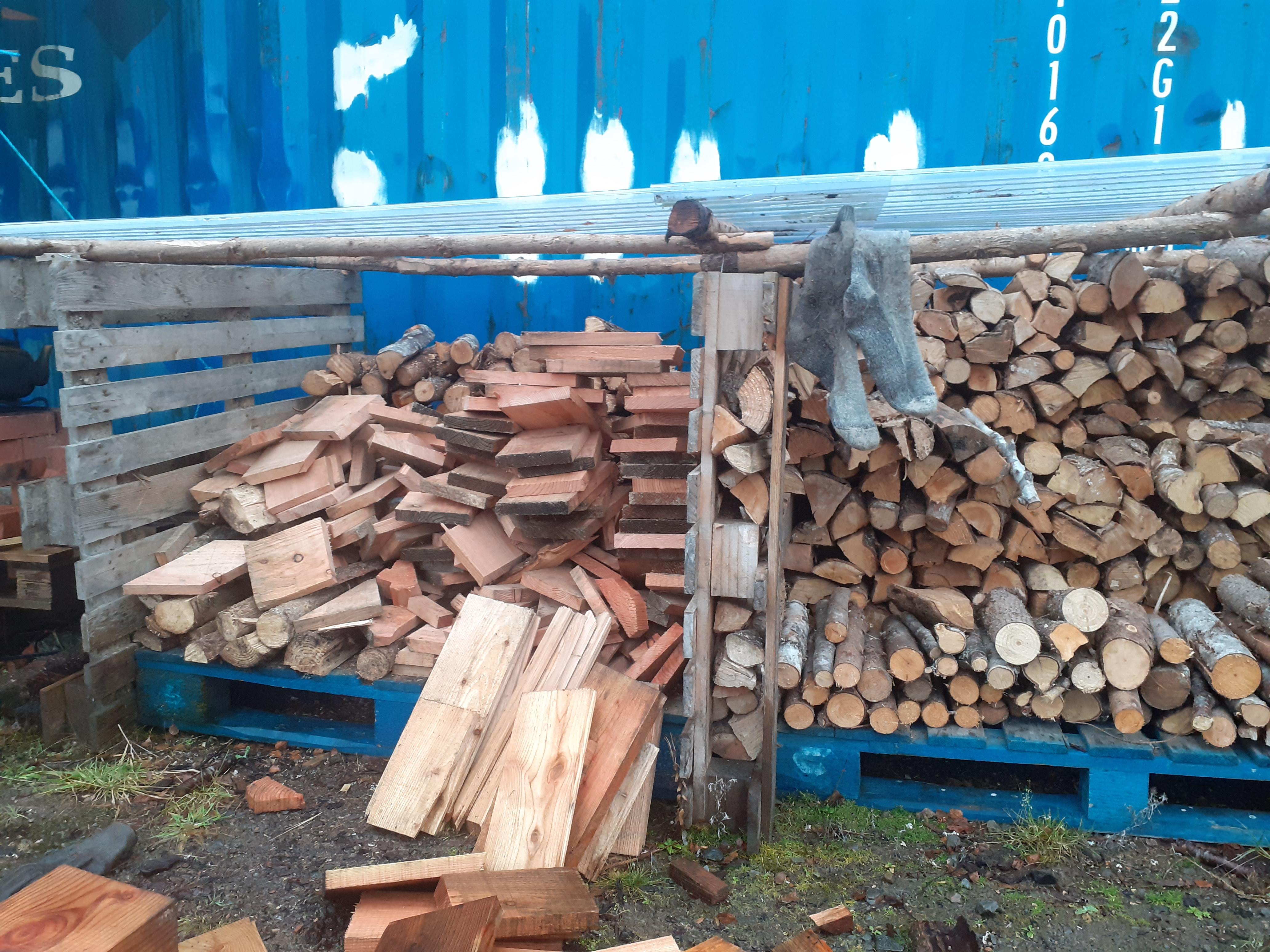
We have an outside one for the Caravan. You won't need the plastic roofing, but you can brace it across the top in the same way with any leftover wood. Piccy below, ignore the manky socks!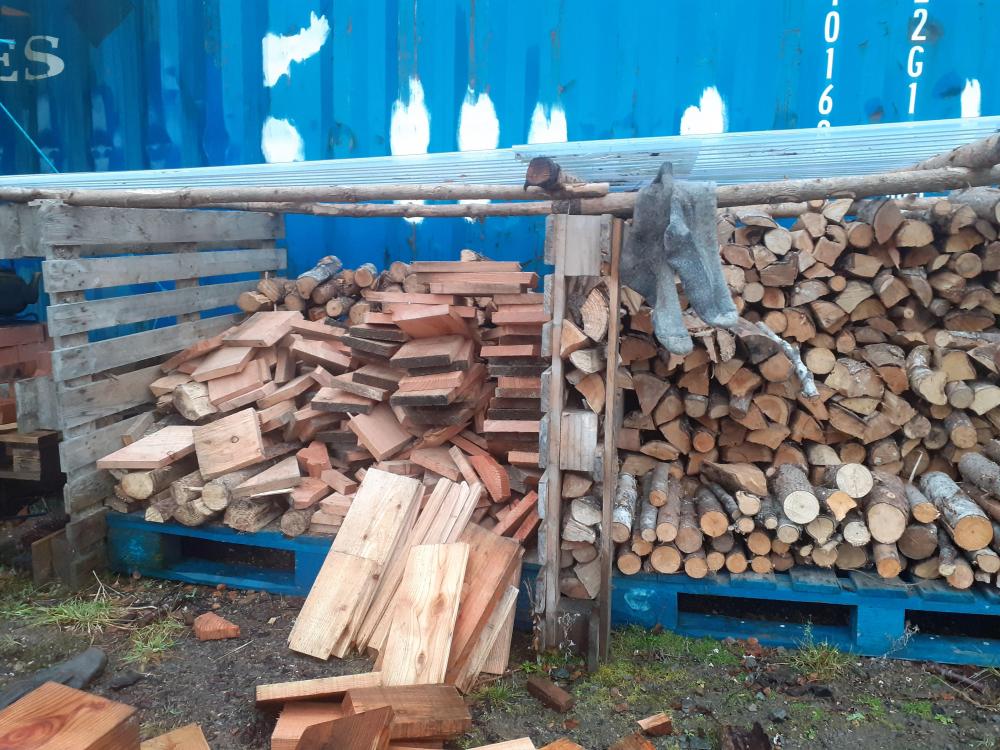
-
I'm not sure on the exact phenomena, but in our case the freezing (on our old supply) created an airlock on a few occasions. We have also broken a tap through freezing it in the past as well though. Once we're up and running properly I plan to continually circulate water through the system so hopefully this problem should reduce. @Stewpot, thanks for that. I'd forgotten a bit about the intake - it's in a highly aerated pool, so perhaps a bit of work at that end might reduce the problem.
-
Thanks all. To clarify: -No pump exists at the moment, just an idea to solve the airlock but I'm looking for ideas as to what type of pump to get. -It airlocked after a very cold period, most likely due to it freezing. This happened on our old supply. @ProDave, it could be a blockage but it air locked before and it is well filtered at the intake. @Ed Davies, yep, I was thinking of the second definition. This pipe does not run all the time at the moment, only when the tank ball valve opens to allow water in.
-
We have ~300m of 25mm mdpe pipe from the burn to our raw water tank, probably around 10m head in total. The last 100m or so is pretty flat, a few minor undulations (<0.5m). Even so, we appear to have an airlock in the pipe somewhere although difficult to determine exactly where. Over time I will stick in some air release valves at the most likely places. In the meantime, any practical suggestions for dealing with the current airlock? Any recommended pumps (electrical supply not easy to get to the majority of the pipeline)?
-
@AliG, this was similar to our situation. We bought a plot which had existing permission for a house which was bigger than we needed (and could afford to build). We submitted a new planning app and as the precedent for a house there had been established by the previous permission the only relevant things were other planning considerations such as foul drainage water supply, consistency with local vernacular. Straightforward from our point of view although we are in quite a rural area with no immediate neighbours.
-
It's usually a lot more work treating surface water. We're doing it because even with the extra treatment it's a lot cheaper then putting in a borehole and I can do it myself. If in future we think a borehole might be needed we can re-use some of the filters. It was quite a large estate, I believe part of the problem was the lining of the borehole.
-
Local authorities in Scotland have an obligation to provide water to private supplies in dry periods. In practice it's Scottish Water that provide the water.
-
@SuperJohnG, the two companies you've asked for quotes are the two that I most commonly hear about doing this work in Scotland. I can't help much with the rest as while we are not on mains, we used a burn supply. However, as a note of caution I will mention a nearby estate who opted for boreholes, paid similar amounts of money you stated above, and did not get what they were hoping for.
-
If you paid a main contractor double your estimate for the exact same turnkey house, do you think building control would have double the work? It may be possible to use a QS or similar to provide a professional estimate that they would accept, but it would wipe out any warrant savings. It's difficult to prove the end cost at the beginning and if BC didn't take a standard approach every man and their dog would be trying to claim they were going to build really cheaply simply to reduce their warrant fee!
-
I think (but am happy to be proved wrong) that they use standard building costs per m2 for the warrant. There are a few discounts if you get certain bits externally certified but they don't add up to much. I too expect to complete for less than the build cost indexed by BC. They will not give you a refund later. Think of it this way - the cost to them is not related to the cost of your build, they just use a per m2 cost as the fairest way of figuring out how much to charge.
-
Help me pimp my eaves please!
jamieled replied to ToughButterCup's topic in General Self Build & DIY Discussion
I have a small space between my vertical cladding and soffit to allow for ventilation. I have installed insect mesh to prevent any beasties getting in. -
I was under the impression that the minimum distance to combustibles was mainly to deal with the risk of a chimney fire, at which point the flue would be a lot warmer.
-
Looks really nice, well worth the early planning. That timber is lovely, it's often easy to write off something that just needs a bit of TLC.