jamieled
-
Posts
639 -
Joined
-
Last visited
-
Days Won
1
Everything posted by jamieled
-
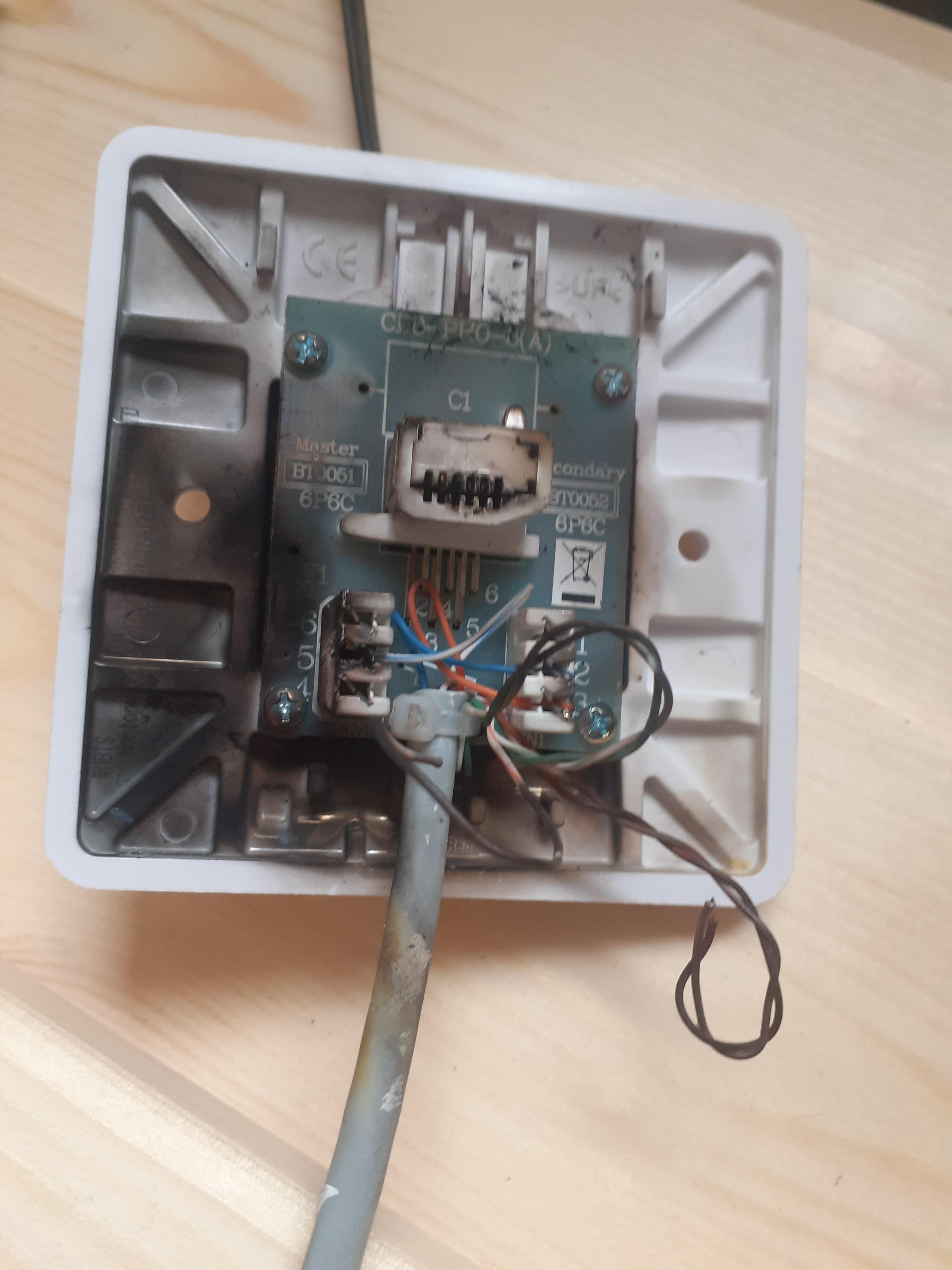
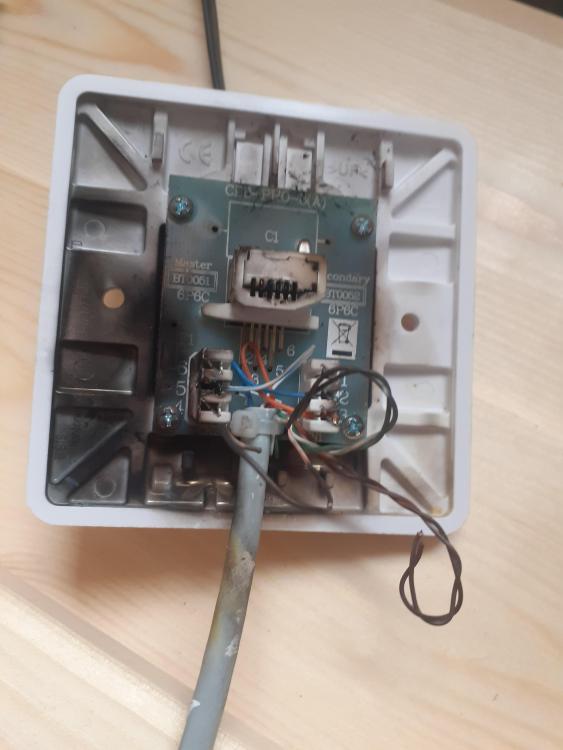
The BT is nowhere near the pole - even where it comes into the house it's separate from power. Had another engineer type out tonight who says he's seen a few similar and reckons the high voltage came via a plugged in cordless phone (which also blew it's plug) into the phone line and back to the openreach socket.
-
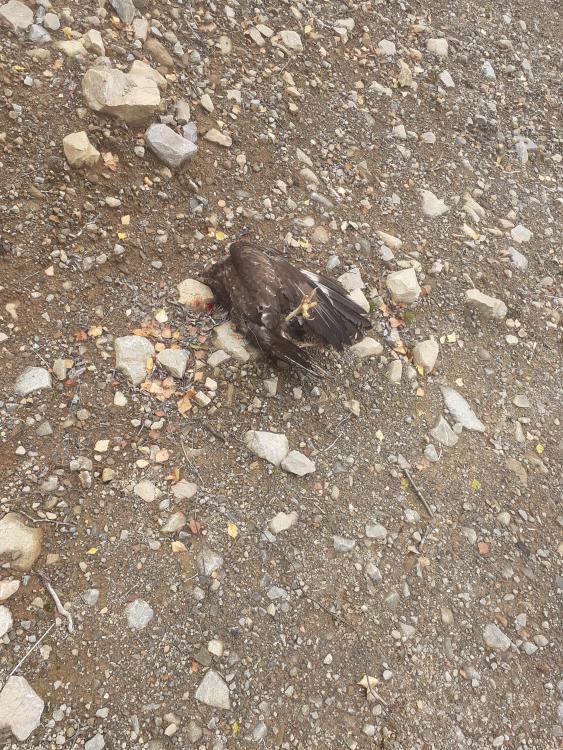
KFB (Kentucky Fried Buzzard) Actually didnt look that fried in the end.
-
@scottishjohn yeah we see them on the poles quite a bit round here. SSE are claiming it's just unfortunate the bird managed to create an arc between two bits of the transformer.
-
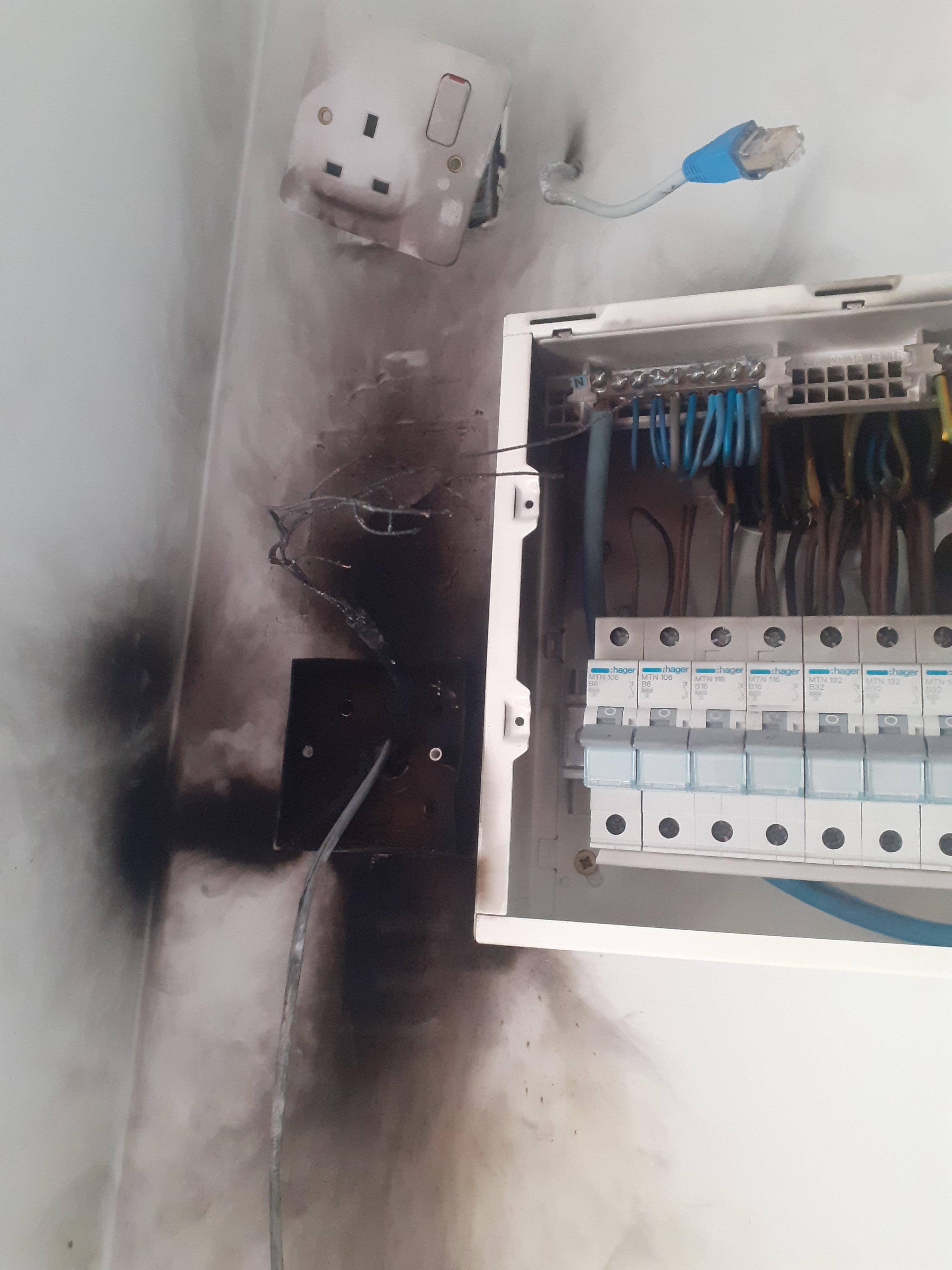
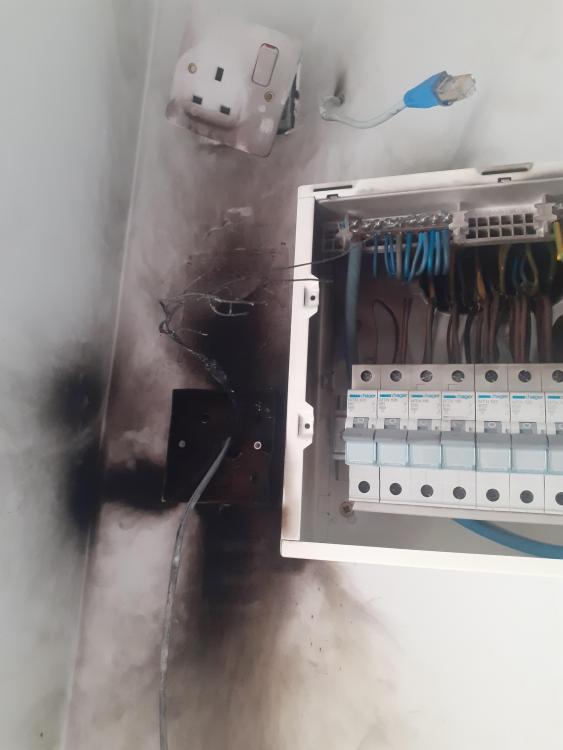
@Temp the electrician had a pretty thorough check of everything. The damage was limited to anything plugged into a phone socket (router, phone) and a couple of electronic switches. Luckily we don't tend to have a lot plugged in so that probably helped.
-
Had a weird one this morning, and possibly quite a lucky escape. Got distracted from work by a loud bang. Power went on/off quite quickly. Anyway, the BT master socket beside the CU exploded with a bit of smoke. Cue two fire engines, SSE and the electrician coming to have a look. Anyway, what looks to have happened is a buzzard hit the pole mounted transformer that supplies our house and caused a large voltage spike. This then somehow travelled through the broadband router which was plugged into the BT openreach socket. As this master socket is also connected to another phone socket it managed to gub that as well. Pictures below. I've asked SSE to put a guard on the transformer to try and stop this happening again. Most of the electrics are fine, though there is a bit of damage to an electronic boost switch and the pv diverter, presumably because they have relatively sensitive electronics.
-
We're in Scotland, just West of Inverness. We don't have any heat sources upstairs with the exception of a towel rail in the bathroom although it's only 40w or something like that. I wasn't aware of any rule about needing to have a heat source in every room. I have had the bedrooms wired in case we find we need upstairs heaters but no plans to fit them unless we think they're really needed. In saying all this, we don't yet have our completion certificate, so may still be pulled up on something. I don't think there are special rules for passive houses in this regards, the only possibility might be if your SAP suggests you might need a high heat input which can't be delivered with the number of heaters you propose? I think there are a few folk on here in Scotland who don't have much heating upstairs, so I might be tempted to question the source of your Architects information.
-
Building Contracts for your project
jamieled replied to tlogic's topic in New House & Self Build Design
I work in engineering, occasionally with a QS. I've also recently almost finished building my house. There may be scope for the service you provide, but I'd second the comments above. In my opinion, there is a big difference between commercial development (i.e. housebuilding or industrial) and self-build on many aspects, from the size of the contracting companies used, the approach to cost management, detailing of the final development and knowledge of the client. I didn't use a QS and the closest I had to a contract were a couple of accepted quotes with no T&C's. I think the approach to managing construction in industry is vastly different to a large number of self builds, to the extent that in many cases I don't believe applying an approach of developing detailed costs, QS estimates and watertight contracts would work for most self-builders. One interesting aspect to understand would be what proportion of self-builds are those where the self-builder hands over responsibility to one or more parties for the build. That's your market, so answer that question and you might begin to understand how viable a business is. -
Stove Hearth & Visual Warning Area
jamieled replied to soapstar's topic in Stoves, Fires & Fireplaces
Have a look here, explains it reasonably well: https://www.stovefitterswarehouse.co.uk/pages/hearth-regulations -
@ProDave presumably that sleeve would work on any twin wall flue of the right diameter. Out of interest, where did you get hold of it?
-
@AndrewR, the guidance is different for inland watercourses and coastal areas. SEPA seem to be content that you can discharge directly from a septic tank into a coastal water, provided there are no particular sensitivities. This is due to the dilution you will get. They do state a partial soakaway is optional, but not mandatory. I'm aware of plenty west coast dwellings (including some new ones) that work on that basis. If the other dwellings using the system have been there a while, they may not have registered with SEPA. You won't be able to escape that, so if it were me I'd ask them now how you go about dealing with an unregistered communal system. There is a sepa registry email address on their website. See here for a bit more info: https://www.sepa.org.uk/media/152675/wat_rm_03.pdf&ved=2ahUKEwjJpKbPm_fqAhVGSRUIHYUvAl4QFjABegQIAxAB&usg=AOvVaw2KBUuxUIv_ldNUHcAJoONZ
-
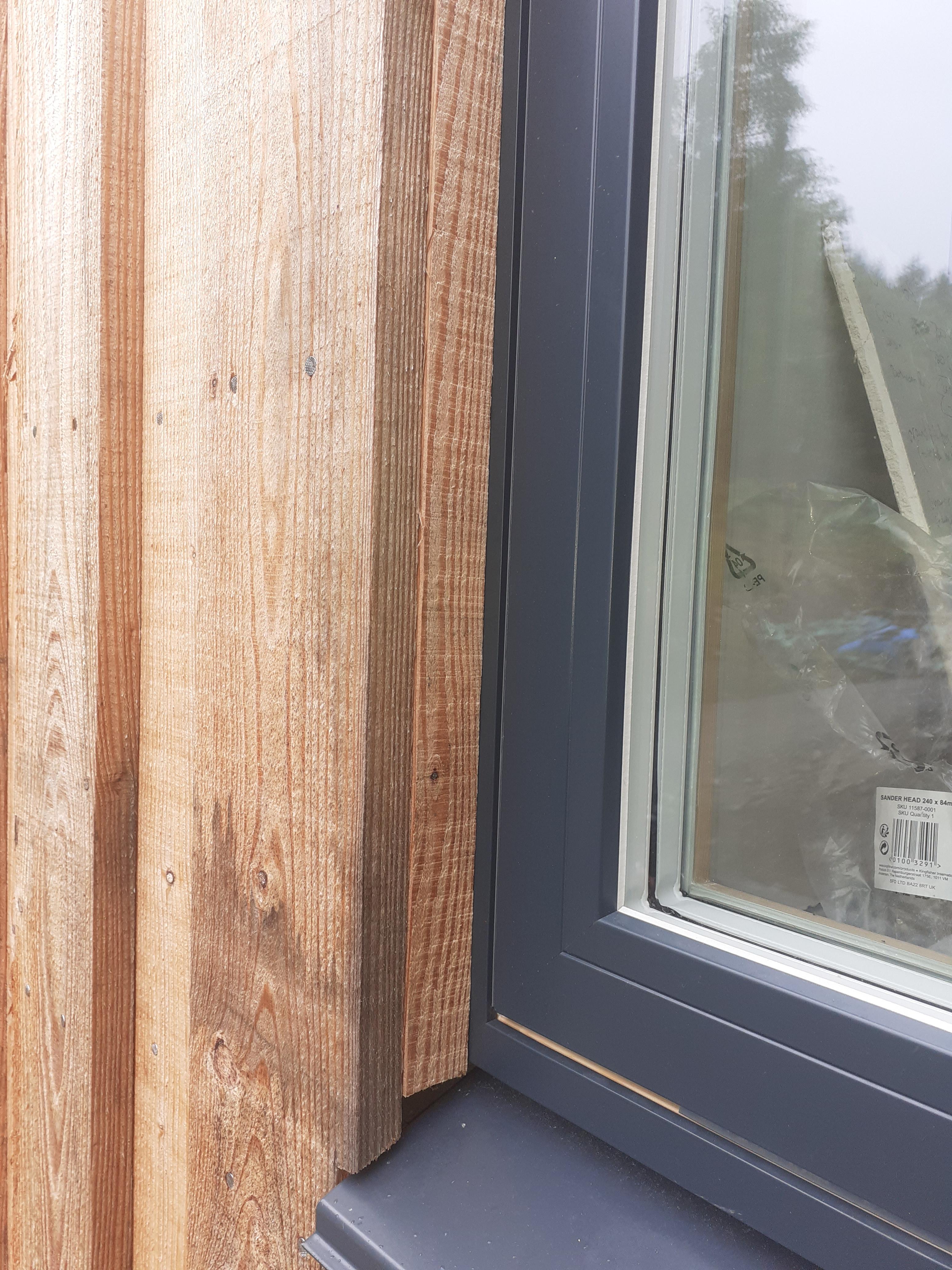
@Andrew, no there isn't anything, only some insect mesh. I'd say if I were doing it again I might try and make those bits circled a bit neater. We have reasonable overhangs above the window so the cills don't see a lot of water running down them. So far I haven't seen a lot of water getting in behind the cladding through that hole.
-
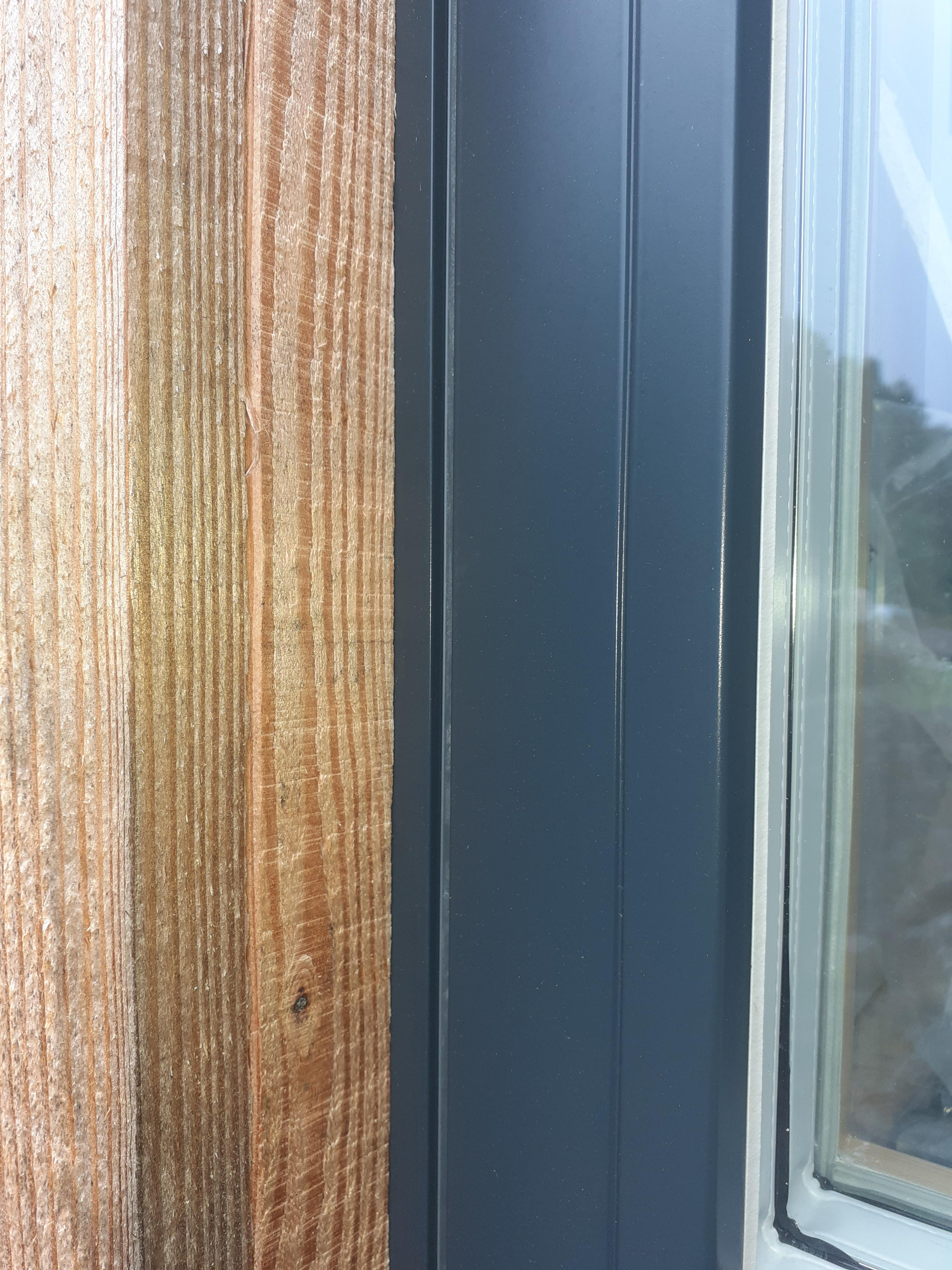
Here's ours, though you can't see the compriband. I ripped the cladding for the external reveal.
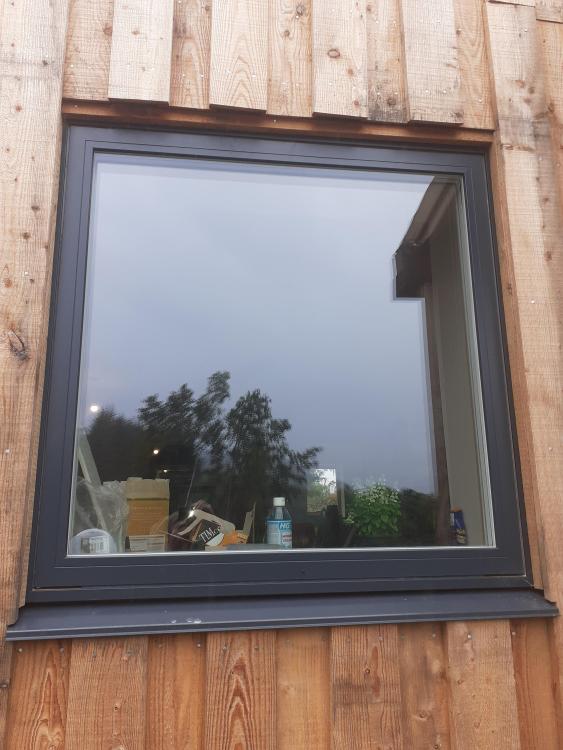
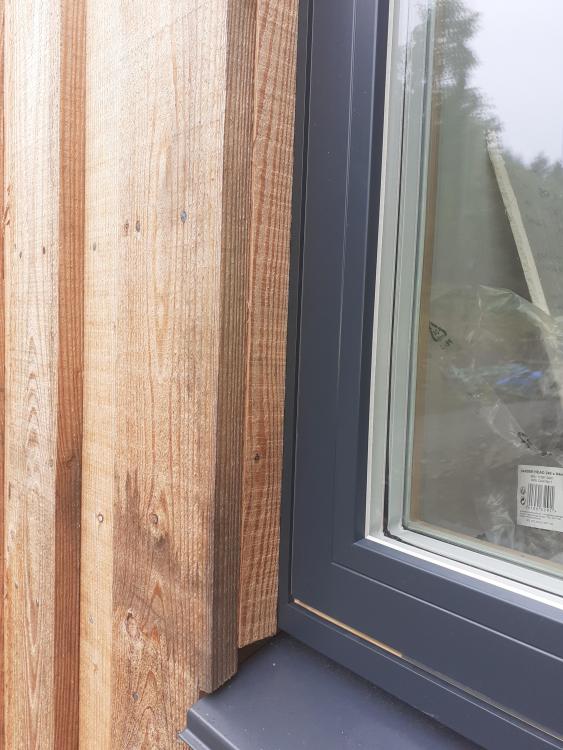
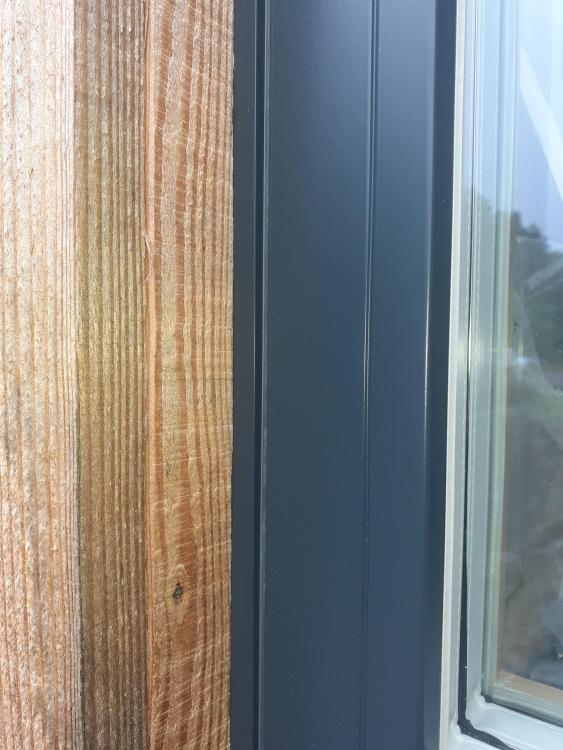
-
Web infill blocking for I Joists for load bearing points
jamieled replied to davidc's topic in Timber Frame
James Jones have a good technical guide which answers this, available somewhere online as a pdf or from them in hard copy. From memory single JJI's were spec'd with osb as additional infill, doubles (for cripple studs etc) specified solid timber. -
Less than 10%. We are limited by dno export capacity to 3.64kw. The small increase pvgis showed in winter by altering the panel angle still amounted to bugger all in an absolute sense.
-
Google Pvgis. Stick in your location and you can play with the angles and aspect and it will tell you what you are likely to get on average. I didn't see the point in trying to improve our winter generation as the improvement was minimal.
-
I'd generally avoid making decisions based on what it does to the SAP rating unless your financing is dependent on it. As has been discussed elsewhere on here, SAP has some flaws in low energy housing. The only benefit you mentioned in using gas is the potentially lower running cost, but even that is only based on current prices and you can't guarantee it would continue. Like everyone on here, we've made many decisions based on what's important to us, rather than trying to cost-benefit everything to death. Assuming your house is fairly well insulated I'd imagine your all electric costs would be pretty low in an absolute sense ? If that's the case, I'd not be considering gas.
-
@scottishjohn similar to what Peter mentioned, although they're not very common, have you considered a well? The groundwater head is clearly pretty high in places if you have springs and now would be the time to find out as it the groundwater head should be approaching its lower levels.
-
You need to clearly distinguish between what insurance cover they hold and what liability the contract holds them to. They are two different things. Most engineers will try and limit their liability (their insurers require them to do so). So for example they may hold PI insurance for £10m, but limit their liability to £2m. With PI, the liability is usually limited to whatever the contract states (or you agree) - I believe that if it is not stated, it is essentially unlimited.
-
As the LA BC will be reliant on the SER for structural design and sign off, I can see how it would work if you get the building warrant under way now. I think this happened with our application although there was only a week or two between architect submitted drawings and engineering design. It's likely there will be a few details to iron out between BC and the architect and the back and forth of that can take time, so I can definitely see some benefit in getting the ball rolling now. Clearly you won't get a warrant until they are in receipt of everything, but from the BC perspective, all they will need to do is tick a box saying SER certificate received and log the drawings (i.e. no checking of design details). In the warrant application you will need to state the certifier details. I think the thing that would worry me the most is the volume of work your SE has. Even if you do this, surely there is a bit of a risk they take some time to do the work?
-
@Miek quick follow up to this. I spent ages adjusting the blower location and air distribution in vain, trying to get the backpressure within the required limits. Turns out the gauge I bought from WTE is a bit rubbish, so if you end up with a similar problem don't assume it's the treatment tank setup.
-
Sewage Treatment plant noisy
jamieled replied to DannyEvs's topic in General Self Build & DIY Discussion
Just a quick follow up in case anyone else has the same problem. I originally bought a pressure gauge off WTE (the vortex supplier) which turned out to be duff! The backpressure is fine when read with a working gauge. -
@scottishjohn In Scotland you are generally required to submit a 'private water supply assessment' with your planning app. If you don't then they will often put a condition on your planning that you provide one prior to construction work commencing. They are looking for evidence of both quantity and quality for a supply. The requirement to do this does seem to vary a bit between local authorities. This website: https://dwqr.scot/private-supply/technical-information/physical-and-chemical-properties/ Provides the relevant info on the limits for certain parameters - colour, turbidity, iron, pH etc. If you need to get the water tested then there are private labs that can do it, but I found Scottish Water the most economical and easy to deal with. You are generally correct that upstream landowners have a responsibility (in law) not to interfere with downstream users water supplies. This would also apply to a spring. In practice this can get a bit messy and I have been involved in a few jobs over the years with arguments between landowners and supply owners.
-
I was speaking to a plumber about the oil-ashp hybrids the other day. Apparently the grant ones figure out what the most financially optimal source is to use based on heat pump CoP and delivered oil/electric price. They only use one or the other source at any one time. Other hybrids might work differently though.
- 23 replies
-
- 2
-

-

-
- heating system
- heating
- (and 3 more)
-
A Energy Rated unvented cylinder
jamieled replied to Robert Clark's topic in Boilers & Hot Water Tanks
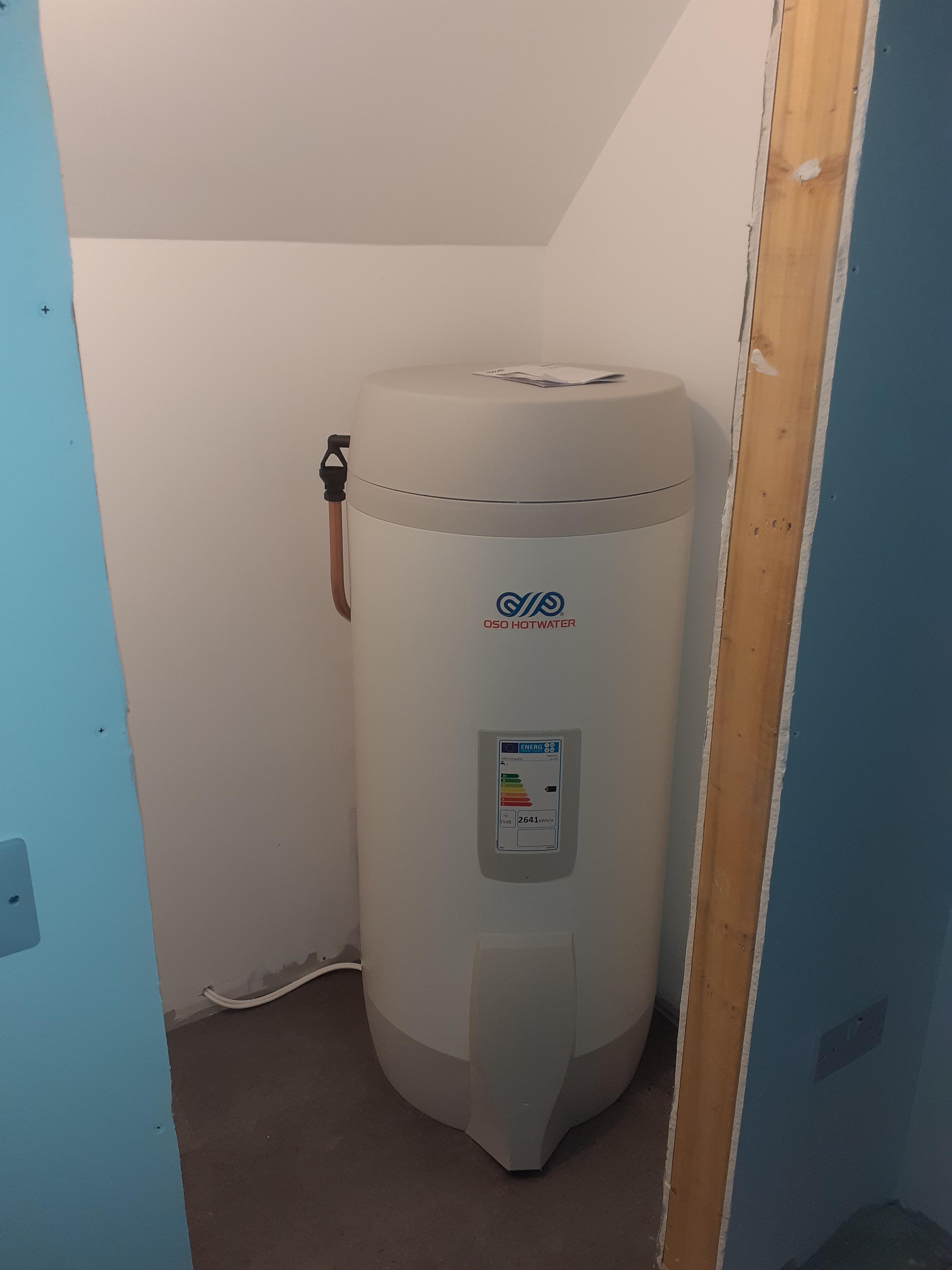
I would agree with this. We have just installed an oso cylinder and the only bit of it that feels warm (with water at 65) is the hot water pipe coming out the back. The cylinder itself doesn't feel much above room temp.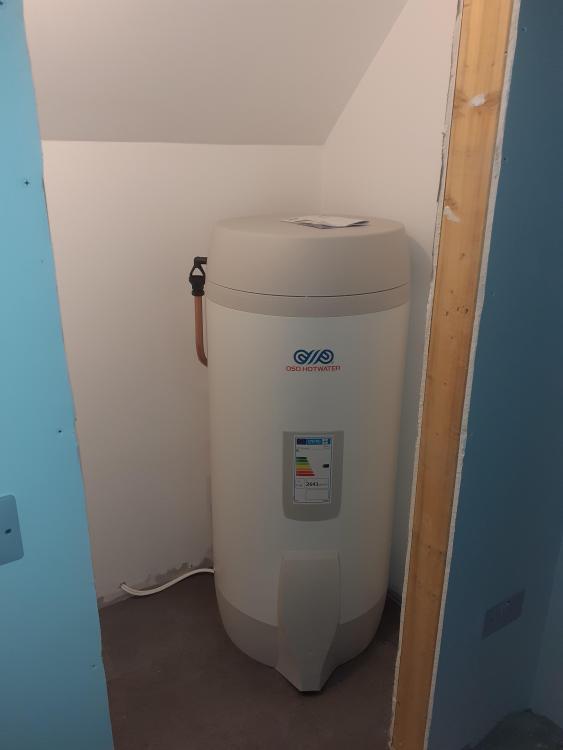
-
Sewage Treatment plant noisy
jamieled replied to DannyEvs's topic in General Self Build & DIY Discussion
I've read this thread with interest and am dealing with a related problem so I thought I'd keep it in the same place. I wonder if anyone else can advise from experience. I'm commissioning a vortex treatment plant, with the air blower housing external to the tank. The manufacturers (WTE) require you to take a backpressure reading in the airline to validate the air pump warranty. In my case the pressure reading should be no more than 200mbar, which is the stated operating pressure of the pump. No matter what I do, I cannot get an air pressure reading close to this (best I can get is about 280mbar). WTE tell you to move the blower housing closer to the tank if the pressure reading is high, but as it stands I can't move it any closer! I've also been adjusting the air movement within the tank but that doesn't seem to get me close either. Has anyone else had trouble getting a reasonable pressure reading, were there any tricks to lowering the backpressure? Or am I over-worrying about this? cheers in advance.