
Nickfromwales
-
Posts
30327 -
Joined
-
Last visited
-
Days Won
296
Everything posted by Nickfromwales
-
I guess the question really is do you EVER see higher static pressure than the 3.1 bar ? To gauge this, I'd fit a gauge and a NRV so whatever the peak network pressure is will be captured on the gauge. Have you already done a 24 or 48 hour constant connection to get this result ? Network ( static ) pressure rises and falls with local area consumption, so, for eg, when surveying for an accumulator the best practice is to see how high the overnight charge will get to before sizing and quoting.
-

Help me deal with a neighbour!
Nickfromwales replied to hmpmarketing's topic in General Self Build & DIY Discussion
I only just realised that the parking space had been drawn on the pavement !! Ask the highways to come and go over it with black tar / paint and end this madness. Edit to add : As @JSHarris has said, I'd report it as graffiti and ask that the offending paint be removed as part of their own maintenance. "If you don't ask" eh? -
Design Help - Plumber not helping
Nickfromwales replied to DeeJunFan's topic in Other Heating Systems
Make sure that your sparky provisions for the immersions at each cylinder if this sounds like a route you'll be going down -
Design Help - Plumber not helping
Nickfromwales replied to DeeJunFan's topic in Other Heating Systems
Forgive me if we repeat things here but I'm pillar to post at the mo Why aren't you connecting the ashp to the DHW cylinder? That should be your back up, not the instant water heater IMO. Reasons are many. You've got a system there already ( ashp run at 55oC ) to provide DHW direct to the UVC so why pay for another bit of kit ( instant ) ? The instant would give a choke point from the 22mm outlet of the UVC, thus restricting your DHW flow rate year round when you may never even use it. They're almost all 15mm, unless it's a commercial unit, so if there was an instant going in I'd only ever put it inline to one bathroom as failsafe. Complexity / cost etc. Id probably go 300l for both cylinders. 300l is a good size to store lots of low grade preheat temp water for uplift. That's preferential as it'll do around 35oC of the ~42oC you'll need for average bathing. The UVC will fill the gap there according to demand. A thermostatic bath filler is your friend here so no wasted hot water goes into the bath to then be cooled down with cold. If your expected DHW demand is to rise ( little ones getting bigger etc ) then I'd upsize the preheat tank to 500l now as its not much more money and it's the cylinder which will have the lowest latent loss, due to the low set temp. 300l is also a good size for the Pv driven UVC, as you want to harvest and store as much of that input as possible, so I'd go no less than 250l but 300l better IMO. Id very much reconsider the inline instant water heater as I think it'll end up redundant. You have Pv and grid driven DHW, plus you could put additional immersions ( x2 ) in the preheat / Ufh TS so you could run without the ashp and still have grid electric supplying both UFH and DHW ( admittedly with far less response but still you'd not be left with nowt ). Remeber that at these sizes the cylinders will both come with dual 3 kW immersions, so you can pump 6kw directly into each if the ? hits the fan. Edited to add : cylinder sizing is according to DHW usage so they could be downsized after a discussion on those specifics. . -
Assessing the quality of a laid tile floor
Nickfromwales replied to Fallingditch's topic in Floor Tiles & Tiling
Stuck at home with work and family commitments at mo sorry, and I've had plenty of offers too ? Self employed = all, or bugger all ? Lessons to be learned here folks, just a shame it's happened really. best to explain to your chosen trades at the outset that your looking for a quality job or no dollars will be changing hands at the end. Any sign of a quivering lip, move onto the next choice. -
Assessing the quality of a laid tile floor
Nickfromwales replied to Fallingditch's topic in Floor Tiles & Tiling
I've been tiling for a bit over 23 years, and assure you that you can easily take as much as 5mm undulation out without having to start billing more, and most of that tiling is at most 5mm or less out in the overall lay. The kickers ( corners proud / sunken ) on this job are all avoidable in the regular expected price of laying. Fwiw, I can't see anywhere where this floor required 20mm of making up. For a job like this where the focal point is the sliding door, that's where you should start laying from. That way you can get that main focal line nice and flat using the least amount of adhesive and then work back into the room, course at a time. Fyi for a slab that's only got 3-5mm undulation leveller will not improve it, it'll actually just cost money and most likely make it worse, as the leveller will just sit on the high points and make them higher as at that thickness the leveller sticks and doesn't completely run away, like it would if it were thin like water . -
Assessing the quality of a laid tile floor
Nickfromwales replied to Fallingditch's topic in Floor Tiles & Tiling
What your saying seems to contradict itself. Laying tiles with an adhesive gives you between 4 and 8mm of bed to play with. I can tile over unfinished, unlevelled bare concrete and get it perfectly flat, it just uses more adhesive and puts the rate up, but if the job needs doing properly you state this before proceeding ( as you'd need to go and buy more adhesive too before starting ). Following the floor is one thing, but kickers every other tile??? NOPE. Sorry to disagree but would you get any work if you stated to your customer "I'm happy to lay on that for £20 a square metre but it'll look like I did it when I was pissed. That be ok?" You'd be out of the door with my foot up your arse if you said that to me. . There is no defence for this guy, his work is just bad. I bet he couldn't tile a pool table, so no sale, sorry. Time to stop making excuses for him and to get the worst of it taken up and redone or bin the lot. The PM needs to step up and take the blame for not stopping him half way through, and contribute towards the renewals as it was their recommendation and even Stevie Wonder could have seen where this was going. -
Perimeter insulation can be 25mm kingspan / other rigid insulation, but for a thin dry screed you'll need to have some other form of expansion skirting ( applied directly in front of the 25mm upstand ). Sonething like this is what I use. Shop around for best price . Liquid screed has a lot of 'after lay' preparation and mechanical cleaning that's needs doing to it before ANYTHING will stick to it ( including primers ). I'd stick with the dry screed TBH, but there are liquid screeds of varying performance based on how much you want to spend. With a <70mm dry screed you need to ensure that you observe expansion gaps at the door thresholds so talk to both the screed layer and Ufh installer accordingly about fitting some of these type of things.
-
Assessing the quality of a laid tile floor
Nickfromwales replied to Fallingditch's topic in Floor Tiles & Tiling
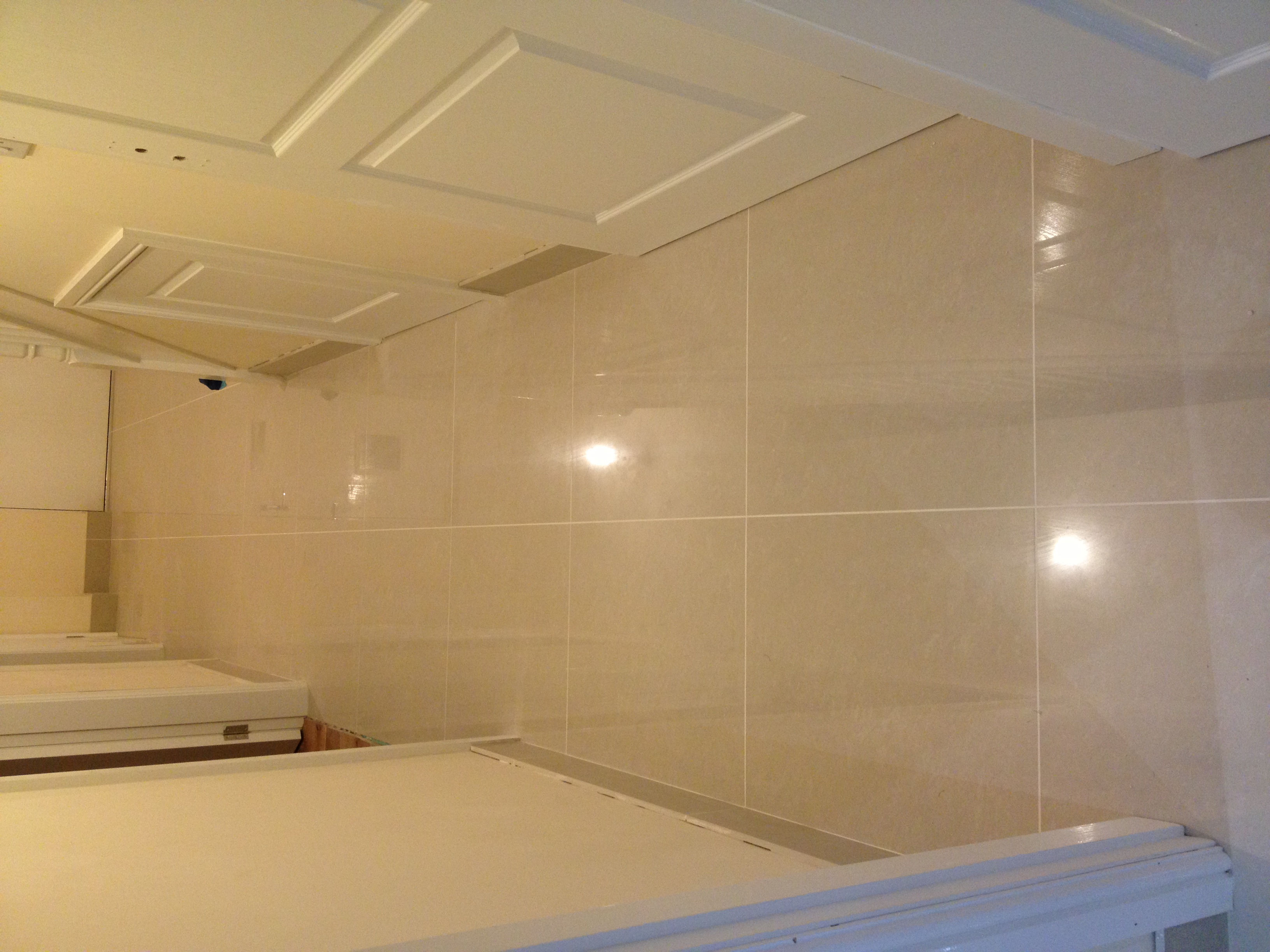
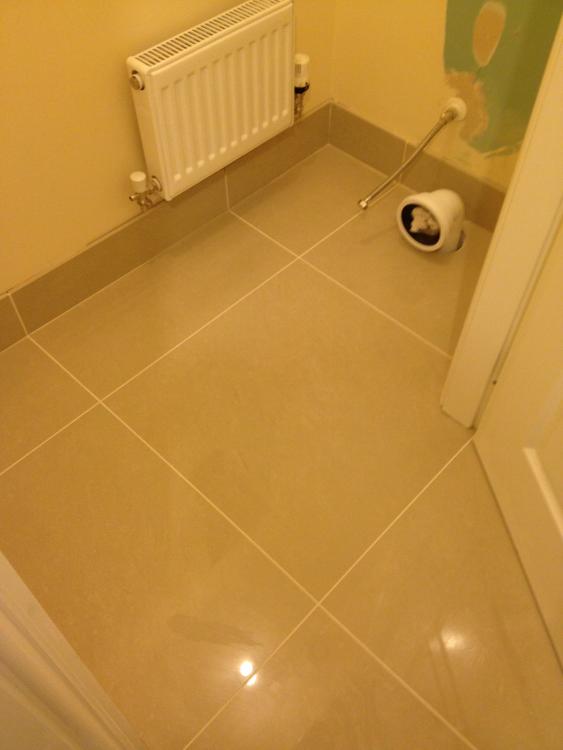
Absolute nonsense. A tiler is bloody well 1000% responsible for levelling and laying a flat floor, REGARDLESS of the state of the slab. If the slab was that far out, which I doubt it was, then the tiler should have ascertained that BEFORE OPENING A BAG OF ADHESIVE !!! At that point they should have advised that the slab needs feathering with latex and should have done so prior to laying Ill bet my left nut that this guy has laid the tiles worse than the slab was in the first place. The skirting / up stands should have all the vertical grout lines lined up with the grout lines in the floor, unless it's a different tile. This was over my mates brand new liquid screeded floor in his Persimmon home, and in the kitchen I had to use about 9 bags of self leveller . Have a butchers at that lot. 600mm x 600mm rectified edge porcelain, a rough as toast screed, and you could play snooker on it after I left. There is no excuse.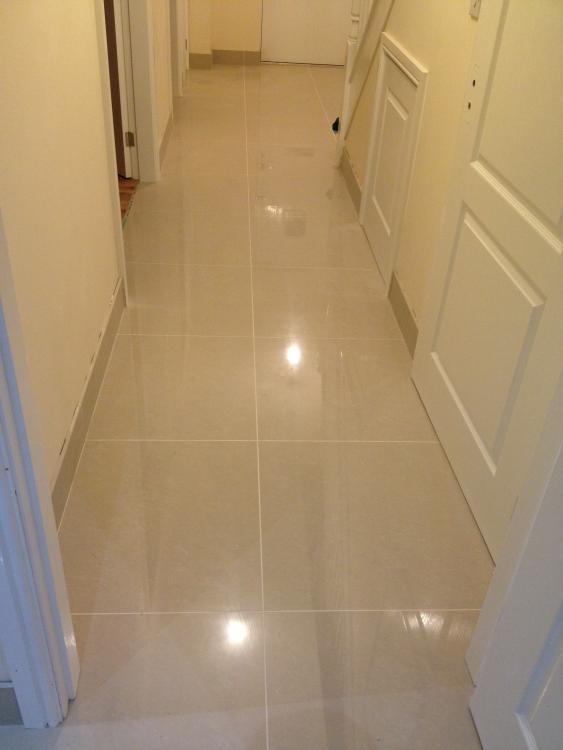
-
Bath Surround / Boxing In, and concealed pipework
Nickfromwales replied to Onoff's topic in Bathrooms, Ensuites & Wetrooms
I've never used the aqua panel tbh, but it's deffo a more robust solution. I'd prob be inclined to use pink grip between the AP and the stud & WC frame to ensure that everything is uniform and secured well. I used self cutting countersunk machine screws on the last ones to secure the PB to the frame, but only where the pan meets the frame. Prob OTT, but I'm always a bit paranoid when doing the wall mounted WC's. You'll know what I mean when you come to tighten the pan back -
The roof makes for a good RWH setup.
-
Bath Surround / Boxing In, and concealed pipework
Nickfromwales replied to Onoff's topic in Bathrooms, Ensuites & Wetrooms
No! Thatll make the rubber slip and cause it to leak. No compound or tape. -
Bath Surround / Boxing In, and concealed pipework
Nickfromwales replied to Onoff's topic in Bathrooms, Ensuites & Wetrooms
+1. A bit more than hand tight is usually ample. Say 1/2 turn or so. Over tightening is bad for rubber washers as it leaves them no elasticity ? -
Assessing the quality of a laid tile floor
Nickfromwales replied to Fallingditch's topic in Floor Tiles & Tiling
I went to tile a bathroom with Wickes brand tiles. I got about a box and a half into laying when I realised they differed in size almost per tile. As much as 1.5mm per tile. I removed the tiles and washed the adhesive off the back of them and told the customer that I was not going to fit them as it would look like I was pissed when doing so. Dont know if she returned them but I never got called back. Likelihood is that she nipped down the pub, got someone who WAS pissed, gave him £60 and got the same tiles laid. Not on my shift sorry. I won't have a bad product make me look like a chump, so let's see some pics and see what the problems are ? . -
Assessing the quality of a laid tile floor
Nickfromwales replied to Fallingditch's topic in Floor Tiles & Tiling
Is this onto a new slab? Get a nice STRAIGHT length of 4x2 around 8' long and sit it across various areas of the floor. That'll show any 'kickers' and undulations in the laid floor. What exactly has you worried? -
How to find a slow leak?
Nickfromwales replied to Fallingditch's topic in Central Heating (Radiators)
Ok, for a 'spanner only' ( no soldering needed ) modification......... You'll want one of these ( compression 22mm x 3/4" centre tee ) One of these ( 22mm x 3/4" bent flexi ) and One of these ( EV mounting bracket and wrap around clamp ) if you don't already have one. Cut a short piece of garden hose and connect it to the heating pipework via the drain off cock ( DOC ) next to the PRV pump. Put the hose into the pump and open the DOC to a rate that the pump can handle and use that to evacuate the water from the heating circuit. Open all of the rad air bleed nipples to allow the remainder to drain, starting at the top of the house and work down. When dry, go back around and close all the bleed nipples, ( making sure not to miss one ). Strip the EV etc out of the attic, and cut / remove / cap the pipework and redundant equipment accordingly. Cut into the 22mm return pipework under / to the side / or above the boiler where most convenient. Fit the compression tee linked above. Fit the flexi to the EV, hand tight, and work out where the EV will fit and mount it so the flexi reaches the tee without being stressed. When happy with the dry fit, strip the flexi back off and apply 20 turns of PTFE tape the male thread and tighten it into the tee. The other end of the flexi should have a rubber seal so only needs to go a bit over hand tight. Do not over tighten. Check the secondary EV for .75 - 1 bar pre charge BEFORE refilling the system. Fill to 1.5 bar and test for leaks. When satisfied that all is A1 and holding tight, run the heating for an hour to get everything nice and warm and recheck. If happy, re-treat with 2x inhibitor and go open a beer ??. edited to add : with a house and system this size, it may be a good idea to cut a pair of 22mm gate valves into the flow and return to isolate the heating system from the boiler room. That way, any further maintence can be done without draining the whole system and without losing the inhibitor. -
Discount Offers of the Week
Nickfromwales replied to Ferdinand's topic in General Self Build & DIY Discussion
@TerryE....suitable for the BH backup we need ? -
Help me with my little penetrations, please.
Nickfromwales replied to ToughButterCup's topic in General Structural Issues
Have you a plan of what's coming through and where? Ground floor WC off a rising stack or straight into the floor? That one needs some real thought if the latter. -
It's quite relative so I'd not worry about hijacking. We set a pretty bad example for digressions here
-
Sorry @Temp / both, I should have been clearer. Assuming the slab is laid, I was referring to cuts in the tiles at the door thresholds and putting a coloured silicone / caulk in to allow some separation / movement between tiled 'areas'.
-
??
-
Do you have a City Plumbing? This recommendation is for an ideal world btw understandable that you need to get on .
-
Flushing that laco residue out is paramount as it's horrible stuff. You REALLY should get some Telux and try it. On new stuff it's brilliant and leaves very little residue.
-
I too have slung many of those....but not ONE off a 'sports' bag
-
A good solid unified slab then, so I'd second the motion for no decoupling . The only thing I'd do is a couple of expansion gaps at the door thresholds where there could be some movement. Its very hard to just promise someone that it'll be fine, so some caution is always extended, but the absolute truth is that you should get the tilers input also ASAP as it'll be their head on the block not ours. Afaic, if primed and laid with a good quality flexible tile adhesive, you should have no issues. I'd only be worried if you intended to have zones and only heat certain rooms at certain times, but that has been well discussed as an unwise way to use the system. Will you just run at one temp so the slab heats and cools 'as one'?