
Nickfromwales
-
Posts
31387 -
Joined
-
Last visited
-
Days Won
346
Everything posted by Nickfromwales
-

Cost of airtightness retrofit?
Nickfromwales replied to anonymous's topic in Energy Efficient & Sustainable Design Concepts
That means a attaining a very ( very ) good AT score? That would be sub 0.6ACH with 1.0 being quite admirable. -
Cost of airtightness retrofit?
Nickfromwales replied to anonymous's topic in Energy Efficient & Sustainable Design Concepts
If it’s an RS ( room sealed ) appliance, yes. Look to see if it’s a coaxial flue ( pipe in pipe ). -
110v versus 240v at start of project
Nickfromwales replied to Drellingore's topic in Tools & Equipment
Pausing is relatively cheap and bloody effective! Feel free to come back and stir the embers -
Typical architects stab lol. Shading will be a huge issue if they end up mounted that way...
-
Ducted insulated twin pipe - best supplier
Nickfromwales replied to HughF's topic in General Plumbing
I was expecting rows of digits etc. Ground averagely permeable, not 'water-logged'. So EPS box and pipes inside good as anything? Pre-insulated pipe would be north of £5k, was thinking home-made would halve the cost ( assuming trench dug either way, just dug a wee bit more to allow for the EPS is chicken-feed once there and at it ). -
Ducted insulated twin pipe - best supplier
Nickfromwales replied to HughF's topic in General Plumbing
OK. So, for a potential project I am considering what could be a good idea, or it could also be the 'other kind' of idea.... @SteamyTea / others, sharpen your best pencils please. I would like to install ~50m of 4x 25mm 'cores' pre-insulated pipe EXAMPLE in a trench of X depth ( assuming 750mm-1000mm atm ) carrying central heating flow and return and DHW + DHW/HRC. This would be to supply services to an single residential annex from a centralised, remote plant room. Assume bags of available heated water from a remote but local ~1000L buffer tank fed from a large oil boiler. No room in the annex for any kind of cylinder / tank etc, so ideally I wanted to pipe the ( already available ) significantly sized services via an umbilical aka district type arrangement as that seems the obvious route atm. I've ruled out a PHE due to the much higher flow temps that would be required to go a-la 'full district' setup; eg via a 2-pipe umbilical pipe arrangement + PHE for DHW, and the fact that the buffer would need to be heated all year round just to give the annex DHW. Summer ideally wants to see the oil boiler and its buffer tank hibernating, ergo the full district setup seems unsuitable / non-cost-effective. The large plant UVC will be kept hot 24/7/365 from an oil boiler + strategic electrical injection via immersion(s) on TOU + Solar PV excess being used to offset DHW running costs; standing losses of UVC plus losses from umbilical. ( 4kWp of existing solar, likely to be upscaled to 8 or 12 if 3ph becomes available ). Annex ( relatively small ) will be lived in all year round ( retired occupants ). Crappy retrofit UFH to GF and brand new convector rads FF. Old stone cottage with OK 2G doors / windows, it is what it is. Will be improved over time, I'm told. I will need to convey; CH flow and return - flow temp assume 65oC . DHW + HRC - 'flow' temp assume 55oC ( will be a fair bit higher in summer I expect, with the source UVC boosted by PV divert ). 30 year proposal / running costs to meet. Q; I am specifically after a bit of help understanding the expected heat losses from the umbilical insulated pipe, please. Options would be; stick with the pre-insulated pipe, burying it in the ground in a 300mm wrap of sharp sand, as is. stick with the pre-insulated pipe, boxing it ( 4 sides around ) inside an EPS 'trunking' ( 100mm thickness or more ) with subsequent air gaps foamed, eg to further reduce losses as best practicable. ditch the uber expensive pipe, do these runs in Hepworth aka Hep2o, insulate them manually with 25mm wall Armaflex, and box them inside 200mm thick EPS trunking + foam open to other better / more cost-effective methods etc lend of a scientific calculator plus simplified instructions for use........ Silence in the room please, the exam has now started. -
.......soaking up valuable pasty-munching time........ You like maths, so; You'll see me tag you elsewhere shortly .
-
New Velux triple glazed, frame condensation
Nickfromwales replied to Sparrowhawk's topic in Skylights & Roof Windows
Cheers, not noticed / considered that tbh. Another good idea to add to the arsenal Give yourself the rest of the day off, with full pay. -
Why? Spend the money on beer or whatever other happiness-inducing activity puts a smile on your face!!!
-
New Velux triple glazed, frame condensation
Nickfromwales replied to Sparrowhawk's topic in Skylights & Roof Windows
Not while I've got a hole in my you-know-what......🤢🤮 They are horrible things, block open with lint / dust etc, and flap back and forth on windy days sounding like you've got bobby-knockers in your bathroom. They also do not stop warm air being 'pulsed' out of the room every time there's positive air being blown into the house. "That kind of money" will save you £££ in heating costs. Just ask if you can pay a pound a week Stop quibbling, get yourself down to TLC / other, and go make the magic happen. Don't forget the timer module is a separate item so you'll need that too ( when you go and buy one.... ) -
Preping bathroom floor for tiling?
Nickfromwales replied to Moonshine's topic in Floor Tiles & Tiling
Cement board way too brittle and a pig to install as it needs to be pilot drilled, countersunk, and bonded down with adhesive then screwed. Completely overkill. I have only ever laid cement board under tiles when installing / creating bespoke wetroom shower floors from scratch. Yes, correct size of screw is assumed. I use 20mm screws for 3.6mm ( aka 4mm ) ply, and 25mm screws for 6mm ply. You need to be putting all of your weight on the impact drill when screwing these in, or they'll just hit the ply and spin out ( 20mm screw vs 6mm ply ), so go with 25mm screws as they'll still be 3mm shy of the pipes when the heads are flushed with the top of the ply. Set the drill speed a bit slower to avoid any "whoops" moments Less haste, more speed etc etc. -
New Velux triple glazed, frame condensation
Nickfromwales replied to Sparrowhawk's topic in Skylights & Roof Windows
I fitted an Icon fan in mine a few months back, and it's brilliant. It has an iris which opens a few seconds after switch on, and closes relatively tightly after it powers down. Has stopped 95% or more unwanted ventilation heat losses from the bathroom which now stays notably warmer since installation. Best money I've spent in a while. It's not the quietest fan in the world, but none of these are. I bought a second one as I plan on taking a multi-tool to ( both of ) these to remove the local fans, and then having just the remaining shroud and iris in the ceiling. I will then have an inline fan remotely mounted in the ceiling void above for quiet / silent operation. If it goes well, I will install both in the same bathroom so I end up with 2x iris ( original one plus experimental one, if it comes around after the anesthetic ) teed together for better distribution / improved 'coverage' for absolute removal of damp / moisture residual from using my kick-ass rainfall shower in a not huge bathroom. There are square ones on the market with linear 'slats' but they're utter shart and do not close tightly, so don't confuse those cheap-o units with the Icon, as they're incomparable. Get that one changed out and you'll be super happy with the results. May stop a lot of unwanted cold air influx and lower the issue with the window. -
Independent ( and impartial ) all the way These people survive on the ones who just say "OK", with one client having paid north of £100k for plumbing in 6 bathrooms, 1 kitchen and 1 utility....... I'd have done it for £99k ( FFS ). That price didn't include connecting to the hot water cylinder, no hot return pump / controls, and they also didn't insulate the hots / hot returns so the client inherited a free constant 6kW of UFH ( unwanted space heating ) from the HRC, ergo they then could not use it and it's been switched off since ( Passivhaus ).
-
Preping bathroom floor for tiling?
Nickfromwales replied to Moonshine's topic in Floor Tiles & Tiling
6mm plywood, glued and screwed at 120mm centres max. Dampen the ply with a 50/50 mix ( primer / water ) immediately before applying the adhesive. Assuming the deck is already glued and screwed with at least 5 screws per joist per board? And zero movement? I use Ultra or Bal for primers and adhesives. Mapei is also very good. -
Horizontal UVC for ASHP??
Nickfromwales replied to lakelandfolk's topic in Air Source Heat Pumps (ASHP)
Don't forget you'd be best off installing a pump across the tank connections to get it to force-stratify during the heating cycle. -
Jesus...... "Should have gone to Specsavers" moment. Thanks, lol. I would have expected to have seen them 'apex-ed' for East - West ( so they were a bit easier on the eye ), and help with the shading issues.
-
Yup, especially as I haven't seen any solar PV panels denoted on the drawing.........
-
Moot, as the grid would cover that / other 'spike(s)', batteries are for the 12 months use not per second @Nytram I've worked on 2 MBC TF houses in Oxon ( Gravenhill and Headington ) and I speak very highly of them always. Turnkey slab / frame from the same company is a massive stress relief, but also reduces build timelines as the frame typically goes into production the same time your founds are due to start. Other spilt arrangements may see the frame only going into production when the slab can be accurately measured, then you've a huge delay where there's zero activity on site. On a previous project they were 31 days total duration from a hole in the ground to a weathertight frame ( less slates / external cladding / doors / windows ( always "by other" with MBC so they can be in and out quickly )). Have had less 'fluid' experiences when being involved with other TF projects..... The house looks great; get your heads down and crack on!
-
This needs proper commissioning. Get an OFTEC reg'd installer out and stop messing about with it yourself?
-
Self install, wise or otherwise ?
Nickfromwales replied to Post and beam's topic in Air Source Heat Pumps (ASHP)
Ouch. As @PeterW says "this" supplier loves to install one pump to x number of manifolds. The client they left without the final ( 2nd ) fix ( that I then went to in the 11th hour to make everything work ) had the same type of spec; 13 stats in a single-storey ZEB standard Certified Passivhaus ( ) and a load of satellite manifolds off one pump. I told the client they wouldn't get the flow, the designer insisted they would, so I hooked it up temporarily to show them which person would be correct......... Cue your's truly then completing the install, trying to adapt pipework / manifolds etc after the house had been boarded and skimmed, and what a mess. Client was very upset as "they" wouldn't get involved again. -
From a cost / simplicity PoV, you could easily and quickly install a high-flow heatstore combi such as a Vaillant 938. Deeper than a regular combi but DHW output is very good as it has 2x 7.5L tanks which store hot water at high temp to blend into the outgoing, instantaneously produced, DHW flow. As you say, no good for solar but with space at such a low premium maybe electrical batteries vs a heat battery would be a better investment. There's only so much DHW you can use all summer at the end of the day! The SA would fit under a worktop if you get the model 3rd biggest in the range, but they're just eye-wateringly expensive these days. Do you have PV atm?
-
What I specify. Very good kit for the money.
-
MVHR - ducts to unit - fall?
Nickfromwales replied to Glenn's topic in Mechanical Ventilation with Heat Recovery (MVHR)
No need to consider anything for the distribution ductwork, as that will just get damp ( moisture ) and then dry out again as the air keeps flowing after the shower etc has been turned off. If the MVHR unit supply air vents are on a gable with driving rain then it may be a good idea to have the first connected pipe rising slightly, but I've not ever really given this detail any further thoughts on previous installs, and I am still in regular contact with the clients. I'd say don't worry, but make sure all joints are made robustly / duct supported well etc, and use rigid insulated ducting to atmosphere. I'd also avoid the fleece type attenuators and use metal 'box' attenuators where possible ( if you are going to install something for sound / noise reduction ). -
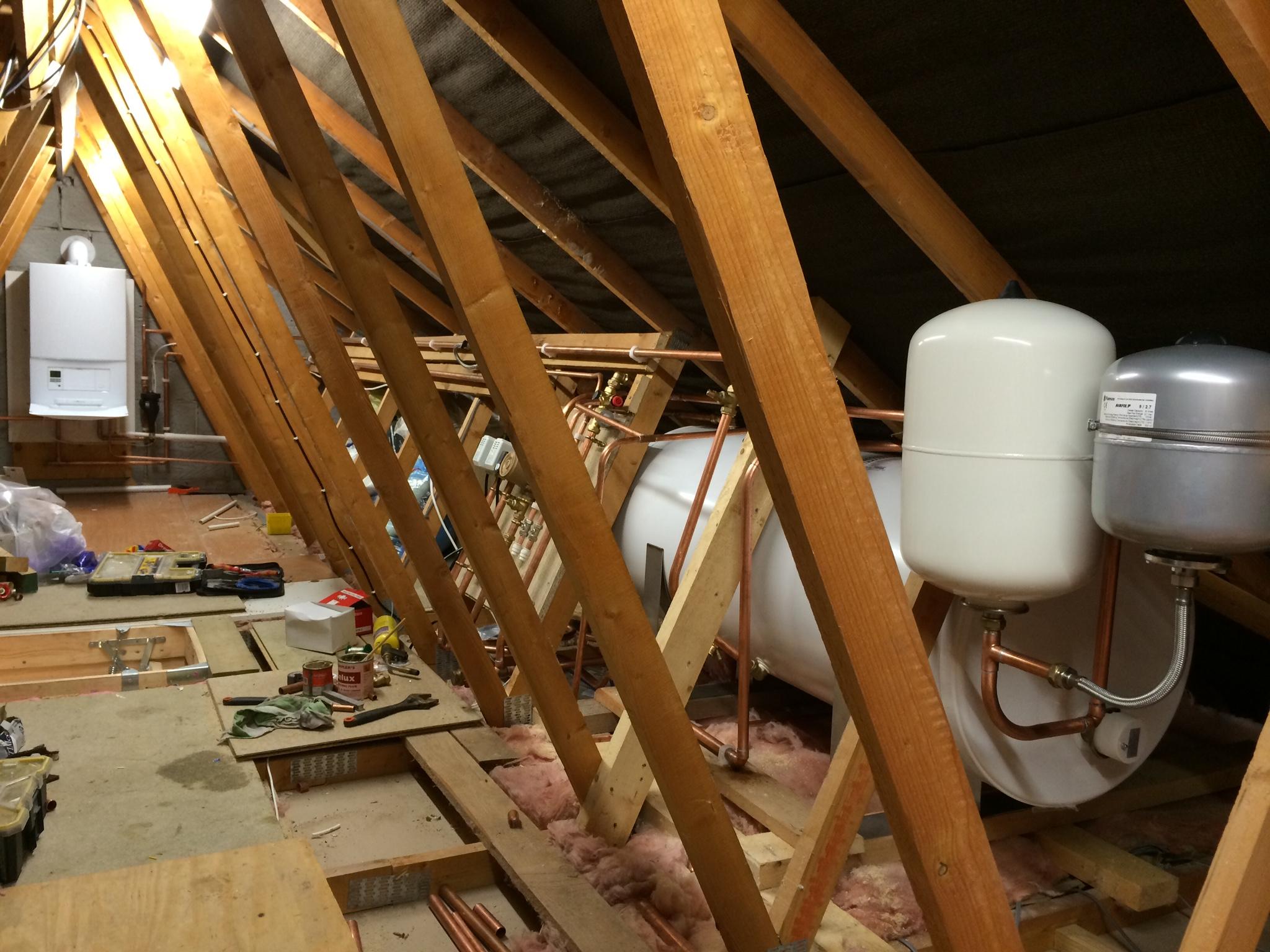
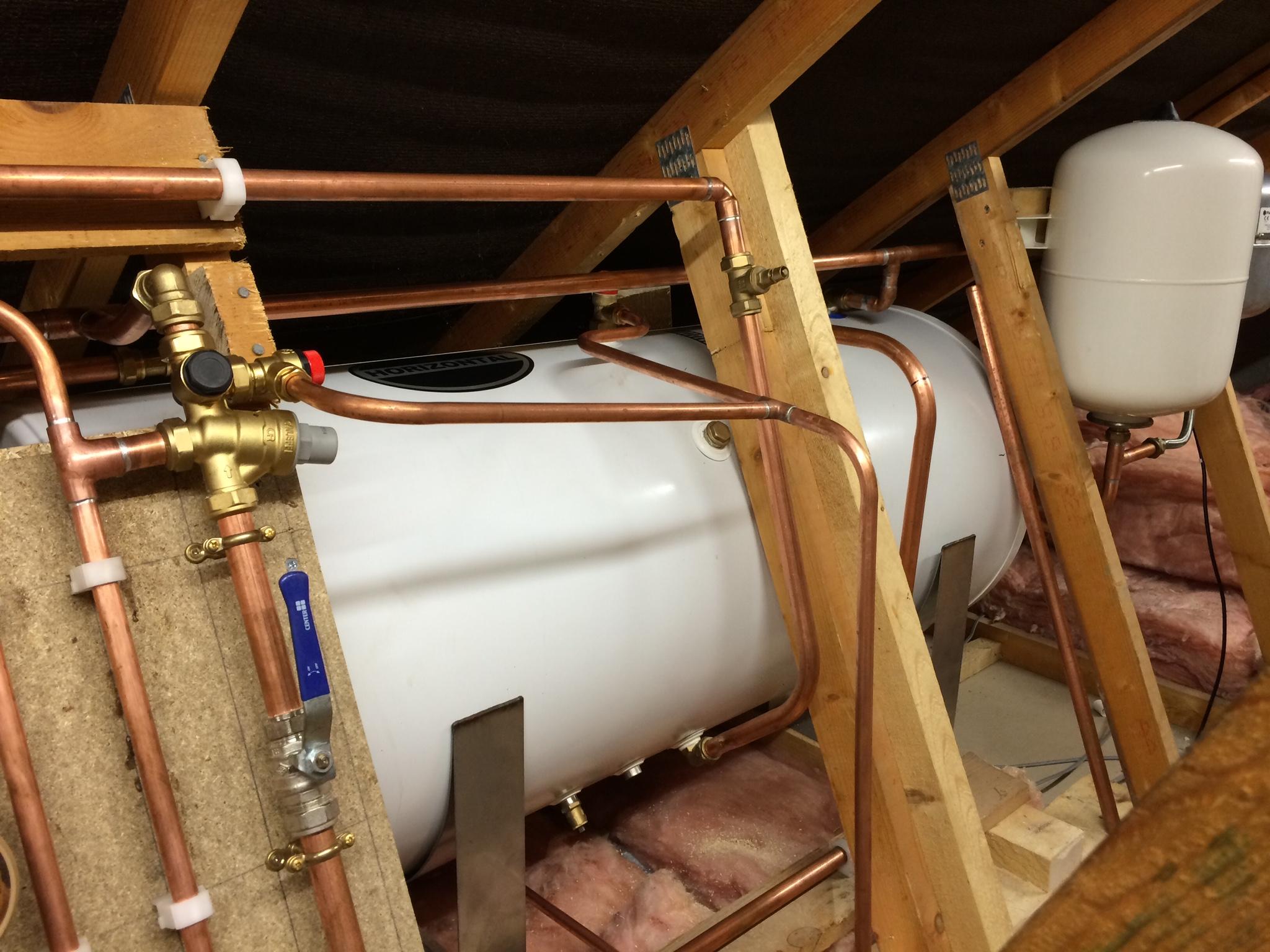
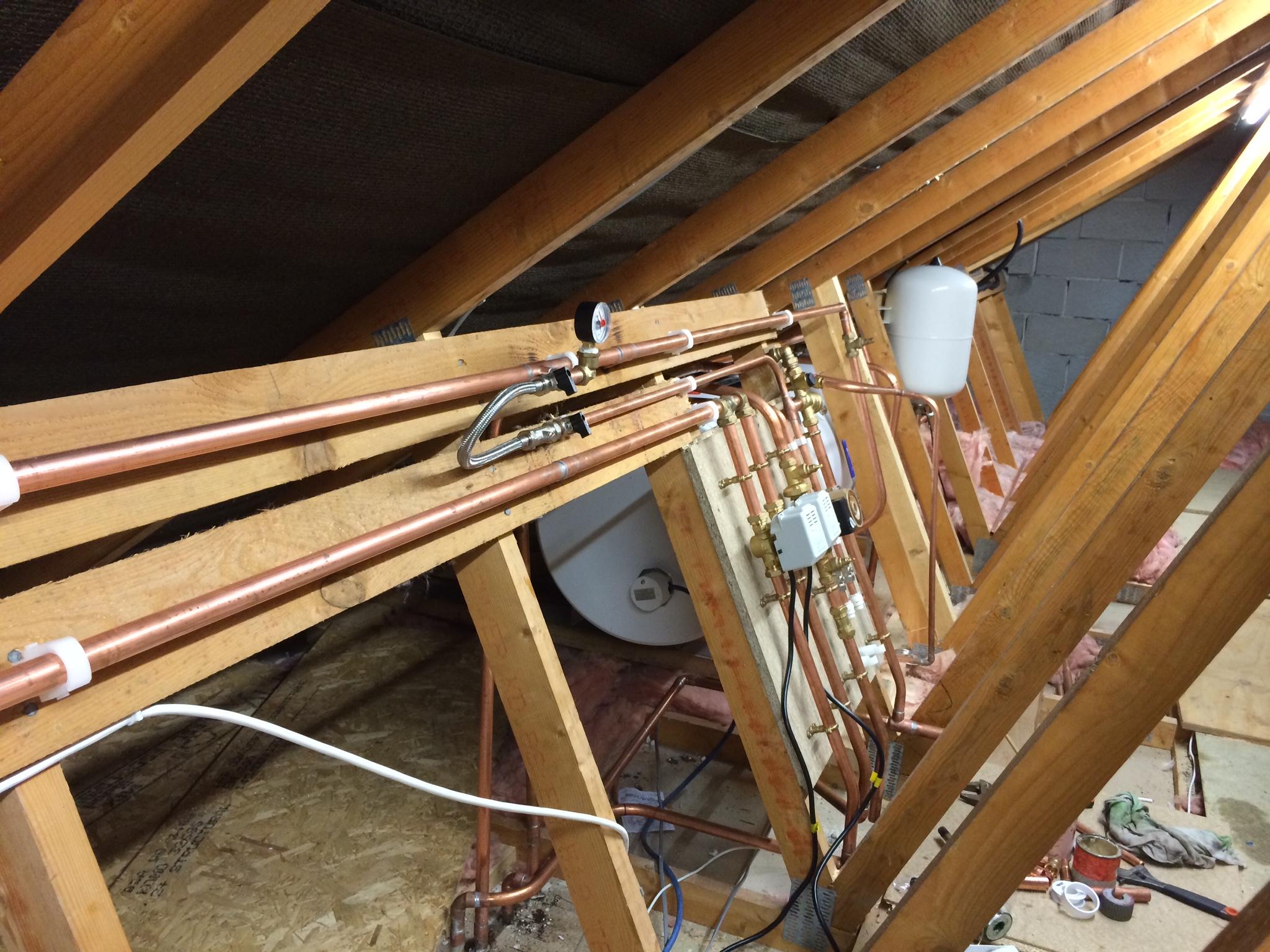
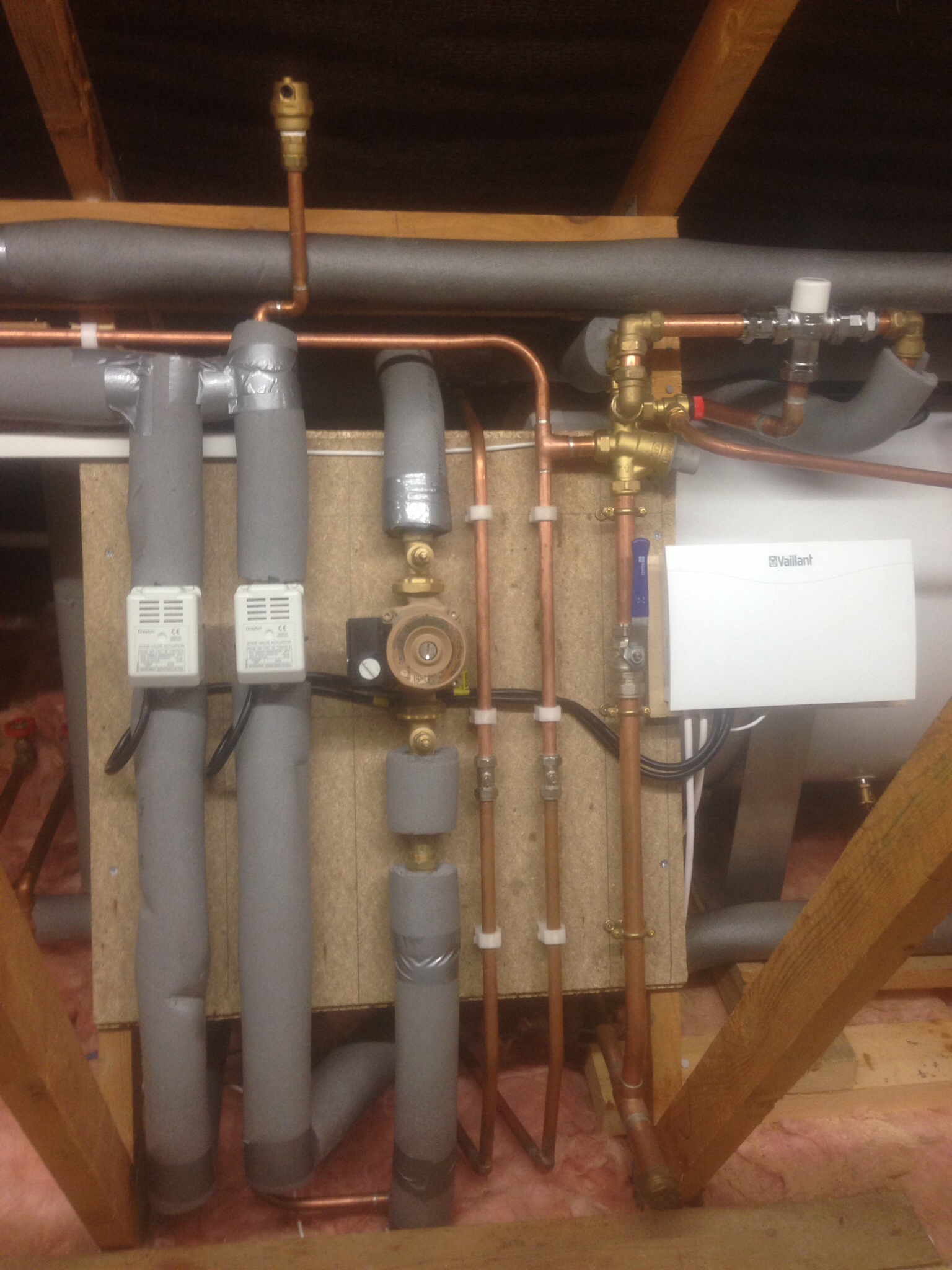
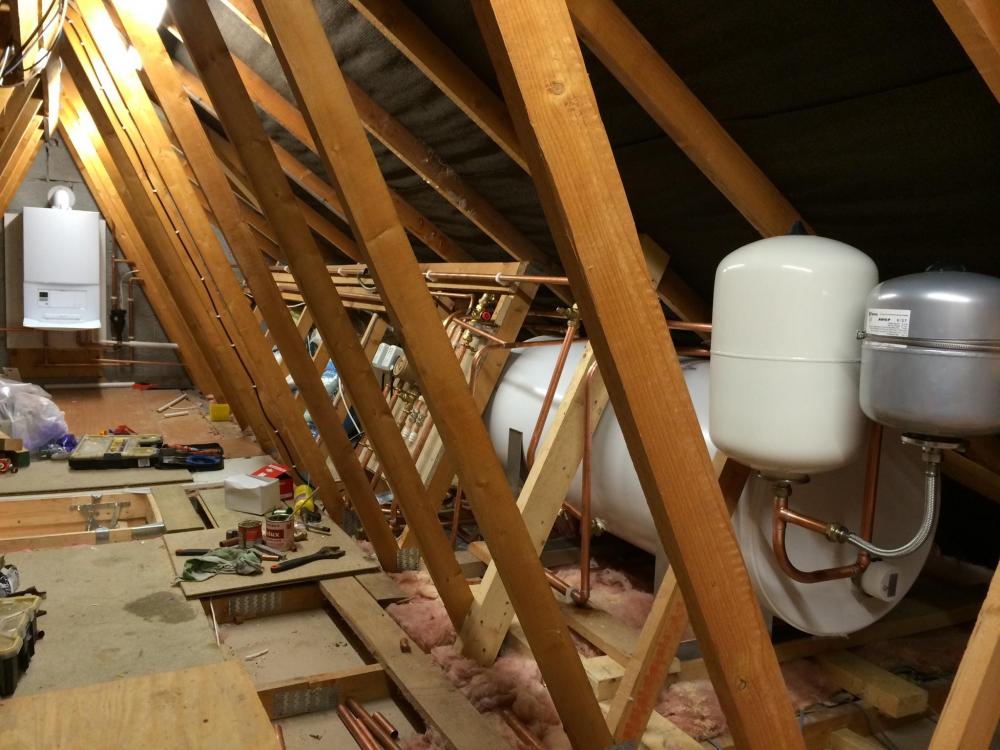
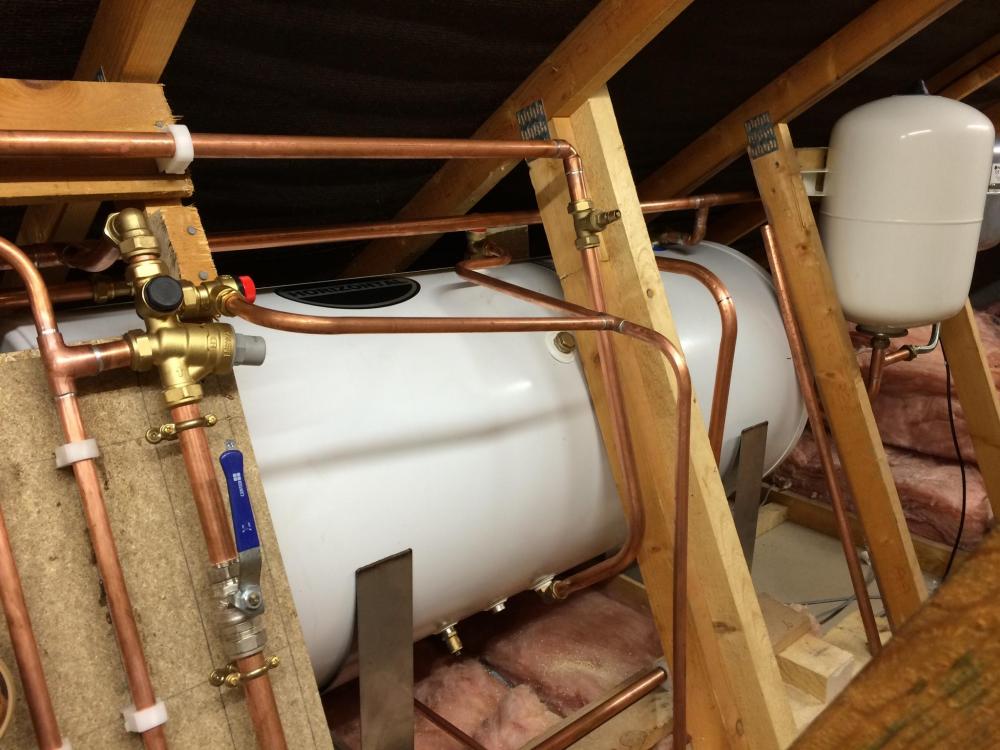
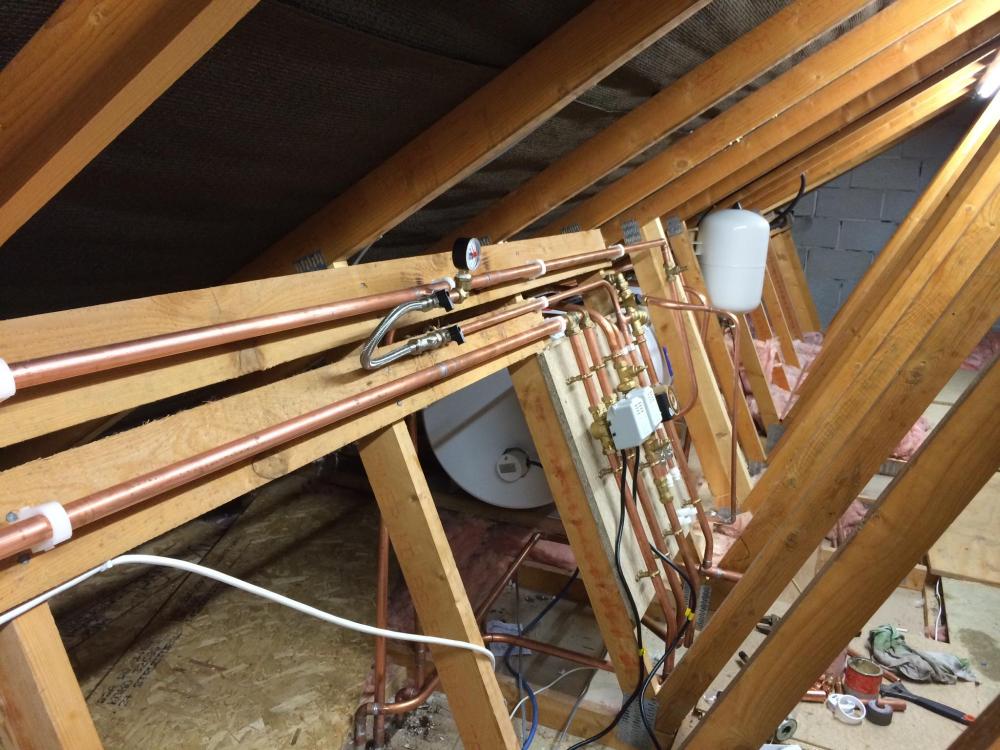
Do you have room for a horizontal unvented cylinder in an eave space?
-
Welcome aboard