
Nickfromwales
-
Posts
31372 -
Joined
-
Last visited
-
Days Won
345
Everything posted by Nickfromwales
-

Does my beam need touching up?
Nickfromwales replied to carson321's topic in RSJs, Lintels & Steelwork
Galvanising is usually only requisite when bridging the cavity or the toe of the metal is exposed to atmosphere, like a Catnic lintel is. OTT if it’s an internal beam on the inner leaf. Red oxide is plenty, so slap a load on with a 4” fluffy roller if it’ll make you sleep better 😉. -
Disposing of cementitious grout (liquid)
Nickfromwales replied to Great_scot_selfbuild's topic in General Construction Issues
Wash it into a very weak solution with a lot of fresh water, and then dump it onto waste area (side of footings / unfinished hard standing etc) and it'll just dry out and turn to dust. -
Respectfully….. I think we need to focus on when the Buildhub massive can attend for house-warming drinks. I’ll man the BBQ, so one less thing for you to worry about I’m all about giving.
-
Bad roofing job: how should I proceed?
Nickfromwales replied to David001's topic in Roofing, Tiling & Slating
C@@@s -
Bad roofing job: how should I proceed?
Nickfromwales replied to David001's topic in Roofing, Tiling & Slating
That looks like dogshit. Flashing should be up behind the wood cladding, so that needed cutting back, lifting away, and the lead offered up behind it. Woodwork and ridge tile etc is abysmal. Shocking how anyone can say they can do a job like this for someone, when they clearly have zero clue what to do or how to do. 2/10 at best, more like a 1/10 though. -
Insurance for garage demolition by family
Nickfromwales replied to Jane W's topic in Self Build Insurance
Uncomplicated, small buildings should be dropped in one continuous sitting. Start on a Monday not a Thursday, and avoid the weekend so nothing is left unsafe. Have a plan and 1 person in charge, not a family day of chipping bricks, to reduce the risk of anyone unaccounted being somewhere they shouldn’t be, when things fall unexpectedly. Obvs absolutely ZERO children or pets on site, and fence off access whilst the works go on. -
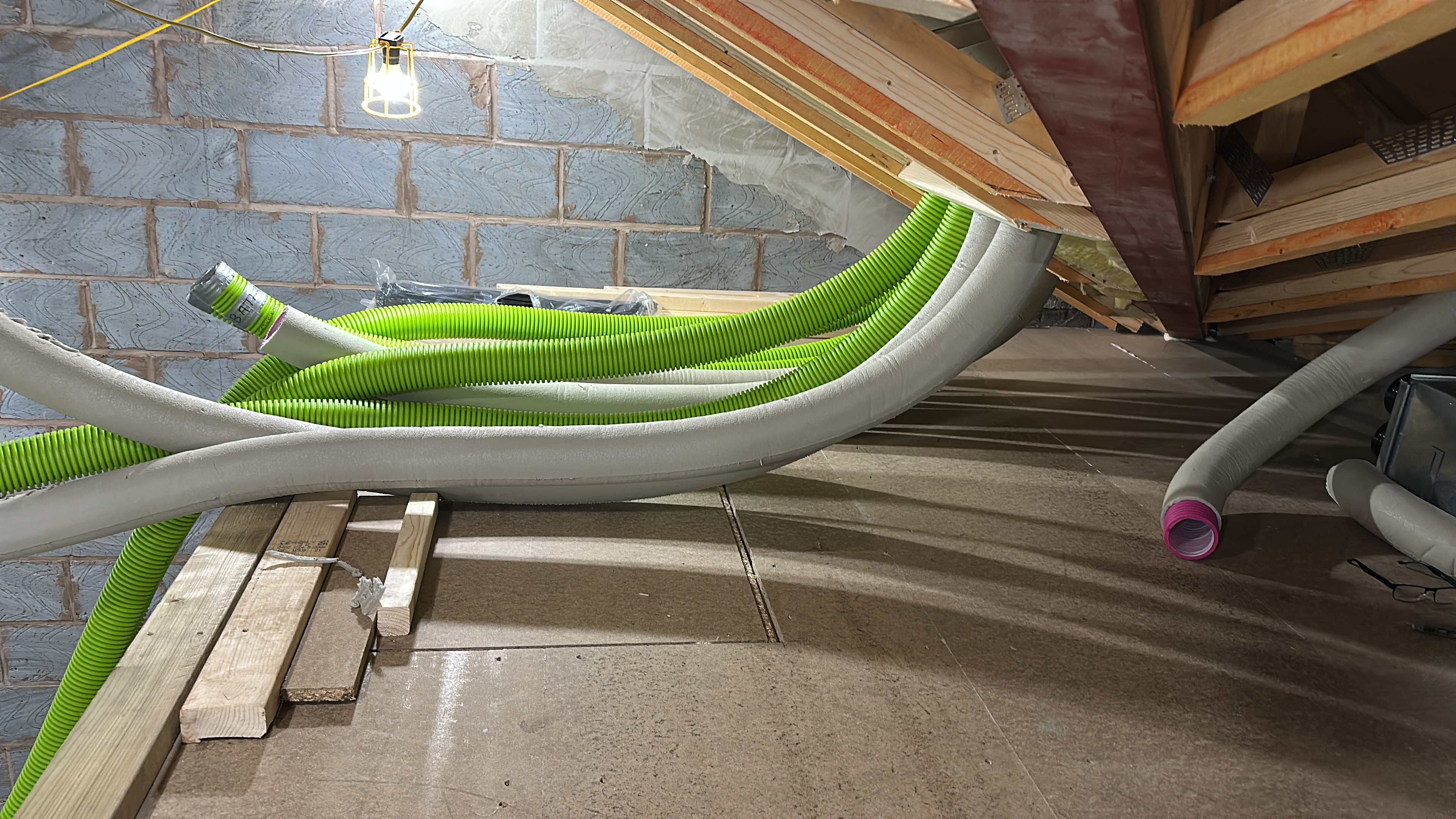
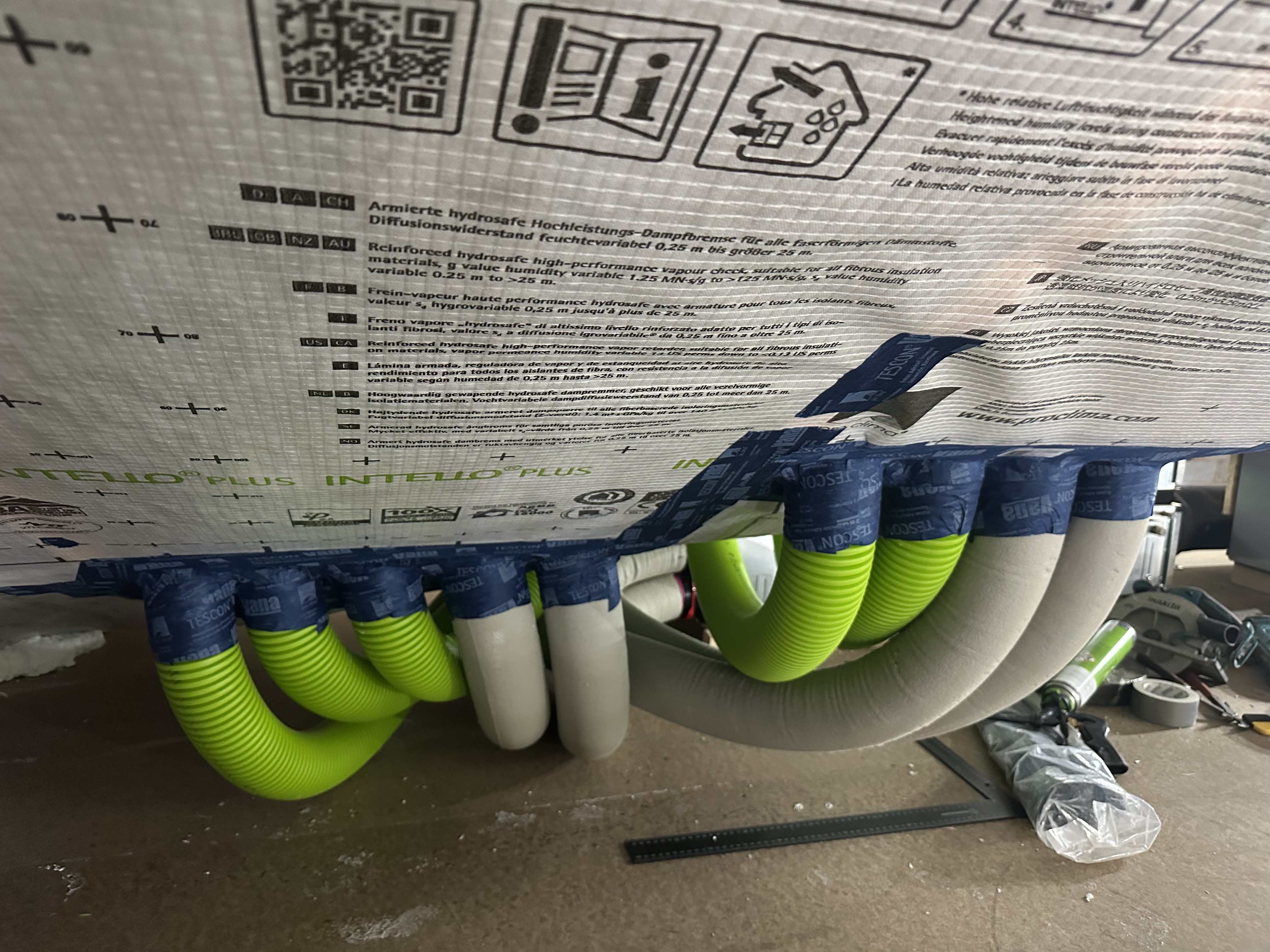
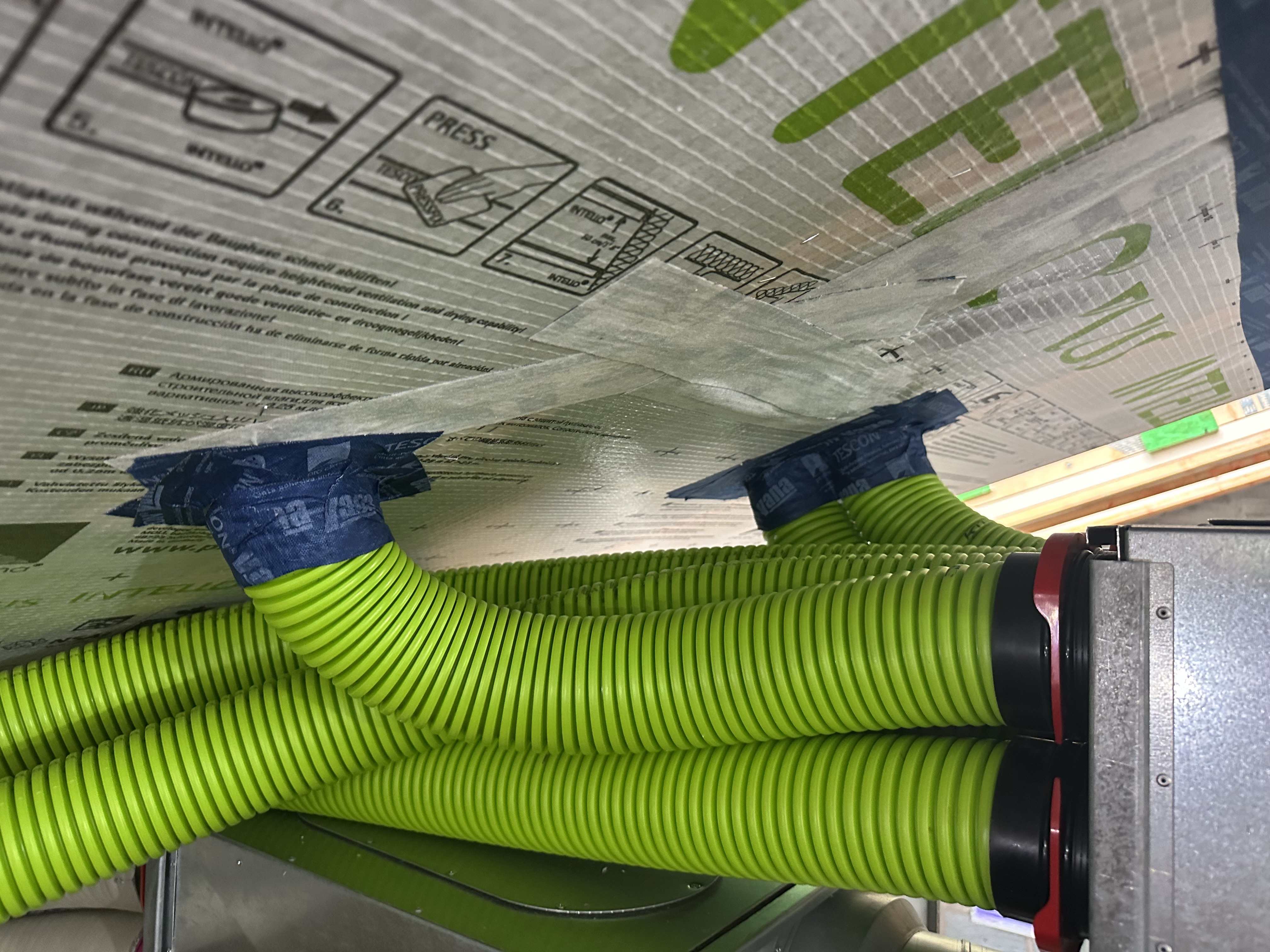
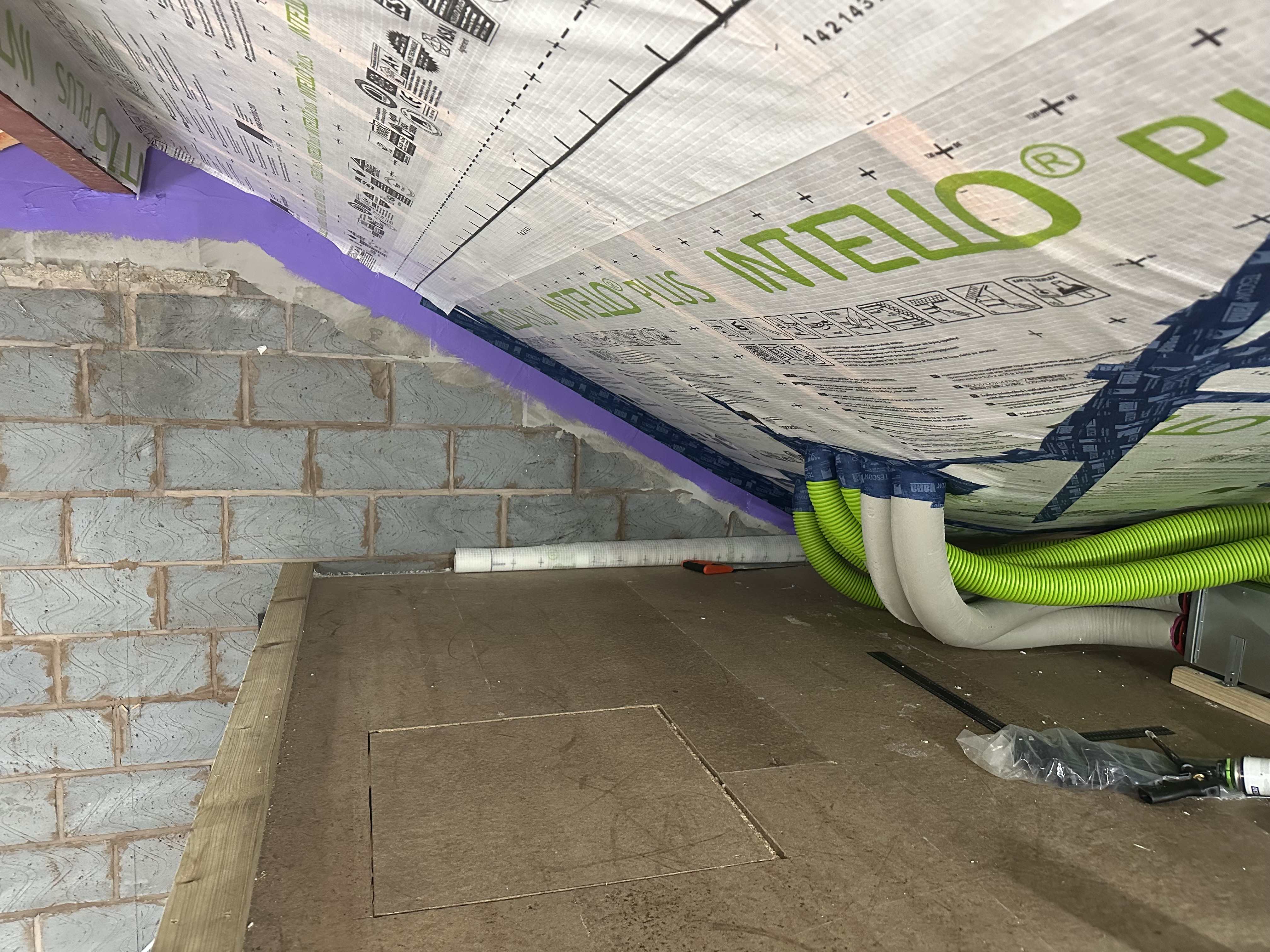
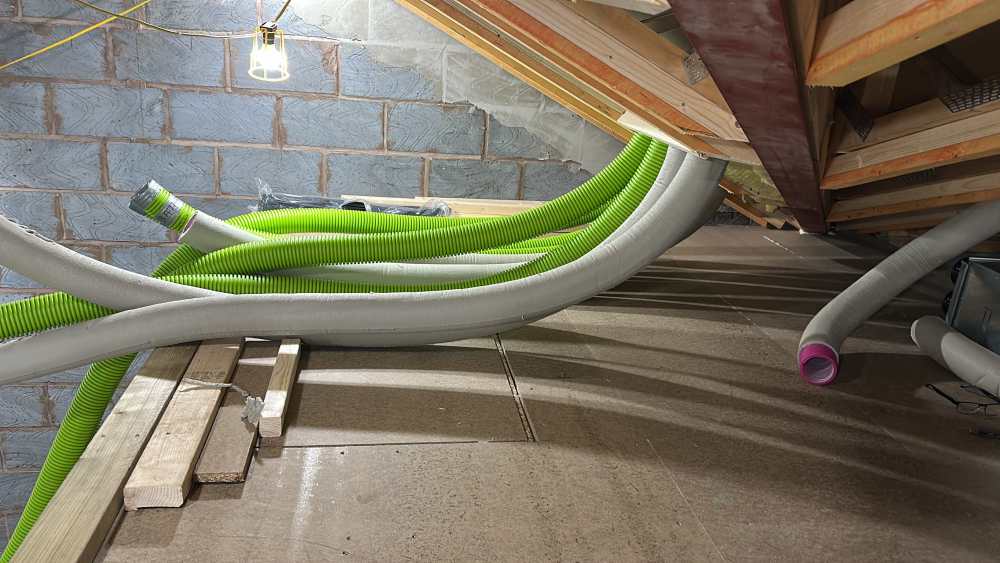
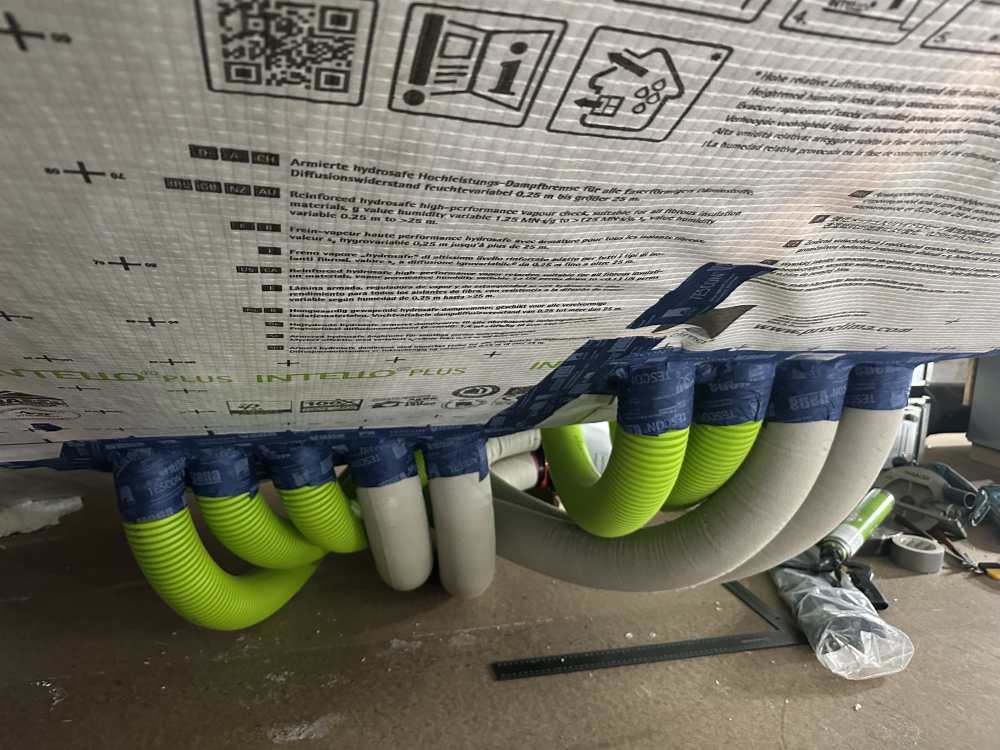
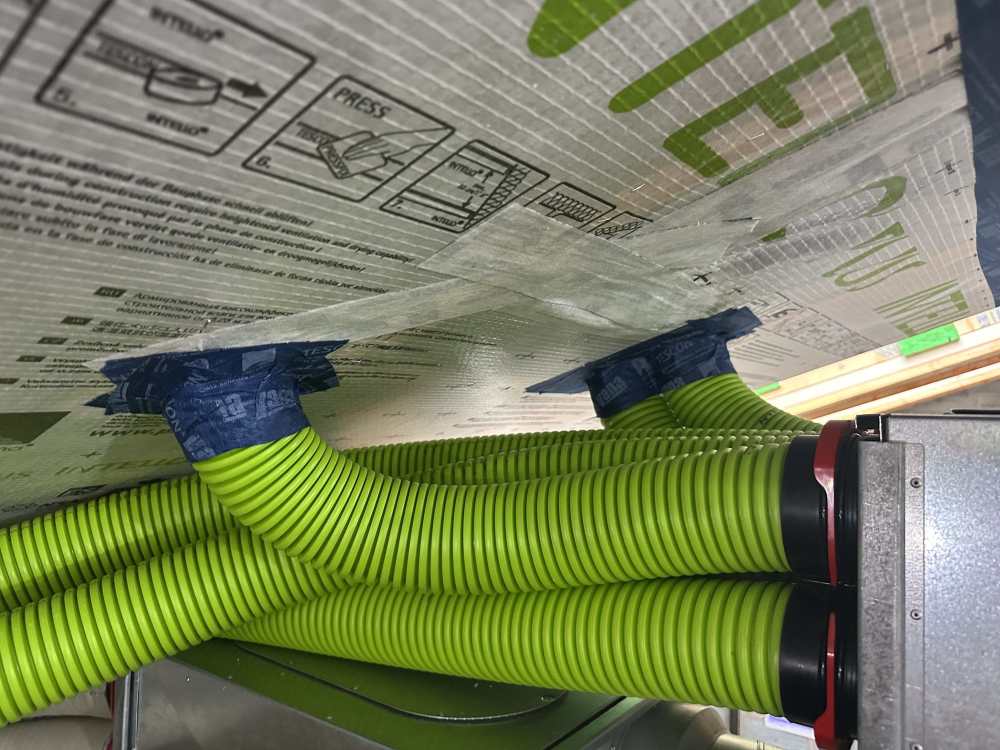
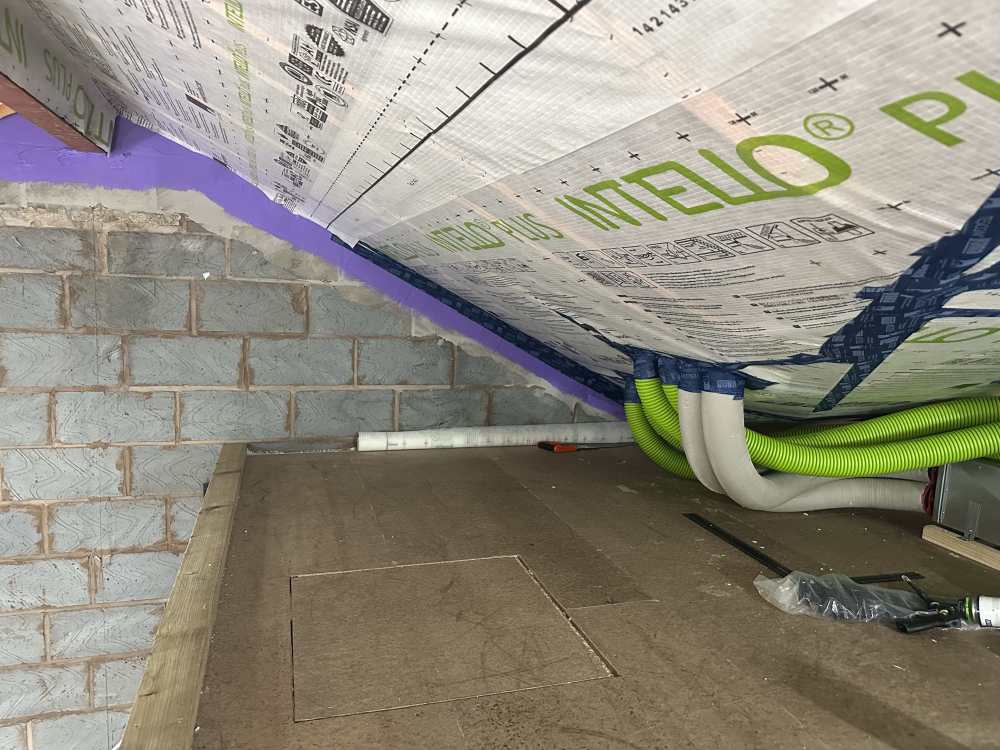
Not an issue tbh. I taped and foamed these to within an inch of their lives. Airtightness score was 0.1ACH on test, so a safe 0.2ACH which I will take allllllll day long. It’s not what you have to tape, it’s who you’ve got, or knowledge and methodology if DIY’ing.
-
Any recommendations for tanking this plant room?
Nickfromwales replied to Great_scot_selfbuild's topic in General Flooring
It was already on site, residual from the works, but you’re OK to be sceptical as it keeps everyone on their toes. In the real world, we both know that tiny section of 150mm thick RC35 SCC would actually be fine for the next 100 years without any further attention. . It’s over-engineered for a domestic slab anyways, with just a (non structural) stud partition to keep it company there. Twill be fine wee laddy 😉🙂 -
Any recommendations for tanking this plant room?
Nickfromwales replied to Great_scot_selfbuild's topic in General Flooring
I allocated MVHR to one 'dry' plant area, and then the client agreed the GF cloak WC didn't need a(nother) shower in it, so we lopped off the end of that room and created a new 'wet plant' area. Both rooms A1 fire protected via the use of cement boards (No More Ply). It is 'wet' because I have put all the "plumbing" paraphernalia in there that is likely to leak (minor or major), by early design. The UFH manifolds are just outside the footprint of this bunded area, but that's the least of 'our' worries; the heating system will only ever leak / puke out the stored volume from being pressurised at 1.5bar, and then it'll stop, maybe a few litres or so max. Odd statement, as you don't have a choice other than to discharge D1>D2>waste (unless you go old school gravity); note you'd still need overflows from the F&E and CWS tanks if so, so are just pushing the problem left to right vs deleting it. Make sure you have a 40mm waste provisioned in this space, even if in abeyance / ends up redundant. I always get this done way ahead of the construction phase, just simplifies things long-term and removes ambiguity for follow on trades if the heavy lifting is done well ahead of their (or my) arrival. Opportunities for value-engineering often go to the wall if these things are engineered 'on the fly', and usually this means compromise / delay / uplift in cost. -
Any recommendations for tanking this plant room?
Nickfromwales replied to Great_scot_selfbuild's topic in General Flooring
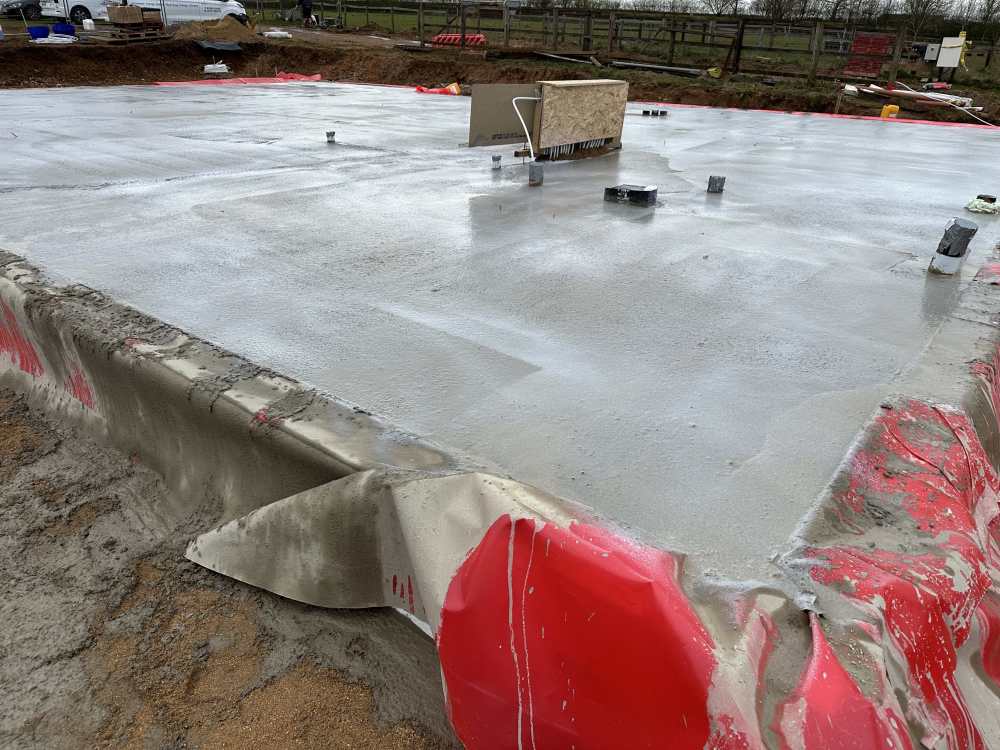
MBC guys tidied all that up the following morning, and inspected before the pour . My bollocks are both accounted for -
Pentagonal shower, any recommendations?
Nickfromwales replied to Super_Paulie's topic in Bathrooms, Ensuites & Wetrooms
Nope, sorry. Looks a decent enough unit from the pics, but that price is just taking the absolute piss. 8mm glass is one up from a 6mm eBay jobby; for that money I’d expected to see that as a minimum but I’d also want to go and see it in a showroom before buying. You soon get a feel for quality, but hard to justify that price from a grainy pic (you also don’t know if the image is exactly the unit you’ll get. Why the pain of the pentagon? Just the heart wants one I guess. -
It’s defo a bird. Magpies have eaten the rubber ring around my boiler flue, one beak-full at a time.
-
That’s not the healthiest option unless windows are opened?
-
Insurance for garage demolition by family
Nickfromwales replied to Jane W's topic in Self Build Insurance
I would have gone for asking forgiveness vs permission, if DIY’ing. -
Any recommendations for tanking this plant room?
Nickfromwales replied to Great_scot_selfbuild's topic in General Flooring
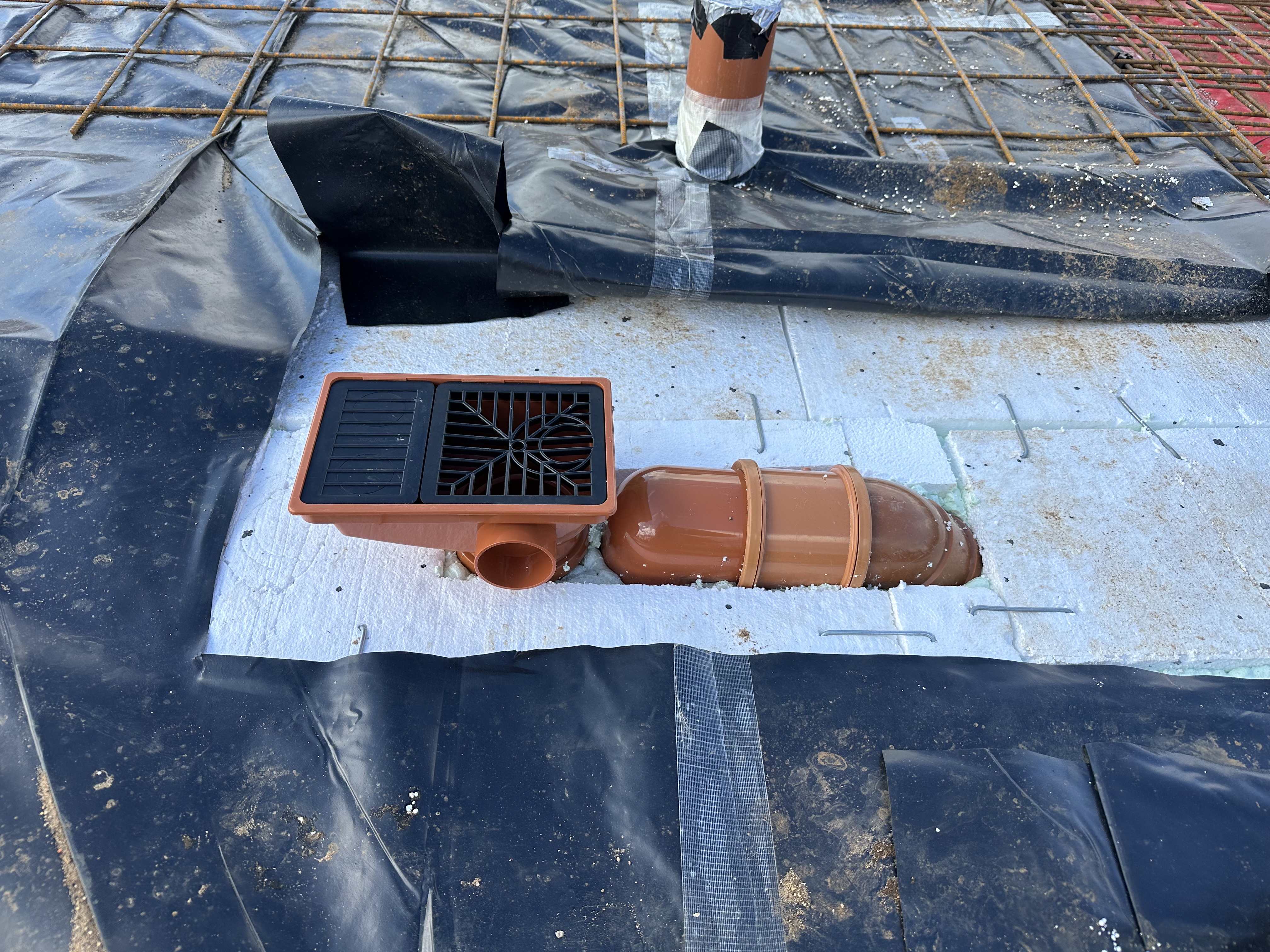
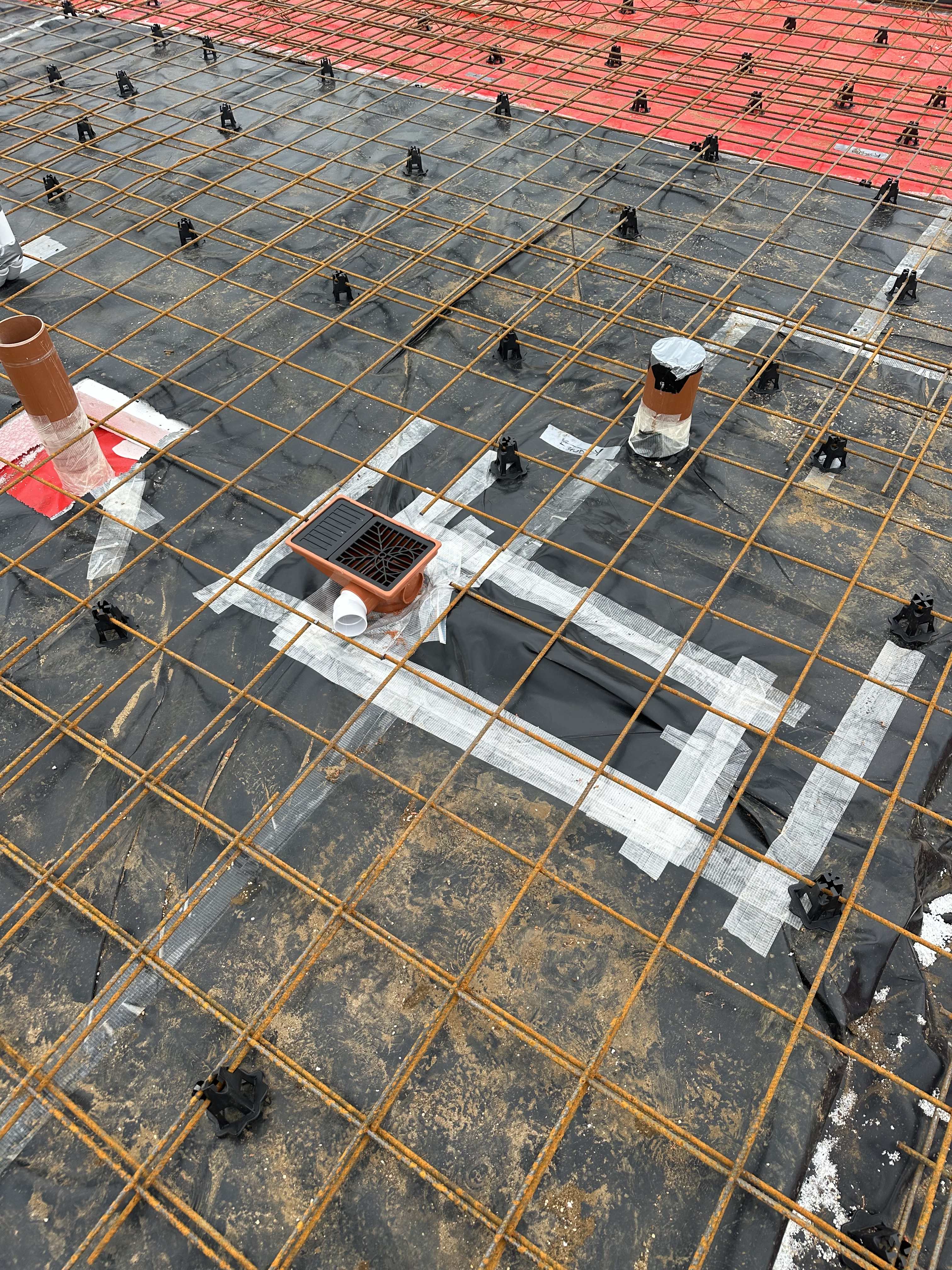
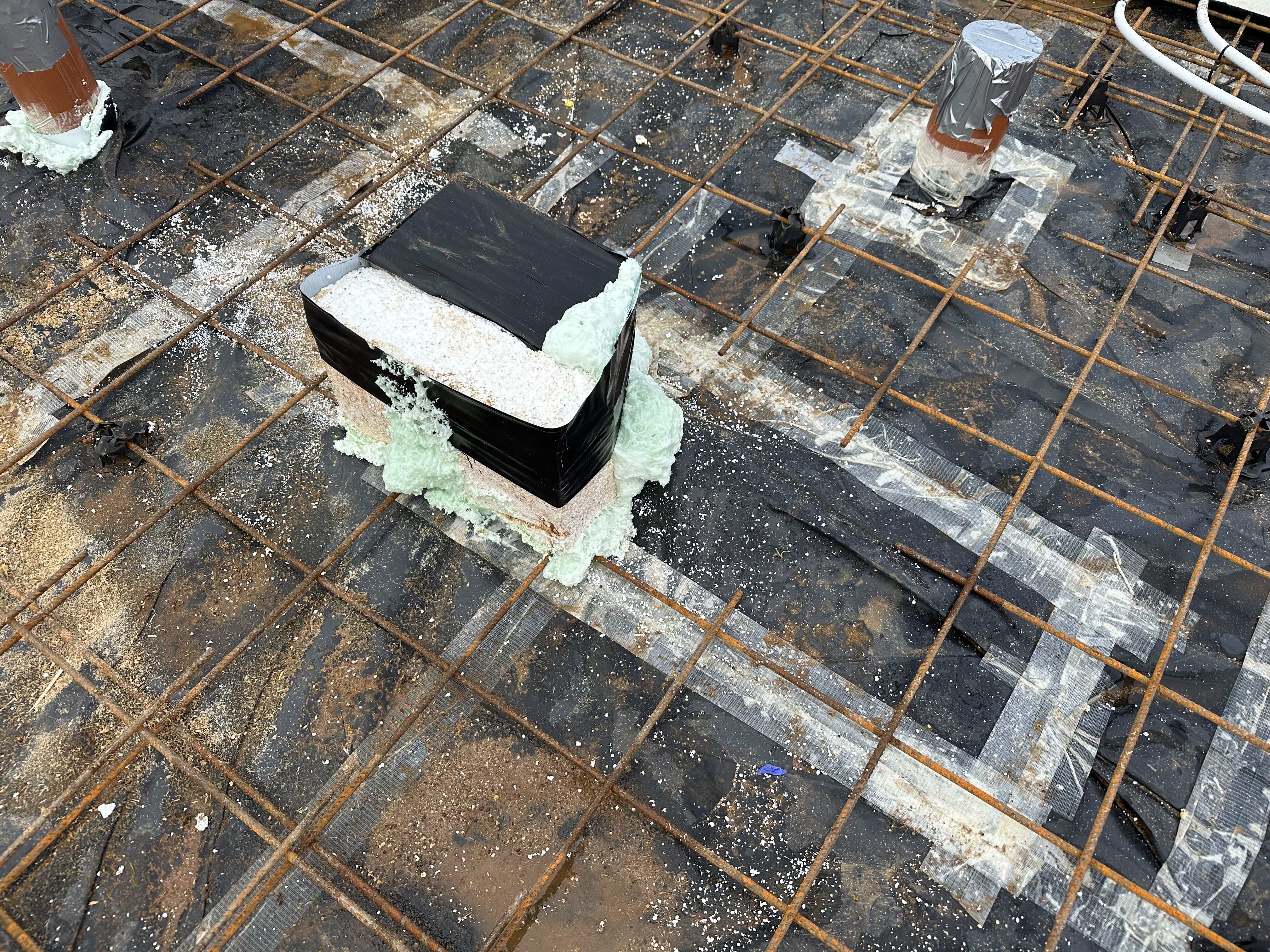
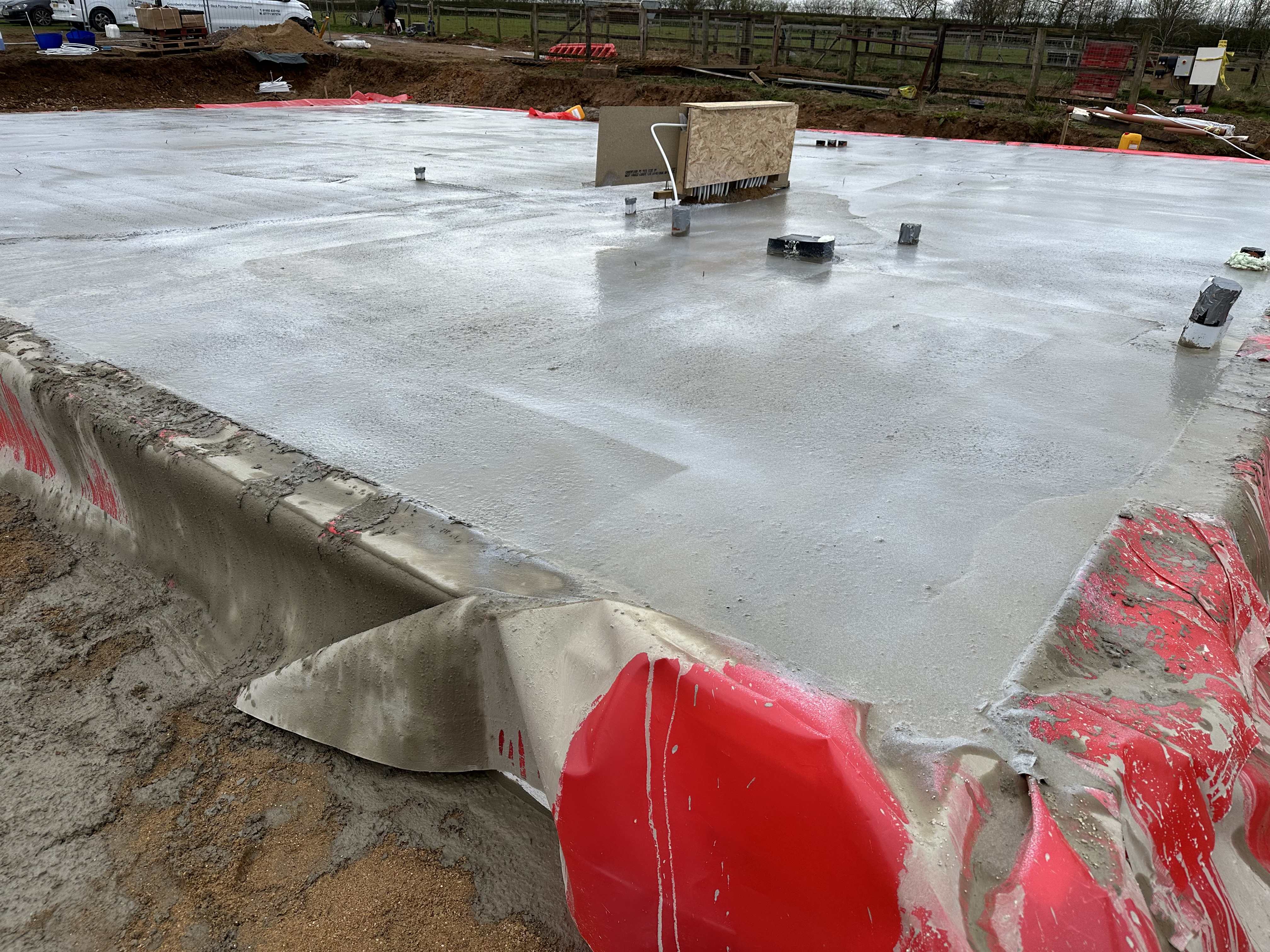
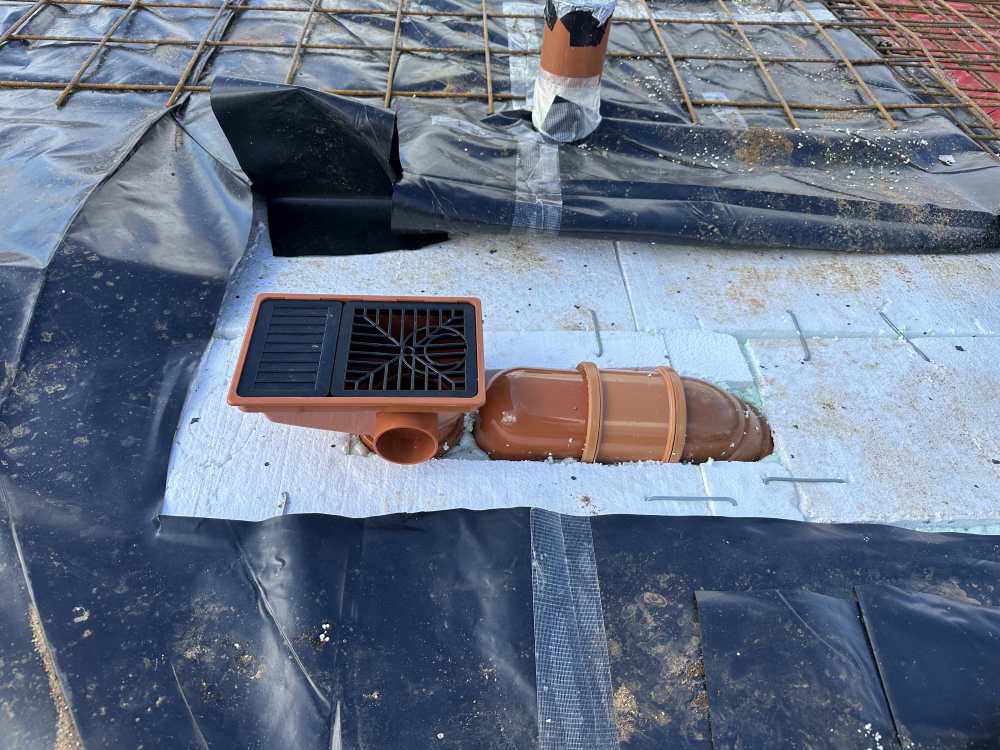
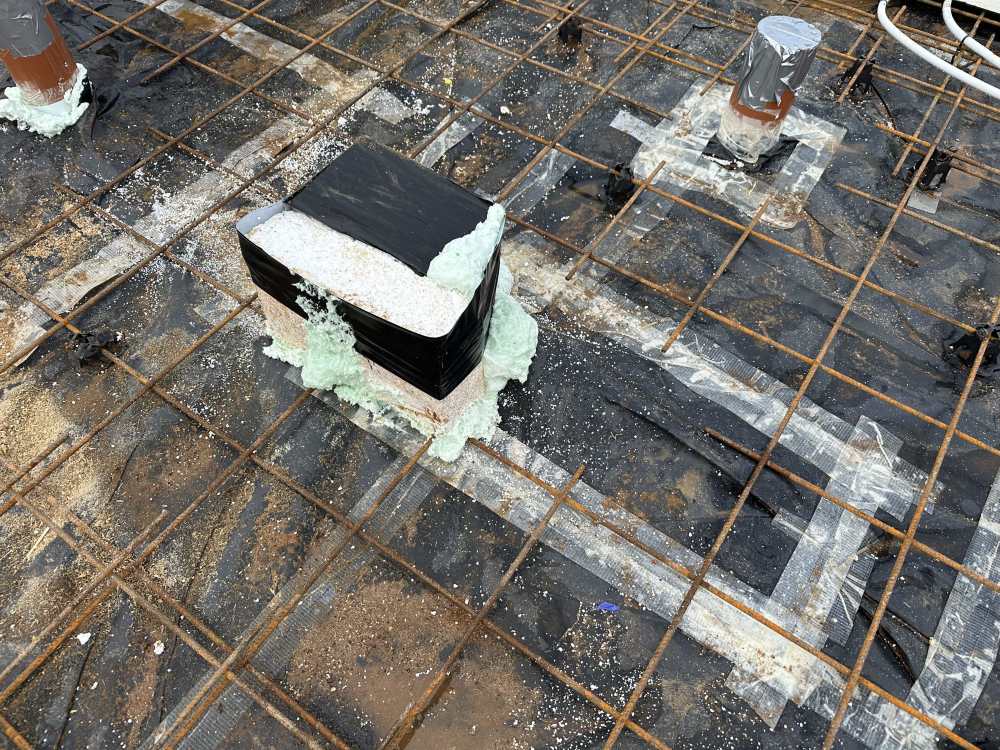
For completeness, I have always managed risk pragmatically, wherever a client has expressed any such concerns. For one current project I spec’d all the ‘wet plant’ to be housed within a newly created GF plant area, and in that footprint I specified a recessed area in the concrete of 30mm. In the middle of the recess, back to back with the utility wall, sink and washing machine, I installed a trapped gulley with a back inlet for 50mm waste to feed in. Note: the white self-adhesive stuff is Radon rated peel & stick barrier, as there was a very high Radon risk here. PITA to do but very necessary. Here is where the washing machine up-stand will eventually connect via 50mm waste. Then I shuttered it with EPS / tape / foam (mummified it) before the pour. The idea being that this can be easily moved / removed after the pour if needs be (for fine tuning height of gulley etc / wiggle room). The finished article, post pour. Note the sand shuttering around the UFH pipes, cheap and simple / effective; just hoover it out after the pour, final fix the manifold / pipes in their forever positions, and backfill with cementitious SLC LINK This was an MBC raft, so they pour the SCC concrete and then return the following morning to cut / scabble the recesses out very accurately, so in that area we now have a 30mm L-shaped recess as a bund for management of any leaks. The plan is to use moisture resistant cement board for all of the wet plant room walls and ceilings, caulking joints etc with intumescent acrylic sealant to attain A1 fire rating too. These bottom of the cement boards will go down past the DPC under the stud walls to meet the concrete in the recess (eg TOC -27mm) where I’ll use 3mm packers to hold the boards just above the rough concrete to create a void for the SLC; this is to ensure the SLC will completely envelop the boards to arrest any future movement / feck any waterproofing up. The boards will effectively be ‘submerged’ in the (~5mm layer of) SLC, and the SLC will naturally run back under them to fully close the purpose made gap. Belt and 500 braces for £2 worth of packers. This will also detail airtightness at the external wall, where the tapes are meant to meet the slab at TOC; plenty of CT1 behind the cement boards at DPC level +/- 15-20mm. Then I will self-level the whole recess, banking it up at the far ends of the room by just 1 or 2mm max, to create a smooth graded surface which arrives at the gulley pot from all corners; The walls will all get smothered with liquid tanking solution, and left to cure fully for a couple of days. No need for steep falls like a shower tray, as gravity and a 25/30mm bund means water can only go into the gulley. Aim is for a burst pipe or failed EV etc to be nothing this room cannot handle. It’ll all get painted with heavy duty 2-part garage floor paint, white on the walls and grey on the floor to make my OCD happy, and lots of it, to create a fully maintainable and presentable, watertight finish. The trap in the 100mm gulley will need to be maintained (kept ‘wet’) to prevent stench; in this instance this will be topped up routinely by the washing machine output. Note: the utility sink will NOT discharge into that 50mm up-stand and into the same gulley, but instead into the adjacent foul pipe rising to the FF, which will also collect the kitchen sink from the adjacent room. This means zero food solids or other stinky stuff will ever sit in the gulley in the plant room floor and create a stink; the only thing the plant room will ever give off a whiff of will be laundry / washing powder. The fact that folk use their WM’s every day, or every few days minimum, means the trap will be wet year-round. If the topology doesn’t lend itself, then you can run the water softener regen discharge into it instead; as a source of daily, clean water. I prefer to not rely on a self-sealing trap in the slab, as I will always want the full flow potential of an uninterrupted 110mm arrangement, vs water squeezing through these socks. Such units are available from decent manufacturers if a retrofit is your only option LINK. Avoid cheap / unbranded units as they’ll let you down eventually.


-
Any recommendations for tanking this plant room?
Nickfromwales replied to Great_scot_selfbuild's topic in General Flooring
No, it doesn’t get left plugged! What would be the situation at each basin / sink / shower / bath? This is what the water in the throat of the trap does, so you need to chill out sir! If you’re considering bunding a room to accept 300L of flood water, forget it. Typical leaks are slow, progressive ones which often go unnoticed for days / weeks / months or even years. -
Any recommendations for tanking this plant room?
Nickfromwales replied to Great_scot_selfbuild's topic in General Flooring
And a fire extinguisher in case the water catches fire as it leaks out? That’s a new level of belt & braces lol -
vaillant cooling mode plug specification.
Nickfromwales replied to Post and beam's topic in Air Source Heat Pumps (ASHP)
Can you share the link to it here please? -
+1. Lots and lots of small gentle taps with a claw hammer, to turn the plaster to dust, and let it fall away as you gently follow the cable. Don't use a chisel, as that can damage the cable if it turns or isn't at the same depth etc.
-
Architects - Hmphhh
Nickfromwales replied to Mulberry View's topic in General Self Build & DIY Discussion
Glad it was saved at some stage. I have tweaked many an architect's final design, countless times, and they often don't care much for my input as principal consultant / pro-rata consultant, as they feel they are far better qualified and I should essentially go mind my own business. Unfortunately for them, they soon realise I don't just go away. A good architect accepts challenges or interjection, a poor one barks and bites, but all of it goes towards getting the client the best possible home, built without compromise, and that should be any professionals focus when they have been paid good money by said client for this 'privilege'. FWIW, that architect, who was too far up her own arse to come to site, would have been binned at the start line. In terms of pain; before you abandon a standing seam roof, check with several membrane installers for issues caused by heat and cool (stretching and quilting) as the roof is a long run and that's not without it's own issues. None of us want to see you back here because that went tits up. -
Architects - Hmphhh
Nickfromwales replied to Mulberry View's topic in General Self Build & DIY Discussion
Primary current client and I have been detailing all of these things intensively, for just over a year before the concrete went down; from the orientation of the new house, grounds / founds / superstructure, and everything from the interior architecture to the roof. Night and day difference in how other projects are run to this, with near zero stress or surprises; doing things in the 11th hour sucks, yields poor results, and causes stress / expense / delays. In this additional slack I have come up with many other ‘new’ ideas which would likely have never had a chance to materialise if issues were popping up weekly / monthly which consumed us all. The aforementioned roofers have brought all sorts of value to the project, including innovative (proven and approved) methods for bespoke flashings, how to detail gutters and facias, and more, including providing examples. They’ve also helped the client to detail the DIY roof prep-work ahead of their arrival. There’s plenty of good (and very good) people out there, but too many people leave this vetting and selection process until it’s too late to book these busy / good trades, and the low-hanging fruit as it’s often bad. Use the time you have before planning wisely folks!!! -
Architects - Hmphhh
Nickfromwales replied to Mulberry View's topic in General Self Build & DIY Discussion
They travel. I’m contacting them for 2 of my current clients projects. I’ll PM you. -
Could be more of a "self-destruct" button here lol, but give it a push anyways and see what happens; I am safely outside the blast radius
-
You "might suggest".....?!? Jesus. It's in the MI's so is a required standard, not bloody optional!!!!!!!!!!!!!!!!!! This is an utterly shite installation, and without the clamps and the bends ALL secured with tek screws, it's dangerous. Who's going in that room? Are they expendable? If so, ignore my advice and plod on. :shakeshisheadindisbelief:
-
Standard detail tbh. IKEA do more about utilising every last mm, literally, but apart from that this is the norm.