
Nickfromwales
-
Posts
31372 -
Joined
-
Last visited
-
Days Won
345
Everything posted by Nickfromwales
-
A table saw is for sheet material, or trimming down timbers lengthways, not for cross cutting etc. You'll just hurt yourself or the saw. You'll be able to do mitres etc with a chop (mitre) saw too.
-
That's the norm in most instances, until the pipe fall naturally drops lower than the underside of the P5. You'll be fine to have such a small area missing.
-
I try to get the 40mm as near to the shower trap as possible, often using a pair of M&F 45's to get the size drop just under the floorboards. You losing another 5, 10, or even 15mm of joist will have zero consequence in the real world, but will make a big difference in how well the shower discharges.
-
They look horrible compared to a flush or low-profile tray. Yuk
-
Are you allowing for the obligatory layer of plywood you'll need over the particle board (chipboard)? Is the board you have P5 / moisture resistant?
-
For £60 you could throw it away at the end of the job!

-
Stop using it for cutting CLS, and get a cheap chop/mitre saw. Dangerous as FECK!
-
Don’t do this, as you’ll be introducing a shoulder in the opposing flow. It’ll promote it blocking early. How can’t you find another 10mm??
-

Shower tray, waste rough?
Nickfromwales replied to Super_Paulie's topic in Bathrooms, Ensuites & Wetrooms
First off, NEVER use silicone for this, and always use a product such as CT1. Silicone has a very short life expectancy in comparison. Usually the underside of the tray is ground down to a flat surface, waaaaaay better than that pic shows, but it’s not life or death. As above the underside isn’t of paramount importance as the primary sealing is done at the top surface, but be sure to apply a smear of CT1 the top of the trap before tightening it up against the black rubber washer. -
This is why JG Speedfit is banished for my jobs, unless it’s for wet testing. Hep2o manifolds have never let me down.
-
Ordering a window seal panel for an air-conditioning vent.
Nickfromwales replied to David001's topic in Ventilation
Yes, won’t it be quite dangerous to be swapping out a glazed unit if you’re above the ground floor? I’d still say this is your best bet tbh. Saves the risks of juggling the glazed unit and (eventually) buggering up the seals / beads. -
Ordering a window seal panel for an air-conditioning vent.
Nickfromwales replied to David001's topic in Ventilation
It would be a serious compromise to security, plus it’s going to kill your window beads from taking in/out seasonally. I’d core drill a hole down low, to match exactly where the outlet exists the AC unit, and just blank the hole off when not in use. Simple blanks with EPS plugs to insulate through winter and be draught-proof would be simple to make, and no unsightly hose or flimsy plastic panel to contend with. -
Don’t overheat it. Slow and steady wins the race.
-
He found it in a holiday let, and just happened to have a pipe cutter in the glovebox.....
-
Just time the heating to do an hour on then 2 hrs off, then repeat.
-
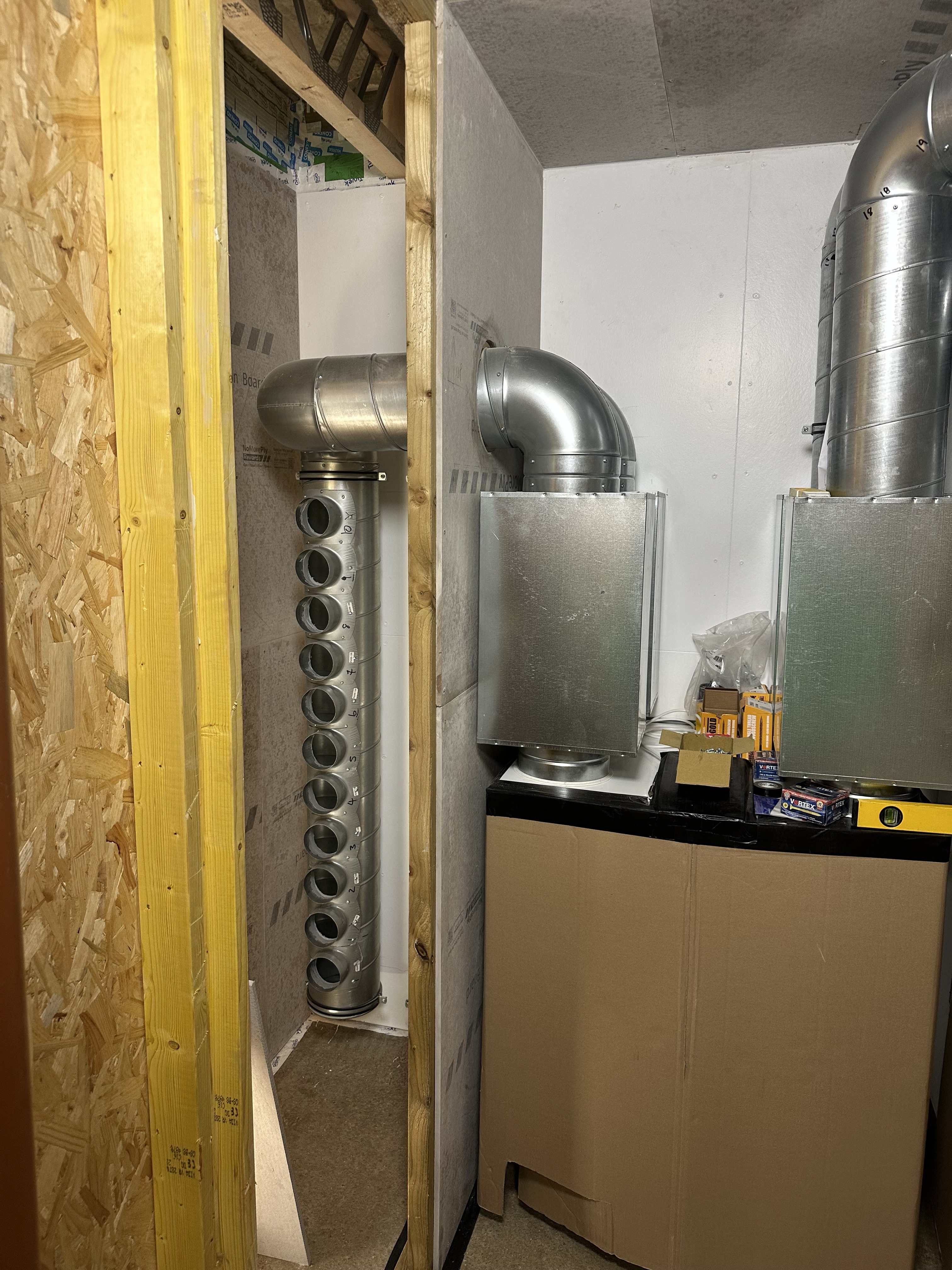
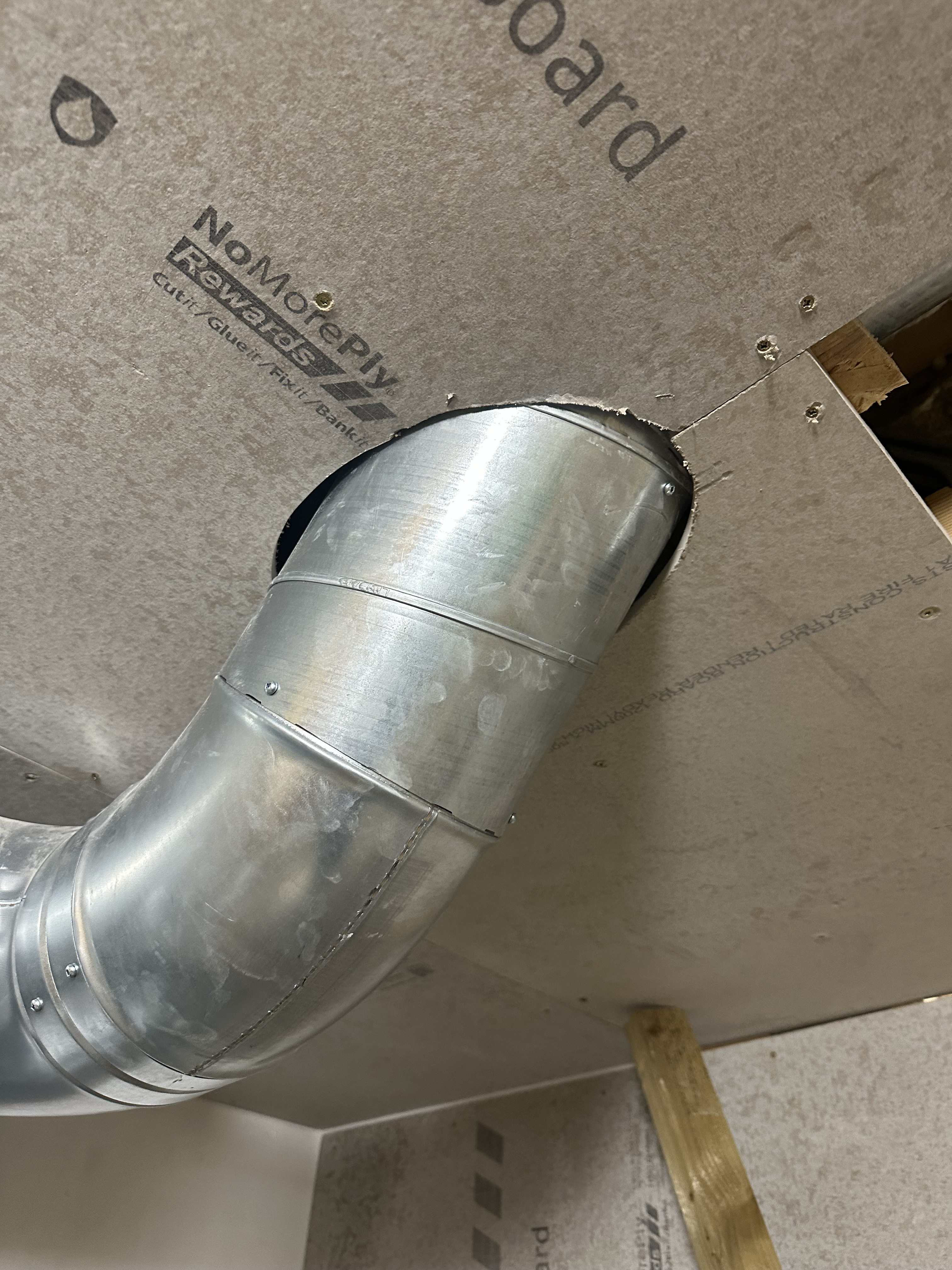
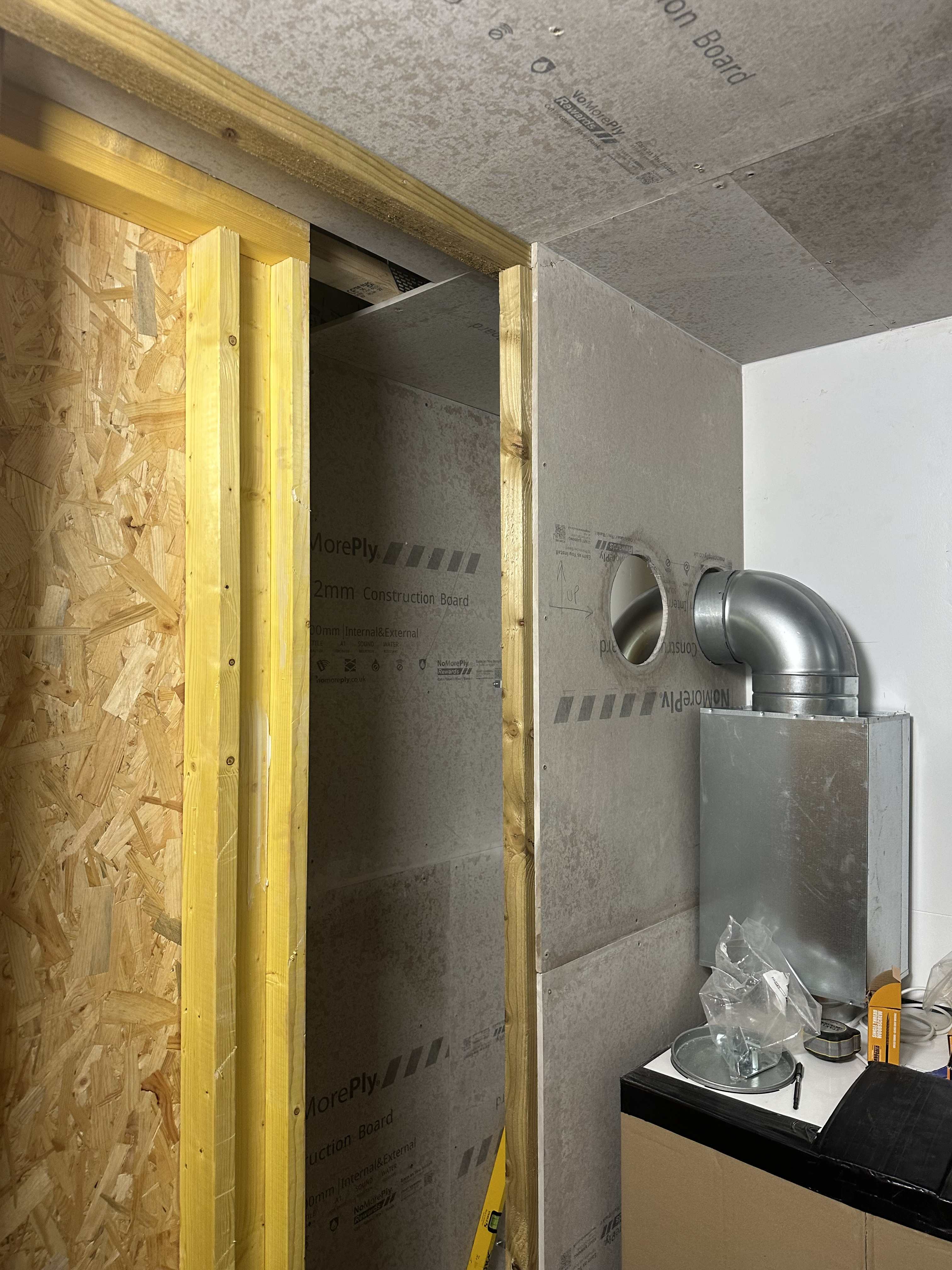
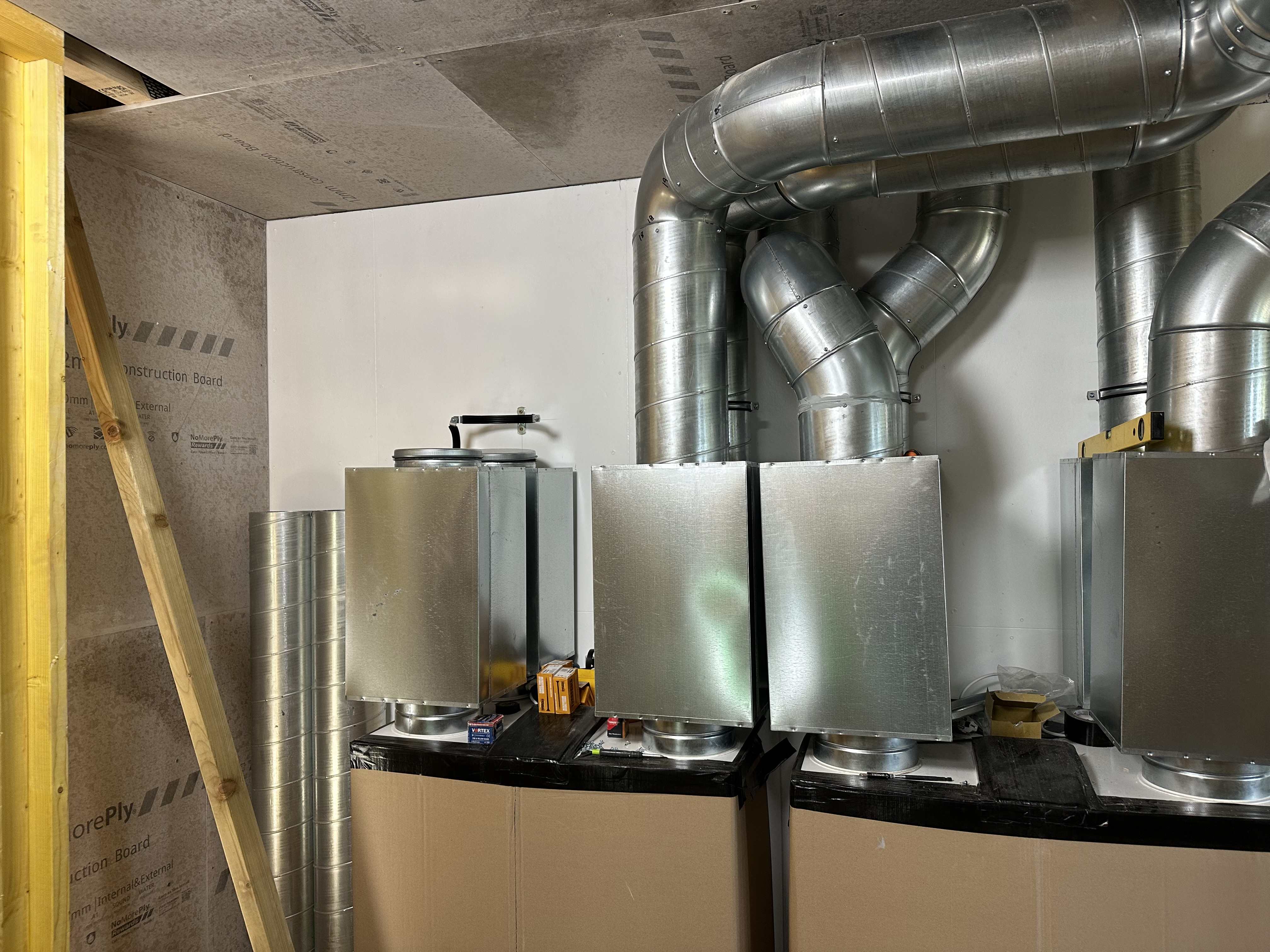
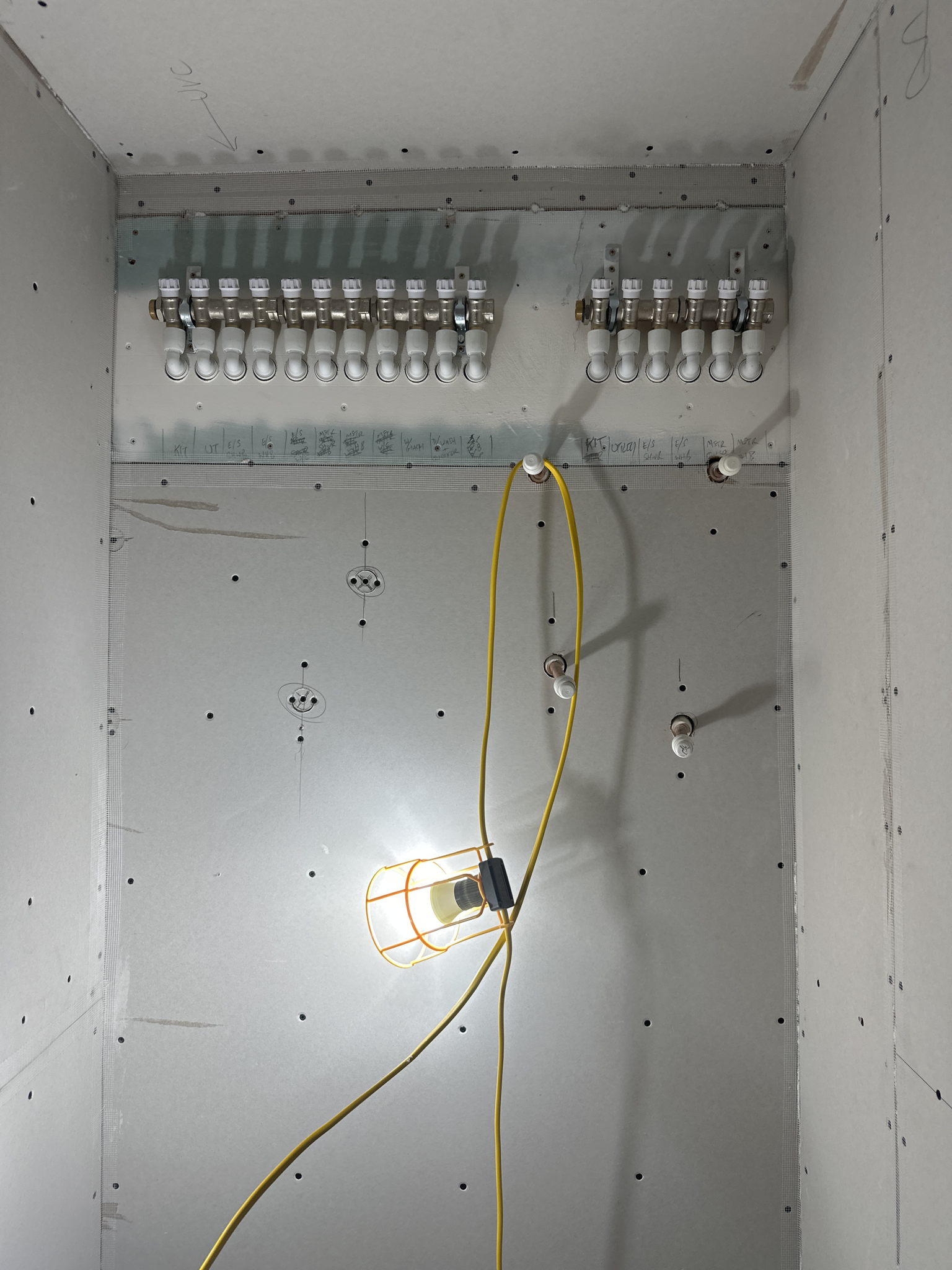
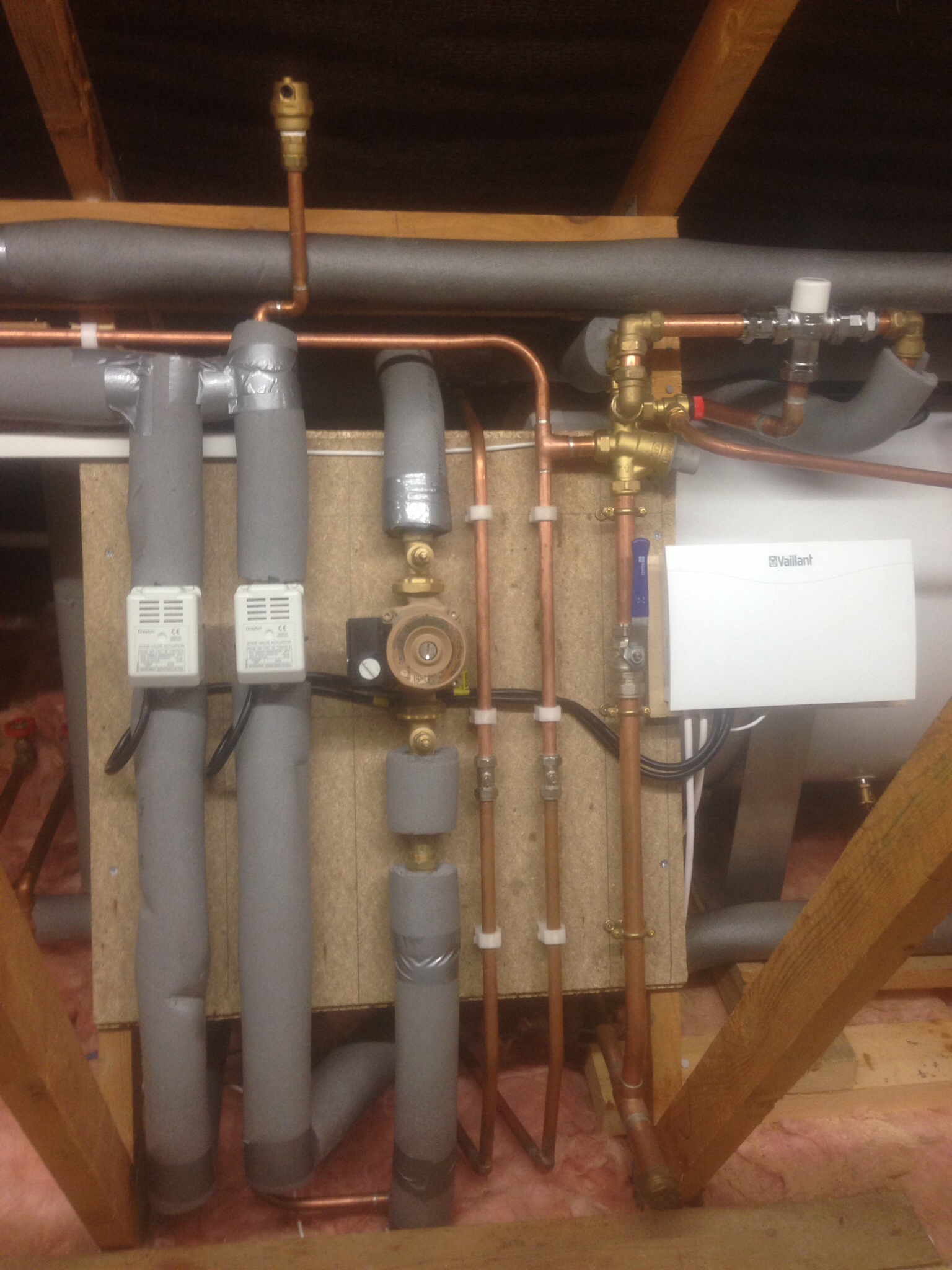
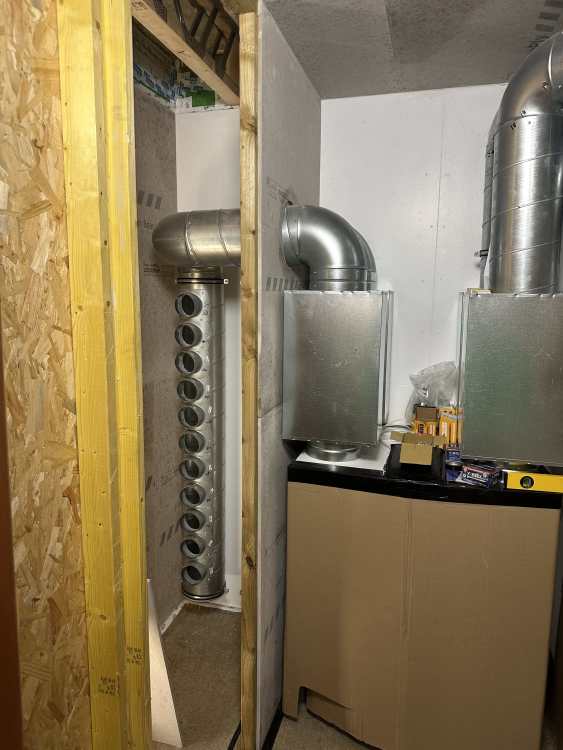
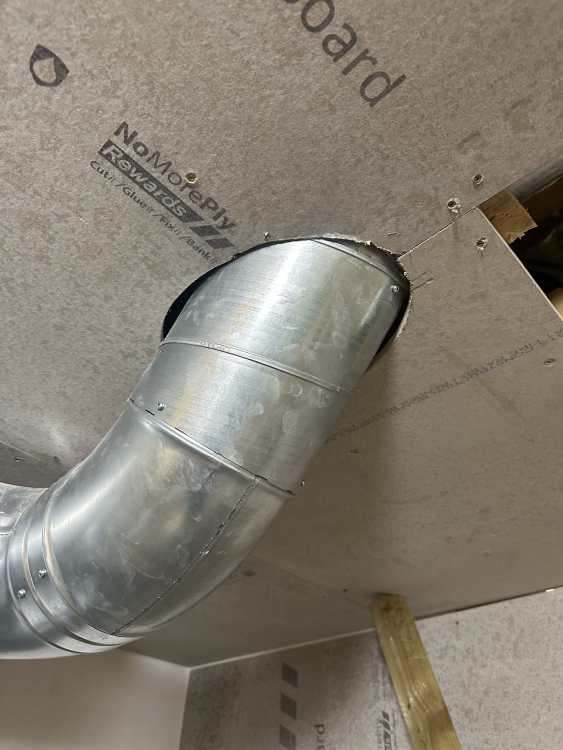
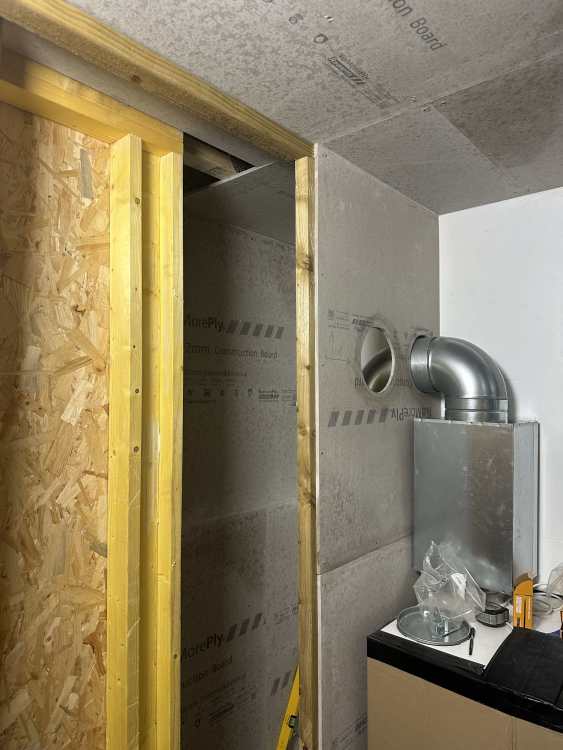
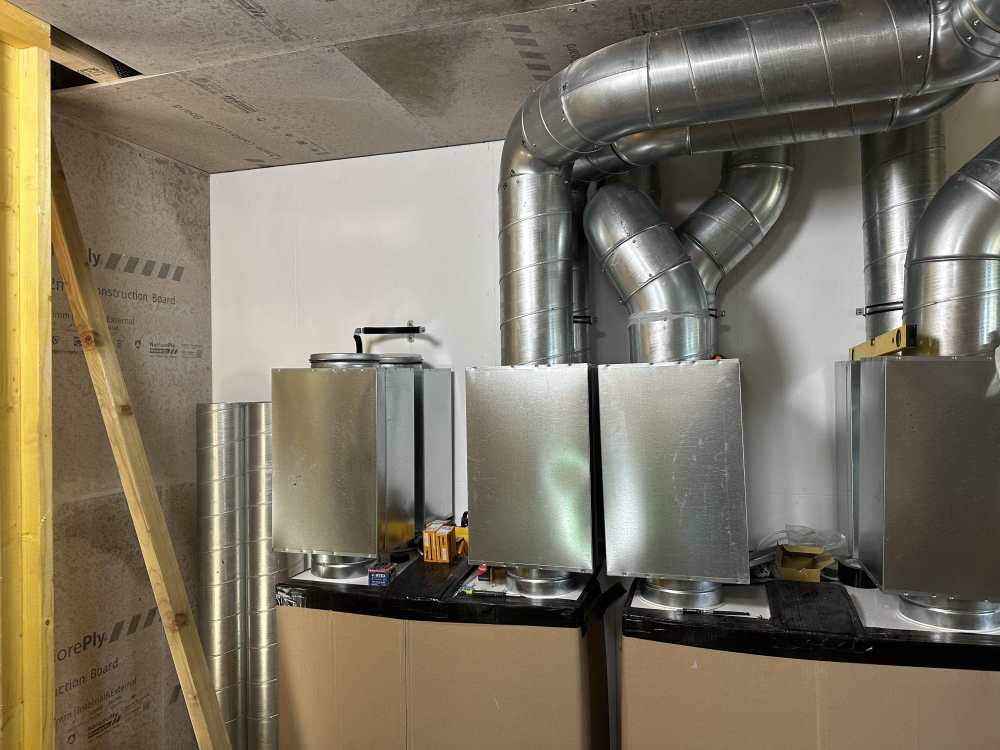
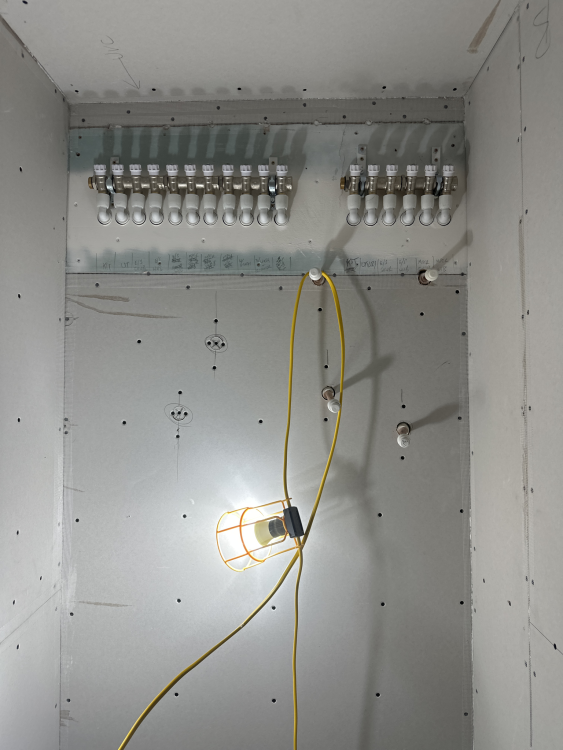
Walls first for any plant areas afaic. Doing this atm for the MVHR plant room: Rear wall was caulked with intumescent caulk and painted before fitting the units, all A1 fire rated, and the rest is getting caulked and painted ad I go. On this job I had to install the full wet plumbing early so the ASHP & UVC could go in early, so I painted a panel of PB and drilled it, then mounted it and then boarded the rest of the room. Painted it because of OCD and the fact it’s near impossible to paint around these things after the fact. I plastered it the week after and then the full install of the UVC etc went ahead.
- 1 reply
-
- 1
-

-
Changes to planning once house is built!
Nickfromwales replied to squealeyhealey's topic in Planning Permission
I’d have asked the cheeky twat for his official complaints procedure. And then asked him to officially respond as to how a neighbour could bully him into trying to push this condition retrospectively. -
Fakro are bell-ends too, as their reed switches are on flying leads, 4 tiny wires…….which are ALL feckin WHITE. Cheers you muppets!
-
Too small a diameter for b regs to moan about fire breach. And don’t fold them, turn them in a loop to not damage the cores!
-
Fermacell vs backer board in bathroom
Nickfromwales replied to divorcingjack's topic in Wall Tiles & Tiling
https://www.underfloorheating-uk.co.uk/ultra-proprimer-multi-surface-primer-5l?gad_source=1&gad_campaignid=17338911325&gbraid=0AAAAAoLvRhE8xAMg9zKPv4sDYKebcUBvm&gclid=EAIaIQobChMIn8i2xMT4lAMV9pFQBh1_tiSiEAQYAyABEgJ7pvD_BwE -
Backer board or plasterboard
Nickfromwales replied to Super_Paulie's topic in Bathrooms, Ensuites & Wetrooms
Ya 👍 -
Backer board or plasterboard
Nickfromwales replied to Super_Paulie's topic in Bathrooms, Ensuites & Wetrooms
Quite ‘faffy’? It’s a brush….. Or go buy battens, and plasterboard, and cut them, and make mess, and shape that lot to fit the space. Faffy?????? 🤷♂️🤷♂️🤷♂️🤦♂️🤦♂️🤦♂️🤦♂️ -
How much closer??
-
Automatic fire suppression systems aren’t ridiculously expensive (mist vs sprinklers) so if I had a building like this for storing / working on vehicles or storing significant amounts of ‘stuff that goes up real good’, then I’d fit a mist system. For all of my domestic clients projects I specify a 3-core cable from the house smoke detection system to both attached AND detached garages, so anything not smouldering / smoking / on fire is immediately obvious to the occupants, eg it is flagged as early on as is possible. Fitting a (wireless) ‘locate’ button in at least one strategic position within the house is also something that I spec (recommend), so basically upon hearing the smoke alarms all going off, every one of them in unison, where you’re possibly awaken, startled and worried, you simply hit the locate button; this action will silence every smoke detector except the one(s) that was triggered, meaning you can then make a bee line for the problem area to tackle the cause. If the house falls entirely silent, that’s your prompt to get your arse out the door, el pronto, to the detached garage / outbuilding where you’ll then hear that one wailing. Most modern homes now have plant rooms, attic plant areas, detached garages and out buildings, so it’s far simpler to have this ‘locate’ facility imo, so you can find the issue in seconds vs running to every room / space that (you can remember) has one. I recommend installing one inside a kitchen cupboard unit too, as with large homes with vaulted ceilings, if you burn the toast, you then don’t have to climb on stuff to press the ‘hush’ button on the detector (giving a 7 minute mute) as these wireless units also allow you to hush and test.

-
If a fire is about to flame-grill you, you’d be out the window like a 21 year old. I have advised exactly this for one of my current clients, eg that they stash drop down ladders in each of the FF bedroom fitted wardrobes, the type that hook onto the window frame and unroll to give a ‘rope ladder’. For £55, there’s no reason not to have at least one of these on the FF. I’ll take that over a pair of broken legs all day long.