Temp
-
Posts
10691 -
Joined
-
Last visited
-
Days Won
43
Everything posted by Temp
-
I think their choice suits the house design but can understand its not everyone's taste. I once visited an architect designed house that was ultra modern on the outside with large metal windows and modern cladding.... but judging by the interior the owner really wanted a country cottage. It had oak cottage doors and flowery tiles. Can you post some examples from your mood board?
-
Yes. As I recall its just a tick box exercise. Its possible not every planning application in that county needs a Coal Authority Risk Assessment so this may not be on the local list of mandatory documents. Its my belief that the validation check is done by junior admin staff or possibly even outsourced to the company that scans them into electronic format.
-
I note he said "should" not "must". Did he write a long speel to justify his point of view? If not then I would just submit the application and in that refer to the 2010 decision on the width. I would also point out that converting the barn from a shop to a dwelling will reduce the amount of traffic using the entrance compared to 2010 levels - if thats true. Sometimes the fire brigade will also have a view. Is your plot further from the narrow entrance?
-
I think the key here is to try and make it a totally self contained unit that could be sold off as a separate dwelling in the future. Eg spell that out in the part q paperwork. You don't have to split the title if you dont want to but you should ensure any planning grant doesn't preclude it. Not only does that make it possible to reclaim the VAT but adds significant value for the future.
-
My bet is they only looked at your application last week when they realised their decision deadline was approaching. They can now claim the deadline doesnt apply as your application was incomplete. Our planners also told us 24 hours before deadline that they wanted changes. This despite spending over a year at the preapplication advice stage. Fortunately they were trivial and my architect was able to get revised drawings to them same day. A few years later one of the planning officers made a comment that he thought the house looked nice and that his department had "done a good job". I had to bite my tongue. They have no shame.
- 13 replies
-
- 2
-

-
- planning
- planning permission
- (and 1 more)
-
I put reciepts in plastic sleeves. Where i had to make changes i added a note with something like "Deduction for returned items" on it with my calculation. On the spreadsheet I just put the results of my calculation.
-
You could go option 2 but include in the Design and Access Statement a few paragraphs and perhaps a drawing showing an alternative design that would be allowed under the new extra storey PDR. You can say you have ruled out this option in favour of the current application because you think it would be out of keeping etc. I'm sure your architect could make that look as horrible as possible. Hint to neighbours you have had interest from a developer who likes that option. See if they will support your preferred design after all.
-
Yes you can on a conversation if its being converted to a separate dwelling. Not if can't be sold seperately to the existing house.
-
On clay soakaways may need to be very large or not work at all. Most water companies don't like you putting rainwater into the foul sewer and may or may not allow it. If they allow it its normally called a combined system.Some allow existing properties to continue with a combined system but dont allow but not new ones to do so. Some options.. You could dig deeper and see if a deeper soakaway works better. You could try applying for planning permission on the basis that a combined system is proposed. The water co will be consulted and may or may not allow it. You could propose storm water attenuation system with outflow to the foul sewer. The water co will be consulted and may or may not allow it. You could propose a rainwater recycling tank with overflow to the foul sewer. The water co will be consulted and may or may not allow it. You could approach the land owner of the ditch for permission to use that. They may allow it but may also want a significant payment if you have no other options so careful what you say when you approach them. If your land has riparian rights you might have a right to use the ditch. I suggest you need to look at the costs of different options. We opted to propose a rainwater recycling tank with overflow to a roadside ditch. It was allowed. Your mileage my vary.
-
Is a floor mounted door stop compatible with UFH
Temp replied to Adsibob's topic in Bathrooms, Ensuites & Wetrooms
We used this type but in white. Seems to work on floor or wall. https://www.toolstation.com/pvc-door-stop/p95235?store=U2&utm_source=googleshopping&utm_medium=feed&utm_campaign=googleshoppingfeed&gclid=Cj0KCQjw4cOEBhDMARIsAA3XDRiqAcawsBtp4Y1KXid_K3BLLUYuEXKKMQnXNqbthNDfMj4xXG4ACEMaAj3FEALw_wcB There is also this type.. https://www.directdoors.com/products/wall-mounted-door-stop-64mm-4-finishes?currency=GBP&variant=31214520434740&utm_medium=cpc&utm_source=google&utm_campaign=Google Shopping&gclid=Cj0KCQjw4cOEBhDMARIsAA3XDRiQo8mHSKqLX-gjOJELt_sU_vxW112T0Jc-mFVYYbMscYee6kbZ5VwaAkGKEALw_wcB -
Was £46 + vat for the weekend although only really needed it for a day. Way easier than trying to hold branches out of the way, nail, board and hammer all at once.
-
No Mow May: Why you shouldn’t mow the lawn in May
Temp replied to MAB's topic in Landscaping, Decking & Patios
These work quite well. I have hired one in the past but they are hard to find now.. -
No Mow May: Why you shouldn’t mow the lawn in May
Temp replied to MAB's topic in Landscaping, Decking & Patios
If I didnt cut mine regularly in May Id need to buy a bigger mower in June. -
Rainwater pipe reline or alternative option?
Temp replied to ashthekid's topic in Rainwater, Guttering & SuDS
I think that would be asking for a blockage. -
Is a floor mounted door stop compatible with UFH
Temp replied to Adsibob's topic in Bathrooms, Ensuites & Wetrooms
We have a door stop in our bathroom. We referred to photographs to check where the pipes were and used a short screw! We mounted another for the shower door on the wall. -
Building close to the boundary..
Temp replied to Temp's topic in General Self Build & DIY Discussion
I think he said it was initially hidden by scaffolding. Then later when he did point out the problem the neighbours said they would fix it. Then they didn't. -
PS.. Remember to include all landscaping you might want to do in you planning drawings. Including any trees you plan to plant etc. This allows you to claim the VAT on those items. You can't if its not on your planning drawings. Your demolition work must be zero rated to you (not reclaimed) as its labour. If the CIL is in your area make sure you claim the exemption BEFORE doing any work on site. Otherwise you can lose the exemption.
-
1) I recommend getting the mortgage sorted before you start and drawdown their money first if possible. This is because its much much harder to get a mortgage on a property that is part built. In addition its not unheard of for a mortgage company to find a reason to change their mind. A change to your employment status for example might be enough to loose the mortgage. I don't mean to worry you, its rare but it has happened. They can't refuse the money after they have already given it to you. Don't forget to allow for a decent contingency. 2) Not quite sure i quite ollow your description. In general the planners will allow you to use an existing entrance that has visibility splay problems as long as the new development won't increase the amount of traffic using it. That said I recommend applying for what you want first and see if they raise any issues. If you want to use existing entrances I would say that in the application and point out you won't be making anything worse. If you think your new in-out proposal will reduce the possibility of an accident you should also mention that.
-
Can this be done under a non material amendment?
Temp replied to J4mes's topic in Planning Permission
I believe if you were to add the raised beds later it would need planning permission. Levelling or raising ground levels significantly is considered an Engineering Operation. Example case.. https://www.planningresource.co.uk/article/1594106/garden-land-raising-held-unlawful I would ask the planning officer what you need to do. Perhaps best not to show him that photo as in that it looks more like a large raised deck/patio than I think you are proposing. You will need a cross section drawing in addition to that garden plan. The wall should be properly tanked if you are raising ground levels. Make sure the builder knows what might or might not be coming so he can handle both. Eg don't let him use blocks instead of bricks as they might be visible if the change if refused. Good luck. Think it will look great. -
Ah ok . I misunderstood and thought you said 1 block wide which really would be small.
-
If its just 1 block wide it will be quite narrow. Too narrow to escape through but I can't remember if a window in an ensuite has to be wide enough to be an escape window or not. The minimum bearing end for the lintle is 150mm but might be better to increase that to half a block eg so the lintel is two blocks/four bricks long like.. .
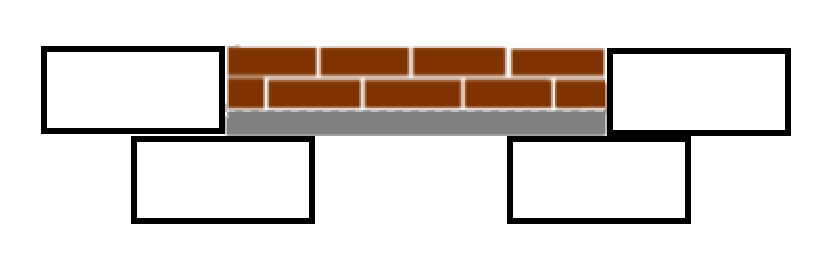
-
+1 Think about curtains. Do you want the rail on the wall or hanging from ceiling? I think if you want it on the wall you need at a few brick courses of height between top of window and ceiling/plasterboard.
-
Nice looking plot by the way.
-
Probably small enough to pull them out with a chain on the excavator.
-
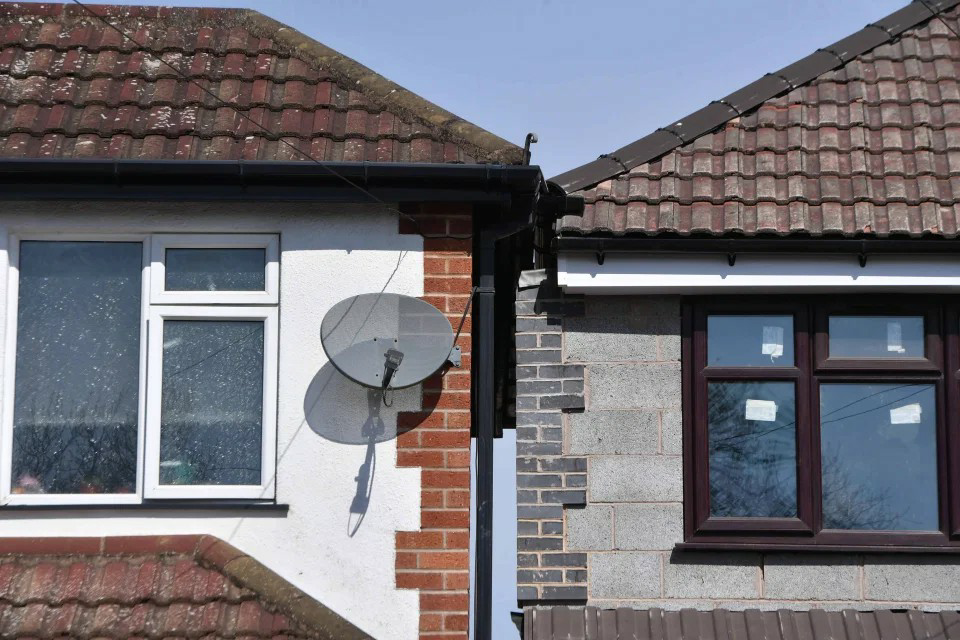
There is close and there's madness... https://www.thesun.co.uk/news/uknews/14830946/extension-leaves-neighbours-furious/