
ragg987
-
Posts
873 -
Joined
-
Last visited
-
Days Won
1
Everything posted by ragg987
-
As you have mains gas then boiler seems the right approach. ASHP can, in theory, be cheaper to run but you get into the issues of low COP when your supply temp is high (DHW at 50C becomes a problem). The good thing about gas is that, provided return is below the condensing temp of 55C, you do not hit the same efficiency issues as ASHP. Factor in current and likely bathing habits, so if you expect to run 2 large baths in the evening then you need more than 4 short showers in the morning. With my kids, I found "more means more" - we had a 120l DHW in the old house and it ran out, we have 300l now and it still runs out! There is a tendency (esp my younger boy) to stay in the shower until water gets cold. So maybe a 200l UVC with at least 20kW (or higher, depending on the spec of the coils in the UVC to transfer heat) to reduce recovery time to about 30mins or less. 100l of hot water at 60C will easily fill a large bath. Or a 15-20 min shower at 10l/min. (Both assume blending with cold at 33%). For UFH, a buffer + blending valve would give you what you need. The boiler will modulate based on energy transferred from coil to cylinder, gas boilers can modulate quite low, I think down to 10-15% of peak. Once your UFH load gets too low then the boiler will cycle. Inevitable at some point.
-
Maybe different in Scotland? I just submitted on the website and there was no discussion or panel. England.
-
I made a successful appeal, they put our build into Band H and I challenged and got it reduced to G. This was based on our planning drawings that (I assume) the council planning had forwarded to them. The key is that valuation bands are based on a notional value at a key date. For England that date is April 1991. So you need a time machine for a house built now. The 3 sources of information I used were: VOA for actual banding of local houses http://cti.voa.gov.uk/cti/inits.asp Zoopla for current house pricing Nationwide House price calculator for the time machine https://www.nationwide.co.uk/about/house-price-index/house-price-calculator Plug your new build house value into nationwide to get the price at the key date. You have your banding, if it is clear-cut and in the middle of a band you may be fine, but I took a belt-and-braces approach and looked at a range of house in our area (using VOA band+1, band, band-1) then checked last sale price or current valuation on zoopla and hence checked the price using the time-machine. Tabulate all this evidence and submit to VOA via their website. About 5 or 6 weeks later I got a nice letter agreeing with an apology for getting it wrong, followed about a month (might have been longer) later by an adjusted council tax bill. I was lucky that zoopla had calculated the valuation of our new build. I suspect this was because I used my zoopla account to update the information about the new property prior to this event. You may be able to use a valuation from an estate agent - ours provided one for free, I think that is commonplace.
-
@j_s my issues were on the supply duct more than on the exhaust - after heat exchange the exhaust tends to be around 8 or 9C, wheres supply can be below 0.
-
Ideally the insulation keeps moisture out else you will get condensation, which leads to soggy insulation (best case) or structural damage due to moisture if left too long. I had to insulate my ducts 4 times before I got it right. The first 3 were foil-backed insulation wrapped around the duct and sealed with aluminium tape. I thought this would be watertight, but after a few months the condenstion became visible. Does not help that the ducts in question were in our utility room where humidity can rise as we have a clothes line in there. In the end i used Armaflex - no issues since.
-
Demolish and rebuild - self build mortgage help please
ragg987 replied to mikew1978's topic in Self Build Mortgages
Not sure if this is feasible. You want to demolish the very thing that provides security against your mortgage. You might need to borrow against the notional land value as a self build mortgage which pays out in stages as build value increase. If that is right you may need to inject cash to reduce the initial loan value. I took my mortgage with the Melton. Might require a discussion to plot a way forward. -
Stunning views. Best of luck with build.
-
The table is quite clear on this. £34 per request, each request is for one or more condition. Our council (AVDC) accepted one fee for multiple conditions, I discharged them all through one application.
-
I pretty much avoided the chain BM for my requirements. Opaque pricing and generally quite high. I tended to shop in advance on internet, and managed to establish a few key relationships over the 'phone. 95% paid in advance. Where we needed something urgently, went through my builders account and he invoiced me. Probably paid a higher price by doing this, but by having this option for low-value and urgent requirements kept us working.
-
Slippery is matter of what you finish it with. We used Osmo polyx, and our teenage boys run around in bare feet or socks and no issues so far. Osmo also have a non slip finish if you are worried. In terms of noise, I suspect this will depend on construction method more than anything else. If your treads are light with limited bracing you have a drum effect and resonant structure. Thicker treads will be better. We have chunky treads with no risers. Solid and noise free unless used with hard shoes. This is where MDF is good, it is not as resonant as a hard wood. Maybe engineered or veneered stairs?
-
We paid £200 / day labour only for all our tiling. Approx 3 days per bathroom, porcelain tiles, including floors and part walls (shower, sink, toilet, bath). About 20m2 of tiling per bathroom, it involved some more complex corners, joints, holes etc as well as trims. The labour was cheaper than materials. Our local indy tiler gave great advise, customer service (we walked away with a boot full of samples) and supplied all tiles, grouts, adhesives, trims, tanking, drills at a good discount. Don't underestimate the cost of the bits - you can easily double the tile cost by the time you add the rest in. Prices on tiles can be crazy, and £61 seems very high, we compared a few on site and settled on a £26 one (after discount). Definitely man-made but it has all the lovely texture and randomness you can expect of natural stone.
-
Our build has T&T and I do like them. Tilt is very convenient and allows ventilation while still secure from casual intruders. We have curtains on some of our windows but the tilt remains inside the reveal and curtains are on the outside, so no issues here. Turn is inwards, which means window ledges cannot have lots of things stacked on them. We hardly ever use this feature, but it makes cleaning of glass very easy, as noted above. Don't think inward or outward opening has much impact on ingress by rain - if wide open you are letting water in anyways, if opening a crack then there may be a benefit but why not just tilt it instead? Our windows seal well (part of pressure test of whole home) and as the mechanism is multi-point I do not think it will be an issue. One other decision on T&T, the mechanism can be either tilt-then-turn or turn-then-tilt. If you are mainly interested in tilt then the first option might be more convenient. In our case we have key lock windows and if locked the window permits tilt-only without a key, provided it is in the tilt-then-turn configuration. MVHR is designed to provide adequate ventilation with all windows closed - that is its primary role. We leave ours always on and it will boost when bathroom humidity rises. I prefer not to switch off even when we open windows, just let it do its thing 24x7.
-
Commissioning for building control
ragg987 replied to Paul_c's topic in Mechanical Ventilation with Heat Recovery (MVHR)
Do it yourself, you will need to borrow / hire an airflow meter. I got a blank form from my supplier which I filled, signed and submitted. Do you have target flows for each vent? This should have been calculated during design. -
Yes, Prince 2 are about methodology, critical path, risk management, stakeholders etc. But of course to apply these methods you need to know a lot about the subject. They go hand-in-hand, you cannot have one and not the other to be effective at it.
-
Agree. I see effective Project Management as a neccessity, not a cost. Else you are risking the outcome of your £x00,000 investment either through missed opportunities, excess costs, poor quality or significant delays. I do not accept that a person without the knowledge can just step in and AND get it right. Full-disclosure: my job it to PM in IT services, I sometimes come across organisations who try to give the PM role to some bod in the business, these are inevitably a disaster. Then comes the question of how you provide that PM: the client - but only if you have the knowledge and time third party - either on the job as @pulhamdown or dedicated and probably part-time main contractor - in which case the contract should recognise that role We had a third party PM from design onwards and until water-tight and I picked up the role from that point as we were in more familiar territory. Our PM was generally on the ball and proactive, so key to realising our dream.
-
Good advice. I got myself into a contract for rendering and did not understand the consequences. In the end the costs were nearly 50% more than they had estimated. Vendor took me to small claims and the judge, while sympathetic, said he had no option but to find in vendors favour. So had to pay the balance plus court fees. And of course the mental stress on top - surprisingly it was a lot of pressure, I always thought I was good at handling that, lesson learnt.
-
I went to these guys who did the design (to a degree, I had to tweak it) and came back with great prices, my own plumber fitted. Skipped RHI. https://www.theunderfloorsuperstore.com/
-
Insulating to Min Building Regs
ragg987 replied to Ian's topic in Energy Efficient & Sustainable Design Concepts
There do seem to be a lot of similarities in the various builds on here. Ironic, really, are we losing our individuality, one of the drivers of a self-build? I suspect Grand Designs has crept into our subconscious... -
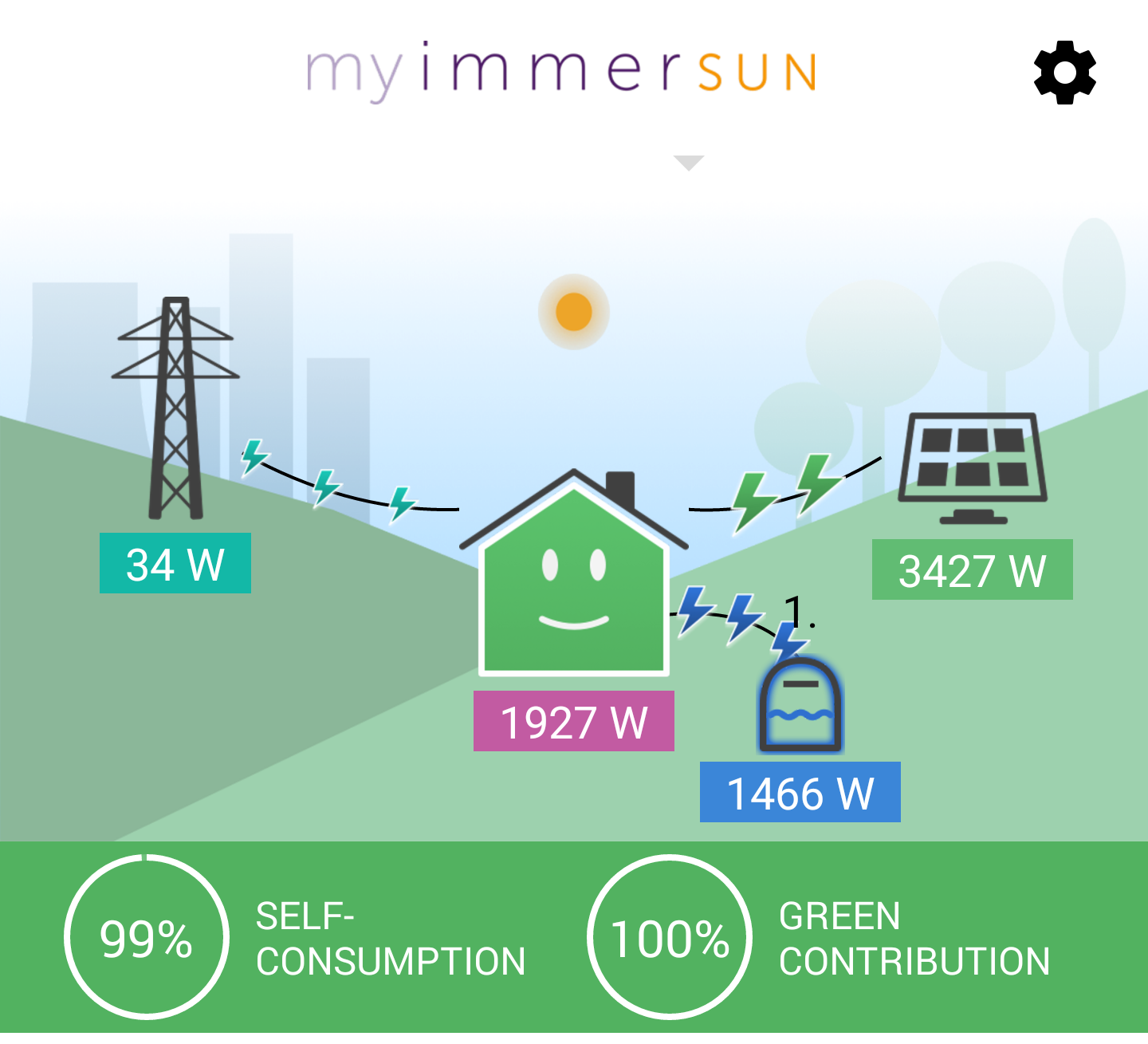
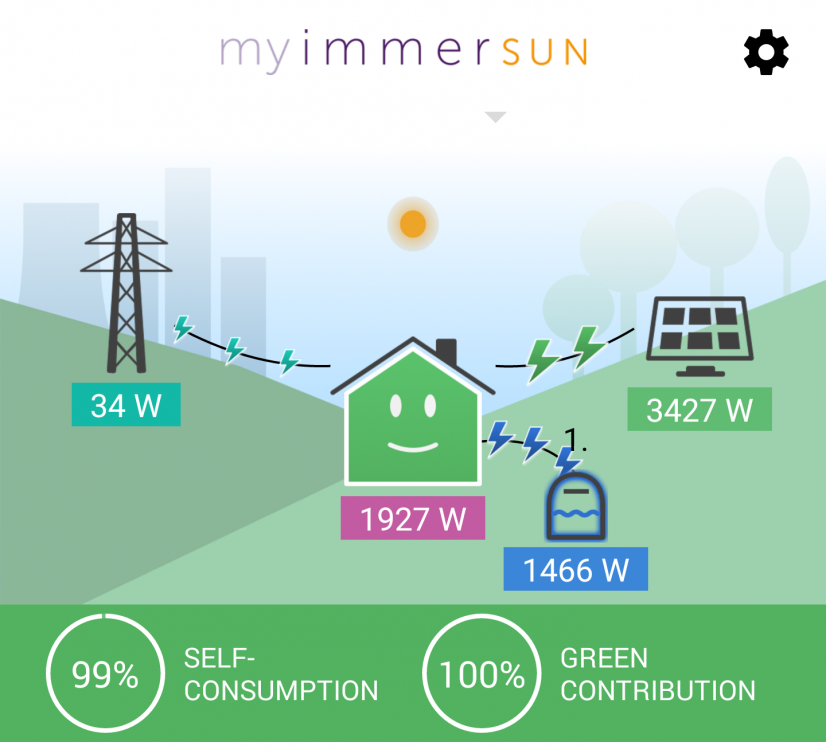
"...a thousand words..." Admittedly today is sunnier than usual. South-facing PV.
-
Our as built SAP shows 6500kWh for space heating. In Dec and Jan I would estimate we used 1600kWh per month, or 400kWh on input of ASHP based on scop of 4 (actual). £50 per month, some of which will have been offset by PV. The trick to keeping scop high is to run the flow as cool as possible. Keep ufh spacing tight, avoid driving the pump for hard and short cycles but rather on all the time and heating gently.
-
If you have a low energy house, close to passiv, then gshp may not be worth it, it is going to cost a lot more to purchase and install and I doubt you would recover the extra outlay. As you already have PV then just get a diverter. In our case we have 330m2 to passiv standards, inc pressure tested, and manage with a 7kW ASHP with 4kWp PV and an Immersun. We manage to use 97% of generated power with a total savings and income of £650 to £750 per year.
-
MVHR: More extracts than supplies?
ragg987 replied to Crofter's topic in Mechanical Ventilation with Heat Recovery (MVHR)
As above it is about air-flow balancing and not number of vents. You could have 2 supplies in your open plan area. Do you not need supply in bedrooms? -
@Nickfromwales is far more qualified than me for this - mine is more an opinion and probably what I would do faced with this choice.
-
I think up and over would be better? Or inside the partition wall to Option 2? Easier to attend to leaks etc, or make future changes, and also means you are not heating the slab all the time.
-
For 6 people a 300l store makes more sense to me. I would suggest 2 immersion heaters, one half-way up (or a bit above that) and one at the bottom. Logic as follows: Heat top immersion first to give you some usable hot water. This can be either electrical or diverted from PV (Immersun). I would suggest you set the thermostat relatively low - e.g. 50 to 55C to minimise waste through standing losses in pipes or through the DHW lagging. Once above has been satisfied, divert the input to the lower immersion. You can set this thermostat a bit higher to take advantage of excess solar during summer months. Note the Immersun has this logic built in as standard. You can also use the Immersun as the timer for direct electrical heating of the DHW.