jfb
-
Posts
646 -
Joined
-
Last visited
Everything posted by jfb
-
Regarding a heating source (sorry haven't read whole thread so assuming no water heating) - assuming it is a airtight/ well insulated why wouldn't you just use a small electric heater rather than the expense of an ASHP/GSHP. I had a SIPs built office similar size that I just used a small heater in and it was plenty.
-
why don't you tile it to the same level as the step?
-
Builders opening for multi fuel burner
jfb replied to Craigbillo's topic in Stoves, Fires & Fireplaces
Seems pretty straightforward to me - already has a decent bearing. Just take out the two courses below and make good. If the lintel is wood I would have thought you could clad the underside with some hardibacker or something like that. I used hardibacker as the register plate for my burner. But it looks like concrete lintel to me. -
I sold some lying around at mine on gumtree in Oxford. I think they were off to Africa!
-
I wouldn’t bother with pva. also don’t make the mortar too wet if you are pointing (not rendering). You’ll just smear it everywhere and make a mess.
-
So i finally had a look and both fans appear to be working. No mould in the duct from the Brink unit to the extract terminal. I noticed that there is some standing water in a small section - in the second picture there is a small section to the left of the EPS upstand (so to the left of the drain and nearer the back) with no route for the water to go anywhere. When the heat exchanger is in place this section is separated from the fan with the mould issue. Any ideas?
-
Use small bits of stone/brick to fill voids as well as mortar. Shove/throw some mortar in, push in some small bits of stone/rubble. Apply more mortar if needed and depending on the finish you are going for.
-
Hydraulic lime is breathable and doesn’t go with cement. Hydrated lime is what is added to cement to make it more workable and can lighten the colour.
-
I thought I heard that if you are running UFH that the UFH pipework can effectively be the buffer tank but you are saying that is wrong. My situation is: small conversion (70m2) , just UFH downstairs running 4 loops of pipe but as one zone (no upstairs rads), heat pump (5KW region) for DHW and UFH, UVC upstairs by bathroom. I hadn't accounted for a buffer tank so might need to think where it could fit as space is tight. Can you advise: 1. What size of buffer tank would be suitable? 2. Is it best/easiest to put the buffer tank upstairs with the UVC or can it be put downstairs by the UFH manifold? thanks
-
Isn’t sound insulation the only useful type of insulation on a non external wall?
-
Fair point terry.
-
I’m not entirely sure that is true. There is a bit of a mystique about it but I’m not sure it is justified. It is just that cement has taken over for so long that most Brickies can’t cope with something new. For someone new to pointing I would say using lime is easier than cement since you have more time to play with. There are also a few other differences. Dampen the stone you are pointing, keep the wall damp/covered if you can after the mortar is in. I would go for hydraulic lime 3.5 and sharp sand (1:3). Getting the right amount of water is key for repointing. You want it dry enough to not smear over the stone. Make sure you rake out enough, push the mortar in firmly and don’t be too fussy to get it looking right. Wait (sometimes a day later if not too dry) till it is ready to rub over ( I use the back of a churn brush that I have shaped to suit the stone) and make sure it is all pressed into place properly. Wait again till it is ready to brush over (I use a soft brush as I don’t like seeing brush lines). I can see the appeal of lime putty as you don’t have to mix up but it is more expensive.
-
why bother with the plasterboard you aren't using? 75m insulation, battening, 15mm soundbloc? Is it the extra sound reduction?
-
I would put the strong boys a bit higher up and accept that you are going to have to do some remedial filling in above the concrete lintels. It might be hard to get the lintels in if the stongboys are this low since the angled support for the strongboy can get in the way and you also need room to get the lintel onto the mortar beds.
-
Sorry last question - are you saying that I can put copper into that push fit isolator and plastic out? Or do I still need a converter before it?
-
I feel like I’m back at school!
-
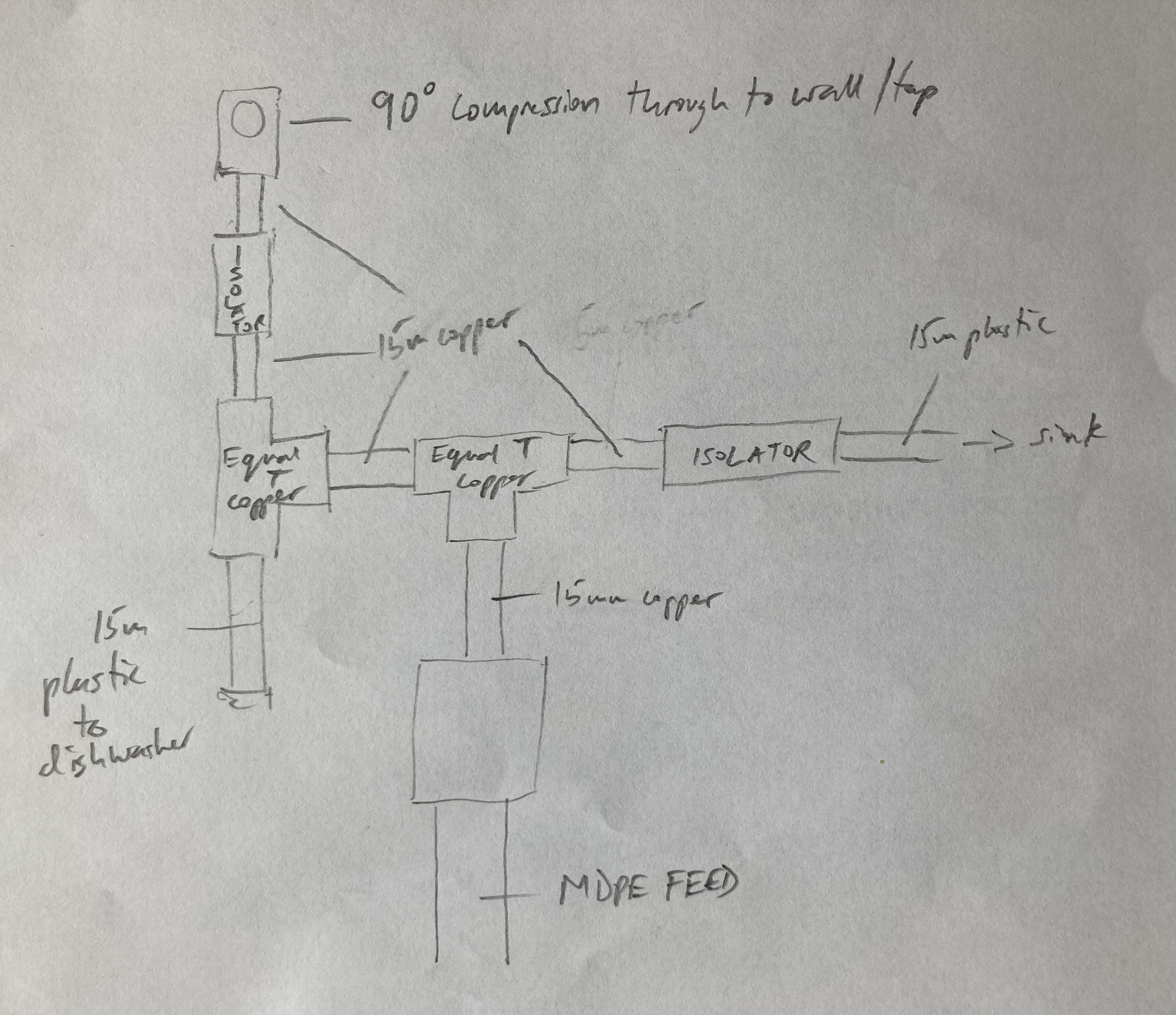
Is it ok to have copper going into a compression isolator and then plastic coming out? thinking like this........
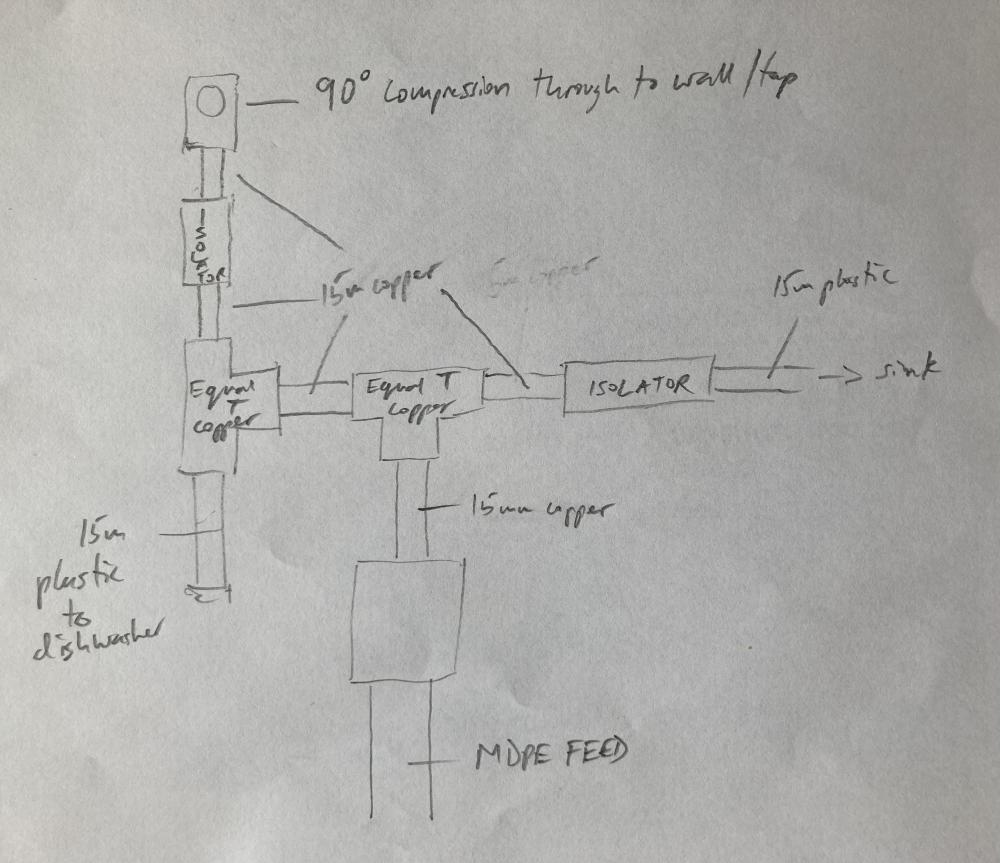
-
Also - would it be ok to put an equal t where the first 90 degree is and branch right for sink tap and put the outside tap feed on the left (before the dishwasher)? Or should the internal pipe work all follow after the outside tap?
-
Yes it isn’t great! And one of the reasons I want to sort it out. I’m also getting rid of the waste pipe behind as it is for a sink that was never used - should make it easier. Should I use copper pipe from outside all the way to the isolator and then plastic from there?
-
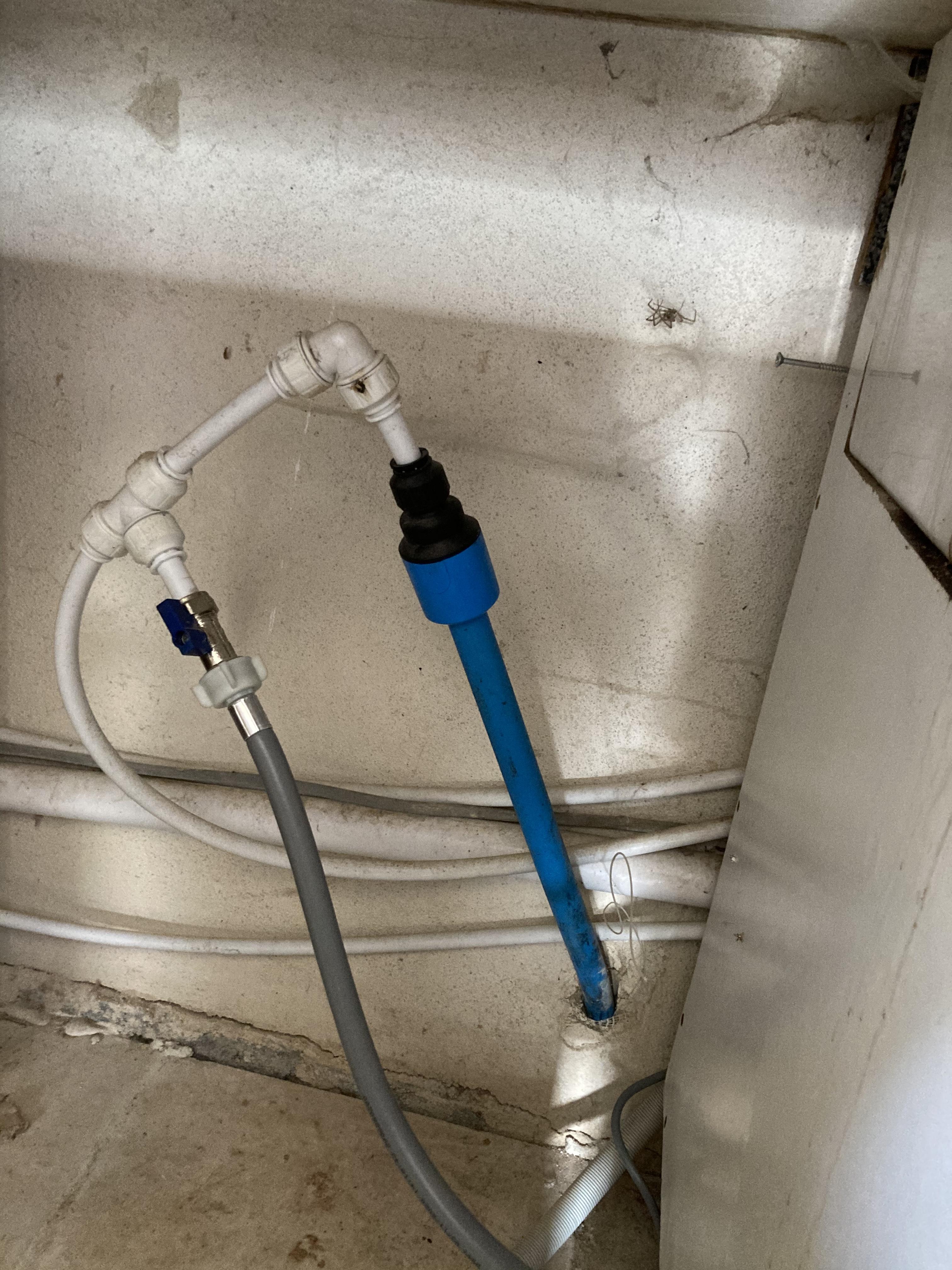
As the title suggests I am going to fit an outside tap. The mains comes into a separate boiler room (with pressure restrict or) and then splits to 3 feeds into the house (all with isolators in the boiler room). One of the feeds comes in under the kitchen sink as shown in the picture. Plan is to branch off the incoming 15mm just after the first 90 degree bend and before anything else. I understand I need a double check valve before it goes through the wall. Is it necessary to put an isolator in as well given that I can easily isolate this supply in the boiler room? anything else relevant? Does it matter if the pipe through the wall is level/sloping up or down? any major difference between outside taps?
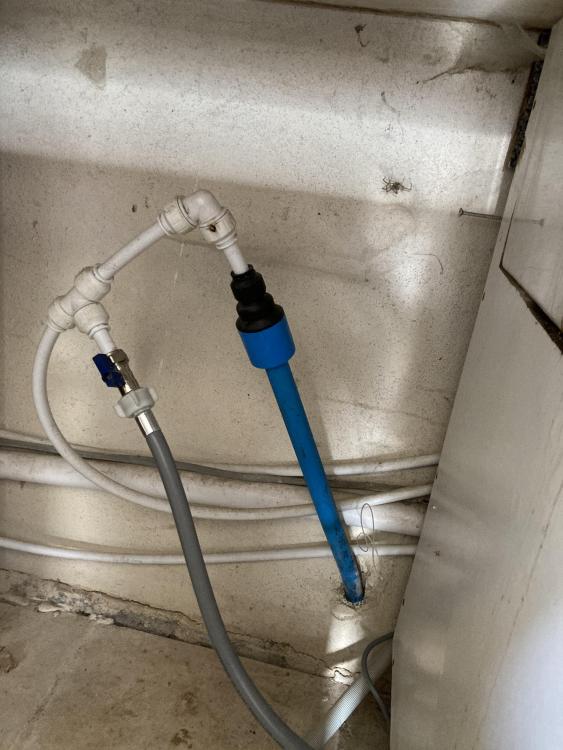
-
I would say that the benefit of insulating internal pipes is limited (coming from someone who lagged the lot religiously!). I guess there is some benefit for the hot pipes but only if taps are being used reasonably close together in time as otherwise the heat just escapes into the house.
-
Too true. But why does it follow that we should accept being tracked in every other sphere of life?
-
Speak for yourself! I shall resist all such change. I'm with those above who are skeptical of the benefits of such things. I mean I can't even understand why anyone would want google or amazon or whoever having a permanent audio/video feed from various parts of my home.
-
You just have to get windows that are large enough. Mine are a little too high for regs so I have to put in a permanent shelf/step up for access.
-
I had a garden studio shed built out of SIPs including the floor and installed by a couple of Canadians where it is more common. They just put in some concrete piers and built off that. I didn't worry about vermin underneath and didn't have a problem (or maybe I just didn't notice the damage being done!). Anyway if the concrete base isn't already installed I'd definitely do that - much cheaper and provides the ventilation it needs.