Jenki
-
Posts
830 -
Joined
-
Last visited
-
Days Won
7
Everything posted by Jenki
-
@mrmike, welcome, there are a few Highlands self builders on here, some already built, some building. Where abouts are you? I'm near the North Coast just South of Wick.
-
@jamieled do you have any photo's of this detail?
-
I found the detail about reversing the Grain detail of the top and bottom boards, interesting, and if honest opposite to my initial thoughts. EDIT_ sentence revised didn't make sense The big worry of timber cladding - the unknown result with the passage of time.
-
@Nick Thomas Thanks for the response, some more reading to be done... @SteamyTea This is the difficult bit, I'm not sure, but if I don't put sensors in the slab. flow sensors on Pipework etc then I'll not have any data. If I don't have a plan to work to, it wont get installed, so I'm trying to get some flexible "EASY" solution in mind, so that I can plan for that. How do you store your temperature data? Thanks
-
This hand book is good, however doesn't answer your question. I'm also thinking of how this detailing will work, one option I was thinking was to reduce the boards widths slightly between reveals of windows / door close to each other to get the base board at the edge of each reveal the same? still not sure if this is the best way forward though. TTF-Cladding-Handbook.pdf
-
There was similar thread a few weeks ago, the OP ended up (after breaking / chipping drills) renting a Mag drill and cutter. At the thickness your talking about this is the best way to go. otherwise the drill will snatch, chip etc or brake your wrists.... EDIT., oops, just re read that , not 3/4" inch.. It will depend on diameter of hole, and number. but you can get some good results with metal hole saw
-
I've read loads of threads regarding sensors in the slab, flow sensors, etc. And although I want my heating / DHW controls to be simple and hopefully off the shelf. I do want to log temperatures, humidity,in the slab,rooms etc to hopefully understand how the house I build actually works, the full details of what and how I'm unsure. But if I get the data then I can worry about that later. So how? I'm not a great programmer, but done some RPI stuff. Then found a really easy example using an ESP32, and connecting wirelessly to FireBase. Is this an option? I was thinking a mySQL database on a web server, but the FireBase example showed some easy web app for displaying the data as well. So for a novice, with little( negligible) experience with networking etc. What's the most simple solution to obtain, then store, then use the data, be that displaying temperatures realtime or number crunching years worth of data in a spreadsheet. Thanks in advance.
-
looks great, love the top row slate detail @the ridge 👍
-

Any truth to ASHP problems based on location?
Jenki replied to Shaun McD's topic in Air Source Heat Pumps (ASHP)
I've coated the fins on my A2A units with ACF-50. -
My Main concern is not pipes close to external walls but pipes close to stud walls(to be built). When laying the concrete you can end up with a hump near the pipe. Flush should eliminate this issue. I plan to use the same reducers for the kitchen waste. Accuracy of positioning of these pipes is important full stop. Some more than others, so setting the height is simple really, plus it will give a visual reference when laying the slab. I'm working on my layout dimensions now. Triangulating the positions from corners / fixed details on the perimeter seems to be the most logical way of checking the positions.
-
I'm tempted to get all mine flush with slab finish level with a coupling and a internal blank cap to seal. Then they can be power floated over, and the blank removed when the slab is cured.
-
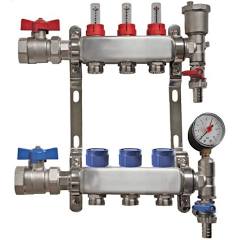
So just a basic manifold with isolation valves? Simple.
-
Cladding and how to Finish Bottom
Jenki replied to GrantMcscott's topic in General Construction Issues
@Kelvin I was planning to use reclaimed slate. I've seen people mention using Ubbink Ubiflex lead replacement. -
Cladding and how to Finish Bottom
Jenki replied to GrantMcscott's topic in General Construction Issues
I'm unsure what the block and cavity is for?. It looks like the foundation was done with Brick / Block &render skin in mind rather than timber clad. My timber clad build won't have a cavity detail? before answering I would want to see the details of the foundation makeup thus far - do you have a drawing of the foundation ? -
This is the Scottish one I used. Looks different the the post above. trbo-advice-on-planning-for-small-development-march-2016 (1).pdf
-
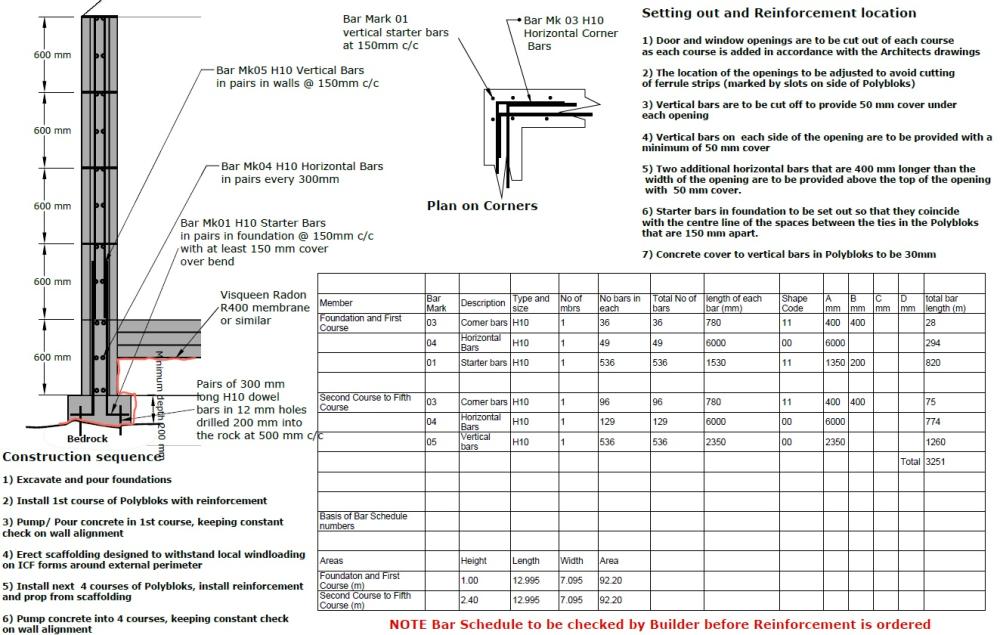
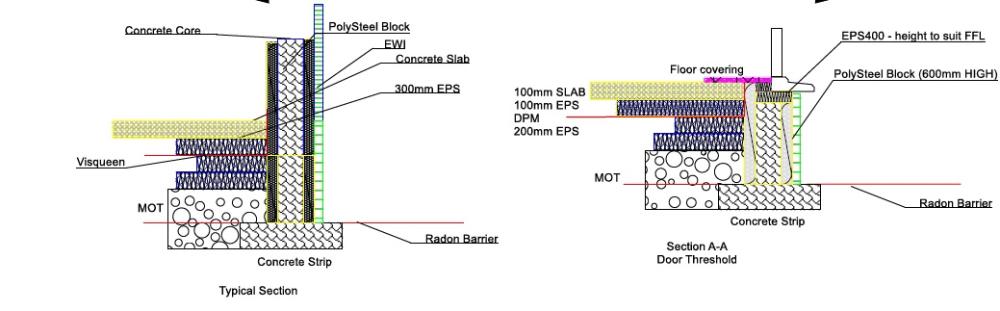
Any of this help?
-
This is a second post where a 20mm PIR layer has been mentioned. To me it makes no sense. UFH is a different mindset to radiators. You mentioned using the slab as a thermal mass, and I'd go this route. Put as much insulation under the the 100mm slab. Personally I'd use the slab as a final floor it's not a huge area. Look at using EPS as an alternative to PIR for cost reasons. (You will need more depth circa 300mm)
-
Saw your post on "self build scotland" Facebook group,👍. The surprised comments that you "want to put so much insulation in" make me laugh . Anyway, Jewson's self build account seems to be a good option, they are sourcing me 100mm EPS sheets for my foundation slab, and are delivering free to site North Highlands.
-
Yes. But watch your wrists. Also cobalt can chip quite easily
-
Cobalt drills will murder the steel, but at 16mm you have to be careful when, not if the drill snatches, (wrist breaker). Take your time, or save your wrists and rent a mag drill.
-
Are these costs realistic for a 500m2 house
Jenki replied to miike's topic in General Self Build & DIY Discussion
I can't disagree with this. This build is high spec, high end, and on a sloping site. I think @nod posted he managed to get one of his builds in under £1k /m² and he built it all himself. Materials prices are unstable and inflated, costs are rising high end labour more so. If your budget is that tight and you are looking at using a shed kitchen I'd worry about the finish you will achieve. Lots of great advices in this thread, but it's time for some reality. -
Don't see why this couldn't be carried out at the consumer unit, using the Phase and Neutral of the main switch, unless the tails have been extended, if so the measurements could be taken at isolator / switch fuse. It's a standard test using an earth fault loop impedance tester. Your electrician can sort this no problem.
-
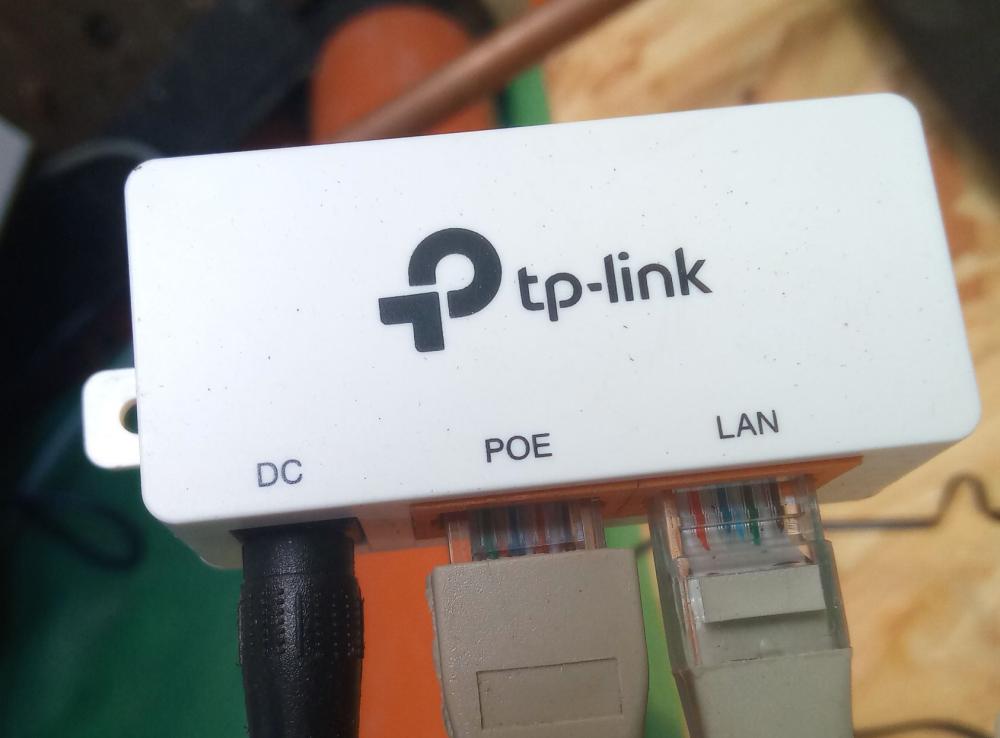
HI, I have 2 off TL-WA801N used as wireless access points. they are (were) powered by the POE injectors that came with them. Unfortunately 1 has just stopped working. I've swapped them over to check its not cable related and tested the cable and these are ok. so its down to the injector. Looking for a solution I came across POE switches, and thought great that will tidy the whole lot up and bought this cheap version. But this won't power the AP. I'm out of my depth here. It shows this capable of powering cameras but it wont send power to the AP. there are no setting so assume this just doesn't "see" the AP as needing POE? What's the best solution to get back up and running? I like the idea of the above as it saves to plug sockets, and removes the mini switch/ splitter I have. and removes the extra patch cables. but ultimately need something that works and hopefully for more than 4 weeks. Thanks in advance

-
Installation of Vaillant AroTherm Plus - DIY
Jenki replied to BartW's topic in Air Source Heat Pumps (ASHP)
Surely this is the heat output? (I've not looked at the model number,) Power input will be way less. Edit: What @Nickfromwales says ↑↑↑↑ -
To Tank or not to Tank? bathroom advice required
Jenki replied to TryC's topic in Building Materials
It's weird, but I've used liquid tanking around bath and shower for 20 years, and although it's called tanking solution, I always viewed it as waterproofing. And reserved the phrase tanking for a wet room, with shower tray former.. I've looked up the word tanking and it's clear I'm wrong in my thinking. That's how I got stuck in this wormhole. So to confirm my enlightened ways. It's very good practice, nay essential to "tank" showers, baths and wet rooms. And it's not that expensive ☺️