ProDave
-
Posts
30861 -
Joined
-
Last visited
-
Days Won
427
Everything posted by ProDave
-
The point is, few of us know what to specify when ordering glass units. and this example just shows how much variation there can be between units that look alike. In some ways it was easier when choosing the windows for my new house. All the suppliers that quoted, provided the Uw and Ug values for each window. They were not bogged down in detail about what coatings the glass has or what gas is used to fill them, just the overall performance. And as it happens the choice was easy, the second best in terms of Uw values (only second by a tiny margin) was also the cheapest quote so that is what we chose. I guess later on when I start looking for the tripple glazed stained glass unit I just need them to quote the Ug value and then compare different options.
-
While that cavity is open under the window, is it not a good opportunity to drop some lose fill bead type insulation in there? Keep pouring and pushing it down with a stick until you can get no more in?
-
Thanks. It turns out it is one of a handful of channels that are on freeview, but stubbornly remain as pay channels on satellite so are not of freesat. And since the only recorder I have is freesat I can't record it. I could watch it live on freeview, but I think I have made my preference about adverts known. Quite why this ludicrous situation persists I don't know. Does anyone who pays a subscription for satellite tv really feel they are getting value for money by paying to watch some channels that are free on other platforms?
-
Our present house was built by us in 2003. We actually paid a builder to build a wind and watertight shell including windows and doors. At the time I didn't know much about what were good or bad windows, but I always thought what they fitted were pretty basic timber windows with double glazed units. Having said that, we never had any issued with condensation or anything like that. Right at the start very early on, one DG unit cracked. Even with a crack in it, it still worked well. Some time later another one broke, we don't know how. Since we are trying to sell the house, we thought we better get them replaced, so got the local "double glazing" company to fit new glazing units to them both. In the summer. The new units fitted perfectly and look identical to the original ones. BUT now it's getting colder, we noticed if you drained a pan of boiling water down the sink, the new pane mists up with condensation, while the original two don't. A test on a cold day (I didn't measure the outside temperature) with my IR thermometer showed the inside pane of the original units to be showing 16 degrees but the inside pane of the new unit is showing just 14 degrees. Now this might be partly my fault for not specifying anything about the replacement units other than they must fit. But it's certainly a heads up to anyone else to be careful. It also must show our original ones were not that bad after all, probably better than we gave them credit for. It's also a concern as soon we will be looking for someone to make us a tripple glazed unit with a stained glass panel in the middle, and unless this local company can explain why these units were so poor, and genuinely assure us they can do better, they are off the list.
-
Do you want to post some pictures of the suspect wiring?
-
Very cheap MVHR
ProDave replied to sphannaby's topic in Mechanical Ventilation with Heat Recovery (MVHR)
If anyone is interested I have been doing some measurements. When i powered it up in "fan speed 1" for my upside down test, I was surprised how noisy it was and how much air it was pushing out. now as a simple guy, I had expected speed 1 to be the slowest. Don't be silly. Speed 1 is the fastest speed. Also the one I have appears only to have 4 speeds available. So power consumption measurements: Speed 4 = 0.2A = 49W Speed 3 = 0.5A = 122W Speed 2 = 1.1A = 269W Speed 1 = 1.7A = 416W Obviously I will be delighted if speed 4 is sufficient for trickle ventilation but I won't know that until very much later on when the house is sealed and it's all ducted up and flow rate measurements done. Another point is according the the manual SW2 should give you the ability to increase or decrease the motor power, but on my unit SW2 is not fitted, though the pcb has the pads and silk screen labeling for it. On speed 4, the slowest, it is whisper quiet. -
Very cheap MVHR
ProDave replied to sphannaby's topic in Mechanical Ventilation with Heat Recovery (MVHR)
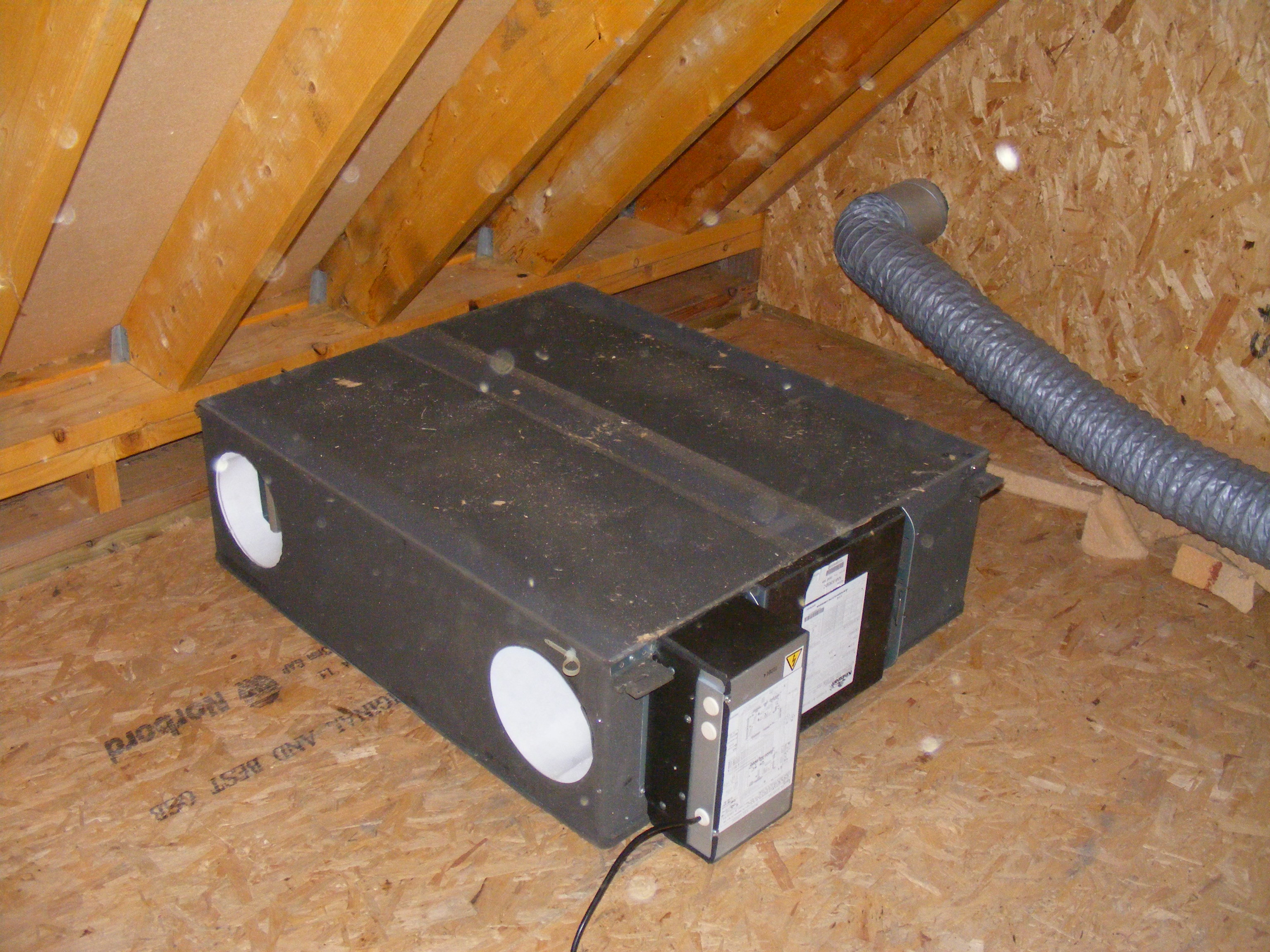
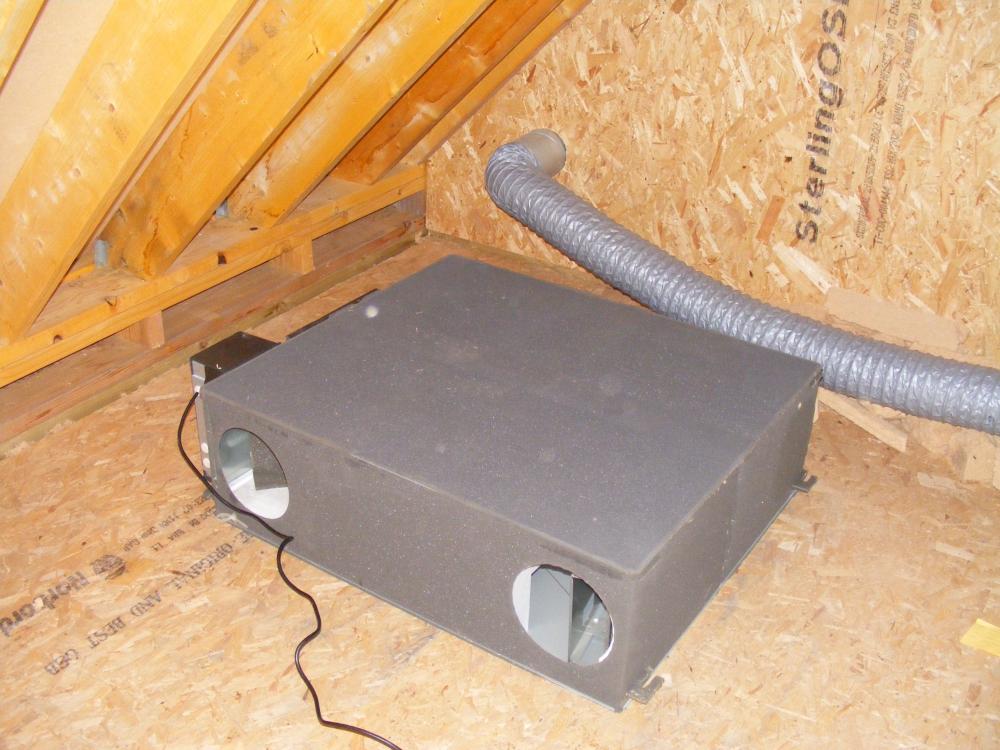
I have done the "upside down" test this morning first picture shows how it would have to go the "right way up" leaving just enough space to withdraw the filters while crouching down right in the eaves. The second picture is with it "upside down" that will enable me to push it almost tight into the eaves and you will access the filters from the outside edge. It makes no strange noises when upside down, the fans run just as they do the right way up, anf the bypass flap also operates correctly upside down. Next question. How are you all mounting these? the manual seems to major on hanging it frm the ceiling via threaded rod to the 4 lugs. That would be very hard to do in this location. I am thinking of still trying to support it from the 4 lugs but on some kind of anti vibration mount?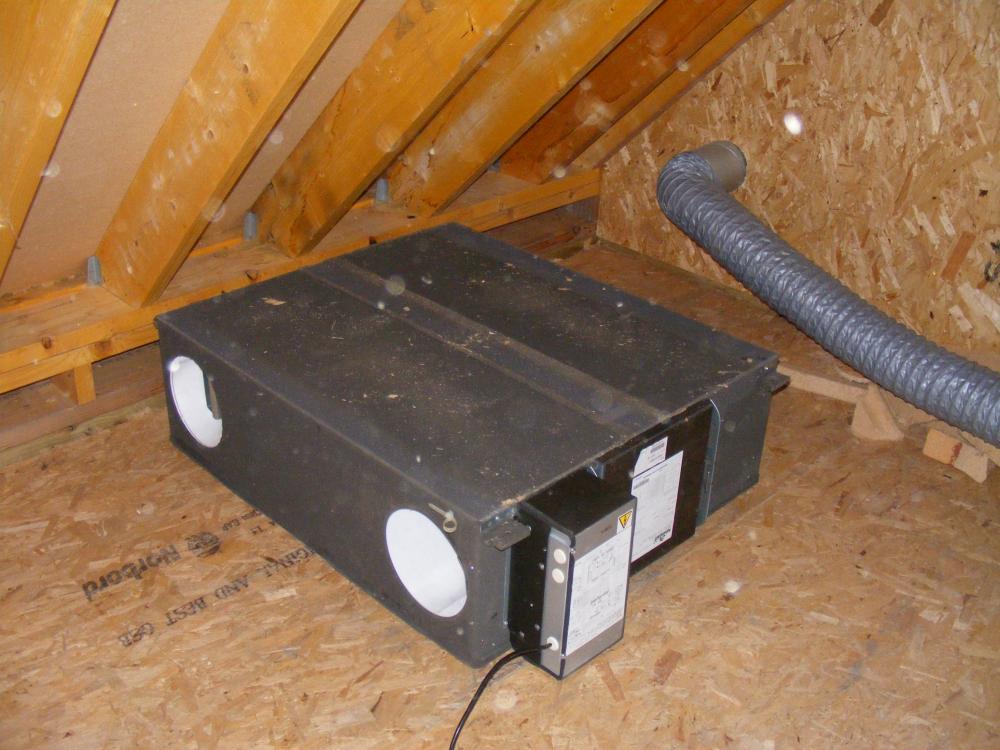
-
Isn't "home" a pay tv channel? No hope of me watching it then.
-
Attic cold water tank - anti-freeze measures?
ProDave replied to readiescards's topic in General Plumbing
I remember this one from ebuild now. If the static pressure is good but it is the inability to supply any decent flow rate, then the accumulator is the solution I would try. It will slowly charge up when you are not drawing water, and will supply your demand (as long as it is big enough) -
I've had enough: please check my thinking before I.....
ProDave replied to ToughButterCup's topic in Planning Permission
The normal procedure is to apply for temporary permission for a static caravan while the house is being built. that usually comes with a planning condition that the static van must be removed once the house is complete. In our case we wanted the 'van to remain as a work space / studio so we managed to get the condition instead that habitational use of the static 'van must cease when the house is complete. -
That sounds like the way forward. Get them to design it with a 2 metre long panel in each main wall, that can be left out if it has to revert to the smaller size. And best of luck with it
-
Thanks for the picture. so you cut one of the verge angles like that I take it? Next question: I assume you can buy a filler piece (foam or something better) to fill in the box sections at the eaves to stop vermin, birds nesting up there etc? (ventilation is already taken care of as it will sit on a vent strip)
-
I've had enough: please check my thinking before I.....
ProDave replied to ToughButterCup's topic in Planning Permission
Can someone list the planning history for this site. I am guessing: applied for permission for house - refused. Applied for permission for stable - refused. started building stable before application was determined, while living in a static caravan. I don't believe enforcement action is taken until an appeal has been heard, but that begs the question, appeal for house, or appeal for stable, or both? -
Okay, so you hide some touch sensitive electronics behind a wall tile. What happens when it goes wrong? break out a tile and replace it? Sorry, I am far too practical to build in something unrepairable like that. (I could bore you with the story of the ready made shower unit I installed once, and how we had to remove the entire thing to get to the box of electronics at the back to replace a blown fuse)
-
I fear the "wanting a bigger garage" bit may be too easy for the planners to spot. Would it fit in or become over developed? One way round the timber frame thing would be to talk to the frame manufacturer. Could they design it as the larger sized garage, but if your amendment is rejected then just miss out a 2 metre long wall section on each side and a few less roof trusses? that might enable them to accept the order and shcedule it's production, knowing there is an easy way to alter the design at the last minute.
-
I agree it looks like that in the photo, but they are not. It's a trick of the light, photo taken late on a dull winters day and the camera decided it needed to turn the flash on which might explain it.
-
Electric towel rails usually only have low power elements, so as a PV dump load are not that good.
-
Blockwork below the belcast is just being painted with light grey masonry paint. Not much of it will be seen, at the front the ground level is high and it's down in a trench, and at the back, most of the house will be covered with decking anyway. The window cills are aluminium, painted the same colour as the aluminium cladding of the windows. Stones used the same windows but had his own aluminium cills made as he wanted them deeper.
-
Attic cold water tank - anti-freeze measures?
ProDave replied to readiescards's topic in General Plumbing
I can't see a water tank in the loft solving a low water pressure problem. The pressure has to be enough to reach the tank, otherwise it won't fill. If your problem is low pressure at times but high pressure some of the time, a big pressurised accumulator may be your solution? -
It's a low pitch, I haven't measured it, but more like about 20 degrees.
-
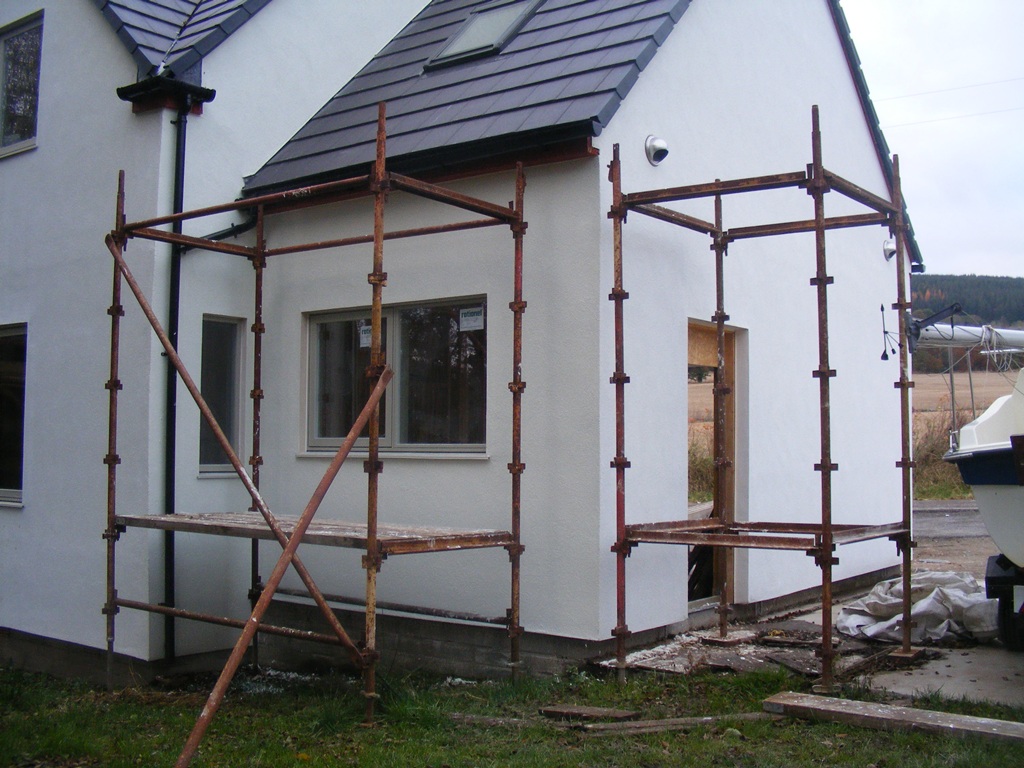
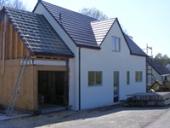
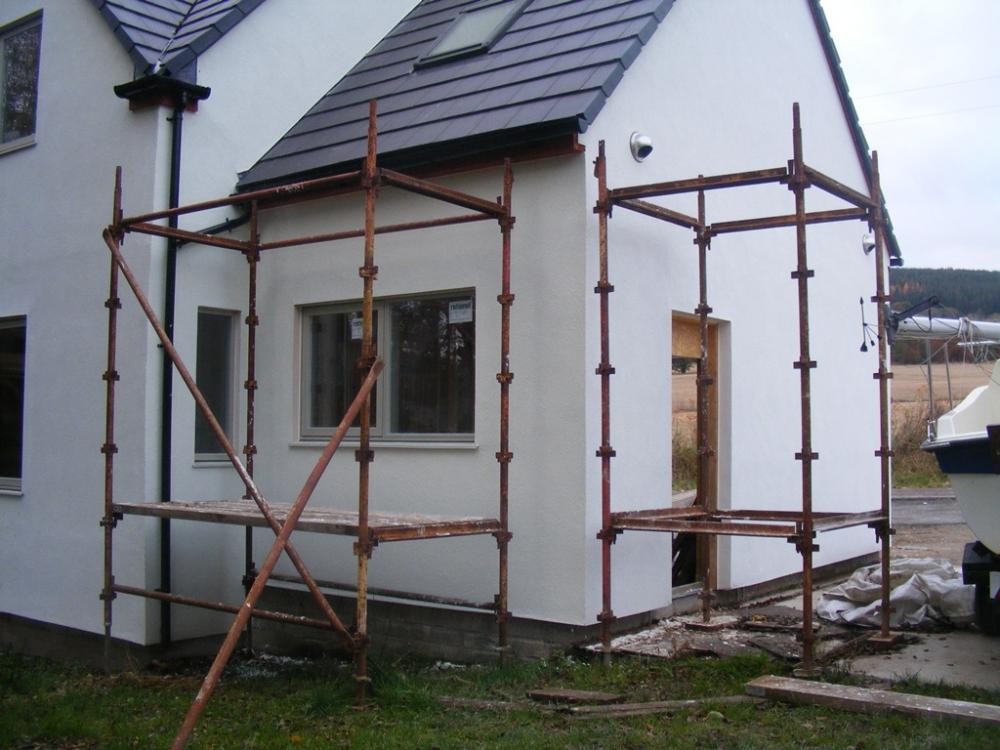
The last wall of my house, the back wall of the garage was finally given it's top coat of render today. This wall had been held up for the garage window which was delayed a bit, then it was a while before I could get help to fit it, then the weather turned. But out of the blue the renderer turned up today saying he "thinks" it will be okay. It looks good and has skinned over nicely. Then I saw the weather forecast which said -6 tonight. So I have covered the back wall with OSB sheets leaning from the scaffold platform and resting on the gutter, and covered around the ends with a dust sheet to try and keep the worst of the frost off it and hope it is still okay in the morning. This is the last bit of wall to be rendered so that is the main part of the house finally properly wind and watertight. well except for the fact there are no doors in the garage yet. More on my blog at http://ardross.altervista.org/Wilowburn/rendering-and-garage-finally-finished/
-
I'm going to make a shed out of pallets.....
ProDave replied to ProDave's topic in General Self Build & DIY Discussion
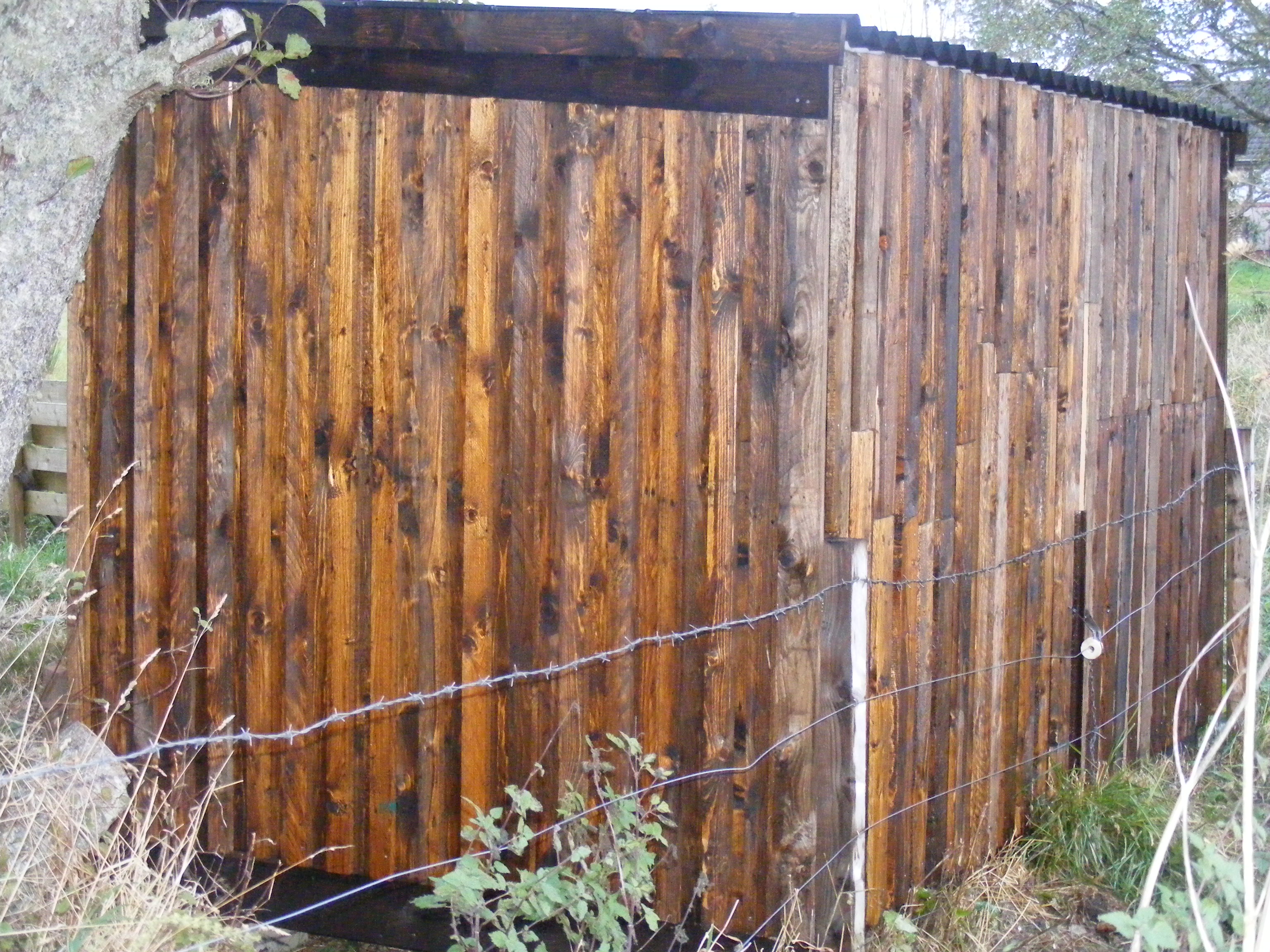
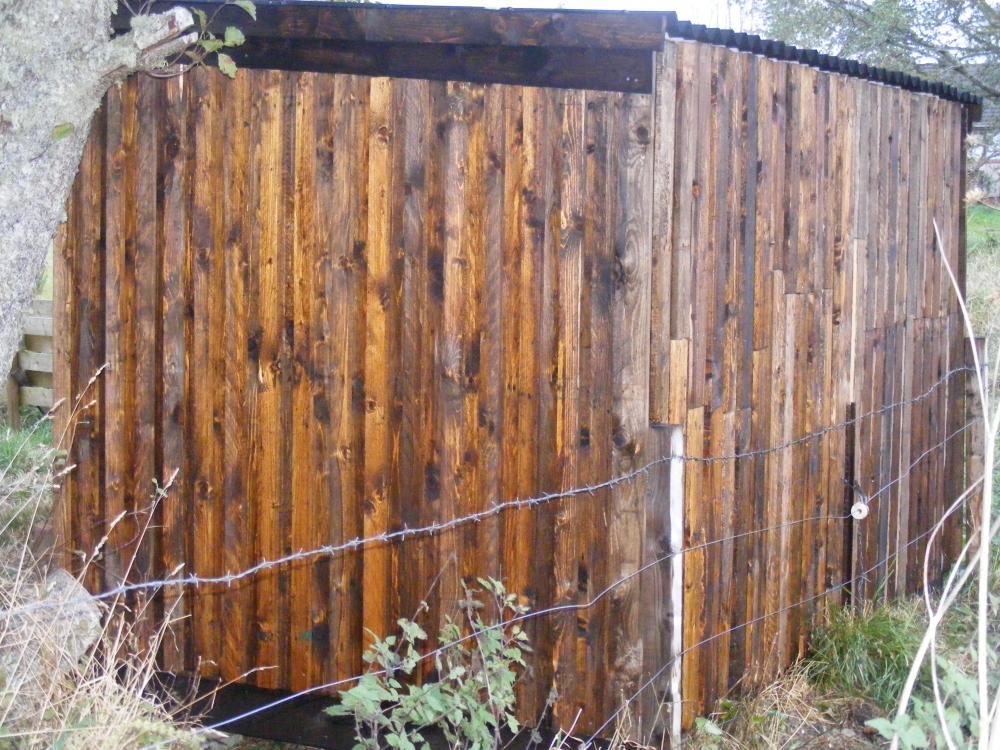
A bit more done on "the shed" I have dismantled the rest of my pallet collection. These are mostly the pallets that the roof tiles came on. These have yielded much thinner and narrower planks. these have been used to cover the joints in the original shed wall planks, to stop driven rain entering. What this has shown is just how many pallets you need to get any useful amount of wood from. What started looking like a very large pile of pallets in the end was barely enough to complete the shed. Watch out for the next installment. The bearers from the roof tile pallets are set to become the frame for a bench inside the shed.....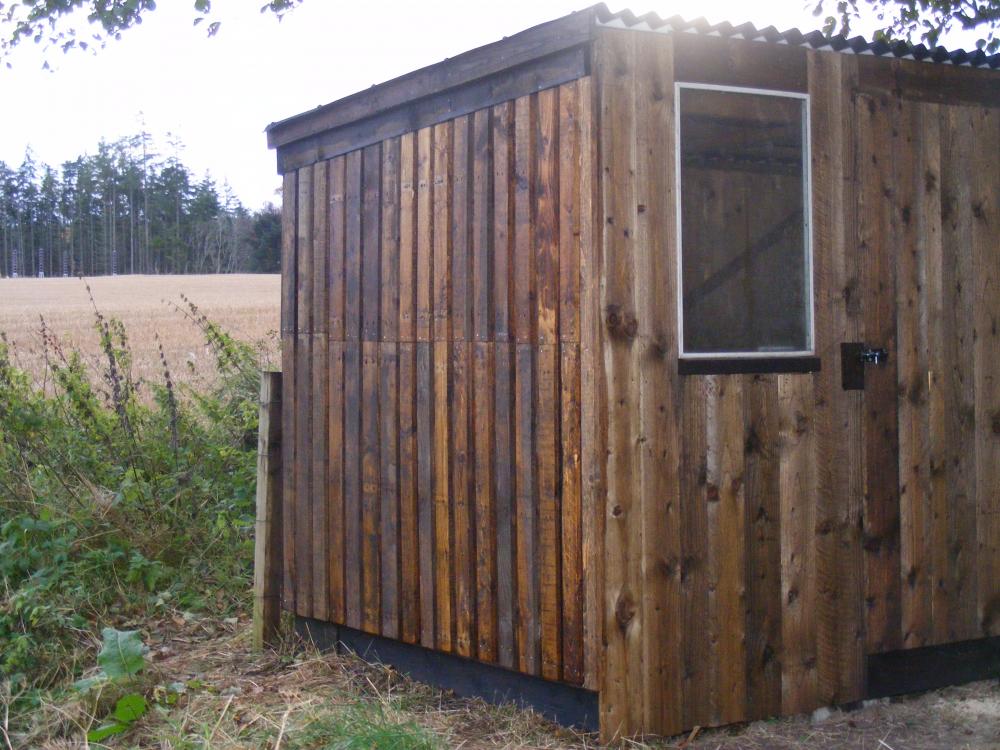
-
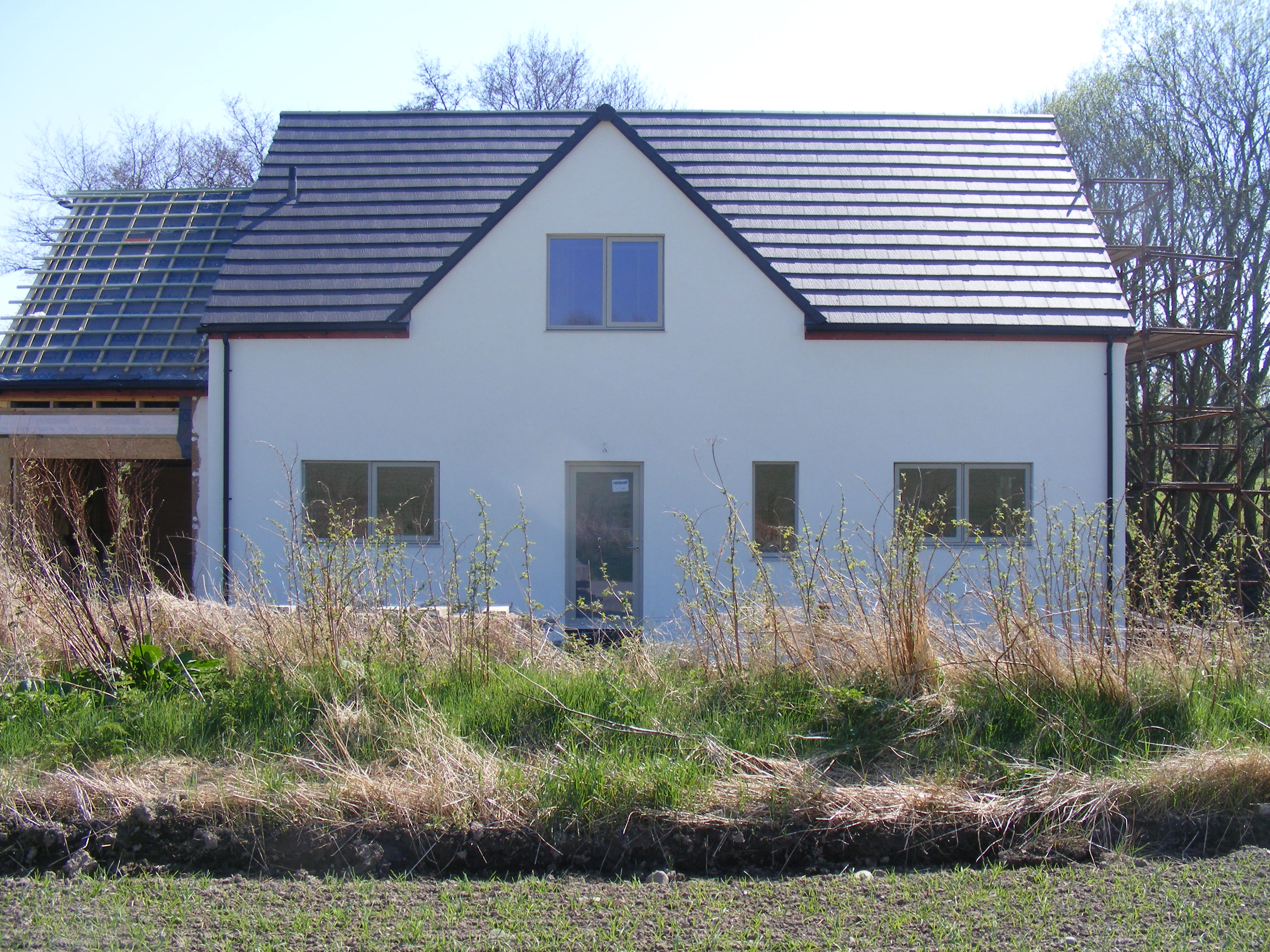
My shiny new Rationel triple glazed window are externally glazed.
-
I think i will agree that it's carp, and I would not have that on the outside of my house.
-
Very cheap MVHR
ProDave replied to sphannaby's topic in Mechanical Ventilation with Heat Recovery (MVHR)
I think I will put a lead on and power it up. then turn it upside down and see if it makes any funny noises.