ProDave
-
Posts
30861 -
Joined
-
Last visited
-
Days Won
427
Everything posted by ProDave
-
Hi and welcome to the forum. If you want to start a blog, you need @recoveringacademic or @PeterW to enable that for you. Otherwise just to ask questions, start a new thread in the relevant section of the forum.
-
Your problem is the amount of road to dig up, very expensive (I paid £1K just for the road crossing across a 3 metre wide single track road) You need to find out WHY they need to run the cable so far. If it is capacity issues ask just what rating supply they can give you from the existing infrastructure. It's not a matter of the condition od the existing cables, but their size.
-
Chip away from the inside to enlarge the hole. Drop a rope out through the hole. attach the face plate, with copious amounts of sealant applied. Pull rope, face plate pulls up to hole. Retain tension until sealant dried. Cut rope and push the end out.
-
Can you get to speak to the surveyor that made up the quote. It could be the existing cable is at full capacity? Or did you tick the wrong box and and ask for 3 phase, or an unusually high capacity supply? (I was "offered" a 12KVA supply and chose to accept that, as I just knew if I wanted more I would be hit with a cost for upgrading the local transformer)
-
Avis/Budget rental and a New Home
ProDave replied to TerryE's topic in General Self Build & DIY Discussion
The DL is in 2 parts now, the paper bit (that seems to last forever) and the plastic bit with your photo that needs renewing every few years. Which bit did you send off for the change of address? Would the hire firm not have accepted the other bit? -
The controls are indeed different. For a system boiler you would expect a couple of motorised valves, a pump, a programmer a wiring centre and you would connect it the way you always had, and it would work. I think the trouble with heat pumps, is they are all so individual, not much cominality between makes. My own, the control box lives inside, connected to the heat pump with a 4 core cable. As well as plumbing in the usual valves and pumps, mine has a flow switch to connect (it will refuse to run if there is no flow detected) It also wants control of the immersoin heater in the HW tank, and a few other details. Nothing complicated but it needs a bit of reading of the manual and applying that.
-
Connecting a monoblock ASHP is really no different to connecting an outside system boiler. Most plumbers would be more confident pricing for that.
-
The planning can be locked in once you have "started" the development. there is then usually no rime limit on completing it. What constitutes "starting" will be individual to each site, but in our case we had a planning condition that the entrance to the site must be formed prior to building work started. I had a letter confirming that once I had created that entrance, the development had "started" so If I wanted to bail out, I could have sold it then with no fear of the planning lapsing. I suspect in any scenario where you are selling a part built house, you would be lucky if the sale price recovered the plot price plus what you had spent.
-
Steeling the Show. And an attack of wind
ProDave replied to ToughButterCup's topic in RSJs, Lintels & Steelwork
My only though, is if you bring to the attention of BC that there might be "voids" in the concrete fill of the blocks, then you re opening a huge can of worms, if Mr BC wants to be picky? Find a solution without him? -
Buy a digger, learn to drive it and dig your own foundations. Go on, you know you want to......
-
Scotframe were the company that refused to talk to me when I started mentioning getting one of their standard offerings and increasing the amount of insulation...... Their exact waffle was "there is no synergy between what we offer and what you want"
-
Tell him I'll give him £600 for the SB
-
I am pretty sure this was the one I bought from Germany https://www.ebay.co.uk/itm/20-Rollen-proclima-TESCON-VANA-All-round-Kle-be-band-30-Mtr-x-60-mm/381452848613?hash=item58d05c8de5:g:DG0AAOSwwbdWMxxx Be careful when comparing roll prices between one manufacturer and another. The Tescon is 30 metre rolls, some others are only 20 metre.
-
Originally the design was for the OSB joints to be taped and the OSB to be the airtight layer, but I decided a proper air tight membrane was better. Some of the OSB did get taped first before I made that decision but I consder that a waste of tape.
-
Mine is between the OSB and the batten that forms the service void.
-
Check it's weight. If less than 200Kg per square metre, buy some of these https://www.ebay.co.uk/itm/EX-DEMO-Versadock-Low-Profile-Floating-Pontoon-2m-x-1-5m-VERSADOCK-APPROVED/292409877779?hash=item4414fca513:g:aIcAAOSwxKBZisXi Do you need PP to have a cabin / houseboat floating on your lake?
-
Hi and welcome to the forum. It sounds like an interesting project, probably best not to divulge the exact location until you have secured it, if not done so already.
-
If you go to one of the established TF suppliers, chances are they will do the building warrant submission for a very reasonable price. If you are happy with a "standard" timber frame construction that may well be the best approach to this. We wanted something a bit better and none of the standard TF companies would do anything other than their standard make up, one even refused to talk to us. So we employed an archtectural technician and structural engineer to design it all and then got a local firm of builders to build it. Building control are a whole lot easier to deal with than planning. If they encounter an issue they will talk to you and work out a resolution, they will not normally just reject it. They will hapily give you a list of items that need to be altered and you just work at it until that list all gets ticked off. You will need to know the heating system for the design SAP assesment but you can change it later as long as the as built SAP is still a pass. If you make too many changes as you build it, then BC may want an amended "as built" set of drawings at the end.
-
My wood shed at the old house has those (from B&Q perhaps theirs are better?) and after nearly 10 years they are still fine (outlived the roof felt on the other shed) with no sag. Supported horizontally every 2ft.
-
Ah rack and pinion or lead screw?
-
Electric or pneumatic actuator?
-
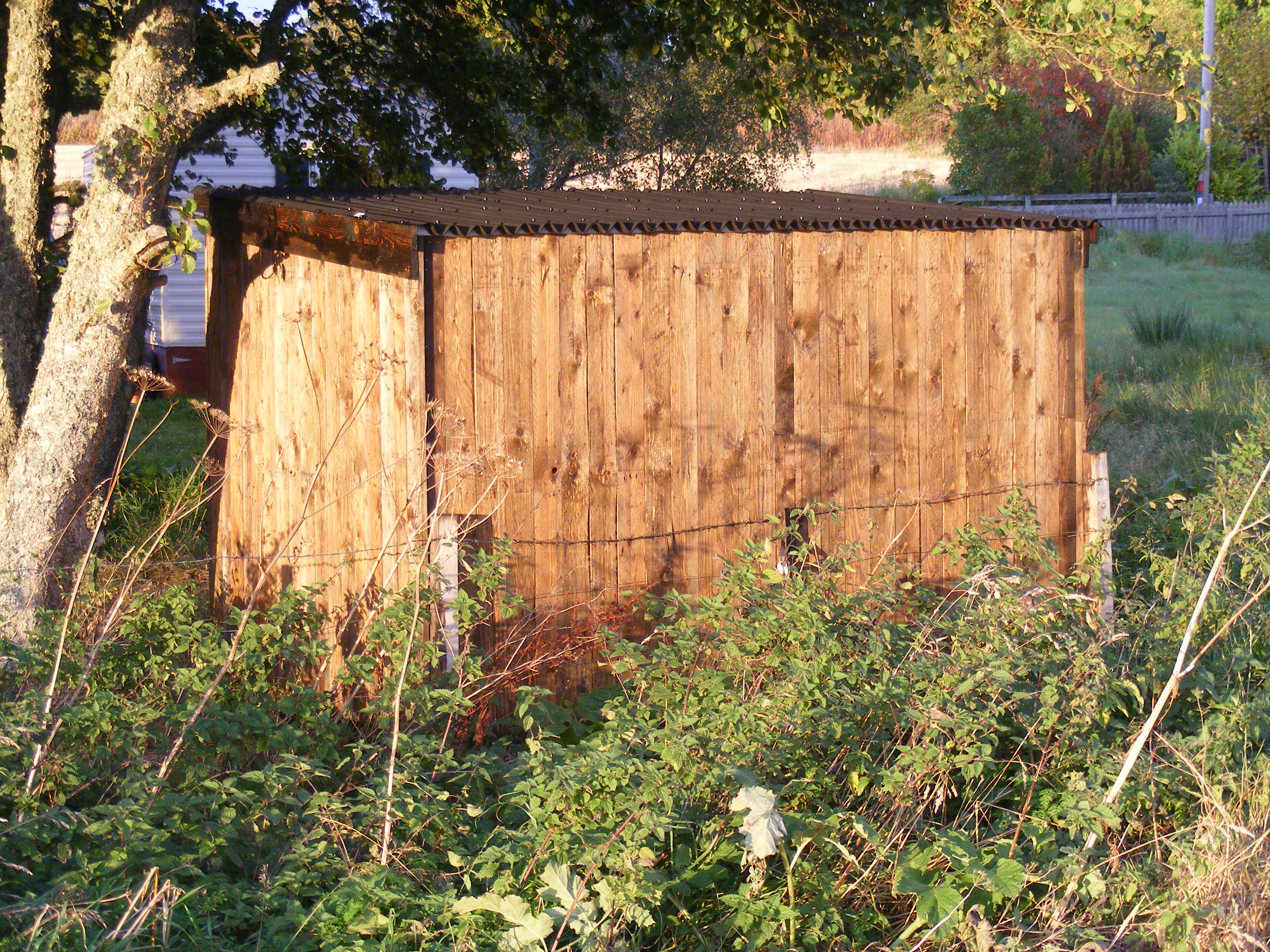
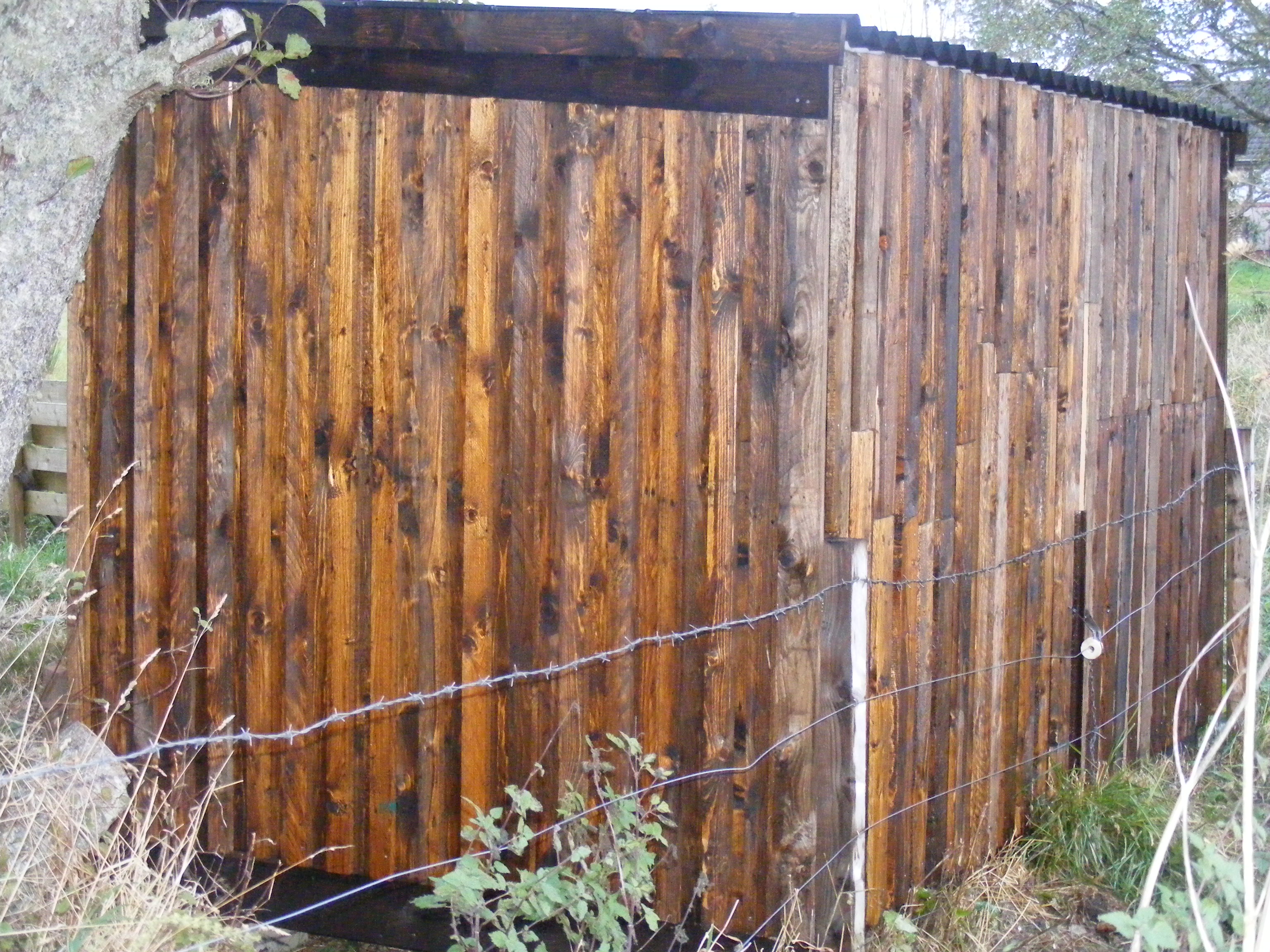
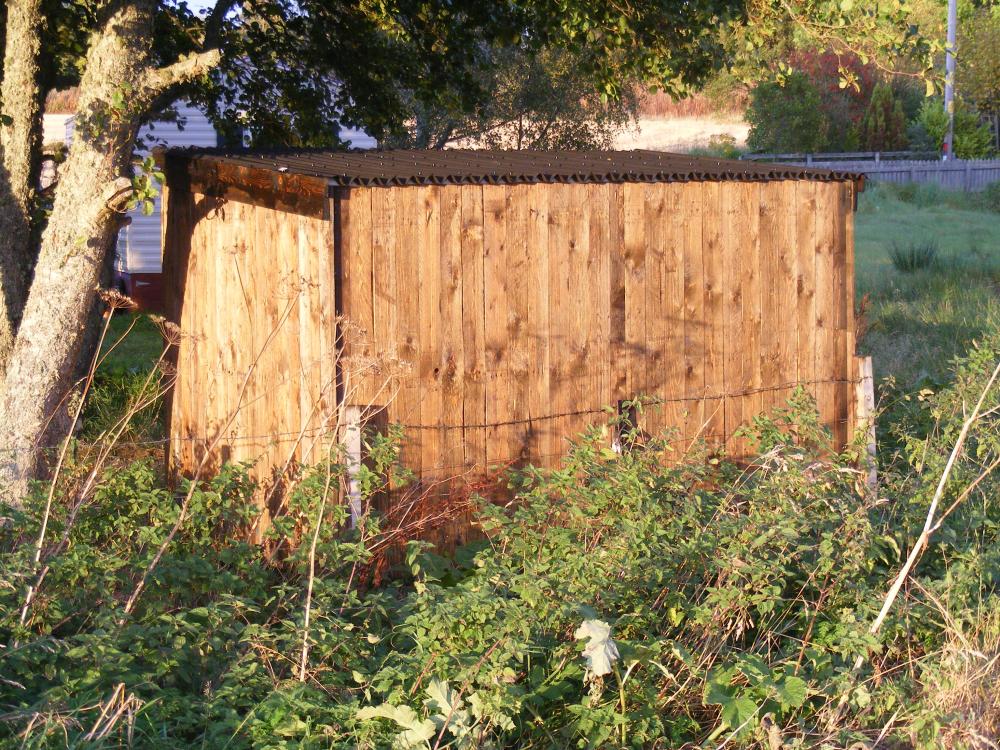
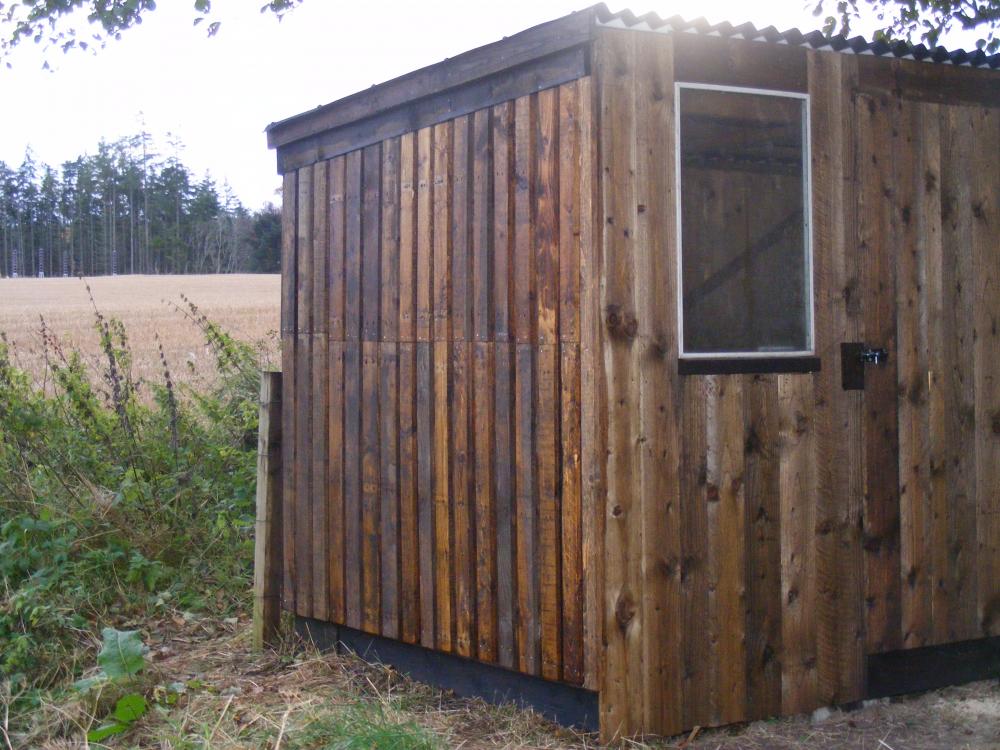
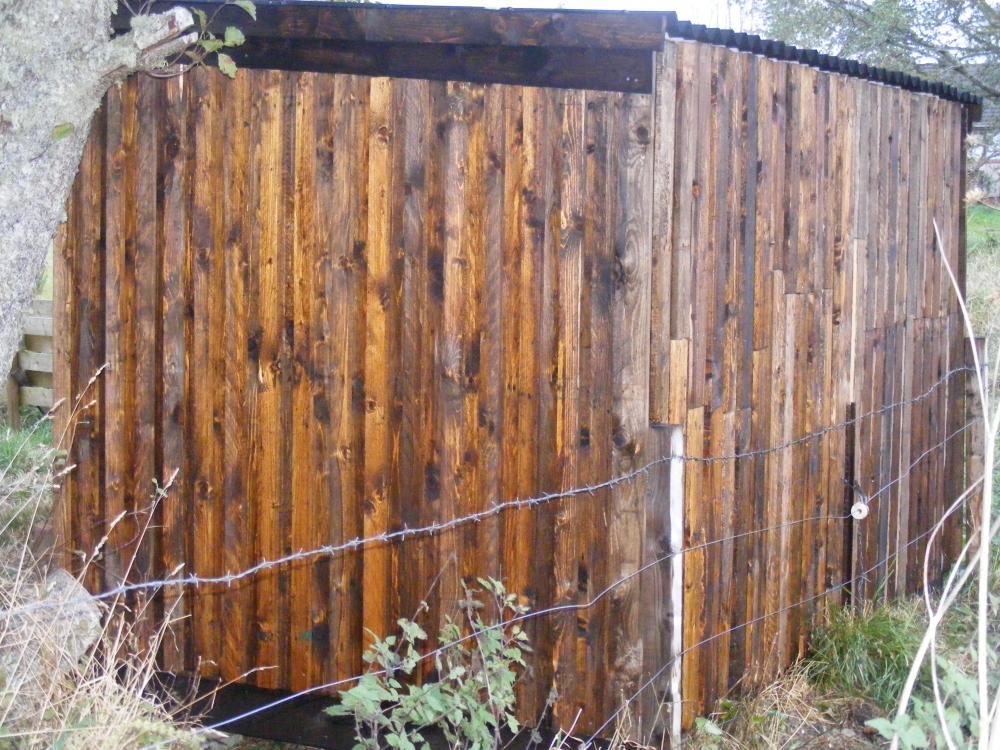
I would never ever ever use "roofing felt" for a shed roof again. Miserable product with a very short life before it starts leaking. Corrugated bitumen impregnated solid panels is my choice of shed roof now.
-
As I suspected, it was built to the portable building / caravan spec so would have been exempt from building regs. In that case it should be possible to separate the 2 halves and move it again. You might even be able to sell it, so I am sure you could give it away. Take lots of photo's and put it here in the market place and on somewhere like Gumtree It is in effect a "twin unit" mobile home, but quite possibly built better than most static caravans. It would make someone a good temporary home while building if nothing else. How far are you from @Nickfromwales ? Crane hire and 2 low loaders. Worth getting a quote? Would a large hiab lift each half? have you looked underneath? are you sure it's not on 2 mobile home chassis with wheels?
-
Does it HAVE to go? It looks too good. I would be trying to retain that and build on a different part. It would make a smashing workshop / shed / man cave, plus temporary accommodation while you build. I had the offer of something similar, but I had nowhere to put it and the condition for having it free was I would have had to remove it. How was it built? is there a chance it was a sectional prefab? in which case it might be possible to remove in sections with a crane and low loader.
-
The usual sequence is: You peg out the house footprint on the ground "That looks tiny, make it bigger" You dig the foundations and lay the dwarf walls "That looks tiny, make it bigger" The timber frame goes up "Oooh it is quite big isn't it.